
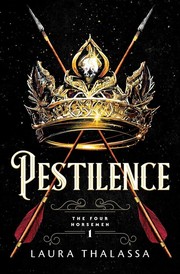
Pestilence
2,508-word summary 11 min read 416 pages in the book
- First published
- 2018
- Publisher
- Bloom Books
- Pages
- 416
- ISBN
- 9781728280165
- Series
- The Four Horsemen (#1)
Reading options
What's inside (9 sections)
The pitch sounds like a dare: a romance where the love interest is Pestilence, first of the Four Horsemen, currently riding across North America killing everyone with a plague. I picked it up expecting a disaster and kept reading because Laura Thalassa plays it straight. The death is gruesome. The attraction is a genuine problem. The woman at the center of it keeps asking herself whether wanting him makes her a traitor, and the book does not let her off the hook cheaply. I expected camp and got something bleaker and better.
The blackened match
Five years before the story starts, all four Horsemen appeared during a storm and rode to the four corners of the world. Technology died in their wake: engines failed, the internet went dark, planes fell out of the sky. Then the Horsemen vanished, and humanity spent five years rebuilding an older, smaller world of oil lamps, horse carts, and trading posts. Now Pestilence has come back alone, working his way through North America and leaving "messianic fever" behind him, a disease that is always fatal and cruel in its final stage, when the body starts to rot while its owner is still alive.
Sara Burns is twenty-one, a firefighter in Whistler, British Columbia. Her station is down to a handful of people, and when it becomes clear the Horseman is heading their way, they draw lots to decide who stays behind to try to kill him while everyone else evacuates. Luke, Felix, and Briggs are the other names in that scene. Sara draws the blackened match. Her parents are among the evacuees. She camps along the Sea to Sky Highway with her grandfather's shotgun and waits to die usefully.
Pestilence arrives the next morning on a white steed, wearing golden armor, and Sara's first mistake is hesitating, because he is beautiful in a way that does not belong to this world. Her second mistake is assuming that a shotgun and a canister of lighter fluid are enough. She shoots him off the horse, douses him, and sets him on fire, then watches him burn for hours, retching, feeling like a murderer instead of a hero. When it is over she crawls into her tent to wait for whatever comes next.
What comes next is a charred hand closing around her throat. Pestilence cannot die. He has regenerated, he has killed every person who ever attacked him, and he is angry for one specific reason: while he was burning, he begged her for mercy and she gave him none. That word, please, becomes a live wire between them for the rest of the book.
He binds her to his saddle and takes her with him, and when she asks why he let her live, he says it is because suffering is made for the living.
The long walk behind the horse
The first stretch of the journey is as grim as anything I have read in a romance. Pestilence forces Sara to run behind his horse until she collapses and is dragged along the asphalt. When she tries to escape, he puts arrows in her back and hauls her through the snow until her shoulder comes out of its socket. Then he cleans her wounds and feeds her and insists none of this is kindness, only pragmatism. The book is honest about how bad he is and about how much Sara hates him, which is why the slow turn works later.
The turn starts small. He lifts her onto the horse instead of dragging her behind it. Sara works out that he controls who catches the plague, which means he has been sparing her deliberately. He admits it, but claims it serves his vengeance rather than his compassion. He also tells her what his actual mission is: to ride until every human being is dead.
They talk, because there is nothing else to do. She challenges his certainty that human pleasures are beneath him. He tastes apple pie and concedes that not needing something does not mean you cannot enjoy it. She spends her days tending the dying, partly because that is who she was before the world ended and partly because someone should. He keeps being a monster while she does it. He marches her through a hospital in Squamish so she can look at the faces of people who will be dead within the week. When she says please during a rainstorm, he remembers how little the word meant to her when their positions were reversed, and uses it against her.
That choice nearly kills her. She develops hypothermia, and he has to break into a house to warm her with his own body heat. A family lives there. A mother named Helen and two young children, all of them already infected. Sara spends four days nursing them through the fever's worst stages, and when the little girl is dying she pretends to be the child's mother so that the girl has something soft to hold on to at the end. Helen sees what Sara is doing, and tells her something that sticks: she does not believe punishment is the reason the Horseman keeps Sara around.
Mercy has a name
By this point the book has a rhythm: horror, argument, small kindness, more horror. Then, at a campfire, Sara kisses him. He threads his hands into her hair and kisses her back, carefully, and that night he murmurs against her hair that what he feels is not lust, and that he hopes she is half as frightened of it as he is. It is one of the few moments where he sounds like a person instead of a verdict.
The growing closeness keeps getting interrupted by humanity at its worst. A family takes them in and then turns hostile, and the father, Nick Jameson, drags Sara into the woods at gunpoint. Pestilence kills him with an arrow at almost the exact moment Nick's rifle goes off. It is the first time his power saves a human life instead of ending one.
The hinge of the whole book, though, is an elderly couple near Seattle. Rob and Ruth welcome Sara and the Horseman into their home with warmth and something closer to awe than terror. Pestilence has never simply been liked before, and it visibly shakes him. Then the fever reaches them, because his plague does not spare people for being kind. Ruth forgives him while she is dying. She makes him promise to take care of Sara. Then she talks to Sara alone and tells her that loving him is not wrong, and that love may be the only thing that can save the world. Pestilence buries the two of them together, and it is the first time he buries anyone at all.
That stretch is the strongest writing in the novel. Ruth's forgiveness is the book's whole argument delivered quietly, by a dying woman, to the thing that is killing her.
Later, Pestilence says out loud, believing Sara is asleep, that she has changed him and that he does not know what to do about it. She hears every word. Not long after, on the balcony of a cabin in the woods, she tells him she no longer sees a monster when she looks at him, just a man, and that is when they sleep together for the first time. Afterwards he shows her something he has kept hidden: a glowing mark on his body, the word Mercy, a sign from God that stayed his hand the morning he met her. So the book finally answers the question it has been circling. He spared her because heaven told him to. Everything since has been him deciding what that means.
The next morning he proposes marriage in a church, because in his understanding, what they did is a binding commitment. Sara refuses. They fight, and then they reach an uneasy truce. It is the most human the two of them get.
Nailed to a telephone pole
The last act turns ugly fast. A gang ambushes them with a roadside bomb. The blast kills Pestilence's horse, the steed Sara secretly named Trixie Skillz, and leaves him critically injured. The gang nails him to a telephone pole in a mock crucifixion and sets him on fire. To twist the knife, one of them, a man named Mac, shoots Sara in the torso with a shotgun while Pestilence watches.
Pestilence drags himself to her and curls around her, sobbing, while she dies. She does die, briefly. She wakes in a luminous void and meets Thanatos, the fourth Horseman, Death, who is winged, patient, and willing to talk. Sara insists on going back, and Death lets her. His brothers War and Famine stay off the page in this book, but Death's cameo makes it clear that Pestilence is only the first of four problems, and that the others are watching.
Still barely healed, Pestilence carries Sara to a hospital. When the staff refuse to treat her, he does something monstrous to save her: he releases his plague inside the building, killing dozens of people instantly, then keeps just enough staff alive to operate. That is the book in a single scene. He loves her. He is a plague. The two facts do not cancel each other out, and the novel refuses to pretend they do.
He commandeers a mansion and spends weeks nursing her back to health. When she asks whether he loves her, he answers plainly: "Yes, Sara, I do."
The outbreak he makes in her name
The morning after they sleep together again, Sara learns that a catastrophic outbreak has spread across the entire West Coast. Millions are dying or already dead. Pestilence did it deliberately, at a great distance, to avenge the shotgun blast. This is the part where the romance has to grow up or fall apart, and Thalassa makes it hurt properly.
Sara begs him to stop. She calls him love for the first time. He refuses, because in his mind revenge is justice and he is only doing what he was made for. Sara tells him the thing the whole book has been building toward: his love has brought out his worst qualities, not his best, and God's mercy was never meant for her alone. Then she walks out.
He locks her in the bedroom. For eight days neither of them speaks. On the eighth day he throws his crown on the floor and tells her she is free. She walks away without looking back.
Weeks later, traveling north, she hears that every infected person on the West Coast recovered and that Pestilence has vanished. He reversed the plague before releasing her, and she never checked the news, because she was too angry and too raw to look. She goes home to Whistler. Her parents are alive. Her teammate Briggs died helping the sick. She tries to resume her old life, and it does not fit anymore.
Victor
Months later, a man in a flannel shirt and jeans knocks on her door. The armor is gone. The divine trappings are gone. He tells her he is Pestilence no longer, and that his plague will never infect another person. He followed her the entire way home and watched from a distance, which is either devoted or unsettling depending on the day, and the book lets it be both.
Sara tells him she loves him. He says he stopped the plague because love brings out the best in her. Then he kneels in front of her and offers a gold ring forged from his melted-down crown and armor. She says yes. He chooses a human name for himself: Victor, because he came to conquer the world and one of its people conquered him instead.
The epilogue jumps ahead five years. Sara and Victor live in a house overlooking the Pacific, and children's toys are scattered around. Then Victor goes pale. The wheel of fate is still turning without him, and he can feel his brother waking up. War is coming. It is a generous ending for this couple and a terrifying one for everyone else, which is exactly the right note.
What holds up and what grates
My honest verdict is that this is a ridiculous premise with a saggy middle and a much stronger ending than it has any right to have. The repetition is real. Once you notice the pattern, a new town, the plague arrives, Sara tends the dying, an argument, a small thaw, you cannot unsee it, and it runs for a long stretch of the book. The world outside the two of them is thin. Five years after the collapse of technology, the story never shows how people are organizing, rebuilding, or mounting any response beyond grudges and mobs, and the collapse itself is mostly background. The theology is decorative. The Mercy mark appears once, carries enormous weight, and is never examined again, and God never becomes more than a device for explaining why the heroine is special.
The bigger issue is the premise, and it deserves to be named. Pestilence kills millions, and Sara knows it the entire time. The book wants the reader to feel the pull anyway, and much of the writing earns that, but there are moments where the swoon and the body count sit badly next to each other. The clearest example is the scene where Sara apologizes to him for shooting and burning him. She was right to try, the book knows she was right, and it still wants the apology, which is where some readers will close the book for good. The plague reversal also happens off the page, so the largest event in the story is delivered as news.
The content warnings are serious too. There is mass death, plague, captivity, torture, a mock crucifixion, the heroine dying and coming back, and explicit sex. This is adult dark romance with an adult tone, not young adult, even though Sara is twenty-one. Readers who need their romance leads morally clean will not survive chapter one.
What works is worth the mess. Sara's voice is dry, funny, and stubbornly human under pressure, and Thalassa lets her be angry instead of grateful. The slow burn is paced well enough that the payoff lands, partly because the book is willing to let Pestilence stay monstrous right up until he chooses not to be. Ruth and Rob are the emotional high point. And the epilogue is a better series setup than it needs to be, because it understands that a happy ending for one couple can coexist with an apocalypse continuing for everyone else.
The edition I read is the Bloom Books paperback from August 2023, 416 pages. Thalassa first self-published the book in 2018, and it was nominated for a Goodreads Choice Award in Romance that same year. If the premise does not scare you off, it is the rare monster romance that keeps the monster monstrous long enough for his change to mean something.
FAQ
Is Pestilence the first book in a series?
Yes, it is book one of The Four Horsemen. Sara and Pestilence's story reaches a complete ending here, but the epilogue sets up War, and the later books follow different couples through the same apocalypse.
How dark and explicit is Pestilence?
It is a dark romance with a fatal plague, mass death, captivity, torture, a mock crucifixion, and explicit sex scenes. It is written for adults despite the young heroine.
When was Pestilence published, and which edition does this page cite?
Laura Thalassa first self-published the book in 2018, and Bloom Books reissued it in August 2023 as a 416-page paperback (ISBN 9781728280165).
Similar books
More from The Four Horsemen first, then related titles.
Savage Bonds
Oli's deadly gift is out in the open, her Bond runs the show, and the Resistance is closer than ever in the second Bonds that Tie novel.
2,431-word summary · 11 min read
Six Scorched Roses
A dying scholar bargains with a reclusive vampire for blood, and six roses turn a transaction into a slow, dangerous romance.
2,663-word summary · 12 min read
At Grave's End
Cat and Bones face Max, a zombie-raising ancient vampire, and a prophecy that ties their marriage to Patra's death in the third Night Huntress novel.
2,061-word summary · 9 min read

Blood Bonds
Oleander is chained in a Resistance camp, and her five Bonds have to find her before Silas Davies finishes what he started in this third Bonds that Tie book.
2,018-word summary · 9 min read
My Dark Romeo
A debutante ball kiss traps Dallas Townsend in a marriage to Romeo Costa, a man who wants her as leverage in a war against his father and her fiance.
2,530-word summary · 11 min read
There Are No Saints
Two rival artists circle a struggling San Francisco painter. Cole Blackwell wants her, Alastor Shaw wants her dead. Book one of the Sinners duet.
2,190-word summary · 10 min read

The Predator
Coder Morana Vitalio and mob enforcer Tristan Caine chase stolen software while a case of missing girls from twenty years back catches up with them both.
2,296-word summary · 10 min read
Lover Unleashed
Paralyzed vampire warrior Payne and surgeon Manny Manello collide in an adult paranormal romance, as Xcor's Band of Bastards arrives in Caldwell for revenge.
2,374-word summary · 11 min read
Blue Moon
Ever Bloom tries to save her immortal boyfriend, Damen, from a mysterious illness while a new student named Roman quietly takes control of her school and her…
1,998-word summary · 9 min read
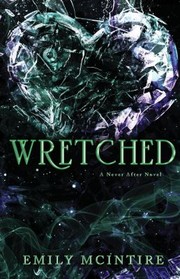
Wretched
The Wicked Witch of the West becomes a heroin chemist, and the DEA agent sent to destroy her family falls for the very woman he was assigned to ruin.
2,117-word summary · 9 min read
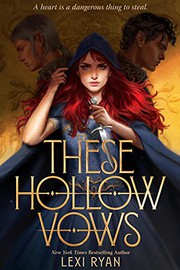
These Hollow Vows
Brie trades with the Unseelie to save her sister and steals for a prince.
2,384-word summary · 11 min read

The Winner's Curse
An aristocratic girl buys a slave who is secretly a prince plotting rebellion.
2,124-word summary · 9 min read
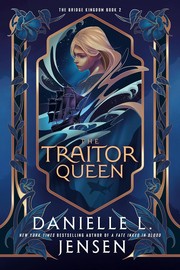
The Traitor Queen
Exiled Lara returns to free Aren and break her father hold.
2,328-word summary · 10 min read

The Kiss Thief
Promised to one man, taken by another, Francesca must choose in Chicago.
2,545-word summary · 11 min read

The Dark One
Winnie trades with Hook while Peter Pan turns cruel in Neverland.
2,596-word summary · 12 min read
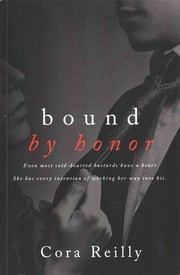
Bound by Honor
An arranged mafia marriage between a Chicago girl and a New York heir turns to love.
2,586-word summary · 11 min read
Broken Bonds
Oleander returns after five years on the run to face the five men she is bonded to, in J. Bree's 2021 opener of resentment, training, and slow trust.
2,582-word summary · 11 min read
King of Battle and Blood
A bride sent to marry vampire king Adrian plans to kill him, fails, and must survive his court.
2,465-word summary · 11 min read
Heartless Hunter
A witch hiding as a socialite courts a witch hunter for secrets, while he courts her back on suspicion, in this romantic fantasy opener.
2,366-word summary · 11 min read
God of Malice
Rina Kent's God of Malice fully retold: Glyndon King, Killian Carson's fixation, secret societies, and the Devlin twist that resets everything.
2,849-word summary · 13 min read
Kulti
Pro soccer player Sal Casillas gets childhood idol Reiner Kulti as assistant coach, and a tense season turns into slow friendship.
2,544-word summary · 11 min read
Scarred
A spy bride sent to ruin a scarred king learns his scars first.
2,074-word summary · 9 min read
Dance of Thieves
Queen's thief Kazi infiltrates Ballenger lands while young leader Jase plays her right back.
2,005-word summary · 9 min read

The Maddest Obsession
Sharp-tongued Gianna spars with secretive Christian Allister in this 2019 Made #2 mafia romance, where teasing hides danger and lies.
3,903-word summary · 17 min read
Does It Hurt?
Running Sawyer hitches a sailboat with guarded Enzo and wrecks off the Australian coast.
2,251-word summary · 10 min read
Assistant to the Villain
Evie Sage becomes assistant to Rennedawn's infamous Villain, sorting office chaos and a slow burn crush while hunting a traitor in his ranks.
2,806-word summary · 12 min read
The Ashes & the Star-Cursed King
Oraya and Raihn hold a shaky throne, face gods and war, and must pay memory to close the rift.
2,127-word summary · 9 min read
Neon Gods
Promised to Zeus, Persephone flees to Hades and trades fake dating for real choice in Olympus.
2,002-word summary · 9 min read
From Lukov with Love
Stalled skater Jasmine pairs with rude champion Lukov for one last season built on 5 a.m. ice.
2,013-word summary · 9 min read
Serpent & Dove
A runaway witch is forced to marry a witch hunter in Cesarine, hiding her magic as old enemies close in.
2,962-word summary · 13 min read