
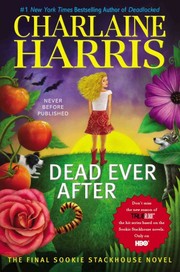
Dead Ever After
2,388-word summary 11 min read 338 pages in the book
- First published
- 2013
- Publisher
- Ace Books
- Pages
- 338
- ISBN
- 9781937007881
- Series
- Sookie Stackhouse (#13)
Reading options
What's inside (8 sections)
I finished the Sookie Stackhouse books over a stretch of a few weeks, and by the time I got to the thirteenth one I was in that odd state where you want the story to finish and you also do not want it to. Dead Ever After came out in 2013 from Ace Books, the same publisher that did Dead Reckoning, and it is the last novel in the series. The hardcover runs 338 pages. It has a mystery, a wedding, a kidnapping, and a decision about Sam Merlotte that fans argued about for years. What struck me on reread is how small the book is in its ambitions compared with some of the earlier entries. Harris is mostly interested in tying up threads, and she does it with a light hand.
If you are coming to this cold, do not start here. Sookie Stackhouse is a waitress in Bon Temps, Louisiana, who can hear the thoughts of everyone around her, and over twelve previous books she has been pulled into the world of vampires, shifters, witches, and fairies. She has fallen in and out with Bill Compton and Eric Northman. She has survived a great deal. Dead Ever After picks up right after Deadlocked and assumes you know all of it. It also spoils major revelations from earlier books within the first few chapters. This is a finale for people who earned it.
The series, also known as The Southern Vampire Mysteries, started with a much smaller kind of story. The early books put a murder in Bon Temps and let Sookie's ability to read minds do the work that a detective's badge would do in another novel. Over time the scope grew, first to vampire politics across the South, then to packs and covens and the fairy side of Sookie's family. By book thirteen, a murder in a bar is almost a small thing. Harris seems aware of this, and she uses the smaller scale on purpose. The book is less about building a new world than about deciding which parts of the old one still matter to Sookie.
The cluviel dor is gone, and Eric is marrying someone else
The book opens with two problems that are linked. At the end of Deadlocked, Sookie used a magical object called a cluviel dor to save Sam Merlotte's life after his girlfriend Jannalynn killed him. The cluviel dor is gone now, spent in a moment Sookie does not regret but that has consequences. Eric Northman, the vampire who is her lover and, in vampire terms, her husband, wanted her to save it. His maker had arranged a marriage for him with another vampire, and under vampire custom he is obliged to go through with it. Eric had hoped Sookie would use the cluviel dor to get him out of that marriage. Instead she used it on Sam.
The spent cluviel dor matters for another reason. Across the later books it has been treated as the one gift that could fix anything, a single use answer to problems that usually have none. Once Sookie spends it to save Sam, the series has to continue without that safety net. Harris makes the choice feel real by letting the people around Sookie respond to it the way people do when someone they love uses up the only good option. Eric's resentment is not villainous, exactly. He had a plan, and she did not follow it.
So the relationship is cool when the book starts, and Eric is annoyed and jealous. Sookie, for her part, feels threatened by the fiancée, whose jealousy could turn dangerous. There is a fairness question here that Harris does not dodge. Eric expects Sookie to spend a powerful, one-use gift on his problem, and when she spends it to save a friend, he punishes her with distance. Sookie has spent much of the series being told what powerful supernatural people need from her. Here she finally chooses for herself, and the person who loves her is the one who cannot take it.
Sam has his own trouble. Being brought back from death has not sat well with him. He and Sookie have been close for years, through his being her boss at Merlotte's, through his being a shapeshifter, through all the times he has been the steady one while vampires tore through her life. Now that he is alive again and co-owns the bar with her, the lines between them are unclear. Harris handles this slowly, which is the right pace. The book does not rush into a romance.
Arlene walks back into Merlotte's
The mystery half of the plot starts with Arlene Fowler. She used to work with Sookie at the bar and was, for a time, a friend. Then she was drawn into a human-supremacist group that opposed supernaturals and the people who associated with them, and she tried to lure Sookie into a situation that would have killed her. Arlene went to prison. Now she has been freed by a mysterious group that seems to have it in for Sookie, and she turns up at Merlotte's asking for her old job back.
The group that springs Arlene from prison is not identified clearly at first, which keeps the threat vague in a way that suits Bon Temps. That vagueness is one of the book's better decisions. Sookie never knows how many people are working against her or what they want beyond hurting her, and the uncertainty makes even an ordinary visit to the bar feel loaded. Arlene's return also drags up a piece of Sookie's human past that the vampires had started to crowd out. Not every enemy in this town needs fangs or a pack.
Soon after, Arlene's body is found, and Sookie is arrested for her murder. It is a familiar setup for the series: Sookie is blamed for a death she did not commit, and she has to clear her name while people she trusts are unreliable. What makes it work here is the target. Arlene was a real enemy, and Sookie has no reason to protect her, which makes the accusation sting differently. The town's willingness to believe the worst of Sookie is one of the quieter themes of these books, and it is on display again.
To sort it out, Sookie calls in a familiar collection of helpers. Desmond Cataliades, her demon godfather, arrives with his niece Diantha and his great-great-grandson Barry Horowitz, who is a telepath like Sookie. The witches Amelia Broadway and Bob also show up. The arrival of this crew is one of the pleasures of late-series Harris: you know these people, you know what they cost, and you know Sookie would not trust them unless she were desperate. Barry in particular is useful because he can do what Sookie does, which gives her someone who understands the noise in her head.
Sam, and taking it slow
The Sam thread is the one that sticks with me. Sam has been around since the first book, first as Sookie's boss at Merlotte's and later as a friend she learned to trust after she found out he was a shapeshifter. He has been the steady one through a long list of monsters and bad boyfriends. Now he is alive again after being killed, and the ordinary rules between them have been scrambled by everything that has happened.
He and Sookie end up in bed together for the first time, and both of them are pleased. Sookie, though, tells him they need to take it slow. She wants to be sure he is not a rebound, given that Eric is marrying someone else and has treated her badly. Sam agrees. That conversation is more mature than much of what the series has given us in the romance department, and it is revealing about where Sookie is at the end. She is not looking for someone to rescue her or to fill a hole. She is careful now, because she has been burned and because she has seen what happens when she rushes in.
Harris lets this develop in small scenes rather than grand ones. Sam is awkward about being alive again. Sookie is awkward about wanting him. They dance around it, and the restraint feels earned after so many years of near misses and bad timing. I liked this stretch a great deal. It is quiet, and it is the part of the book that feels like a real ending rather than a setup for another crisis.
Stomping Sally's and the corn field
The kidnapping is the most action-heavy sequence in the book, and it comes in the middle. Sookie, Sam, Jason, and Michele go out dancing at a place called Stomping Sally's. Sookie is taken by Johan Glassport and Steve Newlin, two people tied to the human-supremacist movement that has haunted the series, and thrown into the back of a van driven by Claude Crane. Claude is a fairy cousin of Sookie's, which adds a family layer to the betrayal. As they drive out into the countryside, Sookie works them against each other until they fight, and Claude swerves the van off the road into a corn field.
She runs, and she is saved by a crowd from Stomping Sally's who have chased the van. Johan and Claude are shot dead. Before he dies, Claude smashes Steve Newlin's skull, and Newlin dies hours later, after confessing that he and Johan killed Arlene. So the murder mystery resolves through a confession extracted in the wreckage of a kidnapping, which is a slightly messy way to close a case but fits the tone of these books. The police are never the ones who solve anything. Sookie survives by talking and running, and the truth comes out because a dying man says it.
This section is the most purely plot-driven part of Dead Ever After, and it moves well. I did notice how much of it depends on Sookie being in physical danger yet again, which is a pattern the series has set before. By the thirteenth book, the effect is less alarming than familiar. You know she will get out of it. The question is what it will cost, and here the cost falls mostly on people around her.
A wedding, and the last page
The book closes with a wedding. Jason, Sookie's brother, marries Michele, and Sookie is the only bridesmaid. It is a sweet, low-key chapter, and Harris gives it room to breathe. After the ceremony, Sookie finds her seat next to Sam, who tells her how pretty she looks. Later that night he drives her home and suggests he stay over, and she says no. Once he is gone, she admits to herself that they will probably be together by Christmas, though she will not be destroyed if it does not work out.
That last line says more about Sookie's growth than any speech she gives in the book. Early Sookie wanted certainty and grand gestures. This Sookie can let a relationship be uncertain and still feel all right about it. Eric's marriage proceeds through the novel, and his storyline ends without a clean reunion with Sookie. The book does not give the reader the pairing that a lot of fans wanted. Instead it gives Sookie a future that is open, a brother happily married, a bar she co-owns, and a slow, careful thing with Sam that might become something.
One thing the finale does not attempt is a full accounting of every supernatural thread the series ever opened. Some strands are simply left where they are, and characters who once had whole plots to themselves now get a page or two. For a book that is explicitly a last installment, that restraint is probably wise. Trying to answer every question would have taken another volume and would have made this one feel even more like an inventory than it already does.
There is a reason the ending upset people. Readers had invested in the Eric relationship for years, and the cluviel dor decision, which made sense for Sookie, was read by some as a betrayal of that pairing. Some fans were highly displeased, and Harris chose not to go on tour for the book. The novel reached the top of the US bestsellers list in May 2013, so the argument did not hurt sales, but it did shadow the reception. I understand both sides. If you wanted Eric and Sookie to ride off together, this will feel like a shrug where you expected a declaration. If you have watched Sookie be defined by other people's desires for thirteen books, her choosing slowly and on her own terms is a satisfying place to leave her.
A fair look at the whole thing
Dead Ever After is not the best book in the series. It is a closer, and it reads like one. The mystery is functional rather than clever, the kidnapping reuses a trap the series has used before, and several beloved characters get only brief appearances. There is a sense that Harris is checking off names: the witches, the demon family, the shifters, the vampires, all brought in for a final bow. That can feel mechanical if you are looking for the invention of the early books, when every new supernatural group felt like a discovery.
What it does well is the emotional bookkeeping. Sookie at the end is not the same woman who started out. She has buried too many people, killed when she had to, and learned to be careful about who she lets close. The Sam relationship is built on that caution, and the ending respects it. Arlene's return gives the book a real threat from Sookie's human past, which is something the series did less of as the vampires took over.
For a new reader, this is the wrong door. For someone who has read the other twelve, it is a reasonable finish, and the final chapters are gentle in a way the earlier books almost never were. I put it down thinking that Harris had given Sookie something she rarely got in life: the freedom to not decide yet. After a series this long, that small, quiet permission is a decent last gift.
FAQ
Is Dead Ever After the last Sookie Stackhouse book?
Yes. Published in 2013 by Ace Books, it is the thirteenth novel in the series and was announced as the final one. The hardcover runs 338 pages.
Why were some fans unhappy with the ending?
Sookie does not end up with Eric, whose arranged marriage goes ahead, and she instead leaves open a slow relationship with Sam. Harris chose not to tour to promote the book after the reaction.
Do I need to have read the earlier books first?
Yes. The novel assumes knowledge of the cluviel dor, Eric's marriage, Sam's resurrection, and many characters from earlier books, and it spoils earlier reveals.
Similar books
More from Sookie Stackhouse first, then related titles.
Dead Until Dark
Sookie Stackhouse, a telepathic waitress in Bon Temps, falls for vampire Bill Compton as local murders close in.
2,751-word summary · 12 min read
Living Dead in Dallas
Sookie screens minds in Dallas for a missing vampire while a hate church sings nearby.
2,059-word summary · 9 min read
Club Dead
Sookie hunts missing Bill in Jackson, posing with a werewolf at vampire Club Dead.
2,324-word summary · 10 min read
Dead to the World
Sookie hides a blank Eric for Christmas while hunting the witch who cursed him and finding Jason.
1,997-word summary · 9 min read
Dead as a Doornail
Sookie tracks a sniper hunting shifters as Jason faces his first panther change and pack justice looms.
2,440-word summary · 11 min read
Definitely Dead
Sookie heads to New Orleans for her dead cousin estate and finds witches, vamps, and family curses.
2,027-word summary · 9 min read
All Together Dead
Sookie serves as human lie detector at a vampire summit where murder and trial threaten her weakened queen.
2,884-word summary · 13 min read
From Dead to Worse
Sookie mediates a Were war and vampire takeover while learning about her fairy blood.
2,533-word summary · 11 min read
Dead and Gone
Weres reveal themselves as Sookie faces a murder, a Fellowship trap, and a brutal fairy war.
2,798-word summary · 12 min read
Dead in the Family
Sookie shelters fairy kin and a telepathic boy while pack murder and Eric's vampire kin close in.
2,412-word summary · 11 min read
Dead Reckoning
Sookie confronts the firebombing of Merlotte's, Sandra Pelt's revenge, and a vampire power struggle while questioning her future with Eric.
2,391-word summary · 11 min read
Deadlocked
A dead woman on Eric's lawn starts a murder investigation, a vampire queen wants Eric as her consort, and the fairies in Sookie's life close in.
2,885-word summary · 13 min read

Revelations
Schuyler is pulled into the Force household as Silver Bloods rise, and a Conclave gathering in Rio ends in bloodshed.
2,166-word summary · 10 min read
The Lunatic Cafe
Anita Blake takes a missing-shapeshifter case into St. Louis werewolf politics while Jean-Claude and Richard both press their claim on her.
2,327-word summary · 10 min read
At Grave's End
Cat and Bones face Max, a zombie-raising ancient vampire, and a prophecy that ties their marriage to Patra's death in the third Night Huntress novel.
2,061-word summary · 9 min read
Lover Unleashed
Paralyzed vampire warrior Payne and surgeon Manny Manello collide in an adult paranormal romance, as Xcor's Band of Bastards arrives in Caldwell for revenge.
2,374-word summary · 11 min read
Guilty Pleasures
Animator Anita hunts a vampire killer while Jean-Claude pulls her close.
2,136-word summary · 9 min read

Blue Bloods
At an elite Manhattan school, Schuyler Van Alen learns she is a forbidden half-vampire as someone starts killing her kind.
2,725-word summary · 12 min read

White Hot Kiss
Layla is half Warden, half demon, and one kiss from her steals a soul. A demon prince warns that Hell is hunting her, and she must choose between the clan that…
2,299-word summary · 10 min read
Wake
Seventeen-year-old Janie Hannagan is pulled into other people's dreams whenever they sleep near her. A nursing-home job, a secretive boy and a drug bust give…
2,488-word summary · 11 min read
The Darkest Night
A woman who hears the voices of the past meets an immortal warrior who dies every night in Gena Showalter's first Lords of the Underworld novel, a dark…
3,483-word summary · 15 min read
Night Pleasures
An accountant is kidnapped by a soul-stealing Daimon and handcuffed to a two-thousand-year-old Dark-Hunter, beginning a romance that forces him to want…
2,039-word summary · 9 min read

Marina
A fifteen-year-old boarder in 1979 Barcelona follows a singing voice into a ruined mansion and finds a girl, a watch, and a mystery the city has kept buried…
2,352-word summary · 10 min read
Lover Reborn
A grieving vampire warrior learns that the only way to free his dead mate from a cold afterlife is to love another, as a rival clan challenges the Blind King's…
2,768-word summary · 12 min read
Evernight
A girl raised among vampires falls for a human boy at a Gothic boarding school, unaware that he hunts her kind.
2,200-word summary · 10 min read
Destined for an Early Grave
A Paris vacation turns into a fight over Cat's past when a vampire who claims to be her husband returns, and she must decide what she is allowed to know.
2,924-word summary · 13 min read
The Laughing Corpse
A millionaire offers Anita Blake a fortune to raise a three-hundred-year-old corpse, then names the human sacrifice it would take. A zombie murder follows.
2,290-word summary · 10 min read
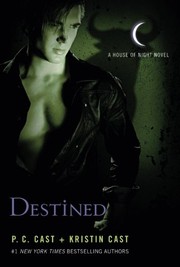
Destined
In the ninth House of Night novel, Zoey Redbird takes her fight with Neferet to the High Council while an ancient bull stirs and a vessel built for murder…
2,317-word summary · 10 min read
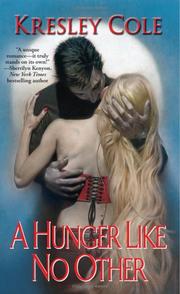
A Hunger Like No Other
Kresley Cole's 2006 paranormal romance pairs a Lycan freed after a thousand years of Fae captivity with a Valkyrie who has no wish to be claimed.
2,539-word summary · 11 min read
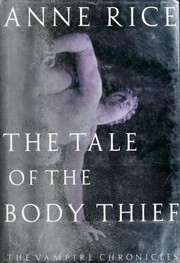
The Tale of the Body Thief
Lestat trades bodies with a psychic thief for one day of mortality and ends up trapped, sick, and hunting his own vampire body.
2,069-word summary · 9 min read