
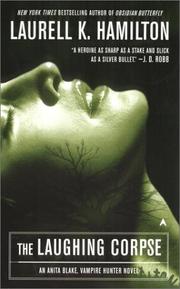
The Laughing Corpse
2,290-word summary 10 min read 293 pages in the book
- First published
- 1994
- Publisher
- Ace Books
- Pages
- 293
- ISBN
- 9780441000913
- Series
- Anita Blake, Vampire Hunter (#2)
Reading options
What's inside (9 sections)
- A millionaire, a three-hundred-year-old corpse, and a white goat
- A family nobody could have torn apart that way
- A funeral, a touch clairvoyant, and a bracelet in a disturbed grave
- Jean-Claude and the woman in a wheelchair
- The gris-gris and the priestess who kept souls in her dead
- The cemetery command
- What holds up and what grates
- Key takeaways
- FAQ
I picked this up expecting more vampire club intrigue after Guilty Pleasures and found myself in a different part of St. Louis by page twenty. Laurell K. Hamilton published The Laughing Corpse in 1994 with Ace Books, and my copy is the 293 page Ace edition, ISBN 9780441000913. It is book two of Anita Blake, Vampire Hunter, set about a month after the first novel. Jean-Claude is still the Master of the City, Anita is still refusing him, and the dead are still hiring her. What changes here is the kind of dead.
A millionaire, a three-hundred-year-old corpse, and a white goat
The opening scene is a business meeting that turns into a test. Harold Gaynor, a local millionaire with a lot of money and very little sense, wants Anita to animate a corpse that has been in the ground for three hundred years. He names a price in the millions. He also mentions, almost casually, that he is prepared to supply a white goat for the job.
Anyone who read the first book knows where that goes. A white goat is not livestock in this series. It is a polite word for a human sacrifice, and raising a body that old would take exactly that kind of power. Anita says no. Bert, her boss at Animators Inc., is tempted by the fee for about two seconds, then learns what the goat means and drops it. It is a useful early signal of where Anita's line sits. She will take money to make the dead speak, but there are deals she will not make, even for her boss.
That rule is the spine of the book, because most of what follows is about a person who crosses it and makes other people pay.
A family nobody could have torn apart that way
Dolph Storr calls Anita to a murder scene, and it is a bad one even by the standards of her job. A family has been ripped apart in its own home. There is far too much blood left at the scene, and a child is missing, possibly still alive. Anita reads the wounds and arrives at a conclusion she does not like. This was no vampire and no man with a knife. It was a flesh-eating zombie, raised and pointed by somebody with serious power.
She can think of only two people in St. Louis who could manage it. One is herself. The other is Dominga Salvador, a vaudun priestess Anita knows about in the careful way people talk about dangerous practitioners. A third name sits in the background. Peter Burke was capable of work like this too, and Peter is recently dead.
Anita arranges an introduction through Manny Rodriguez, her mentor, and meets Salvador in a house that feels more like a shrine with furniture in it. Salvador is old, severe, and more convincing as a threat than Nikolaos ever was, largely because she never raises her voice. She shows Anita her method. You catch the soul of a dead person and install it in the body, which stops the decay and lets the dead go on being punished indefinitely. Then she offers a partnership. The two of them could produce ensouled zombies for paying clients and split the profits. Anita refuses, and leaves the house with something unseen chasing her.
That is the pattern of the middle stretch. Anita is less a detective solving a puzzle than a woman walking into rooms where whoever is in charge expects to be obeyed.
A funeral, a touch clairvoyant, and a bracelet in a disturbed grave
At Peter Burke's funeral Anita meets his brother John, a vaudun priest in his own right and therefore another person who could have done the killings. The funeral is a good scene because Hamilton lets the family grief sit next to the professional suspicion. Anita is there to pay respects and also to measure a possible suspect, and she does not pretend otherwise.
Irving Griswold turns up next with useful information about Gaynor, including the name of one of his former lovers, a woman known as Wheelchair Wanda. Irving also wants something. He asks Anita who the Master of the City is, and gets his answer when Jean-Claude happens into the room. The moment is small but it reminds you that Anita's association with the master vampire is already public knowledge among people who matter, and that she cannot undo it by arguing.
Later, at a cemetery where remains from one of the murdered family members have been found, Anita senses that a grave has been opened recently and that another is empty. The tombstone over the empty grave is smashed. She finds a charm bracelet, takes pieces of it to a touch clairvoyant she knows, and hears that the bracelet belonged to a woman sacrificed to raise a zombie. That is the clue that turns a murder investigation into something older and uglier.
The attacks come in clusters after that. Zombies get into Anita's apartment. Thugs try to grab her and her friend Ronnie on the street, and the two of them fight their way free, only to learn the men were working for Gaynor. Anita is being leaned on from two directions, and neither side bothers to hide it.
Jean-Claude and the woman in a wheelchair
Of all the threads in this book, the one I remember most clearly is Anita and Jean-Claude going into the red light district to lean on Wheelchair Wanda. It is a strange little scene and it works. Wanda knows things about Gaynor, and she is not going to tell a police consultant. Jean-Claude, who owns a great deal of the city's nightlife, knows exactly how to make her talk. Anita goes along because she needs the information and because she wants to watch him work.
What Wanda gives them is the shape of Gaynor's obsession. He is not a greedy man in any ordinary sense. He is chasing a historic family treasure and a family grudge, and he has been chasing them for years. The money he offers Anita is a means to that end. The corpse he wants raised is an ancestor.
Jean-Claude uses the scene to press his own case. He wants Anita to accept her place as his human servant, and the marks he put on her in book one are the argument he keeps returning to. They are a leash that runs both ways. He can feel where she is and call on her, and she can feel him, which is why she dreads his company. Her refusal here is not coyness. She genuinely hates the idea of belonging to someone, and Hamilton lets that hatred be the honest thing in the room instead of smoothing it into flirtation.
I should say that the romance is thinner this time around than it was in Guilty Pleasures. Edward shows up, does his dry, professional thing, and leaves the impression that he would be more interesting in a book of his own. Jean-Claude gets a handful of scenes. The vaudun plot crowds everything else out, and for a while that is fine.
The gris-gris and the priestess who kept souls in her dead
The investigation turns when Anita and John Burke look through Peter's belongings and find a gris-gris, a charm holding a portion of a powerful practitioner's strength. In the wrong hands it boosts an animator's ability enormously. Salvador, it turns out, gave it to Peter. Anita and the police confront her with it, and her grandson Antonio confesses that he was supposed to retrieve it after Peter died and failed to do so. A video exists. Salvador is arrested. For a chapter or two it looks as if the case is closing.
Then Anita goes back to the latest crime scene, the one she thought the zombie was still hiding near, and the zombie comes out of hiding. She fights it and puts it down. That is the book doing its job as horror. There is no elaborate staging, just a woman with a gun and a cross and a corpse that should have stayed buried.
By this point I had a complaint, and it is worth stating plainly. The middle of this novel is a stack of confrontations that all resolve in much the same way: Anita is summoned, a powerful person tries to bend her, she refuses, and she walks away with a bruise and a clue. Dominga Salvador is the strongest version of that pattern, and her arrest arrives so easily that I kept waiting for the other shoe. It comes, but the delay strains belief a little.
The cemetery command
The last stretch earns the title. Gaynor's bodyguards kidnap Anita and take her to his house, where Salvador has somehow made bail. Gaynor wants a relative of his raised and has kidnapped Wheelchair Wanda to serve as the sacrifice. Anita refuses again, so Salvador withdraws to another room to work a spell of compulsion. Anita kills the guards holding her, tries to get Wanda out, and finds herself walking back to the cemetery near Gaynor's house because the spell will not let her do otherwise.
Salvador explains it there, and the explanation is the neatest piece of plotting in the book. She gave Peter the gris-gris so that he could raise Gaynor's ancestor without performing a human sacrifice in front of witnesses. The ancestor had been an animator himself. When he came back he did not come back quietly. He rose as an uncontrollable flesh-eating thing, and Peter Burke was murdered because he knew how it had been done. That is where the family from the opening murder scene fits, and the answer is worth the wait.
Salvador then orders Anita to perform a human sacrifice. The compulsion is literal, and Anita finds the loophole in it. She kills the guards who are holding Wanda, which is the sacrifice the spell asked for, and the power of those deaths lets her raise and control every corpse in the cemetery. She sends the dead after Salvador and Gaynor. When it is over she lays them all back down.
I want to be honest about how that reads. It is a terrific image, and it is also the moment the series starts handing Anita more power than a mystery can comfortably contain. A heroine who can order a whole graveyard around is a heroine who will need bigger problems from here on, and anyone who knows where the series goes will recognize the first step. Still, the scene is earned within this book. Anita spends two hundred pages refusing to use people as fuel, then makes a choice about exactly whose lives count, and does not get to feel clean about it.
The epilogue keeps that unease. Salvador and Gaynor have vanished and nobody has solved their disappearances. Jean-Claude is still refused. Anita sits with the realization that the power she used in that cemetery is hers now, and that she does not entirely know its limits. It is a much more interesting ending than a tidy arrest would have been.
What holds up and what grates
What holds up is the shape of the mystery. The bracelet, the gris-gris, Peter Burke, the dead animator, and Gaynor's family grudge all pay off in the same explanation, and the explanation does not require a coincidence I could not accept. Hamilton is better at this than the vampire politics sometimes give her credit for. The horror is strong too, especially the thing in the family home and the corpse in the cemetery. Neither is dressed up with much ceremony, and both are more unsettling for it.
What grates, first, is the treatment of vaudun. The religion is written as a set of sinister tricks practiced by sinister people, with little room for the fact that it is a real faith with real practitioners. Dominga Salvador is a vivid villain, but she is also a caricature, and the book never steps back far enough to notice. Reading it in 2026, that is the part I would warn a friend about.
What grates second is Anita herself, or rather the version of her on display here. Her certainty about who deserves to die is already formidable, and the ending asks us to cheer a double killing carried out by a cemetery full of corpses. It works as a payoff. It is also a hint of the ethical looseness that later books lean into much harder. If you want a heroine who wrestles with that, you will find some of it here. If you want one who is never tempted by her own authority, you are in the wrong series by book two.
Content notes, since this one is heavier than the first. Graphic violence including a family murdered and a body torn apart, human sacrifice as a plot device, sexual coercion through magic, and a priestess who keeps souls captive in corpses. There is no explicit sex in this volume, which may come as a surprise if the series reputation reached you first.
Who is it for? If you liked the first book's mixture of casework and monsters, this is a solid second entry that broadens the world without losing the procedural spine. If you want the vampire romance to move forward, it will frustrate you. If you want to see where Anita's appetite for power begins, this is the book. It ends with a woman standing in a cemetery she just emptied, wondering what else she could make the dead do. That question drives everything that comes after.
FAQ
Where does The Laughing Corpse fit in the Anita Blake series?
It is book two of Anita Blake, Vampire Hunter, published in 1994 and set about a month after Guilty Pleasures. Book three is Circus of the Damned.
Do I need to read Guilty Pleasures first?
It helps. The marks Jean-Claude put on Anita, her job at Animators Inc., and her standing with the Master of the City all carry over from book one.
Is this book as graphic as the rest of the series?
It has brutal murders, a flesh-eating zombie, and magic used to coerce obedience, but no explicit sex. The gore concentrates in the family murder scene and the cemetery.
Similar books
More from Anita Blake, Vampire Hunter first, then related titles.
Guilty Pleasures
Animator Anita hunts a vampire killer while Jean-Claude pulls her close.
2,136-word summary · 9 min read
Circus of the Damned
A rogue master vampire arrives in St. Louis and Anita Blake is caught in an undead turf war, with a science teacher in the crossfire.
2,757-word summary · 12 min read
The Lunatic Cafe
Anita Blake takes a missing-shapeshifter case into St. Louis werewolf politics while Jean-Claude and Richard both press their claim on her.
2,327-word summary · 10 min read
Dead Beat
Wizard Harry Dresden hunts the Word of Kemmler through necromancers to stop a Halloween godmaking rite.
2,883-word summary · 13 min read
Blood Rites
Wizard Harry Dresden guards a porn set from entropy curses while learning brother Thomas and fighting Black Court nest.
2,211-word summary · 10 min read
Blood Bound
Coyote mechanic Mercy Thompson stands with vampire friend Stefan against a demon driven rival while pack ties strain.
2,636-word summary · 12 min read
Death Masks
Wizard Harry Dresden hunts the stolen Shroud of Turin while dueling a vampire lord and facing fallen angels.
2,979-word summary · 13 min read
Grave Peril
Chicago ghosts turn murderous as Harry Dresden faces a vengeful sorcerer and Bianca's vampire trap.
3,484-word summary · 15 min read
Moon Called
A coyote mechanic in wolf country gets pulled into pack fights and fae bargains when a lost teen shows up.
1,943-word summary · 9 min read

Revelations
Schuyler is pulled into the Force household as Silver Bloods rise, and a Conclave gathering in Rio ends in bloodshed.
2,166-word summary · 10 min read
Memnoch the Devil
In the fifth Vampire Chronicles novel, Lestat is taken by the Devil on a tour of Heaven and Hell and asked to serve as God's adversary.
2,619-word summary · 12 min read
Destined for an Early Grave
A Paris vacation turns into a fight over Cat's past when a vampire who claims to be her husband returns, and she must decide what she is allowed to know.
2,924-word summary · 13 min read
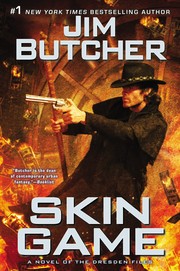
Skin Game
Marooned on Demonreach and bound to Winter, Harry Dresden joins a crew of old enemies to steal the Holy Grail from Hades' vault.
2,249-word summary · 10 min read
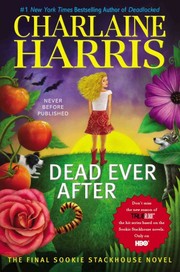
Dead Ever After
In the final Sookie Stackhouse novel, Sookie is framed for murder, Eric is bound to another vampire, and a choice about Sam may decide her future.
2,388-word summary · 11 min read
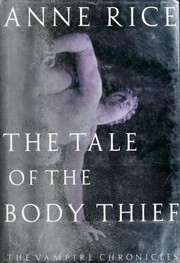
The Tale of the Body Thief
Lestat trades bodies with a psychic thief for one day of mortality and ends up trapped, sick, and hunting his own vampire body.
2,069-word summary · 9 min read
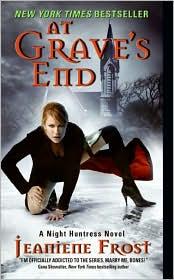
At Grave's End
Cat and Bones face Max, a zombie-raising ancient vampire, and a prophecy that ties their marriage to Patra's death in the third Night Huntress novel.
2,061-word summary · 9 min read
Locke & Key, Vol. 1: Welcome to Lovecraft
After their father is murdered, the Locke children move into a haunted family estate where keys unlock doors to ghosts, other places, and dangerous secrets.
2,019-word summary · 9 min read
House of Salt and Sorrows
Annaleigh Thaumas investigates her sister's death in a cursed island manor where the balls are illusions and the sea god is always listening.
2,025-word summary · 9 min read
Ghost Story
Dead but not gone, Harry Dresden returns as a spirit to find his killer, protect the friends he left behind, and learn why the afterlife gave him a second…
1,978-word summary · 9 min read
Glass Houses
Claire Danvers moves off campus to escape a bully and lands in a house where the roommates know Morganville's real secret: the town belongs to vampires.
2,345-word summary · 10 min read
Cold Days
Back from the dead as the Winter Knight, Harry Dresden must follow Mab's order to kill an immortal and defend Demonreach on Halloween night.
2,361-word summary · 10 min read
Deadlocked
A dead woman on Eric's lawn starts a murder investigation, a vampire queen wants Eric as her consort, and the fairies in Sookie's life close in.
2,885-word summary · 13 min read
Turn Coat
Morgan asks Harry for sanctuary as the Council calls him traitor.
2,590-word summary · 12 min read
Small Favor
Harry owes Mab a favor and must find Marcone while Denarians hunt a holy girl.
2,741-word summary · 12 min read
One Foot in the Grave
Cat hunts vampires with Bones while her Sire plots from the grave.
2,200-word summary · 10 min read
Bone Crossed
Mercy faces vampire queen Marsilia after killing a vampire to save friends.
2,261-word summary · 10 min read
White Night
Wizard Harry Dresden hunts fear-feeding White Court killers preying on Chicago's minor talents, reunites with Elaine Mallory, and faces a coup at Chateau Raith.
2,521-word summary · 11 min read
Changes
Harry Dresden learns he has a seven-year-old daughter Maggie, hidden for years. The Red Court seizes her for a bloodline rite, forcing him toward Chichen Itza.
2,855-word summary · 13 min read
Proven Guilty
Warden Harry defends teen Molly from White Council while fear phages stalk con.
2,068-word summary · 9 min read
NOS4A2
Vic McQueen's bike finds lost things through a bridge, pitting her against Manx's Rolls-Royce ride to Christmasland.
2,060-word summary · 9 min read