
Memnoch the Devil
2,619-word summary 12 min read 354 pages in the book
- First published
- 1995
- Publisher
- Alfred A. Knopf
- Pages
- 354
- ISBN
- 9780679441014
- Series
- The Vampire Chronicles (#5)
Reading options
What's inside (8 sections)
I came to this one straight from The Tale of the Body Thief, because that earlier book leaves a claim hanging in the air that I could not shake. David Talbot says there that God and the Devil are on better terms than most Christians believe. Anne Rice picked the thread up in Memnoch the Devil, published on 3 July 1995 by Knopf, the fifth volume of the Vampire Chronicles, following The Tale of the Body Thief and leading into The Vampire Armand. The first hardcover runs about 354 pages. I expected another Lestat adventure with a religious backdrop. What I got was a book that spends most of its length on a long, often absorbing argument about creation, suffering, and what God and His adversary are supposedly doing with the human race.
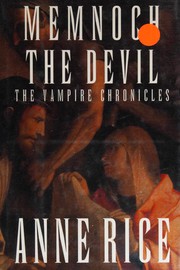
The cover is worth a look before you start. Chip Kidd designed it around a painting by Giovanni Cariani, Road to Calvary with Veronica's Veil, dated 1523 to 1525. That choice gives away more than a jacket usually does, because the veil becomes the physical object the whole story turns on. Rice also borrowed the title and a fair number of themes from Melmoth the Wanderer, the 1820 Gothic novel by Charles Maturin about a man who makes a bargain with the Devil. Knowing that lineage helps. This is a book about a deal offered and not clearly accepted, told by a narrator who is never sure whether he has been shown the truth or sold a very elaborate bill of goods.
A killing in New York and a ghost with a request
The book opens in New York, in snow, with a sentence that goes straight to the point: Lestat sees his quarry come through the front doors. He has been hunting a man named Roger, a ruthless and passionate mobster who runs a cocaine operation. Rice does not dwell on the mechanics of the hunt. What matters is Lestat's habit, established across earlier books, of reading the minds of those he feeds on and taking only people he judges to be truly evil. Roger qualifies. Lestat stalks him and kills him, and then, as so often happens in this series, the dead are not finished with the living.
Roger's ghost turns up and asks Lestat to look after his daughter. This is where the book acquires its human stake. The daughter, Theodora, called Dora, is a televangelist with a cable show, beautiful and charismatic and devout. She wants nothing to do with her father's money, since his trade is drugs and his history includes the killing of her mother when she was a child and her mother sought full custody. Roger, it turns out, was devoted to her in his own violent way, and from beyond death he wants to spare her embarrassment and keep her safe. Lestat, who has been tracking the father, finds himself drawn to the daughter instead. He becomes obsessed with her, ignores the warnings of his own kind, and eventually reveals himself to her. She takes him for the miracle she has been waiting for.
At the same time, Lestat senses that something is tracking him. He grows paranoid that a powerful force is closing in, the way he himself closes in on prey. That reversal is the engine of the early chapters. A vampire who has spent centuries as the hunter discovers what it feels like to be the one watched. Rice writes this with a nice patience. The feeling builds through small disturbances rather than a sudden announcement, and by the time the source of it appears, the reader is as uneasy as Lestat.
The Devil arrives and proposes a job
The force is Memnoch, who calls himself the Devil. He is more powerful and more unnerving than any vampire Lestat has met, and considerably more dangerous to be near, because he is not bound by the same rules. Memnoch takes Lestat on a tour of Heaven and Hell, and he retells the whole of history from his own point of view. The pitch is simple: Lestat should come work at his side as God's adversary.
What complicates the pitch is that Memnoch insists he is not evil. He says he is doing God's work, in a manner of speaking, by gathering lost souls and preparing them for Heaven. His domain is a place of punishment, but in his telling the punishment has a purpose and an end. He also claims that he has been asking for someone else to take the job for thousands of years, a point that links back to what David Talbot glimpsed in The Tale of the Body Thief. Lestat is invited to decide whether he believes the Devil or God, and which one, if either, he will serve. He comes away from the experience confused rather than converted, which is probably the honest outcome. A being who can show you the foundations of everything can also arrange the evidence however he likes.
This is the part of the book that surprises people who come for the vampires. The vast majority of Memnoch the Devil is not action. It is Memnoch talking, and Lestat listening, and the two of them arguing about the nature of pain. Rice follows up on that earlier suggestion that God and the Devil are on civil terms, and she reworks biblical stories into a complete account of Earth, Heaven, and Hell that is meant to sit neatly beside the history of vampires she laid out in The Queen of the Damned. The result is a novel with two speeds: a brisk, sensual thriller at the edges, and a slow theological argument in the middle.
Creation, Sheol, and the argument with God
Memnoch's account begins before matter and time, with God and the angels who worship Him and admire what He has made. In this version God is powerful and immortal, but He is not presented as all knowing or entirely caring. Memnoch says God does not even know how He came to be, and that He made the universe and life as a way of understanding Himself. The angels sing praises. Then life on Earth evolves into the likeness of God and the angels, carrying a flame that permits both feeling and death, and eventually human beings develop souls of their own.
Those souls trouble the angels. They gather in confusion in an airy place the angels call Sheol, or the Gloom, trying to work out what has happened to them. Some fade away. Some never grasp that they are dead. Some draw strength from descendants who still live, becoming patron ancestors, and this is where Rice threads in the old stories of spirits, reincarnation, and the first vampires. She also brings back the addle brained spirits from The Queen of the Damned and The Witching Hour: angels who fell in love with parts of nature and stayed as spirits of rocks and mountains and trees, and the invisible ones, human souls who forgot they had ever been human and became the lesser spirits and gods that the living worship.
Memnoch's real grievance is suffering. He cannot accept God's assurance that all is well while life and death hurt so much. He argues that God lacks vision and kindness. To make his case, he decides to show that humanity is outside nature by taking on physical form himself, and when he experiences sex, God bars him from Heaven. He spends the next three months passing his knowledge to human beings and, quite accidentally, founds civilization. What he discovers in that time is that the quality separating humans from the rest of creation is the capacity to love and to feel passion. He later persuades God to let him find souls fit for Heaven, and after thousands of years in Sheol he brings forward a group who have forgiven God for His absence and can still marvel at creation. God accepts them, and Heaven changes.
Still Memnoch presses the complaint. He wants God to become human and learn what passion costs from the inside. God does, as Jesus, and the two confront each other in the desert. God argues that man is a creature of nature and can only become worthy of Heaven through suffering and death. Memnoch argues that suffering has no value and that human beings are already worthy while being denied the knowledge of it. Memnoch is awed by the crucifixion, but he says God has not gone far enough, because God knew He would survive and so never knew the fear of death that ordinary people carry. That complaint is the last straw. God names Memnoch His adversary and orders him to rule Sheol and Earth in a devilish form, preparing souls for Heaven his own way.
Memnoch says he dislikes the work. Out of it he fashions something like Hell, a place where those who were bad in life are punished until their souls can forgive themselves, one another, and God, and so become ready for the light. Human history, in his account, only makes the problem worse, as wars and persecution and genocide are carried out in God's name. It is a strange and ambitious piece of storytelling, and Rice clearly intends the argument to be genuine rather than a puzzle box. Memnoch has the better lines by a wide margin, and the book takes that seriously.
The crucifixion, the veil, and the faith of Dora
After the tour, Lestat believes he has undergone a major revelation. Among other things, he thinks he has witnessed the crucifixion of Christ and has been given the veil of Saint Veronica, the cloth that in legend wiped Christ's face on the way to the cross. He also suspects the whole thing may have been a deception. That uncertainty is the key to the character here. Lestat is not a fool and he is not a believer, but he is a creature who has seen enough of the world to know that certainty is often a matter of what you have been shown.
He tells his story to Armand, David Talbot, and Dora, who have joined him in New York. When he produces the veil, Dora and Armand are deeply moved. Dora, whose television ministry has been waiting for a sign, takes the object as proof and reveals it to the world. A religious movement grows around it. Armand does something more drastic: he walks into the sunlight and is destroyed, in order to convince onlookers that a miracle has truly occurred. It is one of the most startling decisions in the whole series, and Rice gives it the weight it deserves. A vampire who has lived for centuries chooses a very public death to underwrite a piece of evidence that may itself be a lie.
This is where the two halves of the novel finally meet. The long theology is not a detour from the plot, because the veil is the thing that turns Memnoch's argument into a physical force in the world. If it is real, everything Memnoch said may be real. If it is a trick, Dora's movement and Armand's death rest on nothing. Lestat never settles the question, and he is neither able to prove the veil nor willing to destroy it. That refusal to close the case is what makes the ending feel unresolved in a way that suits the book.
New Orleans and what Maharet returns
Lestat and David go to New Orleans near the end. There, Maharet returns an eye that Lestat lost in Hell during the tour, and she brings a note from Memnoch. The note suggests that the Devil may have been manipulating Lestat to serve his own agenda all along, which casts the earlier arguments and the gift of the veil in a colder light. Lestat loses control of himself at this, and Maharet is forced to chain him in the basement of a convent under vampire control so that he cannot hurt himself or anyone else.
The image is a good one to end on. The vampire who began the book as a hunter, then a watched man, then a witness to creation, finishes it restrained beneath a convent, with one eye restored and his certainty gone. Rice does not give him a speech about what he has learned. The physical situation says enough. He has been given a glimpse of the largest possible story and has come away unable to say whether it was true, and his friends have had to keep him safe from the consequences of caring so much about the answer.
What works and what drags
I finished the book admiring parts of it and impatient with others. The best stretches are the ones where Memnoch and God argue. Rice gives both positions real force. God's insistence that suffering is the route to worth and Memnoch's insistence that it is needless cruelty are neither of them written as a straw man, and I found myself changing sides from page to page. The idea that God does not know where He came from, and made the universe to find out, is a startling thing to put in a vampire novel, and it stuck with me. So did the detail about the invisible ones, souls who forgot they were human and became the gods people worship. That is a small, strange idea with a lot of life in it.
The trouble is that the argument takes over. Critics at the time noticed the imbalance. Michael McLeod, writing in the Orlando Sentinel, called the book a cross between a creature feature and The 700 Club, and said Rice's proportions were so epic that her dark hero got lost among them. That seems fair to me. Lestat is the reason most readers are here, and in the middle of the book he becomes a pair of ears. Maryanne Booth, reviewing for Arcane, gave it four out of ten and said that if this were the last of the Vampire Chronicles it would be a dismal conclusion to a series that had won Rice many admirers. I would not go that far, because the novel does feed into The Vampire Armand and the later books, but I understand the frustration. When a writer this good at appetite and danger spends hundreds of pages on cosmology, you notice the missing flesh.
There is also the question of who this book is for. A reader coming to the series here will be lost, since Lestat's history, David's turning, and the whole vampire framework are taken for granted. A reader who wants a clean horror story will find a philosophical dialogue with occasional murders in it. And a reader who wants a tidy answer about whether Memnoch told the truth will not get one. The note from the Devil suggests manipulation, but it arrives from the same source as the original story, so it cannot be treated as a correction.
I would still recommend it to anyone who has followed Lestat this far and enjoys watching a writer argue with her own material. It is a strange entry in the series, more sermon than chase, and it asks the reader to sit through a great deal of talk. But the talk is about something large, the veil scene is genuinely odd and memorable, and the final image of Lestat chained in a convent basement is a strong one. Rice was willing to risk the momentum of a popular series on a theological argument, and even when the book sags, that is a braver choice than playing it safe. I closed it unsure what to believe and quite certain I had been somewhere different.
FAQ
Where does Memnoch the Devil fit in the Vampire Chronicles?
It is the fifth book, published in 1995, following The Tale of the Body Thief and preceding The Vampire Armand. It follows up on the claim in the earlier book that God and the Devil are on better terms than most Christians believe.
Is Memnoch the Devil mostly a horror story?
Not really. Most of the novel is Memnoch's long account of cosmology and theology, with Lestat listening and arguing. The killings, the veil and the confrontation provide the story around the debate.
Does Lestat decide whether to join the Devil?
He does not reach a firm decision. He suspects the whole experience may have been a deception, and a note from Memnoch delivered with his lost eye suggests he may have been manipulated.
Similar books
More from The Vampire Chronicles first, then related titles.

Interview with the Vampire
Louis tells a reporter how Lestat made him and how Claudia doomed them all in New Orleans and Paris.
2,195-word summary · 10 min read
The Vampire Lestat
Lestat tells his own tale from French village to rock star, waking ancient ones who hate questions.
1,916-word summary · 9 min read
The Queen of the Damned
Rock star Lestat wakes Akasha, mother of vampires, who plans to cull men.
2,100-word summary · 9 min read
The Tale of the Body Thief
Lestat trades bodies with a psychic thief for one day of mortality and ends up trapped, sick, and hunting his own vampire body.
2,069-word summary · 9 min read
The Lunatic Cafe
Anita Blake takes a missing-shapeshifter case into St. Louis werewolf politics while Jean-Claude and Richard both press their claim on her.
2,327-word summary · 10 min read
The Laughing Corpse
A millionaire offers Anita Blake a fortune to raise a three-hundred-year-old corpse, then names the human sacrifice it would take. A zombie murder follows.
2,290-word summary · 10 min read
Small Gods
God Om trapped as a tortoise must convince novice Brutha to save Omnia from its own church.
2,063-word summary · 9 min read
NOS4A2
Vic McQueen's bike finds lost things through a bridge, pitting her against Manx's Rolls-Royce ride to Christmasland.
2,060-word summary · 9 min read
Guilty Pleasures
Animator Anita hunts a vampire killer while Jean-Claude pulls her close.
2,136-word summary · 9 min read
The Witching Hour
A San Francisco surgeon inherits a haunted New Orleans house where a spirit has courted her witches for centuries, until a Christmas Eve birth gives it living…
2,953-word summary · 13 min read
The Sandman, Vol. 4: Season of Mists
Dream travels to Hell and is handed the key to its gates, then every god and demon arrives to argue who should rule.
2,351-word summary · 10 min read

Revelations
Schuyler is pulled into the Force household as Silver Bloods rise, and a Conclave gathering in Rio ends in bloodshed.
2,166-word summary · 10 min read
The Salt King
Sent back to the salt-mining town he fled, a Jesuit priest investigates miracles that turn pilgrims into pillars of salt. Pulley adds a slow-burning queer…
2,214-word summary · 10 min read
The Pursuit of God: The Human Thirst for the Divine
Ten short chapters on wanting God rather than merely knowing about him, from a pastor who wrote the book in a single night on a train.
2,014-word summary · 9 min read
The Buffalo Hunter Hunter
A 1912 diary found in a Montana parsonage recounts a Blackfeet man's unraveling after a dying creature's blood turns him undead, in a novel of history and…
2,731-word summary · 12 min read
Nightmares and Dreamscapes
King's 1993 collection runs from a man buried alive in a Cadillac to a town of dead rock stars, mixing horror, science fiction and dark humor across 816 pages.
3,232-word summary · 14 min read
Momo
A girl with a gift for listening takes on grey-clad thieves who persuade a city to save its time, in Michael Ende's 1973 fable about efficiency and attention.
2,275-word summary · 10 min read
Lover Reborn
A grieving vampire warrior learns that the only way to free his dead mate from a cold afterlife is to love another, as a rival clan challenges the Blind King's…
2,768-word summary · 12 min read
Katabasis
Kuang sends a Cambridge doctoral magician into the underworld to fetch the supervisor she killed, all for a letter of recommendation. Academic satire turns…
2,374-word summary · 11 min read
If Cats Disappeared from the World
A dying postman takes the Devil's deal: each extra day costs one thing erased from the world. As phones, films and clocks vanish, he must decide whether even…
2,354-word summary · 10 min read
Evernight
A girl raised among vampires falls for a human boy at a Gothic boarding school, unaware that he hunts her kind.
2,200-word summary · 10 min read
Destined for an Early Grave
A Paris vacation turns into a fight over Cat's past when a vampire who claims to be her husband returns, and she must decide what she is allowed to know.
2,924-word summary · 13 min read
Bury Our Bones in the Midnight Soil
Across five centuries, three women are turned into vampires by the same restless figure, and each must decide what her endless hunger will cost.
2,727-word summary · 12 min read

Brida
A young Irishwoman convinced she has a spiritual Gift seeks out a forest Magus and a Dublin witch, and learns that her gift is to bridge the visible and…
2,012-word summary · 9 min read
Alchemised
A memory-wiped alchemist wakes a prisoner of the regime that won Paladia's civil war, and her captor is the former rival who wants what remains inside her head.
2,596-word summary · 12 min read
A Grief Observed
In four raw notebooks written after his wife Joy died, C. S. Lewis records grief as fear, anger and doubt, then slowly learns to live without easy consolation.
3,692-word summary · 16 min read
The Wind Through the Keyhole
Sheltering from a killing storm, Roland tells his ka-tet a tale of his youth, then a boy's fairy tale that mirrors his own loss.
2,504-word summary · 11 min read
The Strain
A silent Boeing 777 lands at JFK with almost everyone aboard dead, and a CDC team finds an old vampire war following it into New York.
2,272-word summary · 10 min read
Pyramids
A prince raised by assassins comes home to a desert kingdom where the high priest rules and a spitefully huge pyramid starts bending time.
2,441-word summary · 11 min read
Preacher, Volume 1: Gone to Texas
A faithless Texas preacher bonded with Genesis sets out to find God, joined by Tulip O'Hare and an Irish vampire named Cassidy.
2,414-word summary · 11 min read