
Reading options
What's inside (9 sections)
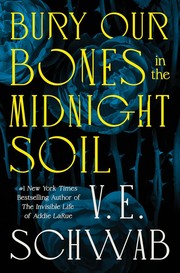
I picked this up because a friend kept describing it as a vampire novel that was really about hunger, and I could not tell from that description whether she meant food, sex, power, or something else entirely. It turned out she meant all of it at once, and that the book was also a story about women who refuse the lives handed to them. Bury Our Bones in the Midnight Soil came out in 2025 from Tor Books, and it is a big book, 544 pages in the hardcover, that follows three women across five centuries. What surprised me was how patiently it moves. Schwab does not hurry to reach the present day. She lets each woman's life fill its own era before the threads begin to touch, and by the time they do, the connections feel earned rather than arranged.
The three women are María, Charlotte and Alice. They live in 1532, 1827 and 2019, and each is changed into a vampire by the same restless figure who moves through the centuries between them. That figure is Sabine, and her own story is the spine that holds the others up. The book is not content to treat vampirism as a single condition with one set of rules. Each woman meets it at a different point in her life and wants something different from it, and Schwab keeps returning to the idea that what you hunger for when you are human does not vanish when you become something else. It sharpens.
María's bargain in Santo Domingo de la Calzada
The first strand opens in 1532 in the Spanish town of Santo Domingo de la Calzada. María is a peasant who wants out of the narrow life she was born into. She sees marriage to the viscount Andres de Guzman as a way up, so she takes it. The arrangement turns into a cage. Andres confines her to his estate and wants an heir from her, and the freedom she married for is simply replaced by a different kind of confinement. This is the first of several times in the book where a woman trades one restriction for another and discovers too late that the bargain was not in her favor.
Desperate to avoid pregnancy, María goes to Sabine, a widow she knew as a child. Sabine is older and carries herself with the calm of someone who has seen a great deal, and María asks her for a tonic that will keep her from bearing Andres a child. Sabine does not give her the tonic. Instead she bites her. The turning is sudden and physical, and it arrives as a response to a request that was really a plea for control over her own body. That detail matters, because the hunger María develops is inseparable from the wish that drove her to Sabine in the first place. She wanted to refuse something. Now she can refuse everything.
What follows is a kind of terrible first appetite. María is insatiable, and she drains Sabine dry. The woman who made her is the first person she destroys. She then bites Andres, burns the estate to the ground and disappears into the wider world. It is a violent liberation, and the book does not dress it up as a triumph. María gets the escape she wanted, but she also becomes something that cannot stop taking, and the people closest to her pay for it. I found this section the most gripping of the three, partly because Schwab gives María's situation such ordinary, recognizable roots. A young woman wants to choose. She is told she cannot. The monstrous result grows out of a very human frustration.
Sabine on the road with Renata and Hector
Sabine does not stay dead, or not in the way a person would expect from being drained. Her story continues, and it becomes the longest thread in the book. After María, she travels with two other vampires, Renata and Hector. The three of them move together for a time, and Schwab uses their company to show what a life without an end looks like when it is lived in motion. They feed, they move on, and they avoid the places where people might notice them. There is a weariness to this part of the book that I liked. Immortality is treated less as a gift than as a long habit that gets harder to maintain.
That wandering life ends badly. A mob catches up with Renata and Hector and buries them alive, and Sabine is left to witness what happens when a community decides that something in its midst must be extinguished. The scene is brutal, and it sets up one of the book's recurring questions, which is how a town or a city decides who gets to belong and who gets driven out. Sabine learns this lesson in the most direct way possible. She survives by being the one who is not buried, but the experience leaves its mark on how she thinks about safety and about company.
Over the centuries Sabine slowly loses her humanity. Schwab does not show this as a single dramatic moment. It happens in increments, through the small choices a person makes when they stop believing that the people around them have claims on them. By the time she reaches the later stories, Sabine has become something quite different from the widow who offered a tonic in 1532. The change is gradual enough that it is hard to say exactly when she crossed the line, which is precisely the point. The book is interested in how a person becomes cruel, and it suggests that the process is usually slower and more ordinary than a single decision.
Matteo in Venice and the rules of the undead
At one point Sabine ends up in Venice, where she meets an ancient vampire named Matteo. He teaches her how a vampire can be barred from a city. This is one of the few moments in the novel where the mechanics of the supernatural get explained, and it is handled through a conversation rather than a rulebook. Matteo knows the old ways because he has outlived everyone who might have told him otherwise, and what he passes on to Sabine is practical knowledge about thresholds and invitations and the limits that bind the undead.
I appreciated that Schwab keeps this part narrow. She gives just enough detail to make the world feel consistent, then returns to the people in it. Vampire fiction often gets bogged down in systems, and this book resists that pull. The rule about being barred from a city matters later, when characters move between places and discover where they can and cannot go, but it never becomes the point of the story. It is a tool the characters use, not a puzzle for the reader to solve. Matteo himself is memorable less for what he knows than for the fact that he has been around long enough to have seen entire cities change around him.
Venice also gives the novel one of its strongest senses of place. Schwab writes history with a careful hand. The clothing, the streets, the social expectations and the dangers of each era are described in enough detail to make the periods feel lived in rather than costumed. This is one of the things reviewers singled out for praise, and it is easy to see why. The past here is not a backdrop. It shapes what the characters can want and what they can get away with, and that is especially true for women whose options are constrained by the conventions of their time.
Charlotte in London, 1827
The second main strand begins in London in 1827. Charlotte is a young woman whose brother discovers her kissing her friend Jocelyn. That single moment is enough to get her sent away, and it tells you almost everything you need to know about the world she lives in. Her family can decide where she goes and who she sees, and a harmless intimacy with another girl is treated as something that must be corrected by distance. The punishment is not dramatic, just effective, and it sets Charlotte up for the hunger that follows.
At a ball she meets Sabine, who by now is a beautiful widow with the composure of someone who has had a great deal of practice. Sabine teaches Charlotte to dance. That small act of attention is what draws Charlotte in. Someone is showing her how to move in a room, how to hold herself, how to be seen without being shamed. Sabine eventually turns her, and Charlotte becomes the second woman in the line of women whose lives are rearranged by this encounter. The turning is bound up with instruction and closeness, which gives it an intimacy that the bite in María's story did not have.
Charlotte's time with Sabine lasts for decades, and it sours. Sabine's protectiveness curdles into possessiveness, and the possessiveness turns lethal. She murders a family, including a thirteen-year-old girl, and the violence is presented as the consequence of a love that refuses to recognize any boundary around the person it claims to care about. Charlotte is bound by a promise never to harm Sabine, so when she realizes what her maker has become, she cannot fight her. She flees instead. That promise is one of the more interesting devices in the book, because it gives the relationship a structure that outlasts affection. Charlotte is tied to Sabine by a vow made in better days, and the vow keeps its force long after the reason for it is gone.
Giada in Rome and the long pattern
The years after Charlotte's flight are where the novel shows its widest span. Sabine does not stop. In Rome in 1953 she kills Giada, who is Charlotte's lover, and the pattern repeats itself from there. Every relationship Charlotte tries to build ends the same way, with Sabine arriving and taking the other person out of her life. The effect is that Charlotte is never allowed to make a permanent attachment outside the one she is fleeing. She can run, but the person she runs from keeps finding her, and each new loss is another version of the same wound.
This section of the book is where the queer themes that reviewers praised come into focus. The relationships that matter most are between women, and Schwab treats them with the same seriousness she gives to the violence. The love affairs are real, with real habits and real disappointments, which is why Sabine's interference hurts so much. A story like this could have reduced its relationships to symbols, but it does not. It lets them be ordinary first, and then lets them be taken away. That is what gives the pattern its weight across the decades.
There is a risk in a structure that repeats itself this often, and I think the book only partly avoids it. By the third or fourth time a relationship ends in the same manner, the shock is gone, and the reader understands the pattern long before the characters finish living it out. Schwab seems aware of this, and she varies the settings and the people enough to keep the routine from feeling copied. Still, the middle stretch between Charlotte's flight and the modern day is the part where my attention drifted. The design is clear, but clarity is not the same as momentum, and some of these years read as a list of losses rather than a story.
Alice in Boston, 2019
The final strand arrives in Boston in 2019. Alice is a shy Scottish student, and she is turned after a one-night stand with a woman named Lottie. Where María wanted escape and Charlotte wanted acceptance, Alice seems to want connection, and she gets a dangerous version of it. After the turning she hunts Lottie through the city. The chase gives this strand a different energy from the two period stories, more immediate and more physical, with the streets of a modern city replacing the drawing rooms and villages of the earlier chapters.
While hunting, Alice finds Sabine's notebook of one-night stands. This is a strong discovery, because it turns Sabine's long life into something intimate and slightly shabby. A book full of names and brief encounters is the opposite of the grand, centuries-spanning figure the other women saw. It is a record of appetite without attachment, and finding it changes how Alice understands the woman she has been chasing. The notebook does more to explain Sabine than any amount of exposition could, and I wish the book had trusted that kind of detail more often.
Alice kills Sabine, which closes the long thread that runs from 1532 forward. She then lets Lottie drink poisoned blood. The ending is bleak, and it refuses the comfort of a clean resolution. The woman who survives is not rewarded with peace, and the cycle of taking and being taken does not end with a lesson. Critics who found the ending grim were responding to something real in the book. Schwab is willing to let the last pages sit with the damage rather than tidy it away, and that choice gives the novel a hard, unsentimental close.
Where the book wins and where it drags
The two historical stories, María's and Charlotte's, are the strongest parts of this novel. They are grounded in specific times and places, and the constraints they describe feel concrete. A marriage arranged for safety, a family that sends a daughter away for a kiss, a widow who knows how to make a young woman feel seen in a room, these are situations with real texture, and the supernatural element grows out of them naturally. The queer relationships are written with care, and the book's interest in female hunger and female refusal gives it a clear point of view without turning every scene into an argument.
The modern strand with Alice drew the most criticism from reviewers, and I understand why. Alice is less fully realized than María or Charlotte. Her world is thinner, her motives are harder to read, and the hunt through Boston, while tense, does not carry the same emotional weight as the earlier lives. Some of this is a problem of order. The book has spent hundreds of pages building two rich period voices, and then it asks the reader to care about a stranger in a hoodie with a much smaller inner life. The contrast is noticeable, and it makes the last section feel flatter than what came before.
There is also the matter of length. At 544 pages, the novel has room to be generous, but it also has room to repeat itself, and the middle years between Charlotte and Alice test that generosity. I found myself skimming some of the recurring losses, not because they were badly written but because I had already understood the pattern they were building. A tighter book might have made the same points with fewer identical endings. That said, the patient structure is also what allows the final confrontation to land. Sabine is not a villain who appears in one chapter. She is a presence that has been accumulating for five centuries, and the book earns the moment when someone finally ends her.
What I would tell a friend who asked whether to read it is this. Go in for the history and for the women, and be prepared for a long middle. The vampire element is a way of asking what happens when a person's appetites are freed from every social limit, and Schwab keeps that question alive even when the plot slows. The book is at its best when it stays close to a woman making a choice in a specific room in a specific year, and it is at its weakest when it rushes through decades to get to the next one. I closed it feeling that the first three quarters were excellent and the last quarter was merely good, which for a book this size is a fair result. The title promises soil and bones and burial, and the novel delivers a story about what cannot be buried, which is the wanting that outlives the people who feel it.
FAQ
Is Bury Our Bones in the Midnight Soil part of a series?
No. It is a standalone novel by V. E. Schwab, published in 2025 by Tor Books.
Who are the three women at the centre of the book?
They are María, a peasant in 1532 Spain, Charlotte, a young woman in 1827 London, and Alice, a Scottish student in 2019 Boston. Each is turned into a vampire by Sabine.
Why does the story span five centuries?
The same figure, Sabine, moves through the years turning and watching the three women, so their lives are linked across time. The span lets Schwab show how the same hunger plays out in different eras.
Similar books
Evernight
A girl raised among vampires falls for a human boy at a Gothic boarding school, unaware that he hunts her kind.
2,200-word summary · 10 min read
Cinderella Is Dead
Two centuries after Cinderella, a Black teenager in love with another girl flees her kingdom's forced marriage ball.
2,250-word summary · 10 min read
The Tale of the Body Thief
Lestat trades bodies with a psychic thief for one day of mortality and ends up trapped, sick, and hunting his own vampire body.
2,069-word summary · 9 min read
Carmilla
Lonely Laura in Styria befriends beautiful Carmilla, whose night visits bring dreams, bites, and ancestral dread.
2,158-word summary · 10 min read
Every Day
A wakes in a new teen body daily until falling for Rhiannon breaks rules.
2,215-word summary · 10 min read
Gallant
Mute Olivia Prior returns to Gallant manor where ghouls walk and a shadow Recommends.
2,081-word summary · 9 min read
She Who Became the Sun
A peasant girl takes her dead brother's name and becomes Zhu Chongba, climbing from a Buddhist monastery toward a fractured China's throne.
2,170-word summary · 10 min read

Revelations
Schuyler is pulled into the Force household as Silver Bloods rise, and a Conclave gathering in Rio ends in bloodshed.
2,166-word summary · 10 min read
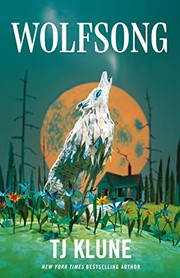
Wolfsong
Ox Matheson grows up believing he is worth nothing. Then the Bennett family moves in next door, werewolves with a secret, and a boy named Joe begins to howl…
2,823-word summary · 13 min read
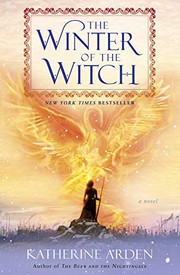
The Winter of the Witch
Vasya returns to a burning Moscow, bargains with the Bear and the spirit of Midnight, and leads the old spirits into the battle that will decide Russia.
2,000-word summary · 9 min read
The Salt King
Sent back to the salt-mining town he fled, a Jesuit priest investigates miracles that turn pilgrims into pillars of salt. Pulley adds a slow-burning queer…
2,214-word summary · 10 min read

The River Has Roots
A fairy-tale novella in which a village on the edge of Faerie, a river that turns a girl into a swan and a harp that sings an accusation retell The Bonny Swans.
2,025-word summary · 9 min read
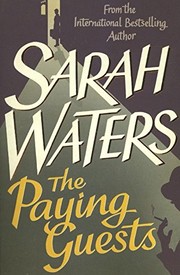
The Paying Guests
A widowed mother and her unmarried daughter take in lodgers in 1922 south London, and a secret affair between Frances and Lilian pulls them into a murder case.
2,661-word summary · 12 min read
The Lunatic Cafe
Anita Blake takes a missing-shapeshifter case into St. Louis werewolf politics while Jean-Claude and Richard both press their claim on her.
2,327-word summary · 10 min read
The Knight and the Moth
Six of seven Diviners vanish, and the last one flees a cathedral with a mocking knight and a gargoyle who calls everyone Bartholomew. Gillig's gothic fantasy…
2,936-word summary · 13 min read
The Dream Hotel
A Muslim American archivist lands at LAX and is detained because her sleep implant says she might kill her husband. Lalami's near-future novel follows her into…
2,687-word summary · 12 min read
The Distant Hours
A letter posted in 1941 reaches Edith Burchill in 1992 and draws her to Milderhurst Castle, where three elderly sisters still guard the secret of a stormy…
2,261-word summary · 10 min read

The Buffalo Hunter Hunter
A 1912 diary found in a Montana parsonage recounts a Blackfeet man's unraveling after a dying creature's blood turns him undead, in a novel of history and…
2,731-word summary · 12 min read
The Binding
In an alternate Victorian England, binders remove unbearable memories into books, and a young apprentice discovers his own past was erased from him.
2,036-word summary · 9 min read
Memnoch the Devil
In the fifth Vampire Chronicles novel, Lestat is taken by the Devil on a tour of Heaven and Hell and asked to serve as God's adversary.
2,619-word summary · 12 min read
Lover Reborn
A grieving vampire warrior learns that the only way to free his dead mate from a cold afterlife is to love another, as a rival clan challenges the Blind King's…
2,768-word summary · 12 min read

Good Girl
A nineteen-year-old artist in Berlin, grieving her mother, falls into an unequal romance with an American author who offers escape from the ideal of the good…
2,579-word summary · 11 min read

Detransition, Baby
Torrey Peters's debut follows three Brooklyn adults as an unexpected pregnancy pushes them to imagine an unconventional family. Funny, sharp, and unwilling to…
2,925-word summary · 13 min read
Destined for an Early Grave
A Paris vacation turns into a fight over Cat's past when a vampire who claims to be her husband returns, and she must decide what she is allowed to know.
2,924-word summary · 13 min read
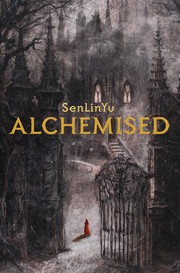
Alchemised
A memory-wiped alchemist wakes a prisoner of the regime that won Paladia's civil war, and her captor is the former rival who wants what remains inside her head.
2,596-word summary · 12 min read
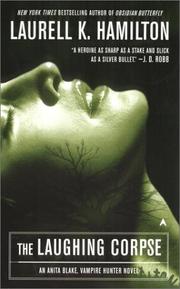
The Laughing Corpse
A millionaire offers Anita Blake a fortune to raise a three-hundred-year-old corpse, then names the human sacrifice it would take. A zombie murder follows.
2,290-word summary · 10 min read

Seraphina
A half-dragon court musician in Goredd helps investigate a royal murder while hiding the secret behind her gift.
2,246-word summary · 10 min read
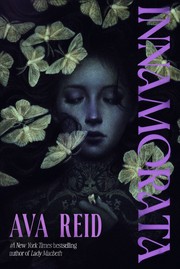
Innamorata
A mute necromancer heiress engineers a royal marriage to reach a forbidden library, then falls for the prince she plans to use.
2,464-word summary · 11 min read
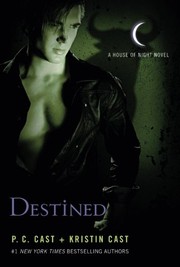
Destined
In the ninth House of Night novel, Zoey Redbird takes her fight with Neferet to the High Council while an ancient bull stirs and a vessel built for murder…
2,317-word summary · 10 min read
Dead Ever After
In the final Sookie Stackhouse novel, Sookie is framed for murder, Eric is bound to another vampire, and a choice about Sam may decide her future.
2,388-word summary · 11 min read