
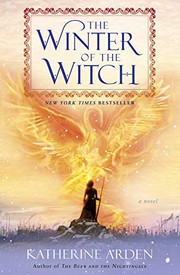
The Winter of the Witch
2,000-word summary 9 min read 384 pages in the book
- First published
- 2019
- Publisher
- Del Rey
- Pages
- 384
- ISBN
- 9781101885994
- Series
- Winternight Trilogy (#3)
Reading options
What's inside (8 sections)
The bridle and the pyre
The trilogy's conclusion opens in medieval Russia under fresh snow, immediately after the fire and siege that ended The Girl in the Tower. Grand Prince Dmitrii Ivanovich and Vasya's brother Sasha find a golden bridle in the ruins of the palace stable. It is the bridle Kasyan used to enslave the mare that became the Firebird and set Moscow ablaze. Dmitrii locks it in his treasure room, which turns out to be the most important decision anyone makes in the book.
Father Konstantin Nikonovich, a priest consumed by hatred and desire for Vasya, channels Moscow's grief into rage. He accuses her of starting the fire with witchcraft, and a mob descends on the tower of her sister Olga. Vasya tries to leave the city unseen. Her stallion Solovey bursts from the stable to carry her and breaks his leg, and Konstantin cuts his throat. Morozko appears in his aspect as a god of death for the dying horse. Vasya is beaten unconscious by the mob, dragged to the frozen river and locked in a cage atop a pyre.
As the fire consumes the pyre, desperation wakes the magic that has been dormant in her all her life. She tears apart the burning bars and leaps through the flames, unknowingly making herself invisible. Medved the Bear appears, freed from centuries of imprisonment by Morozko in exchange for saving Vasya's life. She refuses his offer of help and runs into the crowd.
That sequence is the book at its most elemental. A girl who has spent two novels being told she does not belong is burned, literally, and comes out of the fire with a power she still does not understand. Arden never lets the magic feel like a superpower. It arrives through pain and desperation, and its first effect is to make Vasya invisible, which is both a gift and a form of exile.
The old stories
Varvara, Olga's servant, reveals herself as Tamara's sister and Vasya's great-aunt. With the reluctant help of Polunochnitsa, the ruler of the Midnight road, Vasya enters a country of perpetual darkness where the sighted can cross vast distances. She collapses from her wounds and wakes in a patchwork forest near a frozen lake where Solovey's kin graze as horses that turn into birds.
She takes refuge in an ancient cottage and wakes the dormant Domovaya. A lake spirit tells her the house belonged to her great-grandmother, the witch behind the Baba Yaga legend. The family history emerges. Vasya's grandmother was seduced by the sorcerer Kasyan and stole the golden mare Pohzar, the Firebird, using the enchanted bridle. Tamara rode after him and never returned. The mythology of the trilogy is built out of these family stories, and Arden is very good at making a legend feel like something that happened to someone's actual relatives.
Medved offers an alliance: vengeance in exchange for overthrowing Moscow and the Orthodox Church. When Vasya refuses, he looses his upyry, the walking dead, on her and the injured Pohzar. Baba Yaga's spirit drives them off. Baba Yaga offers Vasya the cottage and the horses as a permanent home, but Vasya insists she must first bind Medved and protect the people she loves. That decision defines the rest of the book. She is offered escape and refuses it, because the war has reached her family.
Morozko
Vasya learns that Morozko traded his own freedom for her life. She asks Pohzar to guide her through Midnight to Morozko's white mare, because blood calls to blood among immortal horses. On the way she rescues Vladimir Andreevich, Olga's husband, from a flood sent by Medved. The Tatar silver tribute is swept away, which makes war inevitable.
Pohzar leads her to a Midwinter village in the lands of winter. Morozko is imprisoned not by chains but by enchanted memories of being honored as a king, feasting with a girl named Yelena and not recognizing Vasya. Vasya challenges the dangerous young Morozko to a knife fight and goads him into taking her as a sacrifice. He wins easily, opens her wrist and carries her to the bathhouse to heal. In the inner bathhouse, intimacy draws him fully back to himself.
He admits that he freed Medved because he believed Vasya's power could bridge humans and the chyerti, the old spirits. Then he confesses the real reason: he could not bear to see her die. She tells him she will be with him even if he is not a man and cannot offer her a life under God. Pozhar suggests using the golden bridle to bind the Bear.
Riding back toward Moscow, they meet Sasha on the Midnight road with Father Sergei Radonezhsky, the holiest man in Russia. Sasha understands the nature of their relationship without being told. Morozko swears he will not bind Vasya to the dark or the cold, though both know she can never live an ordinary mortal life. That vow is the book's most important promise, and it costs him nothing to make and everything to keep.
Arden's use of Russian folklore is the book's greatest strength. The Domovaya, the Baba Yaga cottage, the Firebird, the upyry and the Midnight road are not decorative references. Each is a real force with rules, and the plot depends on characters understanding those rules. The golden bridle is the clearest example. It begins as a piece of evidence in a destroyed stable, becomes the means of a trap, and ends as an instrument of binding. Very few fantasy novels use a magical object this cleanly across three books.
The theme of vision running through the trilogy pays off here. Vasya has always seen the spirits that other people deny. By the end she has built a place where seeing them is normal. That is the utopian element of the book, and it is small and specific rather than grand. She is not going to change Russia. She is going to make one cottage where the old ways are safe.
The battle for Moscow
In Moscow, Medved feels a kinship with Konstantin through his artistry and inner conflict, and promises the priest power and influence. His presence brings plague and the walking dead. Konstantin rises to bishop by appearing to subdue the upyry. The corruption of the church is one of the trilogy's persistent themes, and Arden handles it through a man who believes he is serving God while making a bargain with a demon.
Vasya, Morozko, Sergei and Sasha return to the city. Morozko and Medved battle viciously while Vasya, disguised as a serving girl with Olga's help, infiltrates the palace. Konstantin recognizes her. She flees to the treasure room, inadvertently summons Morozko out of Medved's clutches and finds the golden bridle.
Konstantin holds Olga at knifepoint as Medved brings more upyry through the gates. Sergei destroys the walking dead with a prayer of genuine faith. The shattered Konstantin realizes that God may have been real and that Medved deceived him, and cuts his own throat. The willing sacrifice weakens Medved. Morozko refuses to save him, and Vasya binds the Bear with the golden ropes while Morozko leads his twin back into the darkness.
I found this sequence both thrilling and crowded. Arden is managing a battle, a possession, a family confrontation, a religious reckoning and the resolution of the central magical object at the same time. A lesser writer would have dropped two of them. She keeps all of them, and the book is the better for its ambition even when the reader has to work to follow the motion.
What it costs
Olga, terrified of the death-demon who took her stillborn daughter, sends Morozko away. He offers to take Vasya to his winter lands, but she refuses because the lost Tatar silver makes war inevitable. He tells her to look for him at the first signs of winter.
On the Midnight road, an angry Polunochnitsa redirects Vasya and Sasha into the Tatar camp. They are captured. Vasya escapes by speaking to the camp's horses but must leave the gravely wounded Sasha behind. A mushroom spirit named Deb Grib summons Pohzar to carry her to a solitary oak.
At the oak, Vasya makes a new bargain with Medved. She offers his freedom in exchange for an oath to serve her and never again loose plague or walking dead on Russian lands. He agrees. She then captures Polunochnitsa with the golden rope and demands her allegiance as Baba Yaga's true heir. Midnight swears fealty once Vasya understands that her mission was never to take a side but to unite them.
With her new allies, Vasya rescues Sasha and Vladimir. Oleg of Ryazan, a Russian prince allied with the Tatars, secretly agrees to switch sides after seeing her power. At Kokomna, Vasya secures Dmitrii and Sergei's promise never to condemn witches or those who honor the old spirits, and calls the chyerti to fight at the Battle of Kulikovo.
Morozko returns at the turn of the season. He is skeptical of releasing Medved until Vasya reminds him of his own similar bargain. He will not fight, he says. He will serve as death-god for the fallen. Sasha wins single combat against the Tatar champion Chelubey but is mortally wounded. On the twilit road between life and death he rejects Medved's water of life, which with Morozko's water of death could resurrect him, and dies by his own choice. Vasya respects the decision, having stripped Olga of hers earlier in the book.
At Kulikovo, Morozko lends his strength to the Russian front. Vasya and the brothers pour fire, frost and chaos into the Tatar ranks. Oleg charges from one flank, Vladimir's cavalry bursts from the forest, and the lesser chyerti give unseen aid. The Tatar defense shatters.
The ending
In the aftermath, Morozko reminds Medved that he owes a life. The Bear reveals that he preserved Solovey as a nightingale since the horse's death, and the brothers resurrect the stallion. Medved departs free but oath-bound. The chyerti pledge allegiance. Vasya kisses Morozko and rides into Midnight on Solovey while he rides the white mare. She plans first to bring Olga word of Sasha's death, then to ride to the sea, and eventually to return to the lake cottage to build a secret haven for witches, the old spirits, the immortal horses and the old ways.
That ending is a triumph, and it is also a retreat from ordinary life. Vasya has never belonged in the world of men, and the book does not pretend she suddenly does. The haven she plans is a place for the things that medieval Russia tried to burn. It is a fitting conclusion to a trilogy about a girl who was told she was wrong about what she could see.
The book has one clear weakness for a reader coming to it alone. It is the third volume, and it assumes the reader knows the earlier books. The relationships with Morozko, Medved and Sasha have histories that the story does not retell. Read in order, the ending is one of the most satisfying conclusions in modern fantasy. Out of order, it is a very large book about people you have not met.
One note on the publication history. The first US hardcover appeared from Del Rey in January 2019 and ran to 384 pages. A commonly listed ISBN belongs to the previous book in the trilogy, so I have used the hardcover identifier that matches this volume and its page count.
I finished it thinking about Sasha's choice on the twilit road. He could have been resurrected, and he refused. That decision is the book's final statement about power. Vasya spends the trilogy learning to use what she has, and her brother shows her that the greatest exercise of power might be declining to use it. It is a better ending than a simple victory, and it is why this trilogy stays with me.
FAQ
Is The Winter of the Witch the last book in the trilogy?
Yes. It is the third and final volume of the Winternight Trilogy, following The Bear and the Nightingale and The Girl in the Tower.
When was it published?
The first US hardcover appeared from Del Rey on 8 January 2019 and runs to 384 pages. Some lists give 2018, but all primary sources support 2019.
Do I need to read the earlier books first?
Yes. The relationships with Morozko, Medved and Sasha and the history of the Firebird are established in the first two novels, and this book assumes the reader knows them.
Similar books
More from Winternight Trilogy first, then related titles.
The Bear and the Nightingale
Wild girl Vasya sees household spirits in medieval Russia while a priest calls them demons.
1,907-word summary · 8 min read
The Girl in the Tower
Vasya rides out disguised as a boy, rescues kidnapped girls, and rejoins her siblings in Moscow, where a hidden sorcerer and the Grand Prince's court close in.
2,801-word summary · 12 min read
The Book of Lost Things
A twelve-year-old boy grieving his mother's death slips through a crack in the garden wall into Elsewhere, where fairy tales and a fading king guard the secret…
2,441-word summary · 11 min read

The Wind Through the Keyhole
Sheltering from a killing storm, Roland tells his ka-tet a tale of his youth, then a boy's fairy tale that mirrors his own loss.
2,504-word summary · 11 min read

Inkdeath
The final Inkworld novel sends Mo into the land of the dead, leaves Meggie choosing between two boys, and ends the Adderhead's immortality with three written…
2,062-word summary · 9 min read
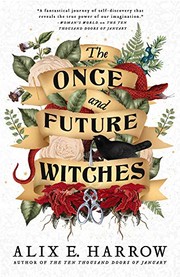
The Once and Future Witches
Three estranged sisters bring witchcraft back to an 1893 city where magic hides in nursery rhymes and the fight for the vote is also a fight for power.
2,132-word summary · 9 min read

The Hazel Wood
Alice Proserpine has spent her life running from bad luck. When her mother vanishes, she follows a trail of fairy-tale clues to her grandmother's estate and…
2,064-word summary · 9 min read
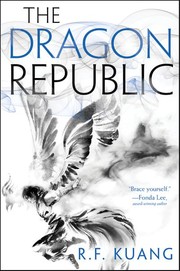
The Dragon Republic
Rin survives the last war only to join the Dragon Warlord against the Empress, trading one brutal fight for another.
2,810-word summary · 12 min read
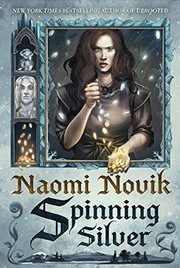
Spinning Silver
A moneylender's daughter says she can turn silver to gold, drawing a winter king, a plain duke's daughter, and a poor servant into one hard bargain.
2,813-word summary · 13 min read
A Curse for True Love
Evangeline wakes married with no memory of Jacks while Apollo and Jacks hunt.
2,287-word summary · 10 min read
The Poppy War
A war orphan wins a place at Sinegard academy, bonds with a fire god, and faces invasion.
2,977-word summary · 13 min read
The Ballad of Never After
Evangeline hunts four missing Arch stones with Jacks to free a cursed Apollo and learns what his rescue will cost.
3,690-word summary · 16 min read
Babel
A Chinese orphan trained in translation magic at Oxford must choose between empire and resistance as Britain drives toward war with China.
3,696-word summary · 16 min read
Once Upon a Broken Heart
Evangeline trades three kisses with the Prince of Hearts to stop a wedding and dooms herself instead.
2,839-word summary · 13 min read
The Tales of Beedle the Bard
Five wizard fairy tales from Hermione book, with Dumbledore notes, including the Three Brothers and the Hallows.
2,663-word summary · 12 min read
The Unicorn Hunters
Arden trades Russian folklore for fifteenth-century Brittany in a standalone about a duchess, a forced marriage, and a unicorn hunt that hides a secret wedding.
2,559-word summary · 11 min read
The Magician's Land
Exiled from Fillory, Quentin takes a teaching job at Brakebills, joins a crew of magical thieves, and must help rebuild a dying world to finish the trilogy.
2,204-word summary · 10 min read
The Iron Trial
Call Hunt tries to fail the entrance tests for the Magisterium, only to be chosen and drawn into a secret about the war that killed his mother.
2,248-word summary · 10 min read
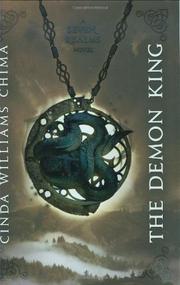
The Demon King
A thief steals an amulet once owned by a legendary sorcerer, while a princess flees a forced marriage in the first volume of Cinda Williams Chima's high…
2,371-word summary · 11 min read
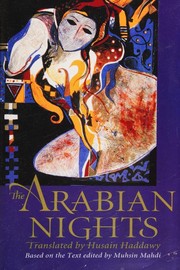
The Arabian Nights: Alf Laylah Wa-Laylah
A frame story about a woman talking for her life holds jinn, sailors, caliphs, and tricksters.
2,338-word summary · 10 min read
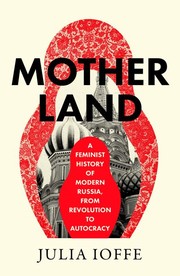
Motherland: A Feminist History of Modern Russia, from Revolution to Autocracy
A feminist history of modern Russia told through women's lives, from the revolutionaries of 1917 to Pussy Riot and the politics of today.
2,191-word summary · 10 min read

Jade City
On an island where jade grants power, two clans fight over the mineral, the family name, and the right to decide what loyalty costs.
2,403-word summary · 11 min read
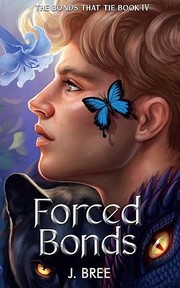
Forced Bonds
The Sanctuary's shield is down and the Resistance is inside. Oli must complete her bond group, including the hostile Nox, before the war costs her everything.
2,316-word summary · 10 min read

Women Who Run with the Wolves
A Jungian analyst reads fairy tales as maps to a woman's instinctual self, from La Loba to Bluebeard and Vasalisa.
2,331-word summary · 10 min read
Wings
A homeschooled fifteen-year-old grows a blue flower from her back and learns she is a faerie sent to guard a hidden gate. Pike's debut makes plant lore feel…
2,506-word summary · 11 min read
Wild Magic
A thirteen-year-old orphan in the kingdom of Tortall learns to live with the gift of speaking to animals, and discovers that the creatures she loves are not…
2,056-word summary · 9 min read
Water Moon
A woman inherits a Tokyo pawnshop that trades in regrets, finds her father gone and one glowing bird freed, and crosses into another world to learn what her…
2,087-word summary · 9 min read
This Kingdom Will Not Kill Me
A grocery delivery driver wakes in a fantasy capital she knows from an unfinished trilogy, only to discover she cannot die.
2,339-word summary · 10 min read
The Woman Who Rides Like a Man
Newly knighted, Alanna heads south into Tortall's desert, where a broken sword and a dead shaman leave her responsible for a rebel tribe and three Gifted…
2,894-word summary · 13 min read
The Sorceress
Flamel takes the twins to London to find Gilgamesh, while Perenelle fights for her life on Alcatraz and an older threat wakes.
2,684-word summary · 12 min read