
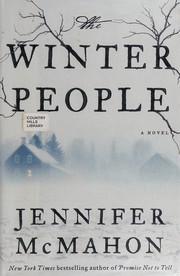
Reading options
What's inside (7 sections)
The sleeper
In the late nineteenth century, a girl named Sara Harrison grows up on an isolated farm three miles outside West Hall, Vermont. She is raised by her father and by an Indigenous-Quécois woman she calls Auntie, who is both a healer and a suspected witch. The book opens in this past and then moves between it and the present, and the connection between the two timelines is a ritual that the dead can be made to return.
As a child, Sara witnesses the reanimated corpse of a girl who died of typhoid in the woods. Auntie calls it a sleeper: a revived dead being that lives for seven days, or forever if it kills someone. She writes down the instructions for the ritual. That piece of paper is the book's most dangerous object. It will be found, lost, sold and used again across a century.
The first sleeper is a girl who died of typhoid and was found in the woods. Sara sees the body move, and the experience gives the book its vocabulary. A sleeper looks like the person it was, which is what makes the ritual so dangerous. There is no visible sign that something has gone wrong. The dead come back with their faces intact, and the people who love them want very much to believe they are unchanged.
Auntie's written instructions matter because they turn a terrifying event into a procedure. Once something can be written down, it can be repeated. McMahon understands that the most frightening thing about a ritual is not the supernatural claim. It is the fact that a person can follow the steps. The paper travels through the novel like a curse that does not need magic to be passed along.
The townspeople pressure Sara's father to banish Auntie. In revenge, Auntie kills Sara's brother. Sara's father shoots her and burns her cabin. Sara believes her gone and never speaks of her again. That is the first of the book's many wrong beliefs about who is dead.
I picked this up because the premise is so unsettling. A rural community where the dead can be called back, a woman who keeps the instructions in a hidden paper, and a present-day investigation that keeps uncovering the same secret. McMahon is very good at the idea that a place remembers what the people in it have done.
Gertie
Sara marries Martin Shea. After three pregnancy losses and the death of an infant son, their daughter Gertie becomes the great love of her life. Then Martin finds Auntie's ring in the fields. Sara begs him to rebury it, but he keeps it. That winter he kills a fox that has been taking chickens and nails its pelt to the barn wall. Gertie follows him outside and disappears.
After a night of searching, her body is found at the bottom of the well. This is where Sara does the unforgivable thing the book is built around. She performs the sleeper ritual, and Gertie comes back through the bedroom closet. The returned child has messages: she was murdered, and the pocket of her dress holds the identity of the killer.
Martin is convinced Sara is mentally ill. He pretends to help dig up the grave but has her bound to the bed with his brother and the sheriff. Sara eventually plays along to be freed. Gertie produces Auntie's ring, and Sara confronts Martin at gunpoint. The gun discharges and wounds him, and he flees into the woods.
The fox is one of the book's strongest details. Martin kills it because it has been taking chickens, and he nails its pelt to the barn wall as a warning or a trophy. Gertie follows him out and never comes back. The animal and the child are linked in the mother's mind afterward, and the book never says whether that link is real. It is the kind of association a grieving person makes, and McMahon treats it with respect rather than dismissing it as superstition.
The bound-to-the-bed scene is the book's most claustrophobic. Sara knows exactly what she did and exactly what the people around her think of her, and she lies still while they decide what to do. Her agreement to play along is a small, practical act of intelligence. She does not escape through a window. She waits until the people holding her believe they have won.
Then Auntie reappears. She survived the fire. She admits she killed Gertie for revenge, and she holds Sara at gunpoint. Gertie kills Auntie with an axe to the head. Sara skins Auntie so the body cannot be identified and her own death can be assumed, hides a written account in the house, and flees with the now-immortal Gertie into the caves beneath a rock formation called the Devil's Hand.
That sequence is the novel's most horrific, and it is not the violence that makes it so. It is Sara's willingness to do anything to keep her daughter. She destroys a body, destroys her own life and condemns herself to live in hiding, all for a child who is not really her child anymore. McMahon never lets the reader forget that Gertie came back wrong.
The farmhouse
Decades later, Bridget and Thomas O'Rourke find the ritual instructions in the house and try to sell them. They explore the caves with Alice and James Washburne, and Gertie kills the O'Rourkes. Alice and James adopt the O'Rourkes' young daughter, call her Ruthie, and move into Sara's farmhouse off the grid. Their purpose is to keep Gertie company and warn people away from the caves. They have a second daughter, Fawn, and James dies of an apparent heart attack.
In the present, a photographer named Gary discovers a box of old photographs containing the ritual instructions. He is grieving a son who died of leukemia, and he hopes to summon the boy back. He dies in a car crash on his way home from meeting Alice, who steals his camera to suppress the images.
Gary's widow Katherine travels to West Hall to learn what happened. The narrative intercuts her investigation with Ruthie's first-person present and with Sara's diary, found beneath the floorboards of Alice's bedroom. Three timelines, three women trying to understand the same house.
On New Year's Day, Gertie, who is lonely, abducts Alice. Ruthie and Fawn find the O'Rourkes' driver's licenses in their mother's room, and Ruthie's boyfriend Buzz drives them to Connecticut to find Thomas's sister Candace. Candace seems unstable, so Ruthie leaves. Candace later turns up at the farmhouse, holds the sisters at gunpoint and demands the ritual instructions so she can sell them and pay a lawyer for custody of her son.
Katherine breaks into the house during the standoff, recovers Gary's camera, and the group finds a map to the caves under the Devil's Hand. In the caves they free Alice. Katherine performs the ritual to call Gary back as a sleeper, and Gertie kills Candace. The survivors escape. Alice tells Ruthie the full story and urges her to stay and take on the duty of guarding Gertie and keeping people away from the caves. Ruthie agrees to consider it.
Katherine is back home at the end and hears scratching at her door. It may be Gary. The book does not say.
What the book is about
The novel is told in alternating strands, and each strand has its own texture. Sara's diary is formal and desperate. Ruthie's sections are funny and angry, the voice of a teenager trapped in a family secret. Katherine's thread is the most conventional, a grief-stricken widow following a trail of photographs. The three voices meet slowly, which is part of the suspense.
The book's real subject is how far grief and love can drive a person. Sara performs the ritual because she cannot accept her daughter's death. Gary wants to do the same for his son. Katherine cannot accept that Gary is gone, and the final scene leaves her hope unresolved. Each character is offered the same impossible choice: accept a death, or try to undo it at a cost nobody can predict.
The mother-daughter theme is handled with similar persistence. Sara and Gertie, Alice and Ruthie, Ruthie and Fawn, Katherine and her dead son. The book keeps returning to the idea that a mother's love can become a form of imprisonment when it refuses to acknowledge loss.
The photograph box is a clever device because it connects the timelines without coincidence feeling forced. Gary is a photographer, so he is the person who would notice what is in an old collection of images. The ritual instructions are hidden among photographs, which is where a family would put something it wanted to forget but could not destroy. Alice steals the camera because she understands that images are dangerous. She has spent her adult life making sure nobody sees what lives near the farm.
I should note a criticism that has been made of the book. The characterization of Auntie as an Indigenous-Quécois woman who is both healer and suspected witch has been read as a stereotype, and a Publishers Weekly review quoted on LitLovers makes that point. It is a fair criticism. Auntie is powerful and mysterious and ultimately evil, which is a very old and tired role for an Indigenous woman in a horror story. The book's treatment of her is the weakest part of an otherwise careful novel.
The title deserves a note. The winter people are the sleepers, the ones who come back from the cold ground, and they are also the people who keep the secret through the long months when the farm is cut off. Winter is when the isolation is complete and the past has the most room. McMahon uses the season as a condition rather than scenery. Almost every important event in the book happens when the roads are bad and nobody is coming to help.
What I finished with
I finished the book wanting to know whether the scratching at Katherine's door is Gary or simply the sound an old house makes. That uncertainty is the point. The novel spends its length asking whether the ritual works, and it declines to answer in a way that would satisfy a reader. A sleeper lives seven days unless it kills. Gary might come back, and what happens then depends on what he has become.
The caves under the Devil's Hand are the most memorable image. A child who died and was brought back lives underground and feeds on wanderers, while a family above ground lives off-grid to keep people away. That arrangement is grotesque and domestic at once. Ruthie's inheritance is not a house or money but a duty to guard a monster who was once a little girl.
McMahon writes the past sections more convincingly than the present ones. Sara's despair has a clarity that the modern investigation never quite matches, and the book is at its best when it stays in the farmhouse. But the structure works. Every thread eventually leads back to the same well, the same closet and the same piece of paper that someone should have burned.
The book was published by Doubleday in February 2014 and runs to 317 pages in the first edition. It has been adapted for screen development, and its mixture of folklore and family drama has kept it in print. Readers who like their horror domestic and their ghosts ambiguous will find a great deal here.
The novel is at its best when it treats grief as a physical condition. Sara does not reason her way into the ritual. She performs it because the alternative is unthinkable, and her hands know what to do before her mind catches up. Gary is the same. He is a photographer who has spent his life recording other people's losses, and when his own son dies he reaches for the one thing he found among old photographs. McMahon understands that a person in grief will try anything, however absurd, and she never mocks them for it. That compassion is what keeps the book from being simply a ghost story.
FAQ
What is a sleeper in The Winter People?
It is a dead person revived by a written ritual. A sleeper lives for seven days, or forever if it kills someone, and looks exactly as it did before death.
Is the book told in one timeline?
No. It alternates between Sara's diary in the past, Ruthie's first-person present and Katherine's investigation, and the three threads converge at the farmhouse.
What has been criticized about the book?
The characterization of Auntie as an Indigenous-Quécois healer and suspected witch has been read as a stereotype. It is the weakest part of an otherwise careful horror novel.
Similar books
Drowning Ruth
In 1919 a Wisconsin mother drowns beneath the ice, and her sister insists the little girl who remembers it only dreamed the event. Schwarz unfolds the truth in…
2,386-word summary · 11 min read
Bat Eater and Other Names for Cora Zeng
A Chinese American crime scene cleaner in pandemic-era New York is haunted by her sister's racist killing and a string of deaths among East Asian women.
2,014-word summary · 9 min read
Family of Liars
The prequel to We Were Liars: Carrie Sinclair finally tells the story of the summer of 1987, the boy who died on Beechwood Island, and the lie her family built…
2,072-word summary · 9 min read

The Woods
Twenty years after two teenagers were murdered and two vanished at summer camp, prosecutor Paul Copeland identifies a fresh corpse as one of the missing.
2,490-word summary · 11 min read
The Sun Down Motel
In 1982 Viv vanishes from a Fell motel desk; in 2017 niece Carly takes the same shift to find her.
2,150-word summary · 10 min read
We Live Here Now
After a near-fatal fall, a woman moves with her husband to a remote Dartmoor house where strange events happen only when she is alone, and a raven watches from…
2,016-word summary · 9 min read
Gone Before Goodbye
Reese Witherspoon's first novel, written with Harlan Coben, follows a bereaved surgeon whose griefbot guides her into a medical conspiracy stretching from…
2,648-word summary · 12 min read
The Silent Sister
Returning to New Bern to clear out her late father's house, Riley MacPherson finds proof that the sister she believes drowned decades ago is alive under…
2,706-word summary · 12 min read

The Beach House
A young valet is beaten to death at a Hamptons party, and his law-student brother spends a year building a case against the family that covered it up.
2,049-word summary · 9 min read
Ghosted
After seven perfect days with Eddie, Sarah is ghosted, and her search for answers uncovers a secret tied to the accident that changed both their lives.
2,011-word summary · 9 min read
The Clockmaker's Daughter
A London archivist finds a Victorian satchel holding a photograph, a sketchbook and a letter, then follows them to Birchwood Manor, where a young woman died in…
2,886-word summary · 13 min read
The Last House on Needless Street
A lonely man, a cat and a mysterious neighbor pull you into a house full of buried trauma.
2,627-word summary · 12 min read

The Heiress
A missing heiress returns to claim a mansion full of letters and lies.
2,362-word summary · 10 min read
The Chalk Man
Childhood chalk codes lead to a murder that follows friends thirty years later.
2,350-word summary · 10 min read
Relic
A museum beast kills during an exhibition while an agent investigates.
2,066-word summary · 9 min read
Everything We Keep
A widow questions her husband's death when a stranger claims his past.
2,307-word summary · 10 min read
The Broken Girls
A journalist revisits her sister's murder while a restored boarding school gives up a girl missing since 1950.
2,579-word summary · 11 min read
The Book of Cold Cases
A true crime blogger interviews Beth Greer, acquitted in the 1977 Claire Lake murders, as fresh violence and ghost sightings pull the old cold case into the…
2,631-word summary · 12 min read
Later
Boy Jamie Conklin sees dead people who must answer truthfully, pulling him into NYPD cases and a drug crew's greed.
2,009-word summary · 9 min read
Duma Key
After losing his arm, Edgar Freemantle paints on a Florida island and learns his pictures can open doors for something hungry.
2,530-word summary · 11 min read
Before the Fall
A private jet falls off Martha's Vineyard. A painter and a small boy survive, then face grief and the news cycle.
2,185-word summary · 10 min read

Ask for Andrea
Three murdered women haunt their killer online dater to stop him from striking again.
2,118-word summary · 9 min read
The Valley of Vengeful Ghosts
A grieving therapist buys a model home in a rainy valley where the walls leak ghosts.
2,035-word summary · 9 min read
A Box Full of Darkness
After 18 years away, Violet, Vail and Dodie return to Fell when missing brother Ben calls them home to face Sister and old ghosts.
2,138-word summary · 10 min read
The Turn of the Screw
A governess sees Quint and Jessel at Bly, or projects them; James never settles which, and Miles dies.
2,080-word summary · 9 min read
I'm Thinking of Ending Things
A woman drives out to meet her boyfriend's parents while planning to leave him, and the night turns quietly wrong.
2,754-word summary · 12 min read
I Am Watching You
A florist watches two schoolgirls chat with ex cons on a train and stays silent. A year later one girl is still missing and someone starts watching her.
2,939-word summary · 13 min read

Bag of Bones
A blocked novelist returns to his Maine lake house after his wife dies and faces a custody fight and old ghosts.
2,616-word summary · 12 min read

Final Girls
A survivor of a cabin massacre tries to live normally until another Final Girl dies and a second one shows up at her door.
2,176-word summary · 10 min read

Lock Every Door
Broke Jules apartment sits at the Bartholomew where another sitter vanished.
2,224-word summary · 10 min read