
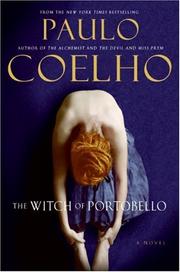
The Witch of Portobello
2,499-word summary 11 min read 288 pages in the book
- First published
- 2006
- Publisher
- HarperOne
- Pages
- 288
- ISBN
- 9780061338809
- Original title
- A Bruxa de Portobello
Reading options
What's inside (8 sections)
I picked this up expecting a story about a woman with supernatural powers, and I was wrong in a way that turned out to be interesting. Coelho first published it in Portuguese as A Bruxa de Portobello in 2006, and Margaret Jull Costa's English translation appeared the following year, with the first American edition from HarperOne in May 2007. What I found was a puzzle built out of witnesses. Nobody sits down to tell Athena's life from the inside. An unnamed collector gathers statements from people who knew her, lets them overlap and occasionally disagree, and leaves us to assemble the person. It reads more like an oral history than a conventional novel, and the question of how Athena died is what keeps you moving through it.
A story assembled from other people's words
The collector explains early on that he considered writing a careful biography and gave up the idea. He had read other biographies and noticed that a biographer's view of a subject shapes the research from the start. Since he did not want to impose an opinion, he decided simply to transcribe what people told him. That framing matters, because every account that follows carries the marks of the person giving it. Some witnesses adore Athena. Some resent her. A few do both in the same breath.
The first voice is Heron Ryan, a forty-four-year-old journalist who says he met Athena in Transylvania while making a documentary for the BBC. He is a man who believes in traffic problems and foreign policy and taxes, not in trances or materialisations. He watched her in a hotel foyer, was drawn in, and fell in love against what he calls his better judgement. Through her he saw rituals he would not have credited if he had not been there, and he kept writing about her even when his journalist colleagues were openly cynical. His testimony is the most lovestruck in the book and also the most useful, because he keeps confessing how little he understood.
There is a memorable scene near the start in which Athena's former teacher Deidre takes Heron to Prestonpans in Scotland. The town had granted official pardons to eighty-one people and their cats, executed centuries earlier for practising witchcraft. Deidre is angry about the ceremony. In her view twenty-first-century descendants of the original killers have no right to hand out forgiveness now. She also talks about a newer witch hunt, one carried on through irony and repression, where a husband or a child forbids any mention of a family member's gift for fear of ridicule. That idea sits underneath the whole book, and I found it more convincing than some of the mystical claims that follow.
Heron's account ends with Athena already dead. Everyone who speaks after him knows that, which gives the testimonies an odd, funeral quality. People are not trying to convert her. They are trying to explain her, and some of them are still angry about it.
The child from Sibiu who chose a new name
Athena's origins are told by her adoptive mother, Samira R. Khalil. Samira and her husband, a successful Lebanese industrialist living in Beirut, could not have children, so they travelled to Sibiu in Transylvania during the dictatorship of Nicolae Ceaușescu. In an orphanage Samira chose a baby girl and named her Sherine. When the girl was five, an uncle pointed out that an Arab name would betray her origins and make life harder abroad. He suggested Athena, a name that gave nothing away. The child liked it and insisted on using it from then on.
Even as a small girl Athena was intensely religious and claimed to see invisible companions, including a woman in white who looked like the Virgin Mary. Samira is careful in how she describes this. She does not say she believed every word, only that her daughter spoke about such things with complete confidence. One night the girl announced that hell was close. The next morning four men were murdered in Beirut, an event Samira connects to the beginning of Lebanon's civil war. Her father took the warning seriously enough to move the family to London. Whether the warning was prophecy or a child's frightening guess is left open, which is more honest than the book sometimes manages elsewhere.
The London years are sketchier, and I wanted more of them. We learn that Athena was awkward in a conventional school setting and that she kept her difference rather than smoothing it away. The adoption papers are locked in a drawer for years, and the question of her birth mother becomes a wound she keeps touching. I found this section the most human part of the novel. A woman who has been chosen and loved can still feel that a piece of her origin is missing, and her adoptive mother's pain at that fact is handled with care.
Lukás, Viorel and the priest who closed the door
At university Athena meets Lukás Jessen-Petersen, an engineer, and the story of their marriage comes from his testimony. He remembers her nearly attacking a fellow student who insulted the Middle East. Before the end of their first year she dropped out and told him she wanted to marry and have a baby. He was only twenty and knew he was giving up freedom, but he chose love anyway. That choice is told without much fuss, and his voice has a flat, wounded honesty that sets him apart from the more lyrical speakers.
Their son Viorel is born, and the marriage begins to strain. Lukás struggles with money and feels passed over in his wife's attention. He asks for a divorce, and Athena receives the news with a calm that unsettles him. The scene that follows is the sharpest in the book. Father Giancarlo Fontana, a seventy-two-year-old priest who had befriended Athena through music and worship, refuses to give her communion in front of the whole congregation because Church doctrine bars divorced people from receiving it. Athena is humiliated. She curses the church and swears she will never return.
This is the part of the novel I trusted most. There is no drama of exorcism or mysterious illness here, just an institution following its rule and a person left exposed in public. Father Fontana, who admits that Athena once confided she had thought about suicide and that motherhood was the only thing keeping her anchored, later regrets the manner of it. His regret does not undo what happened, and Coelho lets the damage stand. The priest's section also gives the book its clearest statement of what Athena wanted from religion: a living experience rather than a set of approved answers.
The Vertex, the blank spaces and a mother in Sibiu
After the divorce Athena's landlord, Pavel Podbielski, introduces her to a dance practice he calls the Search for the Vertex. He describes it as a Siberian tradition in which people danced until exhaustion to reach a hidden light in the heart. Athena, who had always danced, takes to it immediately. She tells Pavel that dance is a way of rising into space and discovering new dimensions while staying in touch with the body, a way for the spiritual and the real to coexist. She brings the practice to colleagues at the bank where she works, and their energy changes the whole branch enough that the bank sends her to Dubai.
In Dubai she studies Arabic calligraphy with Nabil Alaihi, a Bedouin teacher. The move from wild dancing to careful stillness is one of the nicer surprises here. Nabil teaches her patience and precision, and after nearly a year he tells her she has mastered the letters but not the blank spaces between them. Those spaces, he says, are where unwanted thoughts break in, and he connects them to the mother she has never known. This is the book at its most elegant. The silence on the page becomes a figure for the silence in a life.
Athena obtains her adoption papers despite her mother's distress and travels to Romania. In Bucharest, both Heron and her teacher Edda notice her independently in a hotel foyer, a coincidence that the book treats as a sign. In Sibiu a Romani restaurant owner named Vosho is reluctant to help but eventually takes her to Liliana, her birth mother, a seamstress living in poverty. Over several days Liliana teaches her Romani customs and the worship of the Great Mother, a feminine divine figure at the centre of her tradition. On their last morning Athena says the blank spaces in her life have begun to turn into pauses. Liliana asks forgiveness and the two women embrace in tears.
I have mixed feelings about the Romania chapters. The reunion is genuinely moving, and the detail of the calligraphy teacher's blank spaces makes it land. But the book has a habit of arranging meetings so that they feel arranged, and the coincidence in the hotel foyer struck me as too neat. Coelho's belief in fate is the engine of the plot, and if you do not share it, some of these turns will feel like scaffolding. If you do, they will look like design. I sat somewhere in the middle.
Hagia Sofia and the crowds on Portobello Road
Athena returns to London restless. She visits Edda in Scotland, where her teacher performs a candlelight ritual and gives her an instruction she repeats to her students: find a pupil and teach what you do not know, so that the Mother may speak through you. Edda's parting line is blunt, something like "Teach people to be different. That's all!" Athena resists the idea of becoming a teacher, and her first attempt is not a success, but Edda points out that a group asking to be taught has already made her a teacher.
Back in London she starts holding Monday gatherings. She asks people to dance against the rhythm of the music rather than with it, a deliberate disharmony that makes them awkward and then open. During one session she becomes distressed, and when she looks up her face has changed. Speaking as a presence she calls Hagia Sofia, she tells an elderly actor that he has prostate cancer, advises a theatre director to accept his homosexuality, and cures Heron's chronic insomnia. A doctor later confirms the cancer diagnosis. Hagia Sofia also tells her to take Andrea McCain as a student, even though the two women barely tolerate each other, and Andrea agrees.
The gatherings grow quickly. They move from Athena's flat to a warehouse on Portobello Road and draw hundreds of people. Andrea, an actress and Heron's girlfriend, is transformed by the experience and decides to leave him, though she insists she is not doing it out of hatred for Athena. That distinction is one of the more interesting ideas in the book, and the reading guide Coelho's publisher released picks up on it. Athena says that when hatred makes a person grow, it turns into one of the ways of loving. Andrea's journey from accuser to successor is the best argument the novel makes for its own method.
The growth also brings enemies. Reverend Ian Buck, a local evangelical minister, organises a demonstration against what he calls a Satanic cult, and violence follows. Tabloid coverage makes Athena famous and unsafe at the same time. Legal proceedings begin to remove Viorel from her custody. She stops holding meetings, and in a private recording made for Heron she admits she has received death threats and bought a gun, vowing that nobody will take her son alive. She tells him she loves him, but not in the way his human side wants, and names Andrea as the right person to carry the work forward because Andrea has more experience and discretion.
Those scenes are where the book becomes a thriller, and I found the shift abrupt after so much patient testimony. The threats and the custody fight are sketched in rather than lived through, and Reverend Buck never becomes a real person. Still, the recording gives Heron's whole account a new purpose. What looked like a man's lovesick memoir turns out to be a message someone meant him to hear.
The last page and the trick it plays
The court rules in Athena's favour, and then she vanishes. Two months later Heron learns that the body of Sherine Khalil has been found in Hampstead, brutally murdered. It is a bleak note to end on, and the book immediately pulls the ground away again. The postface reveals that the unnamed collector is a Scotland Yard detective, the boyfriend Athena mentioned throughout but whom nobody in the testimonies ever met. Athena is alive, hiding near Snowdonia in Wales, and this transcript is a birthday present for her. Viorel has recorded his first piece of music for the celebration.
The detective explains that he staged her death by planting her blood and hair at the scene of an unidentified murder victim in Hampstead and connecting the case to a real suicide in Portugal. Andrea has taken up the work quietly, building a network of people in positions of influence. Athena's public persona had to die, the book argues, so that the mission could survive the celebrity that was corrupting it. The detective says he compiled the statements to understand why Athena loved him, and the answer comes in her final recorded words to Heron: "Love simply is."
I want to be honest about how the ending landed for me. On a first read it is a clever piece of misdirection, and the reveal re-colours every testimony you have just heard. On reflection it also feels like a cheat in places. If a death is going to be faked with blood and hair from a stranger, the logic of that needs more room than a short postface gives it. Several witnesses are reduced to functions, and the prose sometimes leans on earnest declarations where a scene would have done more work. The book is stronger when it stays with Samira worrying about her daughter or Lukás trying to explain a marriage than when it insists on the grand design.
What I carried away was not the twist but the shape of Andrea's change. She begins by calling Athena a manipulator, and by the end she is the one entrusted with the work. The reading guide asks whether Athena manipulated anyone, and quotes her answer that nobody can manipulate another person because both parties always know what they are doing. That claim is arguable, and I argued with it. Yet the novel earns something through Andrea. A person who starts as a hostile witness ends up protecting the thing she mocked, and the collector's gift to Athena is a book full of the very disagreements she caused. That is a stranger birthday present than any plot twist, and it is the part I keep thinking about.
FAQ
Is The Witch of Portobello a novel about magic?
No. It is a literary novel about a woman labelled a witch, told through testimony from a journalist, relatives, teachers and students who try to explain her life and influence.
When was The Witch of Portobello first published?
It appeared in Portuguese as A Bruxa de Portobello in 2006. Margaret Jull Costa's English translation followed in 2007, and the first American edition was published by HarperOne that May.
Does Athena really die in the book?
Her death is reported early and a body is found in Hampstead, but the final pages reveal that she faked her death and lives in hiding in Wales while Andrea carries on her work quietly.
Similar books
By the River Piedra I Sat Down and Wept
Pilar, 29, meets her childhood friend again in Madrid and finds a rumored miracle worker. One winter week through the Pyrenees to the river Piedra, and the…
2,845-word summary · 13 min read
The Zahir
A bestselling novelist's wife vanishes from their Paris home, sending him on a search that becomes a reckoning with his own marriage and attention.
2,433-word summary · 11 min read
Brida
A young Irishwoman convinced she has a spiritual Gift seeks out a forest Magus and a Dublin witch, and learns that her gift is to bridge the visible and…
2,012-word summary · 9 min read
Eleven Minutes
Maria leaves Brazil for Geneva in Coelho 2003 novel, works as a dancer then as a prostitute, and meets painter Ralf Hart while testing sex against love.
2,639-word summary · 12 min read

Yellow Crocus
In 1837 Virginia, an enslaved wet nurse is separated from her own son to raise a planter's daughter, and the two women build a love the law says cannot exist.
2,094-word summary · 9 min read

Women Who Run with the Wolves
A Jungian analyst reads fairy tales as maps to a woman's instinctual self, from La Loba to Bluebeard and Vasalisa.
2,331-word summary · 10 min read
Theft
Gurnah traces three linked lives in Tanzania, where a servant's accusation of theft opens a family history of love, duty and quiet betrayal.
2,454-word summary · 11 min read
The Salt King
Sent back to the salt-mining town he fled, a Jesuit priest investigates miracles that turn pilgrims into pillars of salt. Pulley adds a slow-burning queer…
2,214-word summary · 10 min read
The Pursuit of God: The Human Thirst for the Divine
Ten short chapters on wanting God rather than merely knowing about him, from a pastor who wrote the book in a single night on a train.
2,014-word summary · 9 min read
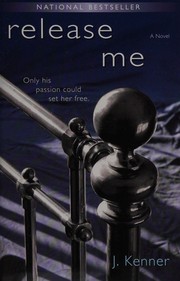
Release Me
A guarded engineering graduate newly arrived in Los Angeles is used as bait at an art gala, then offered a million dollars to pose for a powerful man's private…
2,070-word summary · 9 min read
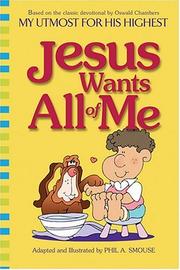
My Utmost for His Highest
A posthumous collection of 366 daily devotional readings assembled from Oswald Chambers's sermons, built around surrender, discipleship and the gap between…
2,015-word summary · 9 min read
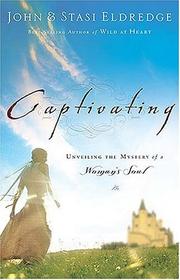
Captivating: Unveiling the Mystery of a Woman's Soul
A Christian companion to Wild at Heart in which John and Stasi Eldredge argue that women carry three God-given desires that wounds can bury. Warm, scriptural…
2,722-word summary · 12 min read
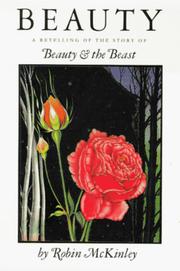
Beauty: A Retelling of the Story of Beauty and the Beast
Robin McKinley's debut retells Beauty and the Beast through a plain, book-loving girl whose nightly refusals of the Beast's proposals slowly become something…
2,100-word summary · 9 min read
The Prayer of Jabez: Breaking Through to the Blessed Life
A tiny 2000 devotional built on two verses in Chronicles became a publishing phenomenon and a lightning rod for criticism.
2,296-word summary · 10 min read
Have a Little Faith: a True Story
Asked to deliver his childhood rabbi's eulogy, Albom interviews the man and a Detroit pastor serving the homeless, and finds two very different models of faith.
2,339-word summary · 10 min read

Infidel
Ayaan Hirsi Ali's memoir of a Somali childhood, a forced marriage, a Dutch asylum claim, and the political fight that followed the murder of Theo van Gogh.
2,041-word summary · 9 min read
The Birth of Venus
A Florentine merchant's daughter trains as an artist, marries a man who hides a secret, and survives Savonarola's bonfire of the vanities.
2,404-word summary · 11 min read
All About Love: New Visions
bell hooks borrows a definition of love as an action rather than a feeling, then spends thirteen chapters showing how hard it is to practice.
2,385-word summary · 11 min read
The Celestine Prophecy
A restless American chases a missing manuscript through Peru and learns Nine Insights about coincidence, energy, and how people vie for attention.
2,599-word summary · 12 min read
Demian
Hesse's 1919 German classic of Emil Sinclair, from Kromer blackmail to Demian, Abraxas, Beatrice and Frau Eva, ending in war: a short, strange guide to growing…
2,510-word summary · 11 min read

The Queen's Gambit
Orphan Beth Harmon rises in chess while pills and drink threaten to take her.
2,027-word summary · 9 min read
The Book of Longings
In first-century Galilee, Ana marries Jesus of Nazareth and fights to write women's stories in a world set against her voice.
2,368-word summary · 11 min read
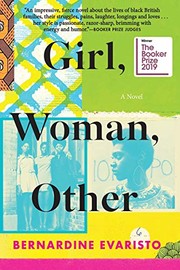
Girl, Woman, Other
Twelve Black British women and girls link across years and cities, anchored by playwright Amma on her National Theatre premiere night.
2,202-word summary · 10 min read
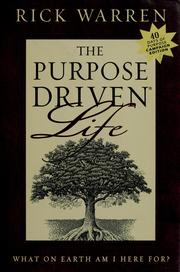
The Purpose Driven Life
Rick Warren's 40-day guide to Christian purpose, from worship and fellowship to growth, service and mission.
2,846-word summary · 13 min read
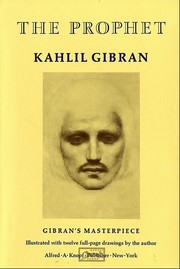
The Prophet
A prophet delayed twelve years answers his city on love, work, sorrow and freedom before his ship sails.
2,852-word summary · 13 min read

the sun and her flowers
Kaur follows love and loss through wilting, falling, rooting, rising, and blooming in short illustrated poems.
2,364-word summary · 11 min read
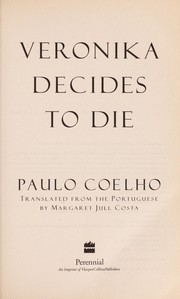
Veronika Decides to Die
After a failed suicide attempt, a young woman in a Slovenian asylum learns she has days to live and starts to want them.
2,224-word summary · 10 min read
The Alchemist
The Alchemist from start to finish: Santiago's dream, the Personal Legend, the crystal merchant, the desert, and the treasure that was never where he thought.…
2,166-word summary · 10 min read
Whisper Network
Four women at a Dallas sportswear company decide to name their boss in an anonymous spreadsheet of bad men, and the office turns on itself.
2,152-word summary · 10 min read