
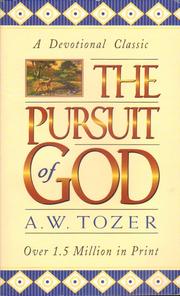
The Pursuit of God: The Human Thirst for the Divine
2,014-word summary 9 min read 121 pages in the book
- First published
- 1948
- Publisher
- Christian Publications
- Pages
- 121
- ISBN
- 9780875097015
Reading options
What's inside (10 sections)
A book written in one night
According to Standard Ebooks, this devotional was written in a single night on a train. It was first published in 1948 by Christian Publications, the press of the Christian and Missionary Alliance, and it made A. W. Tozer a household name among evangelicals. It is a short book, about twenty-nine thousand words, and in 2000 Christianity Today named it one of its hundred Books of the Century.
The book has ten chapters. Each is headed by a verse of Scripture and ends with a first-person prayer. That structure is important because the prayers turn the argument from teaching into address. The book is not content to describe a hungry soul. It keeps showing you what it sounds like to speak from one.
A note on the title before I go further. The subtitle "The Human Thirst for the Divine" is attached to some editions, but it does not appear in the catalog records for the original. The 1948 book was simply The Pursuit of God. The line used here comes from the most common modern catalog form and is a later addition. The text itself is the same.
I picked this up because it is one of those devotional classics that people quote without ever having read. I wanted to see the argument in full, and to find out whether the reputation survives the reading.
Following hard after God
The first chapter takes its title from Psalm 63 and begins with prevenient grace: before a person can seek God, God must first have sought that person. The central image is the hart panting after the water brooks. Tozer is writing about a hunger that is itself a gift.
He attacks a mechanical version of faith in which a person "accepts Christ" and then goes on living as though nothing has changed. Such a person may be saved, in the book's terms, but they are not hungry or thirsty for God. Tozer quotes von Hügel on God being always previous and The Cloud of Unknowing on a naked intent toward God using the single word "God" or "love." He warns against seeking God-and: God and success, God and comfort, God and a settled life.
The chapter's most insistent claim is that God is a Person. He thinks, wills, enjoys, feels, loves and suffers. Religion, in Tozer's formulation, is the response of created personalities to the Creating Personality, known only through long and loving mental intercourse. That phrase is as good a description of the book's tone as any. He wants readers to want God, not to have correct information about him.
The examples are Moses asking to see God's glory, David, Paul saying that he wants to know Him, and St. Bernard's line about tasting God as living bread. These are not proofs. They are invitations, and the chapter ends in a prayer that asks for the hunger it has been describing.
Possessing nothing
Chapter Two, on the blessing of possessing nothing, argues that sin put things on the throne of the heart. The pronouns "my" and "mine" are verbal symptoms of what Tozer calls the Adamic disease of possession. A person says "my house, my money, my time" until the words describe a self that cannot receive anything as a gift.
The illustration is Abraham and Isaac at Moriah. Abraham resolves to offer his son and trusts God to raise him from the dead, and God stays his hand. Tozer's point is that Abraham had everything because he possessed nothing. The possessive self has to be torn out like a plant from the soil or a tooth from the jaw. That is a violent image, and it is typical of the book. Tozer is not writing about gentle detachment.
Removing the veil
Chapter Three begins with Augustine's restless heart and the Westminster Shorter Catechism's answer that the chief end of man is to glorify God and enjoy him forever. It then walks the route of the tabernacle: the outer court, the brazen altar, the laver, the holy place with its candlestick, showbread and altar of incense, and finally the veil before the Holy of Holies, which was rent at Christ's death.
Tozer describes God as eternal, immutable, omniscient and holy, and the chapter is full of fire: the burning bush, the pillar of fire, the shekinah between the cherubim, Pentecost. He admires Frederick Faber's love for each Person of the Trinity. He contrasts the scribe who has read with the prophet who has seen, which is the book's recurring distinction between information and encounter.
The veil that remains, he says, is the self-life: self-righteousness, self-pity, self-confidence, self-admiration and self-love. That list is the chapter's sharpest application. A person does not need more religious knowledge. They need the part of themselves that keeps them from seeing.
Taste and see
Chapter Four takes its text from Psalm 34: "O taste and see." Tozer quotes Canon Holmes saying that for most people God is an inference rather than a reality. The Bible, he points out, uses sensory verbs: taste, smell, hear, see. A person does not reason their way into a relationship with God. They perceive.
The spiritual faculties, in this account, lie asleep until they are quickened by regeneration. Tozer then makes a careful distinction between reckoning and imagination. Faith creates nothing. It reckons on what is already there. That distinction allows him to argue that the real and the imaginary have replaced the spiritual and the real in modern thinking. The other world is present, not future. He points to Mount Zion in Hebrews and to the promise that obedience brings inward revelation.
Chapter Five teaches divine immanence while rejecting pantheism. God dwells in creation and remains other than it. "God is here" at every point in space, but presence must be distinguished from a manifestation of presence. Tozer walks through Adam hiding, David's psalm, Solomon saying that the heavens cannot contain God, Paul at Athens and Jacob at Bethel.
The mark of the saints he admires, from Moses and Elijah to St. Francis, Luther and Thomas à Kempis, is spiritual receptivity. That quality is cultivated, not found through the shortcuts of a machine age. The chapter quotes Michelangelo's sonnet and recalls the large returns that came through Francis, Luther and George Fox.
The voice and the gaze
Chapter Six insists that God is speaking, not merely that God spoke. The world-filling creative Voice is distinct from the written Bible, though the two are related. Tozer pictures Wisdom calling in the streets in Proverbs. He notes that people explain the Voice away as thunder, that scientists kneel to examine rather than adore, and that genius may be a response to a haunting Voice. The corrective is the old command to be still and know. The chapter moves from a sound in the garden to a clear and intimate word, and closes with Samuel's answer: Speak, for thy servant heareth.
Chapter Seven is the book's most memorable. It takes the fourteen-word functional definition of faith in Hebrews 11 and the brazen serpent of Numbers, which Jesus compares to himself. Looking and believing are the same act, so faith is the gaze of a soul upon a saving God. Tozer insists that this is one continuous volitional gaze rather than a decision made once. The eye sees everything except itself. He compares a hundred worshippers to a hundred pianos tuned to the same fork and says the gaze is possible anywhere, in a Pullman berth, a factory or a kitchen.
Chapter Eight treats sin as a moral dislocation and salvation as the restoration of the Creator-creature relationship, illustrated by the prodigal son. God's "I am" is the fixed center by which the sailor shoots the sun to find his bearings. The law that those who honor God will be honored is developed through Eli's sons, who die, the capture of the ark and Eli's broken neck, set against Abraham, Jacob, David, Daniel and Elijah. Tozer asks whether the desire for honor from men is a root of unbelief.
Meekness and the sacrament of living
Chapter Nine turns the Beatitudes inside out to describe fallen humanity, then expounds the invitation to come and find rest. The universal burden is interior: pride, pretense and artificiality. Children do not compare themselves to other children, while advertising feeds the desire to appear what one is not. The meek person is nothing in himself and everything in God, and lets God defend him.
Chapter Ten attacks the sacred-secular split. Jesus knew no divided life, and doing all to the glory of God includes eating and drinking. A single act of consecration can make every later act sacred, though not all acts are equally important. Paul's tent-making and his Epistle to the Romans are not the same kind of work, and motive rather than task determines sacredness. Tozer rejects the inherent sacredness of places and days, notes that the Quakers were the only group he credits with seeing this clearly, and laments the return of Lenten language among Fundamentalists. The book closes with the whole earth full of God's glory.
Tozer's biography helps explain the book's authority. He was a self-taught pastor and radio broadcaster who served the Christian and Missionary Alliance and became known for a style that was both blunt and lyrical. He was not writing from an ivory tower. The short chapters were shaped by years of preaching and by a conviction that religious language can hide a lack of encounter. That is why the prayers at the end of each chapter matter so much. They are the book's way of refusing to let doctrine remain abstract.
The book is also shorter than its reputation suggests. At around twenty-nine thousand words, it can be read in an afternoon, though it is clearly designed to be returned to. Each chapter is a unit, and the prayers invite the reader to stop rather than hurry on.
What I finished with
The book is more argumentative than I expected. Tozer is not writing a gentle devotional. He is trying to convert his readers from a faith of labels to a faith of encounter, and he uses sharp language to do it. The chapters on the veil and the gaze are the strongest. The one on Abraham and Isaac is the hardest, because it treats a terrible story as an illustration of trust without acknowledging how troubling it is.
I should note the edition facts for the site. The first edition was published by Christian Publications in 1948. The ISBN used here belongs to a 1993 paperback of 121 pages with a foreword by James L. Snyder. Later editions carry study guides or are repackaged as a thirty-one-day devotional, but they are not the plain text of the original ten chapters.
The subtitle promises a thirst, and the book is faithful to it. It does not try to satisfy the thirst with answers. It tries to make the reader want God more, and it ends by insisting that the ordinary day is the place where that wanting has to be lived.
The book has never been out of print. Later editions add study guides or repackage the chapters as a thirty-one-day devotional, but the plain text remains the ten chapters described here. It is a short book that has outlasted many longer works of theology.
The book's most enduring image is the gaze. Tozer argues that faith is not a decision made once but a continuous act of looking, and that the eye which sees everything cannot see itself. That is a piece of theology with real psychological insight, and it is the chapter readers return to most often. The claim that the gaze is possible in a kitchen or a factory is the book's great democratic gesture. A person does not need a monastery or a degree to pay attention to God.
FAQ
Is The Human Thirst for the Divine part of the original title?
No. The 1948 first edition was titled simply The Pursuit of God. The subtitle appears on later editions and in common catalog records.
How is the book structured?
It has ten chapters, each headed by a verse of Scripture and ending with a first-person prayer. The prayers turn the argument from teaching into address.
Which edition is cited here?
The ISBN used belongs to a 1993 Christian Publications paperback of 121 pages with a foreword by James L. Snyder. Later study-guide and devotional editions are different books.
Similar books
My Utmost for His Highest
A posthumous collection of 366 daily devotional readings assembled from Oswald Chambers's sermons, built around surrender, discipleship and the gap between…
2,015-word summary · 9 min read
Captivating: Unveiling the Mystery of a Woman's Soul
A Christian companion to Wild at Heart in which John and Stasi Eldredge argue that women carry three God-given desires that wounds can bury. Warm, scriptural…
2,722-word summary · 12 min read
The Prayer of Jabez: Breaking Through to the Blessed Life
A tiny 2000 devotional built on two verses in Chronicles became a publishing phenomenon and a lightning rod for criticism.
2,296-word summary · 10 min read
Have a Little Faith: a True Story
Asked to deliver his childhood rabbi's eulogy, Albom interviews the man and a Detroit pastor serving the homeless, and finds two very different models of faith.
2,339-word summary · 10 min read

Love Does
A lawyer and activist tells stories of saying yes, showing up, and loving people through ordinary, often ridiculous actions.
2,411-word summary · 11 min read
90 Minutes in Heaven: A True Story of Death and Life
A pastor declared dead at a 1989 crash scene describes ninety minutes he says he spent in Heaven, then thirteen months of surgeries, depression, and recovery.
2,246-word summary · 10 min read
God Is Not Great
Hitchens argues religion poisons life across history and texts.
2,545-word summary · 11 min read
Wild at Heart: Discovering the Secret of a Man's Soul
Why do men feel bored and tame? John Eldredge argues a man's heart is wild by design, and that recovering it means facing the wound and the question of whether…
2,289-word summary · 10 min read
The Power of Your Subconscious Mind
Joseph Murphy argues that the subconscious accepts whatever the conscious mind repeats, so worry and confidence quietly grow into very different lives.
2,259-word summary · 10 min read
A Grief Observed
In four raw notebooks written after his wife Joy died, C. S. Lewis records grief as fear, anger and doubt, then slowly learns to live without easy consolation.
3,692-word summary · 16 min read
Concerning the Spiritual in Art
Kandinsky argues that art must come from an inner need and that colour and form can speak directly to the soul, in a book that also made the case for…
2,289-word summary · 10 min read
As a Man Thinketh: A book that will help you to help yourself
In seven short chapters, James Allen argues that character and circumstance grow from thought, and that changing how you think is the practical route to…
2,673-word summary · 12 min read
The Road Less Traveled: A New Psychology of Love, Traditional Values and Spiritual Growth
M. Scott Peck argues that maturity begins with accepting difficulty, then builds discipline, love, and spiritual growth through honest, often painful work.
2,200-word summary · 10 min read
By the River Piedra I Sat Down and Wept
Pilar, 29, meets her childhood friend again in Madrid and finds a rumored miracle worker. One winter week through the Pyrenees to the river Piedra, and the…
2,845-word summary · 13 min read
Blue Like Jazz
Donald Miller leaves youth group faith in Texas for Portland and Reed College, where a confession booth and shared house life reshape his view of Christian…
2,366-word summary · 11 min read
The Untethered Soul
Singer names the noisy inner voice and shows how watching thoughts, loosening old hurt, and keeping the heart open through surrender can ease daily suffering…
2,752-word summary · 12 min read
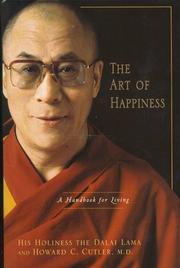
The Art of Happiness
The Dalai Lama and psychiatrist Howard Cutler link lasting happiness to training the mind, human warmth, compassion, and basic spiritual values for daily life.
3,394-word summary · 15 min read
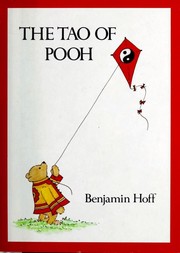
The Tao of Pooh
Hoff explains Taoism through Pooh, Piglet, and Eeyore in gentle chats.
2,006-word summary · 9 min read
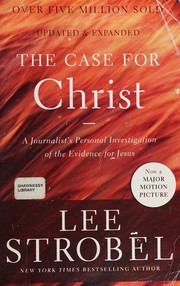
The Case for Christ
An atheist journalist cross-examines scholars on the Gospels, the tomb, and the resurrection to test the evidence for Jesus.
2,882-word summary · 13 min read
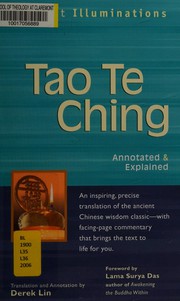
Tao Te Ching: Annotated & Explained
Eighty one brief verses on the Way and effortless action, with Lin's translation and facing notes.
2,140-word summary · 10 min read

Crazy Love: Overwhelmed by a Relentless God
Francis Chan argues that comfortable faith is no faith at all, calling lukewarm Christians toward awe, generosity, and costly obedience.
2,240-word summary · 10 min read
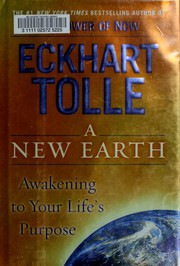
A New Earth
Tolle maps ego pain and shows how presence can loosen roles, thoughts, and suffering.
1,909-word summary · 8 min read

The Screwtape Letters
A senior devil advises his nephew Wormwood on tempting an ordinary Englishman away from faith and attention.
2,489-word summary · 11 min read
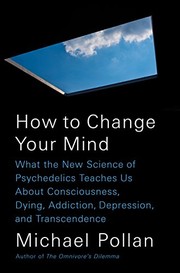
How to Change Your Mind
Pollan blends the history of psychedelic research, his own guided trips, and current neuroscience to ask what these drugs reveal about consciousness.
2,466-word summary · 11 min read

Eating Animals
A new father's question about what to feed his son becomes a wide-ranging investigation of factory farming, food labels, and the stories we tell about meat.
2,100-word summary · 9 min read
Brief Answers to the Big Questions
A short posthumous collection in which Hawking answers ten big questions about God, the universe, time, and humanity's future.
2,464-word summary · 11 min read
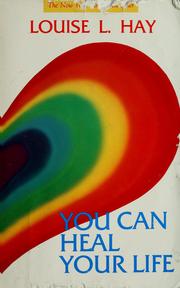
You Can Heal Your Life
Louise Hay's 1984 bestseller argues that thoughts and beliefs shape the body, pairing a mirror-and-affirmation workbook with an A to Z list of ailments and…
3,672-word summary · 16 min read

Women Who Run with the Wolves
A Jungian analyst reads fairy tales as maps to a woman's instinctual self, from La Loba to Bluebeard and Vasalisa.
2,331-word summary · 10 min read
The Witch of Portobello
A journalist collects testimony from those who knew Athena, a woman born in Transylvania who became a dancer and teacher in Portobello. Coelho keeps her fate…
2,499-word summary · 11 min read
Memnoch the Devil
In the fifth Vampire Chronicles novel, Lestat is taken by the Devil on a tour of Heaven and Hell and asked to serve as God's adversary.
2,619-word summary · 12 min read