
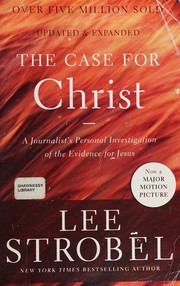
The Case for Christ
2,882-word summary 13 min read 336 pages in the book
- First published
- 1998
- Publisher
- Zondervan
- Pages
- 336
- ISBN
- 9780310345862
Reading options
What's inside (8 sections)
A friend from work left this book on my desk with a sticky note that said you will argue with chapter 8. He was right, though not in the way I expected. My copy is the Zondervan softcover, 336 pages, the revised and updated edition. The original came out in 1998. I read it over four nights at the kitchen table, coffee going cold, pen running out. I grew up around church talk but I have spent enough time around skeptics to feel both sides pulling. That is why Strobel hooked me. He was not raised to defend this. He was trying to talk his wife out of it.
Lee Strobel earned a journalism degree at the University of Missouri, won a Ford fellowship to study law at Yale, then spent fourteen years as a reporter, most of it as legal editor at the Chicago Tribune. He describes himself at the start as an atheist with a courtroom view of truth. Witnesses, documents, corroboration. Then his wife Leslie became a Christian, changed in ways he could see at home, and he decided to use his own tools on her new faith. He spent about two years traveling and interviewing scholars. The book is the record of that run, plus the verdict he reached at the end.
The setup borrows from law on purpose. Each chapter opens with a short scene from crime or court reporting, then moves to a long interview, then closes with Strobel summing up what he thinks the expert proved. There are about a dozen scholars in all, with doctorates from places like Cambridge, Princeton, and Brandeis. The chapters fall into three blocks. First he checks the written record. Then he looks at the identity of Jesus. Then he presses on the resurrection. A short opening and a closing verdict frame the whole thing.
The reporter who wanted to prove his wife wrong
Strobel is good at making his own stake clear. He loved Leslie. He hated what he thought her conversion would do to their weekends, their friends, their plans. He admits he thought faith was a crutch for people who could not face facts.
That honesty helps the early pages. He does not pose as neutral. He tells you he wanted a negative verdict.
He also gives you a foil in Charles Templeton. Templeton had preached beside Billy Graham in the 1940s, then left belief and ended as an agnostic. Strobel interviews him late in life. Templeton still admires Jesus as a moral teacher but will not grant more. I kept thinking about him later. Brains alone do not settle this, and Strobel knows it.
The personal thread stays light after the opening. Leslie shows up, the kids show up, a few newsroom stories show up. The point is simple. This began at home, not in a library.
One thing I appreciated early: Strobel says he read the skeptical scholars first and brought their objections to the Christian experts. You can feel that in his questions. He is not tossing softballs the whole time. He asks about contradictions in the Gospels, about late legends, about church editing, about pagan parallels. Whether the answers satisfy you is another matter. The questions themselves are the right ones.
Are the biographies trustworthy
The first block is called Examining the Record, and it moves in order. Can the biographies of Jesus be trusted. Were they preserved. Is there support outside them. Does digging help or hurt. What about the scholars who vote no.
Strobel starts with Craig Blomberg of Denver Seminary for two interviews on eyewitness evidence. Blomberg argues the Gospels sit close to the events by ancient standards. Mark likely draws on Peter. Luke names his method and his sources. John claims to be from inside the circle. The time gap is decades, not centuries. Strobel pushes him with the classic comparison. The two earliest surviving lives of Alexander the Great were written more than four hundred years after Alexander died, yet historians still use them. The Gospels are far closer to their subject than that.
Blomberg also deals with differences between accounts. He says ancient biography allowed paraphrase and rearrangement around themes. He points to small touches that read like memory, plus embarrassing details the early church would have no reason to invent. I found this chapter readable and a little too smooth.
Then comes Bruce Metzger of Princeton on the documentary evidence. Metzger was in his eighties when they talked, a man who had spent his life comparing Greek manuscripts. His point is preservation. We have thousands of handwritten copies, far more than for most ancient works, plus early translations and quotations. By comparing them, scholars can spot slips and recover the wording with confidence. This interview felt the most solid to me because Metzger sticks to paper and ink.
From there Strobel turns to Edwin Yamauchi, a historian of the ancient world, on corroborating evidence outside Christian writings. Yamauchi walks through Josephus, Tacitus, Pliny the Younger, Suetonius, and a few other short notices. None of these writers believed. They mention Jesus as a real person, His execution under Pontius Pilate, and the early movement that kept meeting after His death. Josephus has one longer passage that scholars argue over, since Christian copyists likely touched up parts of it. Yamauchi concedes the debate and says a stripped down core still points to Jesus as a historical figure. This chapter is modest, which I liked. Outside sources do not prove divinity. They block the claim that Jesus was invented from nothing.
Outside sources and old stones
The next two chapters kept me up latest. John McRay, an archaeologist, takes Strobel through digs and inscriptions that fit the Gospel setting. A stone naming Pilate. Ossuaries with names common in that time and place. Pool layouts in Jerusalem that match descriptions in John. Village sizes and road layouts that fit the travel stories. McRay says digging has not turned up anything that clearly contradicts the biographies, and often it confirms small background details.
I have mixed feelings here. Background accuracy matters. If a writer gets pools, titles, and burial customs right, that counts for care. It does not prove a resurrection. Strobel sometimes writes as if confirmed details tip the larger case by itself. I kept writing in the margin, setting is not event.
Then Strobel faces the rebuttal evidence with Gregory Boyd. Boyd answers the Jesus Seminar, a group of scholars who voted with beads on which sayings of Jesus they thought authentic and ended with a much smaller core. Boyd argues their starting rules ruled out the supernatural before looking, and their late dates for the Gospels do not persuade most specialists. He also takes on the idea that the church layered myth over a plain teacher. He says the highest claims about Jesus show up early, in letters and in a short creed Paul quotes, not only in late stories.
This is where a critic in my head started talking back. Boyd is sharp and funny, and Strobel clearly enjoys him. But the Jesus Seminar never gets its own interview. Their books are quoted, their votes are described, then Boyd answers. That is the pattern of the whole book. Skeptics appear on paper. Friends appear in person. Strobel says he digested the skeptical work, and I believe he read it. Reading is not the same as giving them the chair across the table. A real cross-examination would call hostile witnesses too.
Even so, I learned a lot from these two chapters. I did not know how much ordinary archaeology touches this story. I also did not know how early some of the high claims go. That early dating point returns later and does heavier work.
Who Jesus said He was
The middle block is called Analyzing Jesus. It asks four questions in order. Was Jesus convinced He was the Son of God. Was He crazy to think so. Did He show the marks of God. Did He alone fit the old messianic hopes.
Ben Witherington takes the first question on identity evidence. He argues Jesus spoke with an authority that surprised His audience. He forgave sins on His own say so. He used Son of Man in ways tied to Daniel. Witherington says the church did not invent this picture later. I found this chapter dense, but the payoff is a Jesus who forces a decision.
The next interview is the shortest and the strangest. Gary Collins, a psychologist, answers whether Jesus was mentally ill when He claimed divine standing. Collins says the Gospels show none of the usual signs people associate with delusion. Jesus reads other people well. He stays calm under threat. His sayings hold together. His relationships last. Strobel leans on the old trilemma made famous by C. S. Lewis. A man who said these things cannot be written off as only a fine teacher. The options narrow to liar, lunatic, or who He said He was. Collins rules out the middle one on clinical grounds.
I argued with this chapter the most. It is fair to say the portraits show a steady mind. It is a stretch to turn that into proof of identity. Steady people can still be wrong about themselves. Collins does not claim a diagnosis from two thousand years away proves God. He claims the crazy charge does not fit the texts. That smaller claim holds better. My friend was right about chapter 8. I filled two pages with notes and questions.
D. A. Carson handles the fingerprint question in the next chapter, though Strobel frames it as attributes. Did Jesus do what only God does in these writings. Carson walks through healings, command over nature in the storm story, forgiveness, reception of worship, and the resurrection as the seal. He is careful with method. He says to judge each story in its literary setting, not as a disconnected trick. He also admits faith reads these signs differently than suspicion does. I liked his patience. He does not shout. He keeps pointing to the pattern rather than one flash.
Louis Lapides closes the block on messianic prophecy. Lapides is a Jewish follower of Jesus, which gives the chapter a personal edge. He argues Jesus matches old hopes in a way no one else does. Strobel asks about coincidences and self staging. Lapides answers that some details sit outside a person's control. Critics will say the writers shaped stories to fit texts. This chapter moved me and left me uneasy at once.
The death and the empty tomb
The last block is called Researching the Resurrection, and it is the heart of the book. Strobel slows down. Four interviews. Medical, tomb, appearances, surrounding facts.
Alexander Metherell, a physician, covers the medical evidence. He describes scourging, blood loss, and the spear thrust described in John with blood and water. His conclusion is blunt. Jesus was dead before the tomb, not swooning. This chapter is grim and hard to forget. It also does limited work by itself. Proving death does not prove return.
William Lane Craig takes the evidence of the missing body. He argues the tomb was known, women were the first witnesses in a culture where their testimony counted for less, which makes invention unlikely, and the earliest Jewish polemic assumed the tomb was empty and tried to explain it by theft. He adds that the resurrection was first preached in Jerusalem, where a filled tomb could have been produced to end the talk. Strobel pushes on alternate explanations. Stolen body. Wrong tomb. Legend growing with distance. Craig answers each in turn. I found the Jerusalem point the strongest. Starting this claim next door to the grave would have been a strange strategy if the grave still held a body.
Gary Habermas handles appearances. He centers on a short creed Paul quotes in his first letter to the Corinthians, about death, burial, resurrection, and appearances to Peter, the Twelve, more than five hundred at once, James, and Paul himself. Scholars across views date this material very early, within a few years of the events, because Paul says he received it. Habermas argues hallucinations do not explain group settings, changed lives, or the specific conversions of skeptics like James, the brother of Jesus, and Saul, the persecutor who became Paul. He is not claiming every detail is settled. He is claiming a core with wide agreement, that followers believed they saw Jesus alive, and that belief started at once.
J. P. Moreland closes with circumstantial evidence. Why did fearful disciples turn bold. Why would they die for what they knew to be false, if they had stolen the body. Why did the movement shift worship to Sunday, drop strict Sabbath habits in some ways while keeping monotheism, and grow among people who had every social reason not to join. Why did James and Saul flip. Moreland treats these as converging lines. No single line proves the point. Together they point one way.
Reading these four chapters in a row has force. Strobel writes them like a closing argument. Death is established. Tomb is empty. People claim meetings. Lives change at cost. He keeps asking what best explains all four together rather than in isolation. That method question is the best part of the book. Even if you doubt one interview, the shape of the argument stays visible.
Where I land on it
Strobel ends with a verdict of his own. He weighs the strands, says the case points to Jesus as the Son of God, and tells how he stepped from atheism to belief. The 2016 update adds material on manuscripts and digs, plus fresh reading lists. The Gold Medallion win and the millions of copies sold get noted on the publisher page. None of that proves the case.
Now the fair pushback, since my coworker asked for it. The roster is one sided. Every live voice belongs to the believing side. Skeptics are quoted from books and then answered by friends. That is not cross-examination in any court I know. It is a strong direct examination of friendly witnesses. The difference matters. Direct examination builds a story. Cross tests it. Strobel tests on paper, not in the room.
The legal frame also flatters the method. In court you must decide guilty or not on the evidence allowed. History rarely gives you that clean a choice. Archaeology can confirm a pool or a title without confirming a miracle. Manuscript counts can show careful copying without showing the first report was right. Psychology from ancient narratives can rule out crude caricature without proving identity. Each chapter is stronger on its narrow point than Strobel sometimes allows in his closings.
There are smaller nags. The prophecy chapter lists fits without giving critics equal space to argue shaping. The psychology chapter is short for the weight it carries. The book barely touches other religions except in passing. Women scholars are absent from the interview list, which is hard not to notice. And Strobel can sound like a prosecutor who already knows the sentence he wants. He tells you that himself, to his credit. He wanted Leslie to be wrong, then he wanted Jesus to be real. Wanting shapes seeing. He admits will was part of his change. I wish he had let that admission breathe more.
Even with those nags, I would still hand this to a curious skeptic or a tired believer. It reads fast. The questions are clear. You finish with a map of the standard arguments, stated by people who hold them, in ordinary language.
Who will like it most. A seeker who wants order rather than heat. A new Christian who wants reasons to hold onto. A church group that wants weekly topics, since each chapter ends with discussion help in many editions. Who will not like it. A reader who wants hostile witnesses in the room. A scholar who wants footnotes on every counter. A person hurt by church pressure, who may hear verdict language as coercion. For that last reader I would say skip the final ten pages on first pass and sit with the interviews.
My own verdict is closer to Strobel than I expected when I started. The early creed, the empty tomb preached in Jerusalem, the flips of James and Saul, and the stubborn continuance of a movement that had little to gain socially, these facts together are harder to wave off than any one of them alone. I am less moved by the courtroom frame than Strobel is. I see a strong cumulative case rather than a trial win. The history points. It does not compel like math. That may sound like hedging. It feels honest after four nights with this book.
If you pick it up, read with a pencil. Mark where Strobel overstates. Mark where the expert concedes a limit. Those concessions are often the most trustworthy lines in the chapter. Then ask the question Strobel keeps returning to, the one Templeton could not answer to his own satisfaction. If these reports are roughly right about what followers saw, what do you do with the figure at the center. I closed my copy at midnight and sat with that longer than with any single argument.
FAQ
When was The Case for Christ first published, and which edition is cited here?
It was first published in 1998 by Zondervan. Facts here cite the revised Zondervan softcover of 336 pages, ISBN 9780310345862.
Does Strobel interview skeptical scholars directly?
No. He says he read their work and brings their objections to believing experts, who answer in person. That one sided setup is the main weakness noted in the summary.
What is the trilemma in the psychology chapter?
Drawing on C. S. Lewis, Strobel frames Jesus as liar, lunatic, or who He claimed to be, with psychologist Gary Collins rejecting the lunatic option from the Gospel portraits.
Similar books
The DaVinci Code: A Quest for Answers
A short 2006 dialogue in which three friends test Dan Brown's claims about Jesus, Mary Magdalene, Nicaea, and the canon.
2,088-word summary · 9 min read
Blue Like Jazz
Donald Miller leaves youth group faith in Texas for Portland and Reed College, where a confession booth and shared house life reshape his view of Christian…
2,366-word summary · 11 min read
God Is Not Great
Hitchens argues religion poisons life across history and texts.
2,545-word summary · 11 min read
The Holy Bible: King James Version
The 1611 King James Bible in a 1,472-page Thomas Nelson edition: from Genesis to Revelation, law, prophets, Gospels, and letters.
2,904-word summary · 13 min read
The Zookeeper's Wife: A War Story
The directors of the Warsaw Zoo hid roughly three hundred Jews in empty cages and outbuildings after the German invasion, while Jan worked for the resistance.
2,065-word summary · 9 min read

Long Walk to Freedom
Mandela's account of a Thembu childhood, a law practice, a banned movement, twenty-seven years in prison, and the negotiation that ended apartheid.
2,454-word summary · 11 min read
1491: New Revelations of the Americas Before Columbus
Charles C. Mann gathers archaeology, ecology, and demography to argue that the Americas before Columbus were older, fuller, and more deliberately shaped than…
2,712-word summary · 12 min read
Nothing to Envy
Barbara Demick follows six defectors from Chongjin through the North Korean famine, showing how ordinary people lived, believed, and finally left.
2,068-word summary · 9 min read
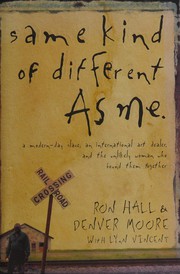
Same Kind of Different as Me
An art dealer and a formerly homeless sharecropper tell the story of the friendship that began at a Fort Worth mission and the woman who insisted on it.
2,023-word summary · 9 min read

Infidel
Ayaan Hirsi Ali's memoir of a Somali childhood, a forced marriage, a Dutch asylum claim, and the political fight that followed the murder of Theo van Gogh.
2,041-word summary · 9 min read
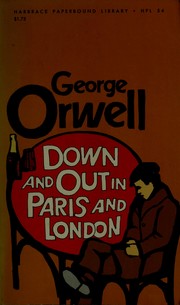
Down and Out in Paris and London
Orwell's account of washing dishes in Paris hotels and tramping through London does not ask for pity, only for a clear look at how poverty actually works.
2,282-word summary · 10 min read
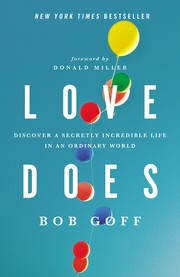
Love Does
A lawyer and activist tells stories of saying yes, showing up, and loving people through ordinary, often ridiculous actions.
2,411-word summary · 11 min read
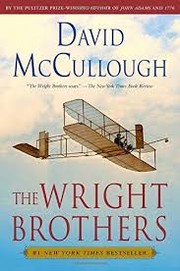
The Wright Brothers
David McCullough tells the story of two self-taught Ohio brothers, working largely alone and out of a bicycle shop, who solved the problem of flight before…
2,027-word summary · 9 min read

The Chosen
A shattered pair of glasses in a 1944 Brooklyn softball game starts a friendship between a Hasidic boy and his Orthodox neighbor, and their fathers pull them…
2,443-word summary · 11 min read

The Magnolia Story
How Chip and Joanna Gaines met, closed their first shop, nearly lost everything in a housing development, and built Fixer Upper.
2,994-word summary · 13 min read
Lone Survivor: The Eyewitness Account of Operation Redwing and the Lost Heroes of SEAL Team 10
Marcus Luttrell's account of the 2005 SEAL mission in Afghanistan that killed three of his team and left him alone.
2,144-word summary · 10 min read
Bury My Heart at Wounded Knee: An Indian History of the American West
Dee Brown's 1970 retelling of the American West from the point of view of the people it destroyed.
2,233-word summary · 10 min read
At Home: A Short History of Private Life
Bill Bryson tours his own Norfolk rectory room by room to explain how private life and the modern home got built.
2,334-word summary · 10 min read
Prisoners of Geography: Ten Maps That Tell You Everything You Need to Know About Global Politics
Tim Marshall explains how mountains, rivers, coasts, and resources shape the choices of nations, from Russia's flat borders to the chokepoints of the South…
2,328-word summary · 10 min read
The Lost City of Z: A Tale of Deadly Obsession in the Amazon
David Grann retraces Percy Fawcett's 1925 disappearance in the Amazon and finds that the lost city he sought was not entirely a fantasy.
2,493-word summary · 11 min read
The Letters of Vincent van Gogh
Vincent van Gogh's letters to his brother Theo, in a Penguin Classics selection edited by Ronald de Leeuw, trace a decade of work, faith, and obsession.
2,611-word summary · 12 min read
Exodus
Leon Uris's sweeping 1958 novel follows Jewish refugees, Haganah fighters, and Holocaust survivors from Cyprus to the founding of Israel and the 1948 war.
2,529-word summary · 11 min read
The World Is Flat: A Brief History of the Twenty-first Century
Thomas L. Friedman's 2005 bestseller argues that technology, trade, and open borders leveled the global playing field, and it names the ten forces that did it.
2,369-word summary · 11 min read
90 Minutes in Heaven: A True Story of Death and Life
A pastor declared dead at a 1989 crash scene describes ninety minutes he says he spent in Heaven, then thirteen months of surgeries, depression, and recovery.
2,246-word summary · 10 min read
Catherine the Great: Portrait of a Woman
A German princess survives a miserable marriage and a coup to rule Russia for thirty-four years, torn between Enlightenment ideas and absolute power.
2,065-word summary · 9 min read
The Warmth of Other Suns
Three migrants ride north out of Jim Crow toward Chicago and LA.
2,561-word summary · 11 min read
The New Jim Crow: Mass Incarceration in the Age of Colorblindness
How mass incarceration became a racial caste system after civil rights.
2,413-word summary · 11 min read
The History of the Hobbit, Part One: Mr. Baggins
Rateliff traces every draft of Bilbo from 1930 notes to print.
2,410-word summary · 11 min read
The Fire Next Time
Baldwin writes his nephew and faith on race in America.
2,463-word summary · 11 min read
The Emperor of All Maladies
A biography of cancer from Galen to chemo through one doctor cases.
2,255-word summary · 10 min read