
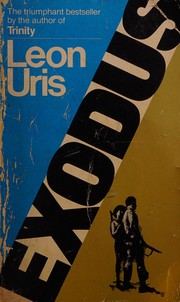
Exodus
2,529-word summary 11 min read 608 pages in the book
- First published
- 1958
- Publisher
- Bantam Books
- Pages
- 608
- ISBN
- 9780553258479
Reading options
What's inside (8 sections)
I found my copy of Exodus in a used bookshop, a thick Bantam paperback with a cracked spine and a cover that promised sweeping history. Leon Uris published the novel in 1958, and the Bantam Books edition I read runs 608 pages under ISBN 9780553258479. I knew the film with Paul Newman existed. I knew the title from the ship. What I did not expect was how completely the book throws itself into the founding of Israel, with the confidence of a writer who believes a novel can carry a nation's origin story.
That confidence is the first thing to understand about Exodus. It is not a neutral account of 1948. It is a popular epic built around Jewish survival, displacement, and statehood, and it takes sides with open enthusiasm. Reading it now means holding two things at once. The story is often gripping, and its picture of the Arab world is badly incomplete. I came away admiring the scale and distrusting the ease with which the book turns complicated history into a moral procession.
The novel begins in the cramped world of displaced persons camps on Cyprus after the Second World War. Kitty Fremont, an American nurse, works at Karaolos. She is a widow who lost her daughter, and she has learned to keep her grief behind a professional manner. The camp is full of Jewish refugees waiting for a chance to enter Palestine. The British administer the camps and restrict immigration, and the atmosphere is one of queues, tents, paperwork, and postponed lives.
The ship in the harbor
Into this setting comes Ari Ben Canaan, a sabra and a Haganah operative. He is practical, hard, and used to making decisions that other people will have to live with. With David Ben Ami, he plans to take 302 Jewish children out of Cyprus on a ship renamed Exodus. The British learn what is happening and blockade the harbor. The ship cannot leave. The refugees begin a hunger strike, and the standoff becomes a public contest of wills.
Uris stages that contest well. The children are hungry and frightened, and the adults are calculating how much pressure the British can withstand. Ari threatens to blow up the ship rather than let it be boarded. He says the children will jump overboard if the British try to stop them. Whether or not every detail is historically exact, the scene has the force of a founding myth: the weak refusing to be managed, the British caught between force and bad publicity, and the ship becoming a symbol before it has even sailed. In the novel, the British eventually allow Exodus to leave.
Kitty is drawn into the operation against her better judgment. She is not a Zionist when the book begins, and she is not a believer in heroic speeches. She is a nurse who responds to individual children. That makes her a useful pair for Ari, who thinks in terms of the movement and the state. Their relationship develops slowly, and Uris uses it to bring the political argument down to a human scale. Kitty's grief over her daughter makes her wary of attachment. Ari's certainty makes him difficult to love and difficult to dismiss.
The opening also introduces Mark Parker, an American journalist who moves between the camps and the corridors of power. Bruce Sutherland, a British officer sympathetic to the Jewish cause, shows that the novel is not content to make every Briton a villain. The book likes decent individuals caught inside bad policy. It is less interested in the people who have no place in its story at all.
Two brothers and one land
The novel keeps stepping back from the ship to explain how Ari's family reached Palestine. His father Barak and his uncle Akiva came as young men after pogroms in Eastern Europe. They changed their names and threw themselves into the work of building a Jewish homeland. They also split over how to fight for it. Barak becomes a Jewish Agency leader who believes in negotiation, immigration, and the slow construction of institutions. Akiva leads the Maccabees, a militant underground group willing to use bombs and reprisals against the British.
That division gives the novel its political spine. Barak and Akiva are brothers who love each other and disagree about almost everything. Ari belongs to the Haganah, which places him between his father's patience and his uncle's severity. Uris uses the family to dramatize arguments that were real in mandatory Palestine: whether force helps or harms the cause, whether the British are enemies or reluctant partners, and whether a future state can be built without becoming the thing it fights.
The flashbacks are among the strongest parts of the book because they give the struggle a longer memory. The novel reaches past 1948 into generations of persecution and the decision to stop waiting for permission. Uris writes those earlier chapters with a plain, driving energy. He is good at showing how a family turns a name change into a new identity and how a political argument becomes personal at the dinner table.
Ari himself is the novel's answer to the question of what that history produces. He is a soldier and a man who has little patience for sentiment when there is work to do. He can be charming, but his charm is a tool. He can be cruel, and the book usually finds a reason for it. Kitty sees both sides. She is attracted to his competence and disturbed by his certainty. That tension keeps the romance from becoming a simple reward for the hero.
The British prison at Acre and the underground's operations give the middle of the novel its action. Akiva is eventually shot by the British during a prison break, and his death lands as a cost rather than a spectacle. The book understands that the militants are not separate from the society being built. They are part of the same argument, and their bodies end up in the same ground. Barak's grief for his brother is one of the few places where the novel lets its political figures be simply human.
Karen and Dov
The emotional center of Exodus is not the ship or the battles. It is Karen Hansen Clement and Dov Landau. Karen is a German Jewish teenager who was sent to Denmark before the war. She survives there, but her family does not. She emerges from the displaced persons system with a guarded hope and a need to find out what happened to her father. Dov is a survivor of the Warsaw Ghetto and Auschwitz. He is a forger, a skill that makes him useful to the underground and a reminder of how survival can train a person for strange work.
Karen and Dov meet in a world that has already taken almost everything from them. Their love is tentative and young. Uris writes it with more tenderness than he brings to most of the political scenes. Karen wants a future that resembles an ordinary life. Dov wants Karen, and he also wants revenge. His anger is not abstract. It comes from what he saw and what he had to do to stay alive.
Karen eventually finds her father. The reunion is not the healing scene the reader hopes for. He is broken by what he has endured, and he does not recognize her. That scene is one of the novel's best arguments about the cost of the Holocaust. Survival does not guarantee wholeness. Families can be reunited on paper and still be lost to each other. Karen has spent years imagining this meeting, and the reality gives her nothing to hold.
Later, Karen is murdered by fedayeen from Gaza. The killing is sudden and brutal, and it changes the emotional temperature of the book. Dov is devastated. He had found something worth living for, and the novel takes it away. Karen's death also serves a political purpose in the story, turning grief into justification for the fight. Uris does not hide that purpose, but he does let the personal loss sit for a moment before the larger argument takes over. She remains a specific young woman who wanted a life rather than a symbol of Jewish suffering.
Partition, war, and the price
The second half of the novel moves from the underground to the state. The United Nations votes on partition, and the Jewish leadership accepts the plan while the Arab side rejects it. The book treats that vote as a moment of enormous possibility and immediate danger. Celebrations in the street are shadowed by the knowledge that war is coming. The British prepare to leave. The new state has to assemble an army, a government, and a border while fighting for its life.
Uris follows the 1948 war through several theaters. There is the battle for Safed, where Jewish forces take a city that the novel presents as essential to the Galilee. There is the siege of Jerusalem, with supply routes cut and civilians under pressure. There is the Negev, where small units try to hold ground that seems impossible to hold. The book is good at the texture of those campaigns: trucks in the dark, makeshift units, scarce ammunition, arguments between commanders, and the sense that the state is being built while it is under attack.
David Ben Ami is killed in a suicide mission in Jerusalem. His death is one of the novel's clearest examples of sacrifice without glamour. Jordana Ben Canaan, Ari's sister and a Palmach fighter, carries her own grief into the war. Barak dies of cancer and is buried beside Akiva, the two brothers united in death after a lifetime of disagreement. The novel keeps returning to the same idea: the state is paid for by particular people, and the bill is never settled.
The war chapters also show the limits of Uris's method. Battles are vivid, but they are shaped to fit the moral arc. The reader is rarely asked to sit with the fear and displacement of the Arab civilians who are being pushed out of the new state. When they appear, they are mostly obstacles, threats, or anonymous crowds. It does not extend the same imagination to the other side.
Kitty's arc runs through the war as well. She stops being an outsider who observes the cause and becomes someone who works inside it. Her medical skill gives her a place, and her love for Ari gives her a stake. By the end, she has been changed by the country and by the people she has treated. That change is one of the novel's more convincing pieces of character work, even when the plot around her becomes larger than any single life.
Why the book became a phenomenon
Exodus was a huge popular success. It spent 19 weeks at number one on the New York Times bestseller list, and by 1965 it had sold more than five million hardcover copies. The 1960 film adaptation with Paul Newman gave the story an even wider audience. For many American readers, this novel was their first detailed encounter with the founding of Israel. It shaped how they imagined the country, its soldiers, and its moral claims.
It is easy to see why. Uris writes with forward momentum. He gives the reader clear heroes and clear enemies, a family saga, a love story, and a series of dramatic set pieces. The book is long, but it rarely feels confused about where it is going. The ship, the prison break, the partition vote, and the war all arrive as stations on a road. Readers who want a large historical novel with a strong emotional pull can still be carried along by that structure.
The novel's treatment of the Holocaust is central to its power. Uris does not use the camps as a distant background. He shows survivors carrying the dead with them into the new state. Dov's anger, Karen's search for her father, and the refugees' determination to reach Palestine all grow from that history. The book argues that a state is necessary because the powerless have learned what happens when no one will take them in. That argument is presented with real force, and it is part of why the novel moved so many readers.
The politics are also simpler than the history. Uris wrote a story that justifies the Jewish claim to statehood and treats the creation of Israel as a rescue and a rebirth. There is truth in that framing, but it is not the whole truth. The novel does not give the Palestinian Arabs a serious place in its moral imagination. They are not shown as a society with its own losses, memory, and claim to the land. They are mostly a backdrop to Jewish suffering and Jewish resolve.
The side the novel cannot see
The most serious criticism of Exodus is not that it is biased. Uris was open about writing from a Jewish point of view, and a novel is allowed to have a perspective. The problem is the cost of that perspective. Arab characters are largely stereotypes: hostile, undifferentiated, and rarely given a name or an interior life that matters. The book does not reckon with the Palestinian displacement that accompanied the creation of Israel. The Nakba is not simply underplayed. For most of the novel, it is absent.
Historians have also pointed to factual liberties. The real Exodus passengers were not allowed through the British blockade and sent back to Europe, a detail the novel changes for dramatic effect. That alteration is not a small one. It turns a story of deportation and political pressure into a story of successful defiance. Uris was writing a popular novel, not a work of scholarship, but readers should know where the drama departs from the record.
It is very good at conveying why the founding of Israel mattered to Jews who had survived the camps and to a generation that had decided to fight for a homeland. It is much less good at asking what that homeland cost other people. The omission does not make the Jewish story false. It makes the novel incomplete, and the incompleteness is built into its emotional machinery.
I would not hand Exodus to someone as a first history of the conflict. I would hand it to someone who wants to understand how a powerful national story was told to American readers in the 1950s. Read it beside a good history that gives Palestinians their own voice. Then the novel becomes more interesting, because you can see both its craft and its blind spots. The ship, the children, and Karen's search still work. The silence around them is what stays with me now.
The book ends with a state that exists and a people who have paid for it. Uris wants the reader to feel that price as a victory and a wound at the same time. He succeeds often enough to make the omissions harder to forgive. That is the honest way to describe Exodus: a novel of enormous energy and genuine grief, built to persuade, and willing to leave out whatever would complicate the persuasion.
FAQ
Is Exodus by Leon Uris historically accurate?
It is a novel built on real events, but it changes details and presents a strongly pro-Israel view. The real Exodus passengers were deported rather than allowed through as the book suggests.
Who are the main characters in Exodus?
Ari Ben Canaan, Kitty Fremont, Karen Hansen Clement, Dov Landau, and Ari's father Barak and uncle Akiva drive the story. The novel follows them from Cyprus through the founding of Israel and the 1948 war.
Why is the book controversial?
Arab characters are largely stereotypes, and the novel omits or distorts Palestinian displacement during the Nakba. Uris said he wrote with deliberate bias, so it works better as a popular epic than as neutral history.
Similar books
Edge of Eternity
Five families cross civil rights, Cold War and Berlin Wall to the eighties.
2,489-word summary · 11 min read

The Zookeeper's Wife: A War Story
The directors of the Warsaw Zoo hid roughly three hundred Jews in empty cages and outbuildings after the German invasion, while Jan worked for the resistance.
2,065-word summary · 9 min read
The Orphan's Tale
A Dutch teenager rescues a Jewish baby from a death train and joins a German circus, where a Jewish aerialist teaches her to fly.
2,943-word summary · 13 min read

Sophie's Choice
A young Southern writer in 1947 Brooklyn befriends a brilliant, unstable couple and slowly learns the story of the Polish Catholic woman at the center of their…
2,798-word summary · 12 min read

The Queen's Fool
A young Jewish refugee with second sight becomes a court fool to Edward VI, Mary I, and Elizabeth, and learns what it costs to tell the truth.
2,412-word summary · 11 min read

Cleopatra: A Life
Pulitzer winner Schiff restores Cleopatra as a capable ruler, from Ptolemy debts and Caesar to Antony, Actium, and her death in 30 BC, built from coins and…
3,586-word summary · 16 min read
People of the Book
Conservator Hanna traces Sarajevo Haggadah stains back to 1480 Seville.
2,479-word summary · 11 min read
Winter of the World
Five families from Berlin to Moscow live through the Nazis, World War II, and the atomic age in Follett's second Century volume.
2,402-word summary · 11 min read
Schindler's List
Womanizing profiteer Schindler spends a fortune typing over a thousand Jews onto factory lists.
2,048-word summary · 9 min read
Shogun
An English pilot wrecked in 1600 Japan becomes a pawn in Lord Toranaga's patient bid for power, and slowly becomes Japanese himself.
2,251-word summary · 10 min read
Wolf Hall
In Mantel's Booker winner, Thomas Cromwell rises from a Putney forge to Henry VIII's council, steering the annulment crisis past Wolsey's fall toward a break…
2,911-word summary · 13 min read
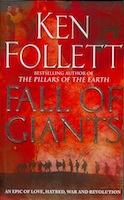
Fall of Giants
Five families from Wales to Russia live through World War I, the Russian Revolution, and the fight for women's votes.
2,255-word summary · 10 min read

Violeta
A woman born in 1920 writes her life story to her grandson, from one pandemic to another, through wealth, ruin, passion, and dictatorship in South America.
2,555-word summary · 11 min read

Long Walk to Freedom
Mandela's account of a Thembu childhood, a law practice, a banned movement, twenty-seven years in prison, and the negotiation that ended apartheid.
2,454-word summary · 11 min read

Heretics of Dune
Fifteen centuries after Leto II, the Bene Gesserit raise a new Duncan Idaho while the Honored Matres return and Rakis burns.
2,673-word summary · 12 min read
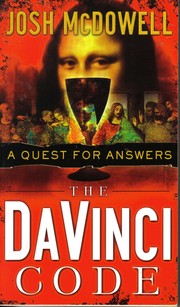
The DaVinci Code: A Quest for Answers
A short 2006 dialogue in which three friends test Dan Brown's claims about Jesus, Mary Magdalene, Nicaea, and the canon.
2,088-word summary · 9 min read
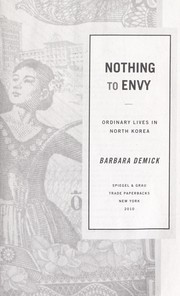
Nothing to Envy
Barbara Demick follows six defectors from Chongjin through the North Korean famine, showing how ordinary people lived, believed, and finally left.
2,068-word summary · 9 min read

Infidel
Ayaan Hirsi Ali's memoir of a Somali childhood, a forced marriage, a Dutch asylum claim, and the political fight that followed the murder of Theo van Gogh.
2,041-word summary · 9 min read
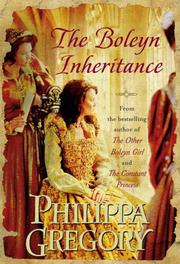
The Boleyn Inheritance
Three women narrate Henry VIII's fourth and fifth marriages: a foreign bride who survives, a teenage queen who does not, and the widow who opens the door.
2,391-word summary · 11 min read

Down and Out in Paris and London
Orwell's account of washing dishes in Paris hotels and tramping through London does not ask for pity, only for a clear look at how poverty actually works.
2,282-word summary · 10 min read
A Long Walk to Water
Two eleven-year-olds in southern Sudan, twenty-three years apart: a Dinka boy fleeing war and a Nuer girl walking hours for water, until their stories meet at…
2,217-word summary · 10 min read

Lone Survivor: The Eyewitness Account of Operation Redwing and the Lost Heroes of SEAL Team 10
Marcus Luttrell's account of the 2005 SEAL mission in Afghanistan that killed three of his team and left him alone.
2,144-word summary · 10 min read

Bury My Heart at Wounded Knee: An Indian History of the American West
Dee Brown's 1970 retelling of the American West from the point of view of the people it destroyed.
2,233-word summary · 10 min read
The Silence of the Girls
Briseis, queen of Lyrnessus, is captured by Achilles and narrates the Trojan War from inside the Greek camp, where women are prizes and survival is its own…
2,098-word summary · 9 min read
The Last of the Mohicans
During the French and Indian War, Hawkeye and two Mohican warriors try to save two British sisters from a Huron chief whose revenge will end the Mohican line.
2,017-word summary · 9 min read
The Birth of Venus
A Florentine merchant's daughter trains as an artist, marries a man who hides a secret, and survives Savonarola's bonfire of the vanities.
2,404-word summary · 11 min read

Prisoners of Geography: Ten Maps That Tell You Everything You Need to Know About Global Politics
Tim Marshall explains how mountains, rivers, coasts, and resources shape the choices of nations, from Russia's flat borders to the chokepoints of the South…
2,328-word summary · 10 min read
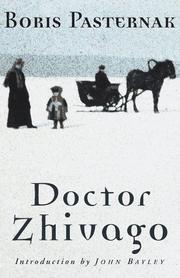
Doctor Zhivago
A doctor and poet lives through revolution, war, and love in Pasternak's novel of private life under the pressure of Russian history.
2,213-word summary · 10 min read
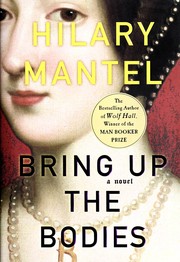
Bring Up the Bodies
Thomas Cromwell sets out to destroy Anne Boleyn, building a case from rumor and revenge while Henry VIII waits to marry Jane Seymour.
2,066-word summary · 9 min read
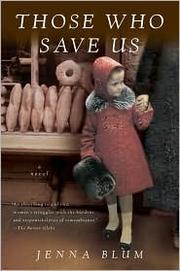
Those Who Save Us
A Minnesota professor hunts her mother's hidden wartime past in Weimar, where survival came wrapped in an SS officer's protection. A dual timeline about…
2,345-word summary · 10 min read