
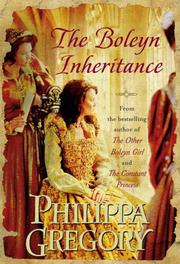
The Boleyn Inheritance
2,391-word summary 11 min read 528 pages in the book
- First published
- 2006
- Publisher
- Touchstone
- Pages
- 528
- ISBN
- 9780743272506
- Series
- The Plantagenet and Tudor Novels (#10)
Reading options
What's inside (8 sections)
I read The Boleyn Inheritance in two long sittings, which is about right for it. Philippa Gregory published it in 2006, four years after The Other Boleyn Girl, and it picks up the same family story from a different angle. Anne Boleyn is four years dead. Jane Seymour is dead too, and Henry VIII has spent two years without a wife, which in this court counts as a crisis. The book runs from 1539 to 1542 and covers the fourth and fifth marriages, the ones that get less attention than Anne and Catherine of Aragon but are just as strange.
Gregory tells it through three first-person narrators. Anne of Cleves, the German bride. Katherine Howard, the teenage cousin of Anne Boleyn. And Jane Rochford, widow of George Boleyn, the woman whose testimony helped send her own husband and sister-in-law to the block in 1536. Each chapter is dated and signed by whoever is speaking. That sounds like a small technical choice. It ends up doing most of the work, because the same court looks completely different depending on which woman is describing it.
What holds the three strands together is the title. There is an inheritance in this family, and it is not money. It is a face, a set of connections, and a habit of using daughters as currency. The Howards have been doing it for generations. Katherine Howard is the next payment, and she has no idea what the interest rate is.
Jane Rochford is called back to court
The book opens with Jane in the country, poor and half forgotten, and she hates it. She was at court once. She had a husband, a position, and a place near the center of everything. Then Anne Boleyn fell, and Jane gave evidence about what she had seen and heard, and George and Anne died. She has spent the years since telling herself a story about that. She was loyal. She was frightened. She said only what was true. Gregory lets her repeat this version of events often enough that you start to notice the cracks in it.
The Duke of Norfolk, Thomas Howard, summons her back. He needs a widow with court experience to serve the new queen, and Jane needs a way back in. The bargain is not stated out loud, but both of them understand it. She will be useful to the family, and the family will let her be near power again. Jane's chapters are the most uncomfortable in the book because she is so eager. She wants to be needed. She wants to matter. She will do almost anything for a room in the palace and a seat at the queen's table.
That hunger is the engine of the whole tragedy. Jane does not set out to ruin anyone. She drifts into it one favor at a time, and by the time she understands what she has done, the doors are locked.
Anne of Cleves arrives in England
Anne is the foreign bride, and Gregory has a lot of fun with her. She is twenty-four, tall, plain in a way that reads as healthy rather than beautiful, and completely unprepared for the English court. Her brother William, Duke of Cleves, has arranged the match for political reasons. Henry wants an alliance against France and the Emperor, and he wants a portrait that makes the deal look good. Hans Holbein paints her, and the painting flatters. Henry looks at the picture, agrees, and waits for the ship.
The first meeting goes wrong immediately. Henry, who cannot resist a bit of theater, rides to Rochester in disguise and presents himself to Anne as a stranger. He tries to kiss her. She shoves him away and curses at him in German. When she realizes who he is, she is horrified and tries to apologize, but the damage is done. Henry has a long memory for humiliation, and he has just been rejected by a woman he already suspected was not pretty enough.
They marry at Greenwich in January 1540 anyway. The wedding night is a disaster that Gregory plays for both comedy and dread. Anne has been raised so strictly that nobody has told her what marriage involves. She does not understand what Henry wants, and Henry, who is nearly fifty, obese, and nursing an ulcer on his leg, is in no mood to be patient. Within days he is complaining to his ministers that the marriage was never consummated and that he has been badly used.
The book is very good on Anne's isolation. She speaks almost no English, plays no instrument, cannot sing or dance, and has been taught that ornament and flirtation are sinful. The court reads all of that as dullness. But Anne is not stupid. She learns English fast. She watches. She is kind to Mary and Elizabeth, and she is gentle with the little Prince Edward, and those kindnesses cost her with Henry, who does not want his daughters encouraged. Her friendship with Jane Rochford begins as a practical arrangement and becomes something closer to real affection, which is one of the few warm things in the novel.
By summer Henry wants out. Thomas Cromwell, the minister who put the marriage together, is arrested and executed. Anne is asked to consent to an annulment on the grounds of a pre-contract with the son of the Duke of Lorraine and on the claim that the marriage was never consummated. She agrees. She is intelligent enough to see that refusing means following Cromwell to the block. The settlement gives her Richmond Palace, Hever, a generous income, and the title of the King's sister. She becomes, in effect, the only one of Henry's wives who gets a pension and a life.
Katherine Howard catches the King's eye
Katherine Howard is fourteen when the book starts, living at Lambeth with her step-grandmother, the Dowager Duchess of Norfolk. Gregory paints that household as badly supervised and full of bored young people. Katherine has already had a music teacher, Henry Mannox, pay her attentions she did not know how to refuse, and she has an understanding with Francis Dereham, a secretary in the household. They call each other husband and wife. They share a bed. She is a child who has been allowed to play at being an adult and has no idea that any of it will follow her.
Her uncle Norfolk sees the main chance. Katherine is pretty, pliable, and related to the right people. He arranges for her to join Anne of Cleves's household as a lady-in-waiting, and Henry notices her almost at once. The courtship is grotesque in a way the novel does not soften. A girl who likes dancing and new dresses is given gifts by a man old enough to be her grandfather, and everyone around her, including her own family, tells her that this is the best thing that could happen to her.
They marry in July 1540, days after the annulment. Katherine is queen, and for a while she loves it. The dresses, the jewels, the attention, the ability to reward her friends and punish people who snubbed her. Gregory is good at showing how queenship looks from the inside to a teenager: a room full of people who agree with you, and a husband who visits when he wants something.
Then the reality sets in. Henry's leg smells. He is huge and in pain and his temper is worse than ever. Katherine is expected to produce a son, and Henry, who already has doubts about his own potency, is not an easy partner. Mary, nearly ten years older, treats her with open contempt. And Katherine, who has never been taught to think about consequences, begins to look for something that feels like affection.
Jane Rochford builds the trap
This is where Jane's story and Katherine's story lock together. Jane becomes Katherine's closest attendant, her confidante, her alibi. She is the one who knows the back stairs, who can hold a door, who can say the queen is resting. She tells herself she is helping a young woman survive a miserable marriage. She is also, quietly, enjoying the power. The queen needs her. The queen trusts her. For a woman who has spent years being the widow nobody wanted at dinner, that is a powerful drug.
Gregory makes the seduction mutual. Katherine falls for Thomas Culpeper, a handsome young gentleman of the King's privy chamber, and Jane encourages it. She arranges meetings. She stands guard. She carries messages. The novel has a scene where Katherine and Culpeper meet in a room while Jane waits outside, and Jane's interior monologue is a tangle of excitement and self-justification. She is not doing this for love. She is doing it because being in the middle of a secret makes her feel alive again.
The affair is not the only danger. Francis Dereham comes back. Katherine's grandmother sends him to court looking for a post, and Katherine, who should have sent him as far away as possible, gives him a place in her household. He knows too much. He talks. Katherine's old life is not buried as deep as she thought, and the people around her have long memories and no reason to protect her.
The novel is careful about the mechanics of the fall. It is not one dramatic betrayal but a chain of small ones. A reformer named John Lascelles hears the old stories from his sister, who had been in the Duchess's household, and takes them to Archbishop Cranmer. Cranmer, who has his own reasons for wanting to be useful to the King, writes the allegations down and puts them in front of Henry. The King's first reaction is disbelief, then rage, then the cold machinery of an investigation.
Dereham is arrested and taken to the Tower. Under torture he confesses, and he names Culpeper. Culpeper is arrested too and confesses. Katherine's letter to Culpeper is found, in her own handwriting, and that is the end of any defense. The men are tried and executed in December 1541. Dereham is hanged, drawn, and quartered. Culpeper is beheaded. Their heads go up on London Bridge.
Katherine is not tried in a courtroom. Parliament passes a bill of attainder declaring her guilty, and the law is written so that a queen who fails to disclose her sexual history within twenty days of marriage commits treason. It is a legal shortcut dressed up as justice. Jane is arrested as well, and when she collapses into something that looks like madness, the crown simply changes the rules again so that a mad person can be executed for treason too.
The block, and the woman who survives
The last fifty pages are hard to read, and Gregory does not look away. Katherine spends her imprisonment at Syon and then the Tower, and the girl who loved clothes and dances is reduced to a frightened child who cannot understand why the people she trusted have vanished. Her family stays away. The Howards, who pushed her forward, do not want to be splashed with the same blood. In Gregory's version she uses her last speech to say that she would rather have died Culpeper's wife than a queen, which is the line history remembers, and which lands here as both defiance and confession.
Jane Rochford goes to the block with her. Gregory has her unravel before the end, haunted by the husband and sister-in-law she helped kill, seeing their faces in the crowd. It is a fictional deepening of a historical mystery, since the real Jane's mental state is not well documented. It works as a closing argument about guilt. Jane spent years telling herself a story about her own innocence, and the story finally stops holding.
Anne of Cleves is the one who walks away. She is living comfortably in one of her houses when the executions happen, and she lives on, through Henry's sixth marriage and his death. She outlives Katherine by fifteen years. Gregory gives her the last word, or close to it, and the effect is strange and satisfying. The woman everyone dismissed as plain and foreign turns out to be the one who understood the rules well enough to survive them.
What works and what does not
The three voices are the best thing in the book. Anne's chapters are funny and sharp and full of the relief of a woman who has stopped pretending. Katherine's chapters are all appetite and confusion, and Gregory is honest about how young she is. Jane's chapters are the most complex, because she is the only narrator who is actively lying to herself, and the reader can see the seams.
The weaknesses are real. Gregory has a habit of repeating a character's central anxiety in almost the same words every few chapters. Anne worries about being ugly and unwanted. Katherine wants pretty things. Jane wants to be needed. After a hundred pages you can predict the interior monologue before you read it. The middle section, with its round of wedding nights and political waiting, sags. And the history is bent in places to make a cleaner story, especially the compressed timeline of Katherine's affair and the amount of access Jane has to the queen's private rooms.
The novel is also much kinder to Anne of Cleves than to almost anyone else, and that affection occasionally flattens her. She is given a modern sort of common sense that makes her easy to root for and a little too easy to understand. The real Anne is a stranger figure than this, and the book knows it but does not always want to admit it.
Readers who want a strict, source-based account of the Tudor court will bounce off it. Gregory writes novels, not history, and she fills the gaps with invention. Readers who want a fast, immersive, emotionally direct story about women surviving a system designed to use them will find a lot here. The Boleyn Inheritance is not subtle about its themes, but it is serious about its people. It gives Katherine Howard the dignity of being more than a cautionary tale, and it lets Anne of Cleves be the cleverest person in the room. That is worth the read.
FAQ
Do I need to read The Other Boleyn Girl first?
No. This book stands alone, though it helps to know that Anne Boleyn and her brother George were executed in 1536 after Jane Rochford testified against them.
Which wives does The Boleyn Inheritance cover?
It covers Henry VIII's fourth and fifth marriages, to Anne of Cleves in 1540 and Katherine Howard from 1540 to 1542. Jane Seymour's death in 1537 sets the story in motion.
How does Anne of Cleves survive?
She agrees to an annulment instead of fighting the king, and the settlement gives her houses, an income, and the title of the King's sister. She outlives both Katherine and Henry.
Similar books
More from The Plantagenet and Tudor Novels first, then related titles.

The White Queen
Elizabeth Woodville secretly marries Edward IV and fights to keep her children safe as earls turn and kings fall. Told in her voice, it mixes court politics…
2,926-word summary · 13 min read
The Constant Princess
Catalina of Spain becomes Katherine, outlasts poverty and spies, and wins Flodden as Henry's queen.
2,065-word summary · 9 min read
The Queen's Fool
A young Jewish refugee with second sight becomes a court fool to Edward VI, Mary I, and Elizabeth, and learns what it costs to tell the truth.
2,412-word summary · 11 min read
Bring Up the Bodies
Thomas Cromwell sets out to destroy Anne Boleyn, building a case from rumor and revenge while Henry VIII waits to marry Jane Seymour.
2,066-word summary · 9 min read
The Marriage Portrait
Fifteen year old Lucrezia Medici marries Ferrara's duke and sits for a portrait shadowed by menace.
2,031-word summary · 9 min read

Violeta
A woman born in 1920 writes her life story to her grandson, from one pandemic to another, through wealth, ruin, passion, and dictatorship in South America.
2,555-word summary · 11 min read

The Shadow Sister
Star D'Apliese steps out of her sister's shadow and follows a bookshop clue into the Edwardian life of Flora MacNichol, a woman who gave up love for duty.
2,260-word summary · 10 min read

Howards End
Forster's 1910 novel follows two families, a house in Hertfordshire, and a burned note, asking whether money and feeling can ever be connected.
2,187-word summary · 10 min read
Only Time Will Tell
A Bristol dockworker's son wins a scholarship, falls in love with the daughter of the family that owns the shipyard, and learns that his father's death was not…
2,082-word summary · 9 min read

On Chesil Beach
Two newlyweds spend one terrible night on Chesil Beach in 1962, and the rest of their lives is decided by it.
2,456-word summary · 11 min read
Loving Frank
Mamah Borthwick Cheney leaves her family for Frank Lloyd Wright, and their affair becomes a public scandal that ends in tragedy at Taliesin.
2,034-word summary · 9 min read

Exodus
Leon Uris's sweeping 1958 novel follows Jewish refugees, Haganah fighters, and Holocaust survivors from Cyprus to the founding of Israel and the 1948 war.
2,529-word summary · 11 min read
Death Comes to Pemberley
P.D. James drops a murder onto the Pemberley estate and sends Wickham to trial, reading Austen's most famous marriage through the machinery of Georgian justice.
2,318-word summary · 10 min read
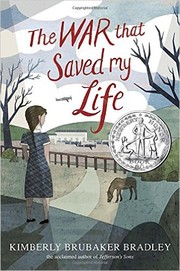
The War That Saved My Life
Ten-year-old Ada has never left her London flat, hidden away because of her clubfoot. Wartime evacuation sends her to Kent, where a reluctant guardian and a…
2,252-word summary · 10 min read
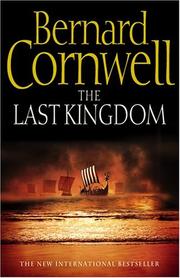
The Last Kingdom
Kidnapped by Danish raiders as a boy and raised in their halls, Uhtred of Bebbanburg must choose what he is when the fight for England begins.
1,997-word summary · 9 min read

Edge of Eternity
Five families cross civil rights, Cold War and Berlin Wall to the eighties.
2,489-word summary · 11 min read
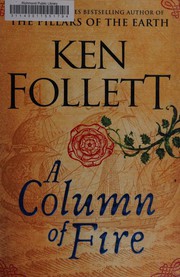
A Column of Fire
Spies and lovers cross Tudor England as Mary and Elizabeth fight for the crown and faith.
2,029-word summary · 9 min read
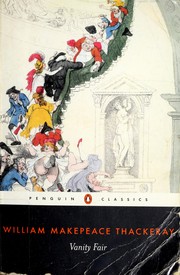
Vanity Fair
Becky Sharp schemes her way up Regency society while loyal Amelia waits, in Thackeray's witty novel without a hero.
2,698-word summary · 12 min read

Trust
Four rival accounts of one Wall Street fortune collide: a 1930s novel, a tycoon's memoir, a secretary's story, and a wife's diary.
2,217-word summary · 10 min read
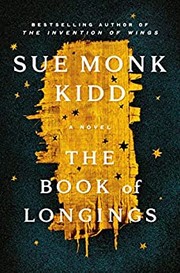
The Book of Longings
In first-century Galilee, Ana marries Jesus of Nazareth and fights to write women's stories in a world set against her voice.
2,368-word summary · 11 min read
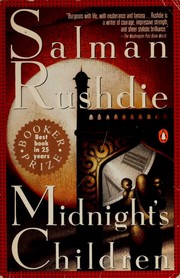
Midnight's Children
Saleem Sinai, born at India's independence midnight, narrates his family's saga as his life mirrors the new nation's history.
2,734-word summary · 12 min read
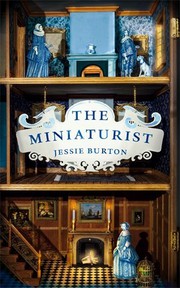
The Miniaturist
A new bride in 1686 Amsterdam gets a dollhouse replica of her home, and its tiny figures start to reveal what the Brandt family hides.
2,865-word summary · 13 min read

Winter of the World
Five families from Berlin to Moscow live through the Nazis, World War II, and the atomic age in Follett's second Century volume.
2,402-word summary · 11 min read

Year of Wonders
A maid in plague-hit Eyam nurses neighbors, loses her sons, and finds skill and doubt in 1666.
2,563-word summary · 11 min read
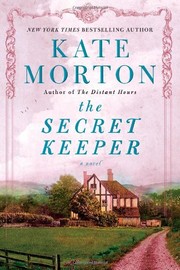
The Secret Keeper
A girl watches her mother kill a stranger in 1961; fifty years later she digs into her mother wartime London past.
2,262-word summary · 10 min read
Middlemarch
Idealistic Dorothea marries dry scholar Casaubon while ambitious doctor Lydgate marries Rosamond, and a Midlands town watches both marriages strain.
2,883-word summary · 13 min read

Evidence of the Affair
Two strangers trade letters after learning their spouses are having an affair in 1970s California.
3,000-word summary · 13 min read

The Story of a New Name
Married Lila and student Elena grow apart and collide again across shops, Ischia, and Pisa.
2,523-word summary · 11 min read

Shogun
An English pilot wrecked in 1600 Japan becomes a pawn in Lord Toranaga's patient bid for power, and slowly becomes Japanese himself.
2,251-word summary · 10 min read
Wolf Hall
In Mantel's Booker winner, Thomas Cromwell rises from a Putney forge to Henry VIII's council, steering the annulment crisis past Wolsey's fall toward a break…
2,911-word summary · 13 min read