
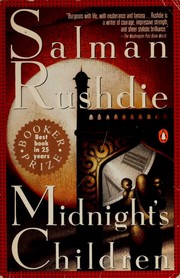
Midnight's Children
2,734-word summary 12 min read 446 pages in the book
- First published
- 1981
- Publisher
- Jonathan Cape
- Pages
- 446
- ISBN
- 9780224018234
Reading options
What's inside (8 sections)
I put off reading Midnight's Children for years because of its reputation. Booker Prize winner, giant of postcolonial fiction, supposedly difficult. People talk about it the way they talk about mountains they have not climbed. Then I finally started it on a long weekend and found something I had not expected. It is funny, chatty, rude, and warm, even while it is telling a hard history. The narrator talks to you directly, apologizes, brags, backtracks, and begs you to keep listening. Once I gave in to his voice, the 446 pages of the Jonathan Cape first edition from 1981 moved faster than books half its length.
The setup is famous. Saleem Sinai is born at the exact stroke of midnight on August 15, 1947, the moment India becomes independent. His life is tied to the fate of the country from that second onward. Prime Minister Jawaharlal Nehru even sends his parents a letter predicting the child will mirror the nation. Saleem grows up believing this literally. Everything that happens to India happens to him in miniature, and everything that happens to him means something about India. The novel follows him from his grandparents' generation through partition, childhood in Bombay, war, loss, and the dark years of the Emergency in the 1970s, all narrated by Saleem himself as a thirty-year-old man who feels his body falling apart and is racing to finish his story.
Three generations before the stroke of midnight
Rushdie spends the first large part of the book on Saleem's family before Saleem exists, and this history matters because the novel keeps insisting that people are made by the past. It starts with Saleem's grandfather, Dr. Aadam Aziz, a Kashmiri Muslim doctor trained in Germany who returns home in 1915 full of modern ideas and then slowly loses his faith. His courtship of Naseem, the daughter of a landowner, happens through a sheet with a hole in it, since her father allows the doctor to examine her one hidden part at a time. It is a strange, comic, sad image, and it sets up how the book treats love and custom. They marry, Naseem grows into the formidable Reverend Mother of the family, and their daughter Mumtaz becomes Saleem's mother under a new name.
The family moves through the convulsions of early twentieth century India. Aadam Aziz joins pro-independence agitation, survives the shock of the Jallianwala Bagh massacre in Amritsar in 1919, where British troops fired on an unarmed crowd, and carries that wound into everything after. Mumtaz marries a poet, the marriage fails, and she remarries a Delhi businessman named Ahmed Sinai, taking the name Amina. The couple moves to Bombay and buys a house on Methwold's Estate from an Englishman named William Methwold who insists, as a condition of sale, that the buyers keep everything exactly as the British left it, down to the furniture and the cocktail hour. The Sinais agree, and then slowly let the British habits rot away. That estate, with its big houses and mixed neighbors, becomes the stage for Saleem's childhood, a little model of a new country trying to decide what to keep and what to throw out.
I found this opening section slower than what follows, but it pays off. By the time Saleem is born, you know the weight of religion, money, migration, and pride sitting on his parents. You also learn how Rushdie writes history. He never gives you a textbook paragraph. He filters big events through gossip, family quarrels, smells, food, and small humiliations. The massacre matters because of what it does to the doctor's nose and prayers. Partition matters because of which street a family ends up on. This method can feel loose if you want dates and causes, but it is deliberate. The book argues that people remember nations the way they remember families, in fragments tied to feeling.
Born at midnight and switched at birth
Saleem's birth scene is the hinge of the whole novel. Amina goes into labor in a Bombay nursing home as the radio plays the independence celebrations. At the same moment, another woman named Vanita, the wife of a street musician called Wee Willie Winkie, gives birth to a son fathered in secret by Methwold, the departing Englishman. The nurse on duty, Mary Pereira, is heartbroken and politically confused and in love with a revolutionary, and in a rush of feeling she swaps the two babies. The rich couple takes home the poor child, and the poor family takes home the rich one. Saleem, the child raised as Ahmed and Amina's son, is biologically the son of Vanita and Methwold. Shiva, the child raised in poverty who becomes Saleem's rival, is the true biological heir of the Sinais.
Rushdie does not hide this twist for long. Saleem tells you fairly early, because the point is not surprise but meaning. The midnight child of independent India turns out to be part English, part street poor, raised rich, and entirely mixed. His supposed destiny as the mirror of the nation is built on a mistake, which is exactly Rushdie's joke about national stories. Countries tell clean tales about who they are. Real origins are messier, full of accidents and secrets nobody writes on monuments.
Childhood in Bombay gives the book its most joyful stretch. Saleem grows up with an enormous nose that never stops running, big curious eyes, and a head full of voices. The Methwold estate children form a gang, the neighbors quarrel over language and religion and film songs, and Saleem's parents fight about money and respectability. Saleem gets hit in the head in ways that change him, hides in a washing chest to spy on his mother, and discovers at around age nine that he can hear other people's thoughts by tuning his mind like a radio. The telepathy scenes are wonderful. He describes sorting through the noise of the city, finding one clear voice, then dozens, then a whole parliament of children yammering inside his skull. For a while the book feels like a Bombay childhood memoir crossed with a superhero origin, and I liked it best here.
The thousand and one children and the rival with strong knees
The middle of the novel opens outward into its famous fantasy device. Saleem learns that every child born in India between midnight and 1 a.m. on independence night has strange gifts, and the closer to midnight, the stronger the power. There are 1,001 of them. One can travel through mirrors. One changes sex. One speaks every language. Saleem, born exactly on the stroke, is the strongest, and his gift is gathering them all into a midnight parliament inside his head, where they debate what to do with their powers. The meetings fall apart over the same things that split real politics. Language, region, religion, caste, pride. The children from rich families look down on the poor ones. The Bombay kids mock the Madras kids. Saleem tries to keep order and fails, and the conference dissolves. It is a clear image of a young democracy, but Rushdie keeps it playful enough that it never reads like a lesson.
Shiva, Saleem's swapped brother, is the shadow across all of this. Where Saleem is round-faced, snotty, talkative, and soft, Shiva is handsome, strong, and brutal, famous for his huge knees that can crush things. His gift is war. He becomes a soldier and a hero in the wars with Pakistan, while Saleem drifts. Their rivalry is personal and political at once. Two boys born the same minute, one raised with everything and one with nothing, both cheated by the swap, circling each other for decades. Saleem fears Shiva and pities him and cannot stop comparing himself. Their final confrontations late in the book carry real menace because Rushdie has spent hundreds of pages making them brothers in every way except the official story.
Fair warning for new readers. This section is also where the book sprawls. Saleem chases side stories, repeats himself, loses threads, and apologizes to his listener. He hides in a washing chest for pages while his mother meets her old flame. He spends long chapters on neighbors like the film magnate Homi Catrack and the sabotaged love affair of Lila Sabarmati and her husband Commander Sabarmati, which ends in a shooting that sets Bombay gossip alight. Some of these detours delighted me. The Sabarmati shooting and the estate politics are vivid and funny. Others tested me, especially when Saleem lectures about language riots or film songs while the main plot waits. If you like novels that wander, you will be happy. If you want a tight plot, you will need patience.
History keeps walking into the house
What makes the novel more than a family saga is how national events keep breaking through the front door. Partition scatters the family and redraws maps while Saleem is still small. Language marches divide Bombay. Saleem's sister, called the Brass Monkey and later Jamila Singer, becomes Pakistan's most famous voice while refusing to be seen. The family moves to Pakistan for a stretch, and Saleem grows into an awkward teenager there, lost between countries the way teenagers get lost between houses after a divorce.
The wars arrive in full. Saleem serves as a human bloodhound in the army during the 1965 and 1971 wars with Pakistan, using his superhuman nose to sniff out danger after a head injury wipes his memory and leaves him strangely blank. Rushdie writes the Bangladesh war of 1971 in brutal, surreal chapters, with a forest of suspicion, magical escapes, and a giant ayah figure, and then lands the horror plainly. Villages burned, people disappeared, cruelty on all sides. The fantasy thins out here on purpose. When the killing starts, Saleem's powers go quiet, as if even magic is embarrassed.
Then comes the Emergency, the section that still angers readers in India. In 1975 Prime Minister Indira Gandhi suspends civil liberties, jails opponents, and rules by decree. Her son Sanjay Gandhi drives a program of forced sterilizations and slum clearances. Rushdie turns this into Saleem's personal catastrophe. Saleem is picked up, interrogated, and surgically sterilized, his powers drained along with his future children. The midnight's children are rounded up and destroyed as a group, their gifts cut out of them. The Widow, as Rushdie calls Indira Gandhi through the whole book, becomes a near-mythic villain with hair parted like a wound. Supporters of the Congress party have always objected to this portrait, and even sympathetic readers may feel the satire tip into hatred. I thought it was the bravest and least controlled part of the book. The anger is real, but it flattens people who in earlier chapters were allowed to be complicated.
How Saleem tells it: pickles, Padma, and beautiful lying
The frame story holds all of this together. Saleem narrates from a pickle factory in Bombay run by the Braganza company, where Mary Pereira, the same nurse who swapped him, now works. He writes and talks at once, addressing his tale to Padma, his strong-armed, superstitious, loving listener who keeps interrupting. Padma wants love scenes and clear morals. Saleem wants to chase metaphors. She tells him he is going too fast or too slow, complains when he hides behind fancy words, and pushes him to admit what he actually feels. Their bickering is the best guide to how to read the book. Whenever I got lost, Padma got lost first and asked the question I needed.
Pickles are the governing image. Saleem says his story is like chutney, flavors packed in jars, past preserved with salt and heat, each chapter a different mix of sweet and sour. Memory, he insists, is not a record but a recipe. You chop, you season, you get the taste slightly wrong and call it true. He even warns you that he misremembers dates and names and refuses to fix them. At one point he admits he gave a wrong date for an assassination and leaves the error standing, saying his mistake is part of how the past lives in him. Some readers find this thrilling. Others find it a cheat that lets Rushdie dodge fact-checking. I landed in the middle. The pickle talk explains the style well, but it also excuses stretches where the book coasts on wordplay instead of doing the harder work of showing what happened.
The language itself deserves its own note. Rushdie writes English stuffed with Bombay slang, Hindi and Urdu words, film lyrics, advertising jingles, and long looping sentences that pile clauses until they topple into jokes. He loves lists, smells, and crowd scenes. A street comes alive in a paragraph through sweat, frying oil, marigolds, and bus horns. At his best, nobody writes a city better. At his most indulgent, the sentences show off. I underlined lines about noses and crowds and ghosts that I will keep for years, and I skimmed a few passages where the puns stacked so high they blocked the view. New readers should know both things are normal here.
The fair criticisms beyond style are worth stating plainly. Women in the book are drawn with force but often through Saleem's hungry gaze. Breasts, hips, and wombs get described so often that several characters feel reduced to their bodies even when the plot grants them power. Jamila, Parvati-the-witch, and Padma all push back in their own ways, and Naseem the Reverend Mother dominates every room she enters, but the male stare never fully lifts. The book is also long in the way of someone who loves his own voice. Saleem tells you he is cracking apart and must hurry, then spends forty pages on a neighbor. I forgave most of this because the voice charmed me, but on tired evenings I felt the length.
The ending and who should read it
The last movement brings Saleem back to Bombay, broken, sterilized, stripped of his parliament of children, caring for a son who may not be his by blood but is his by love. Parvati, the witch of the midnight's children, has loved him and borne a child named Aadam Sinai fathered by Shiva, and Saleem raises the boy as his own after Parvati dies. Young Aadam is strong-willed and fierce where Saleem was soft, with ears that hear too much, and Saleem takes hope from him. The final pages move toward Saleem's thirty-first birthday on August 15, 1978, which he expects will also be his death, when his cracked body finally crumbles into millions of pieces and rejoins the crowd. He marries Padma in a ceremony that is half apology and half gratitude. He finishes his jars of pickles and his chapters at the same time.
I will not spoil the exact final image beyond saying it mixes dread and tenderness. Saleem walks into the future fearing he will dissolve and hoping his son will hold. The country he mirrored has survived Emergency and voted the authoritarians out, limping but alive. The book closes on the idea that a self, like a nation, is not one clean thing but millions of specks pressed together, always coming apart and reforming. It sounds grand put that way. On the page it reads intimate, because by then you know the specks by name.
Who is this book for now? Anyone interested in India, in big novels that mix history with fantasy, in narrators who talk like friends. Readers who loved the playfulness of writers like Gabriel Garcia Marquez or Gunter Grass will feel at home, and Rushdie openly invites the comparison to Grass and his Tin Drum. Readers who want a straight history of independence and partition should look elsewhere first and come here second. Readers who dislike long sentences, detours, and bodily humor will struggle, since the book has all three in abundance. It won the Booker Prize in 1981, then later won special prizes naming it the best of all Booker winners, which tells you how critics rate it, but prizes do not tell you whether you will enjoy Tuesday night with it. I enjoyed most nights with it and argued with it on others, which seems like the right relationship for a book this alive. If you start, give it a hundred pages before you judge. The family history is the slow climb. Bombay childhood is the view.
FAQ
When was Midnight's Children published and did it win the Booker?
Jonathan Cape published it in London in 1981, with the first edition running 446 pages. It won the Booker Prize that year.
Is Midnight's Children part of a series?
No, it stands alone. The list title uses a curly apostrophe but the published title uses a straight one, Midnight's Children.
Who are the midnight's children?
The 1,001 children born in independence night's first hour have gifts, with Saleem strongest because he was born exactly at midnight.
Similar books

Violeta
A woman born in 1920 writes her life story to her grandson, from one pandemic to another, through wealth, ruin, passion, and dictatorship in South America.
2,555-word summary · 11 min read
The Storyteller's Secret
A New York journalist goes to India to learn why her grandmother loved a British officer, and why a family servant kept the truth for forty years.
2,270-word summary · 10 min read
Bring Up the Bodies
Thomas Cromwell sets out to destroy Anne Boleyn, building a case from rumor and revenge while Henry VIII waits to marry Jane Seymour.
2,066-word summary · 9 min read
The Island of Missing Trees
A talking fig links 1970s Cyprus lovers Kostas and Defne with their grieving London daughter Ada years later.
3,172-word summary · 14 min read
The Covenant of Water
Three generations of a Kerala family face a drowning affliction from 1900 to 1977, from child bride Big Ammachi to physician Mariamma who seeks its cause.
2,955-word summary · 13 min read
The Wind-Up Bird Chronicle
An unemployed Tokyo man hunts a lost cat, then his missing wife, and slips from quiet suburbs into wells and wartime memory.
3,344-word summary · 15 min read
The Boleyn Inheritance
Three women narrate Henry VIII's fourth and fifth marriages: a foreign bride who survives, a teenage queen who does not, and the widow who opens the door.
2,391-word summary · 11 min read

Sophie's Choice
A young Southern writer in 1947 Brooklyn befriends a brilliant, unstable couple and slowly learns the story of the Polish Catholic woman at the center of their…
2,798-word summary · 12 min read

Fathers and Sons
Arkady brings the nihilist Bazarov home to his father's estate, and a generational argument turns into love, a duel, and an early death.
2,192-word summary · 10 min read
Dance Dance Dance
A divorced Tokyo writer returns to a Sapporo hotel that has been rebuilt, then follows a woman who may be a ghost and a teenage girl through a mystery about…
2,407-word summary · 11 min read
The Lowland
Two brothers grow up beside a marshy lowland in Calcutta, and the choices of the younger one draw the older into a life of duty, distance, and quiet grief that…
2,213-word summary · 10 min read
Once Upon a River
A wounded man stumbles into a riverside inn carrying what appears to be a drowned child who is not quite dead, and the story braids the guesses of everyone who…
2,173-word summary · 10 min read
Stones from the River
Trudi Montag is born a dwarf in a small German river town in 1915 and grows up to keep the town's library and its secrets, from the First World War to the…
2,818-word summary · 13 min read

Ivanhoe
A disinherited Saxon knight, a great tournament, a besieged castle and a trial by combat. Scott's most famous novel, set in England in 1194.
2,834-word summary · 13 min read
Euphoria
Three anthropologists in 1930s New Guinea turn fieldwork into a love triangle, and a real history breathes behind them.
2,048-word summary · 9 min read

Wide Sargasso Sea
Jean Rhys gives the first Mrs. Rochester a Caribbean childhood, a marriage built on money and suspicion, and a voice that Charlotte Bronte left in the attic.
2,021-word summary · 9 min read
The Sisters Brothers
Two hired killers ride from Oregon to Gold Rush California to murder a prospector, and find their trade, their brotherhood, and the frontier myth coming apart.
2,095-word summary · 9 min read
The Silence of the Girls
Briseis, queen of Lyrnessus, is captured by Achilles and narrates the Trojan War from inside the Greek camp, where women are prizes and survival is its own…
2,098-word summary · 9 min read
The Queen's Fool
A young Jewish refugee with second sight becomes a court fool to Edward VI, Mary I, and Elizabeth, and learns what it costs to tell the truth.
2,412-word summary · 11 min read

The Birth of Venus
A Florentine merchant's daughter trains as an artist, marries a man who hides a secret, and survives Savonarola's bonfire of the vanities.
2,404-word summary · 11 min read
Mother Night
Howard W. Campbell Jr., a Nazi propagandist and American spy, tells the story of his double life from an Israeli prison cell while waiting to be tried for war…
1,988-word summary · 9 min read

The Tiger's Wife
A young doctor in a war-scarred Balkan country chases the stories her grandfather left behind, including a deathless man and a deaf girl who loved an escaped…
2,232-word summary · 10 min read
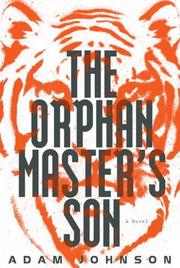
The Orphan Master's Son
Adam Johnson's Pulitzer-winning novel follows Pak Jun Do from a North Korean orphanage to a deadly identity swap, under a state whose loudspeakers never stop…
2,219-word summary · 10 min read
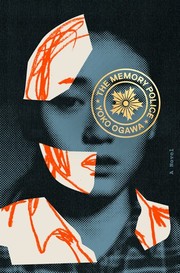
The Memory Police
On an unnamed island, ordinary things keep vanishing from memory, and a novelist hides her editor from the police who make sure the vanished stay forgotten.
2,440-word summary · 11 min read
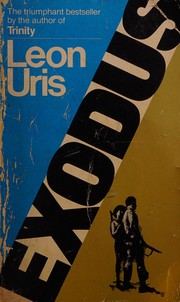
Exodus
Leon Uris's sweeping 1958 novel follows Jewish refugees, Haganah fighters, and Holocaust survivors from Cyprus to the founding of Israel and the 1948 war.
2,529-word summary · 11 min read
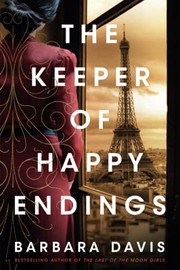
The Keeper of Happy Endings
Barbara Davis's 2021 standalone braids a Paris dressmaker's wartime losses with a grieving Boston artist who unlocks her family's secrets through an old row…
2,437-word summary · 11 min read
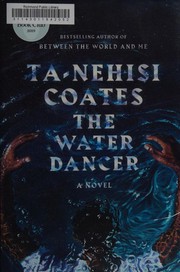
The Water Dancer
An enslaved man with a strange power for travel fights to free himself and rescue those he loves.
2,910-word summary · 13 min read
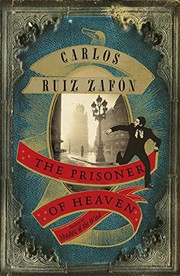
The Prisoner of Heaven
Fermin Christmas past returns with a stranger and a prison debt.
2,388-word summary · 11 min read
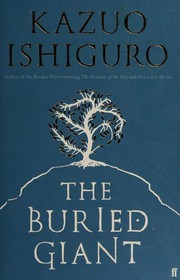
The Buried Giant
An old couple crosses a misty post Arthur Britain searching for a son.
2,593-word summary · 12 min read
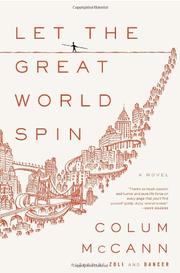
Let the Great World Spin
A wire walker crosses the towers as Bronx lives collide below.
2,338-word summary · 10 min read