
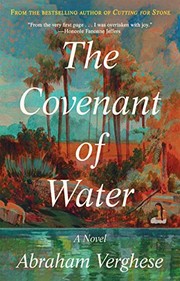
The Covenant of Water
2,955-word summary 13 min read 736 pages in the book
- First published
- 2023
- Publisher
- Grove Press
- Pages
- 736
- ISBN
- 9780802162175
Reading options
What's inside (8 sections)
I picked up The Covenant of Water because Cutting for Stone had stayed with me for years. I still remembered the twins in Addis, the missing mother, the way surgery felt like family business in that book. When I heard Verghese had spent fourteen years on a follow up set in South India, I put it on my list at once. Then I saw the size and stalled. The first American hardcover from Grove Press, published May 2, 2023, runs 736 pages. That is a commitment.
I finally started it on a quiet week when I could read in long stretches. That helped. This is not a book to read in ten minute bursts between chores. It asks for patience, and for the most part it pays that back.
The frame is simple to state and large to live inside. From 1900 to 1977, in Kerala on the Malabar Coast, three generations of a Saint Thomas Christian family at an estate called Parambil live with what they call the Condition. In each generation at least one person dies by drowning. Hearing loss, dizziness, a strange pull toward heights and water, then a death in a ditch or river or sea. Kerala is all backwaters and monsoon and wells and sea, so water cannot be avoided. The family keeps a genealogy they mark with signs, a Water Tree, and they worry over every child who cannot hear well or who loves climbing too much.
Verghese splits the story between Parambil and the medical world around it. One thread follows the women who hold the house together. The other follows two outsider doctors, a Scot named Digby Kilgour and a Swede named Rune Orqvist, who run a leprosy hospital called Saint Bridget, and the way their lives braid into the family through marriage, friendship, and finally parentage.
A twelve year old bride at Parambil
The book opens in 1900 in Travancore. Mariamma is twelve. Her father, a priest who wanted her to stay in school and even go to college, has died of a fever with black urine after a posting in a damp hill parish. Her mother is now at the mercy of her brother in law. Her uncle arranges a match with a wealthy widower of forty who needs a mother for his small son.
The wedding journey by boat is one of the best early passages. Mariamma and her mother travel with the groom's sister Thankamma to a church said to go back to Saint Thomas. The groom takes one look at how young Mariamma is and walks out. He is only ten years older than his own son in some tellings, closer to a father to her than a husband. Thankamma talks him back. She tells him leaving will ruin the girl. The ceremony goes ahead quickly.
Parambil itself feels cut off on purpose. It is a big house on about five hundred acres, run day to day by Shamuel, a man of the pulayar caste whose family has worked for the house for generations. His wife Sara and later his son Joppan become part of the household story. There is an elephant named Damo who comes to Mariamma's window in the first nights and makes the strange place feel less empty. The widower, called Big Appachen and also Thamb'ran, which means something like master or sir, keeps his distance at first. He treats Mariamma more like a charge than a wife. He will not travel by boat. He hides from rain. He climbs trees with ease but will not step into a pond. He keeps no books or paper in the house because he cannot read, a fact he hides after being cheated over papers he signed.
Mariamma mothers the little boy JoJo. She learns cooking from Thankamma. She waits. On her sixteenth birthday her husband gives her gold earrings that mark womanhood, and their marriage truly begins. It becomes loving, which surprised me given the start. He is tender in his limited way. She is devout and practical.
Then grief arrives in the pattern that will repeat. Mariamma gives birth to a daughter, Baby Mol, who shows developmental delays from early on. Soon after, JoJo, who fears water like his father, falls face first into a shallow irrigation ditch and drowns on land. The whole house tries to revive him. Nothing works.
Only after that does Big Appachen show Mariamma the family tree with its marks for drowned kin. He tells her about his aunt, about others, about hearing trouble and falls. She gives the pattern a plain name, the Condition, because calling it a curse would end thought. She writes her own name and JoJo's into the tree and vows that someone in the family will learn enough to end it. They later have a son, Philipose. Big Appachen dies after what looks like a stroke. Mariamma, now called Big Ammachi, meaning Big Mother, by JoJo and then by everyone, takes over the estate and the promise.
Big Ammachi holds the house for decades
I liked Big Ammachi more than any other figure here, and I think Verghese wants that. She is not educated in the way her father hoped, but she is shrewd about money, labor, and people. She learns to run five hundred acres. She deals with tenants and priests and brokers. She pushes schooling for children around her even when custom and money work against it. She keeps her mother with her after rescuing her from neglect. She keeps Baby Mol close all her life.
The middle decades at Parambil are about endurance. Famine comes. World War II touches supply and work. Philipose, sensitive and partly deaf, opens a feeding center during shortages with help from a local reformer called Uplift Master. That detail stayed with me because it shows how Verghese ties medicine to food and roofs and roads, not only to hospitals.
Caste runs through these chapters in a way that felt honest rather than staged. Shamuel is foreman and friend, yet still bound by rules that set him apart. His son Joppan grows up playing with Philipose, then is barred from the classroom by a school official. Big Ammachi struggles to explain to the boys why friendship does not erase the line. Years later Philipose and Joppan have awkward adult talks about debt and duty, about what the big house owes the workers who kept it standing. Verghese does not resolve that cleanly, which I respected.
Baby Mol remains at home, loved and protected, never able to live alone. Big Ammachi organizes life around her without making her a symbol. She is simply there, aging, needing care, giving odd clear judgments at times. The house adapts around her.
This long middle is also where some readers will fidget. Verghese lingers on land disputes, church meetings, harvests, funerals. I found most of it absorbing because the place becomes familiar. But I will admit pages where I wanted the story to move faster.
Digby and Rune and Saint Bridget
The second large thread starts in the 1930s with Digby Kilgour, a working class Scottish Catholic who cannot get proper surgical training at home because of bias against his faith and his background. He joins the Indian Medical Service and posts to Madras. He is earnest, clumsy with politics, good with his hands, hungry to prove himself.
Madras hospital life is drawn with insider ease. Crowded wards. Too few nurses. British seniors who protect each other. Digby's boss, Claude Arnold, is a polished surgeon with a cruel streak. When Claude causes a patient's death through pride, Digby testifies truthfully against him. It ruins Digby with the establishment and saves his self respect.
Digby then falls into an affair with Claude's wife Celeste, an unhappy woman who paints and wants more air than her marriage allows. Their time together ends in a studio fire. Celeste dies. Digby burns his hands badly trying to save her. For a surgeon that is close to losing identity. He cannot operate. He cannot even hold tools right.
That is how he reaches Rune Orqvist. Rune is a Swedish surgeon turned missionary doctor who has rebuilt an old lazaretto near the backwaters into Saint Bridget, a leprosarium. With no cure for leprosy, Rune teaches prevention. He shows patients how to check hands and feet, how to pad tools, how to watch for burns and cuts they cannot feel. He operates on hands to save function.
Rune tries to repair Digby's hands and sets him a odd rehab. He asks Elsie, the young daughter of his friend and contractor Chandy, to teach Digby to draw. Elsie is talented and blunt. She makes Digby look properly and move a pencil before he can hold a scalpel again. She corrects him. She gets bored. She comes back.
Rune dies suddenly and Digby stays on to run Saint Bridget. That decision shapes the rest of the book. Digby becomes the doctor who will be present at several births and deaths that matter to Parambil, the man both families call when water or labor or injury leaves them helpless.
Philipose and Elsie, writing and art
Philipose is the child Big Ammachi hoped would cure the Condition, and he knows it. He grows up partly deaf, unable to swim, loving English books taught by an odd neighbor, reading Western classics at home because school does not fit him. He tries college in Madras and leaves. The lecture halls make no room for his hearing. He comes home by train, educates himself with books and radio, and starts publishing satirical stories in the local paper. People notice. He has a light touch and a sharp eye for priests and officials and landlords.
On that train home he meets Elsie again. She draws his portrait quickly, sure handed. She comes from money. Her father Chandy works as a contractor for the army and knows Rune and Digby. She wants to be an artist. Philipose wants to be worthy of her. He courts her through work, publishing more, building a name, then asking a broker to carry his proposal. She accepts because she believes he will protect her time to paint.
Their marriage starts with a small request that turns large. The morning after the wedding Elsie asks Philipose to cut down the plavu tree that blocks the view from their room. He delays. He also will not leave Parambil to visit her family or to go with her to Madras when she wins an art prize. He wants her close and her art small.
Their son Ninan is born early and survives against odds. He becomes the center of their life. He also shows the old signs. He loves heights. He climbs. Fear gathers around him the way it once gathered around JoJo. One day after Philipose has cut back the plavu in anger and left sharp branches, Ninan climbs and falls and is impaled. Philipose tries to save him and shatters his ankles in the attempt. Ninan dies badly. It is the hardest scene in the book to read, and Verghese does not soften it or stretch it for shock. He lets it happen and then stays with the mess after.
The marriage breaks under blame. Philipose turns to opium. Elsie cannot paint in a house full of grief and smoke. She leaves Parambil. She comes back briefly when Baby Mol nearly dies of sorrow, then is trapped by monsoon floods. During that stay she becomes pregnant. Philipose hopes the child is Ninan returned. Elsie withdraws further. She asks Big Ammachi to raise the child if it is a girl and to name her Mariamma. After a dangerous labor she will not hold the baby. When she is stronger she walks away and leaves her clothes by the shore. The family reads it as suicide by water, another loss to the Condition.
Big Ammachi raises little Mariamma with everything she was denied. Schooling. Books. Attention. Philipose, lame and grieving, loves his daughter but cannot steady himself for years. Elsie's sculptures, some broken by Philipose in his worst stretch, linger in memory as proof of what the house lost.
I found this section the most painful and the most true. Verghese understands how a single accident can bend a whole family for decades. My criticism is only that Philipose's addiction cycles repeat. We get the point well before those pages end.
Mariamma learns medicine and names the Condition
Little Mariamma grows into the promise Big Ammachi made back in 1908. She keeps the Water Tree, adding names and notes about who could not hear, who felt dizzy, who feared water, who drowned. She connects Parambil deaths to similar patterns in related Christian families and starts to suspect one distant ancestor links them. She decides to study medicine.
Medical school in Madras gives the book fresh energy after the long grief at Parambil. Mariamma excels at anatomy and surgery. She faces a harassing professor named Sarkar and answers him directly. She learns to place lines, to close skin, to stay calm when bleeding starts.
Two other lives braid in here. Lizzi, married to a corrupt broker named Kora who stabs her while hallucinating, reaches Digby with a terrible wound where her unborn child's fist pushes through her womb. Digby saves both and nicknames the boy Lenin for the raised fist. Lenin survives and drifts to Parambil, where he grows angry at injustice. He joins communist groups, fights in forests, hides, runs. Years later he returns with headaches and seizures.
Philipose never heals from Ninan. Late in the book he sees a magazine photo of a statue he swears is Elsie's work. He leaves Parambil, which he has barely done for years, and boards a train to Madras to follow the lead. The bridge fails. The train falls. Philipose survives the crash, hears a child crying in the water, swims to help, loses direction, and drowns. It mirrors JoJo and all the others, except now someone is watching with medical eyes.
Mariamma arranges an autopsy and imaging of her father. What she finds gives the Condition its first real name. Philipose had tumors on both hearing nerves, acoustic neuromas, part of a genetic disorder with benign tumors through the nervous system that harm balance and hearing. In modern terms it reads as neurofibromatosis type II. Poor hearing plus poor balance near water turns risky. A slip becomes a drowning. A child who cannot orient in cloudy water cannot save himself. The family curse becomes a disease with a pattern, one that can be tracked and one day treated with surgery.
Mariamma acts on it. She helps open the long dreamed mission hospital near Parambil, doing emergency work with help from Joppan and others. She treats Lenin when his headaches turn out to be the same disease, draining pressure at Saint Bridget and then getting him to Vellore for a larger operation that leaves part of his face weak. Police later take him for past violence.
Mothers, fathers, and what the length costs
The last turn concerns parentage, and I will state it plainly because this is a summary. Philipose is not Mariamma's biological father. After Ninan's death Elsie spent time near Saint Bridget where Digby gave her space to make art. They fell in love. Elsie returned to Parambil, gave birth to Mariamma, then learned during pregnancy that she had leprosy. So she staged a drowning, left her clothes by the water, and went to live in exile at the leprosarium where Digby cared for her. There she kept sculpting in clay, blind and disfigured. When Mariamma reads Philipose's journals and sees the dates do not fit, she confronts Digby. Mother and daughter meet with glass between them, pressing palms to either side.
Big Ammachi and Baby Mol die peacefully in sleep near the end, close together in time. The hospital grows. Other families come forward with their own drowned kin once Mariamma publishes. The book closes in 1977 with a sense that knowledge will spare some future child even if it cannot repay the dead.
Now the fair criticism, since length is the main issue. At 736 pages many threads repeat their point. Philipose's opium years circle. Train crash plus lost journals plus surprise art catalog to trigger the final trip relies on chance stacked on chance. The leprosy history, moving as it is, sometimes pauses the family story for lessons that could be shorter.
Medical detail cuts both ways. I love that Verghese shows hand surgery, brain pressure relief, wound care, autopsy findings in plain terms. It makes the Condition reveal feel earned. But if operative scenes tire you, there are many.
Who should read it. If you liked long family novels where place is a character, where faith and medicine argue and also help each other, this will suit you. If you want a tight mystery about a curse, look elsewhere. The answer to the Condition arrives late and matters less than the lives lived under it.
What stays with me is not the diagnosis but Big Ammachi moving from a frightened twelve year old on a boat to the woman who decides a family will learn its way out. What stays is Shamuel keeping the estate honest, Joppan staying near when it would be easier to leave, Digby learning to draw before he can cut again, Elsie choosing exile so her daughter can live unmarked, Mariamma putting her palm to glass. Water takes a lot in this book. Care gives back what it can. That felt true to Kerala as Verghese paints it, lush and risky, and true to medicine as he has practiced it, slow progress paid for by past loss.
FAQ
When was The Covenant of Water published?
It was published May 2, 2023 by Grove Press. The first American hardcover runs 736 pages with ISBN 9780802162175.
What is the Condition in the novel?
It is the family name for hearing loss, balance trouble, and drowning in each generation. Mariamma traces it to tumors on the hearing nerves, in modern terms neurofibromatosis type II.
Is The Covenant of Water part of a series?
No. It is a standalone family saga. It follows Cutting for Stone by the same author but has different characters and no sequel.
Similar books

Violeta
A woman born in 1920 writes her life story to her grandson, from one pandemic to another, through wealth, ruin, passion, and dictatorship in South America.
2,555-word summary · 11 min read
The Lowland
Two brothers grow up beside a marshy lowland in Calcutta, and the choices of the younger one draw the older into a life of duty, distance, and quiet grief that…
2,213-word summary · 10 min read

The Storyteller's Secret
A New York journalist goes to India to learn why her grandmother loved a British officer, and why a family servant kept the truth for forty years.
2,270-word summary · 10 min read
Stones from the River
Trudi Montag is born a dwarf in a small German river town in 1915 and grows up to keep the town's library and its secrets, from the First World War to the…
2,818-word summary · 13 min read
Midnight's Children
Saleem Sinai, born at India's independence midnight, narrates his family's saga as his life mirrors the new nation's history.
2,734-word summary · 12 min read
The Cider House Rules
Homer Wells grows up in a Maine orphanage under Dr. Larch, who delivers babies and performs illegal abortions.
2,985-word summary · 13 min read
Cutting for Stone
Twin surgeon brothers come of age in Ethiopia and America in Verghese's sweeping medical saga.
2,664-word summary · 12 min read

The Stationery Shop
Two teenagers fall in love in a Tehran stationery shop in 1953, are separated by the coup and a family deception, and meet again sixty years later.
2,024-word summary · 9 min read

Anatomy: A Love Story
In 1817 Edinburgh, a noblewoman who wants to be a surgeon disguises herself to study anatomy and falls for the grave robber who supplies her with bodies.
2,031-word summary · 9 min read

The Shadow Sister
Star D'Apliese steps out of her sister's shadow and follows a bookshop clue into the Edwardian life of Flora MacNichol, a woman who gave up love for duty.
2,260-word summary · 10 min read

Mrs. Everything
Two Jewish sisters in Detroit grow up, apart and together, across seven decades of American life, from the 1950s to the 2016 election.
2,362-word summary · 10 min read

Sophie's Choice
A young Southern writer in 1947 Brooklyn befriends a brilliant, unstable couple and slowly learns the story of the Polish Catholic woman at the center of their…
2,798-word summary · 12 min read
Only Time Will Tell
A Bristol dockworker's son wins a scholarship, falls in love with the daughter of the family that owns the shipyard, and learns that his father's death was not…
2,082-word summary · 9 min read

Ivanhoe
A disinherited Saxon knight, a great tournament, a besieged castle and a trial by combat. Scott's most famous novel, set in England in 1194.
2,834-word summary · 13 min read
Euphoria
Three anthropologists in 1930s New Guinea turn fieldwork into a love triangle, and a real history breathes behind them.
2,048-word summary · 9 min read

A Spool of Blue Thread
Four generations of the Whitshank family in Baltimore, and the silences, resentments and quiet love they hand down without ever saying so.
2,408-word summary · 11 min read

Wide Sargasso Sea
Jean Rhys gives the first Mrs. Rochester a Caribbean childhood, a marriage built on money and suspicion, and a voice that Charlotte Bronte left in the attic.
2,021-word summary · 9 min read
The Sisters Brothers
Two hired killers ride from Oregon to Gold Rush California to murder a prospector, and find their trade, their brotherhood, and the frontier myth coming apart.
2,095-word summary · 9 min read
The Silence of the Girls
Briseis, queen of Lyrnessus, is captured by Achilles and narrates the Trojan War from inside the Greek camp, where women are prizes and survival is its own…
2,098-word summary · 9 min read

The Birth of Venus
A Florentine merchant's daughter trains as an artist, marries a man who hides a secret, and survives Savonarola's bonfire of the vanities.
2,404-word summary · 11 min read
Mother Night
Howard W. Campbell Jr., a Nazi propagandist and American spy, tells the story of his double life from an Israeli prison cell while waiting to be tried for war…
1,988-word summary · 9 min read

Bring Up the Bodies
Thomas Cromwell sets out to destroy Anne Boleyn, building a case from rumor and revenge while Henry VIII waits to marry Jane Seymour.
2,066-word summary · 9 min read
We Were the Mulvaneys
After a rape following a school dance, the Mulvaneys, a family that believed it was blessed, comes apart over fifteen years. Narrated by the youngest son.
2,094-word summary · 9 min read
A Long Petal of the Sea
A pregnant widow and her brother-in-law marry for passage on a ship of Spanish exiles bound for Chile, then spend decades building and losing homes together.
2,016-word summary · 9 min read
The Prisoner of Heaven
Fermin Christmas past returns with a stranger and a prison debt.
2,388-word summary · 11 min read
The Buried Giant
An old couple crosses a misty post Arthur Britain searching for a son.
2,593-word summary · 12 min read
Let the Great World Spin
A wire walker crosses the towers as Bronx lives collide below.
2,338-word summary · 10 min read

Edge of Eternity
Five families cross civil rights, Cold War and Berlin Wall to the eighties.
2,489-word summary · 11 min read

Bleak House
Jarndyce and Jarndyce grinds through Chancery while Esther finds her family.
2,480-word summary · 11 min read

Song of Solomon
Milkman Dead leaves Michigan to hunt for family gold and finds instead the old song of his ancestor Solomon.
2,465-word summary · 11 min read