
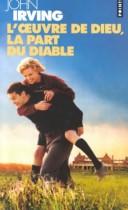
The Cider House Rules
2,985-word summary 13 min read 560 pages in the book
- First published
- 1985
- Publisher
- William Morrow
- Pages
- 560
- ISBN
- 9780688030360
Reading options
What's inside (7 sections)
I came to this one backwards. I had seen bits of the film years ago, the orchard and the kindly old doctor, and I had read A Prayer for Owen Meany the previous year. A friend told me this was the Irving to read if I wanted the same big heart with less church talk and more moral argument. The edition I tracked down matches the original shape of the thing: first published in 1985 by William Morrow, 560 pages, ISBN 9780688030360. It took me about ten days. Some nights I read a hundred pages. Some nights I set it down after twenty and stared at the wall.
The short version is that this is a book about an orphanage in Maine, a doctor who breaks the law every week on purpose, and the boy he trains to replace him. The long version keeps pulling you into apple orchards, war injuries, bad marriages, and a list of rules nobody can read. I found it generous and exhausting in roughly equal measure.
St. Cloud's and the doctor who stayed
St. Cloud's, Maine is not really a town so much as a station stop with an orphanage attached. Irving sets the boys division and the girls division and the hospital all on a hill, with nurses who name the babies and check them over. Nurse Edna and Nurse Angela do most of the daily holding and scolding. They are the kind of minor characters Irving writes well, fussy and tired and completely reliable.
Above them is Dr. Wilbur Larch. He founded the place, or built it into what it is, and he never leaves. His backstory comes in pieces. As a young man he had a rough start, a bad experience with a prostitute that left him disgusted with sex, a medical education, early work delivering babies. Somewhere along the way he decided he would do two things most doctors of his time would not do together. He would deliver unwanted babies and keep them safe for adoption. And he would perform abortions for women who asked, even though the law called it a crime.
Larch is also an ether addict. He breathes it to sleep, to soften the nights, to keep his own history at a distance. Irving does not play this for comedy. It makes Larch foggy and sad and sometimes reckless, and it also makes him tender in a way that feels earned. Each night he walks the hall and calls out to the boys, blessing them as his princes of Maine and his kings of New England. I had heard that line before reading the book. On the page it lands softer than I expected. It sounds like a man trying to give children a title they can keep.
Homer Wells is his favorite. Homer arrives as a baby and basically never gets adopted, though not for lack of trying. Two families take him and bring him back. One beating, one sadness, the details blur but the effect is clear. After a while the orphanage stops trying to place him. He becomes the kid who helps. He holds the lamp. He learns to read a chart. By his teens he can do much of what a young obstetrician can do, at least in practice if not on paper.
What makes Homer interesting is that he is not a rebel. He is grateful. He loves Larch. He just draws a line Larch cannot understand. Homer will deliver babies. He will not perform abortions. He thinks it is wrong to take a life, even when he sees the women who come to St. Cloud's desperate and poor and sometimes already damaged by attempts elsewhere. Larch argues, lectures, writes long letters in his head. Homer listens and says no.
I thought this setup would feel dated, a debate from another era. It does not. If anything the early chapters felt uncomfortably current. Larch keeps records of women who died from back alley attempts. He has seen what happens when the law says no and need does not go away. Homer answers with a principle that sounds clean until you watch a frightened girl in the waiting room. Neither man is written as a villain. That patience is the best thing about the first third.
A small complaint already, though. Irving loves to explain. Larch gives speeches. The narrator gives background. Then Larch gives another speech that repeats the background with more feeling. I agree with Larch, mostly, and I still skimmed a couple of those pages. The point is made early. The book keeps making it.
Candy, Wally, and the excuse to leave
The plot finally moves when a young couple drives up the hill. Wally Worthington is handsome and rich in the casual Maine coast way, family orchard money, easy smile. Candy Kendall is his girlfriend, pretty and kind and restless. They have come because Candy is pregnant and they want an abortion. Larch does the procedure. Homer assists, or watches, and finds himself staring at Candy in a way that has nothing to do with medicine.
Wally and Candy offer Homer something he has never had. A ride out. Work on their family orchard at Ocean View, near a town called Heart's Rock. Fresh air, pay, a room in the cider house with the other pickers. Homer says yes, mostly because he wants to see the world, partly because he is already half in love with Candy and does not admit it.
Leaving St. Cloud's is the first time Homer feels ordinary. He picks apples. He learns the names of trees. He sweats. He gets teased by the crew. The orchard has its own rhythm, harvest and pressing and winter pruning, and Irving clearly loves writing about work. Those pages move faster than the hospital pages. You can smell the apples and the oil in the cider house.
Wally goes off to war. This is the early 1940s turning into the middle of the war, and Wally becomes a pilot. His plane goes down over Burma. For a long stretch everyone believes he is dead. The military lists him as missing. Candy grieves. Homer grieves in a quieter way, because Wally was his first real friend outside the orphanage, the one who showed him how to act like a young man with a future.
And then, because people are weak and lonely and young, Homer and Candy start sleeping together. It begins as comfort. It becomes a habit. It becomes love, or something close enough that neither of them ends it. Candy gets pregnant. They drive back to St. Cloud's in secret, Larch delivers the boy, they name him Angel and pretend Homer adopted him. On paper Homer is a single father with an adopted son. In truth the boy is Homer and Candy's, raised in the middle of a lie everyone agrees to keep.
This stretch made me uncomfortable in a useful way. Irving does not excuse the affair. He shows how decent people talk themselves into it. Wally is missing, probably dead, Candy is alone, Homer is there. Later, when Wally turns out to be alive, the discomfort gets worse, which is the point. I kept wanting someone to confess. No one does. They protect Angel, they protect Wally, they protect themselves. It felt true even when I disliked every adult involved.
Wally does come home. He was found in Burma, badly hurt, paralyzed from the waist down. He can still be intimate with Candy in some ways but he is sterile from infections caught during those lost months, if I recall the medical explanation right. He marries Candy. He loves Angel as a son. He never learns, or never lets himself learn, whose boy Angel really is. Homer stays on at the orchard, the helpful friend, the secret father, the man sleeping with his best friend's wife for something like fifteen years.
Fifteen years. That number sat heavy with me. Irving treats it as sad rather than thrilling. The sneaking around loses its excitement early. What remains is routine guilt. I thought the book was brave to let the affair go on that long without turning it into melodrama. I also thought some of those middle chapters sag. Harvest after harvest, Wally getting kinder and sadder, Candy getting sharper, Homer getting stuck. You understand why he stays. You wish someone would make him leave.
The cider house rules
The title comes from the migrant crew. Each season a group of Black workers comes up from the South to pick at Ocean View. Their leader is a man called Mr. Rose, stern and proud, with a daughter named Rose Rose who works alongside the men. They sleep in the cider house, a rough bunk building with a wall where the orchard owners have posted rules for years. Behave. Do not smoke in bed. Do not drink too much. Clean up after yourselves.
None of the workers can read the list, or none of them bother to, depending on how you read Irving's tone. The rules were written by people who never asked what the crew needed. They sit there, stained with cider and smoke, irrelevant and faintly insulting. Homer, who can read, sees them and feels the gap. Here are rules for people who had no hand in making them. That image carries half the book once you notice it.
Rose Rose gets pregnant. The father is her own father, Mr. Rose. She tells Angel first, I think, because they are close in age and half in love in that summer way. Angel tells Homer. Homer is forced into the exact position he swore he would never take. He can send Rose to St. Cloud's, or he can help her himself, or he can do nothing and watch her try something dangerous.
He performs the abortion.
Irving handles the scene without grand language. Homer is scared. His hands remember Larch's training even while his conscience objects. Afterward he feels sick and certain at once. It does not convert him into Larch in a single night, but it breaks his absolute refusal. He sees what Larch meant about being of use. Sometimes the principle costs someone else too much.
What follows is violent and brief. Mr. Rose is confronted, or confronts himself, and dies by his own hand or by the logic of his shame. I do not want to overstate the mechanics because I read those pages fast, but the outcome is that Rose leaves, the crew scatters, and the orchard feels emptier. The rules stay on the wall. Nobody takes them down. That detail stayed with me more than the speeches about choice. Rules written by the wrong people do not protect anyone.
If the book has a center, it is here. Not in the hospital debates, but in a cider house with a stained list and a girl who needed help that week, not in theory. I wish Irving had trusted that image more and lectured less. He circles back to explain what the rules mean, then explains again through Larch, then again through Homer. The metaphor is strong enough to stand without help.
Melony and everyone Larch failed
I have to talk about Melony, because she splits readers and she nearly split me.
Melony grew up in St. Cloud's with Homer. She is big, rough, blunt, probably gay though the book uses the language of its time and place. She loves Homer first, fiercely, and he loves her back in a child way before Candy rewrites his idea of love. When Homer leaves with Wally and Candy, Melony leaves too. She will find him. She will make him answer for leaving.
Her chapters are the strangest in the book. She becomes an electrician, moves through jobs and towns, takes a lover named Lorna who is patient in ways Melony is not. She gets her nose and arm broken by some man and refuses to press charges, planning her own revenge on her own schedule. She lifts weights. She endures. Every few hundred pages she surfaces, asks about Homer, misses him by a little, keeps going.
Some readers love her. I admired her and got tired of her. She functions as Homer's conscience with muscles, the person who reminds him that comfort at Ocean View came at a cost. But Irving gives her long stretches of wandering that feel disconnected from the main story. I found myself flipping ahead to get back to Angel or Larch. Then, when she finally reaches Homer near the end, the scene works so well I forgave the detours. She sees him clearly. She tells him he has gone soft and safe. She is right.
Larch, meanwhile, is fading. The ether use gets worse. The board that oversees orphanages is asking questions. He forges records, invents a history for Homer that will let Homer replace him, even creates a fake identity complete with credentials. It is fraud and it is love at once. He wants St. Cloud's to survive him, and he knows only Homer can run it the way it needs to be run, both the births and the secret work.
Larch dies. I will not dress it up. He overdoses on ether, accidentally or on purpose, alone in the place he built. The chapters around his death are among the best Irving ever wrote, quiet and procedural and sad. Nurses crying. Paperwork. A body that was once a force. Homer hears the news at the orchard and understands what is being asked of him. Go back. Lie about who you are on paper. Be the doctor St. Cloud's needs.
There is a temptation to read Larch as a saint. Irving pushes back, at least a little. Larch is controlling. He decides who gets adopted. He withholds affection to make separations easier, which is a theory that hurts children in practice. He uses Homer. He lies to the state for years. The book lets those criticisms sit alongside the lives he saved. I appreciated that balance. A simpler novel would have made him either hero or monster.
Going back to be of use
Homer returns. He brings Angel, or Angel follows, and they settle into St. Cloud's with its familiar smells of disinfectant and old wood. Homer takes Larch's name in the records, or takes his role under a constructed history, something like that. The details of the forgery matter less than the choice. He will deliver babies. He will also perform abortions now, because Rose taught him what refusal costs.
The last chapters echo the first ones. Night rounds. Naming babies. Calling out to the boys. Homer, who once judged Larch, now breathes easier knowing the work continues. He still wishes the law were different. He dreams of a day when what he does in secret can be done openly and safely. That wish is the quietest political statement in a loud book, and the most effective.
Does the ending redeem the affair, the lies, the fifteen lost years? Not really, and I think Irving knows it. Homer does not get Candy. Wally keeps Candy and Angel's public love. Homer gets duty. It sounds bleak. On the page it feels like growth rather than punishment. He stops being the boy who watches life from the orchard and becomes the man who stays in the room when someone needs him.
My fair criticisms, gathered in one place so they are easy to argue with. The book is too long. At 560 pages it could lose eighty without losing anything except repetition. The middle orchard years drift. Wally is too good to be interesting for long stretches, Candy is sharper but still seen mostly through Homer's desire, and the migrant workers, especially early on, feel observed from outside rather than known from inside. Irving tries, and Mr. Rose has real menace and pride, but the point of view stays with the white hosts. A modern reader will notice that.
The abortion argument, which I share, sometimes flattens the characters into positions. Larch speaks for Irving. Homer speaks for the opposition until experience moves him to Larch's side. That arc is honest about how minds change, through practice rather than debate, but the debates themselves can feel staged. I kept thinking of the nurses, who do the actual daily work and get few speeches. I would have traded three Larch lectures for one more chapter from their point of view.
And yet I kept turning pages. Irving writes caretaking better than almost anyone. Feeding, washing, waiting, driving through snow to reach a woman in trouble. The accumulation of small useful acts builds a moral case no speech can. When Homer finally acts, you believe his hands know what to do because you watched him learn. That is novelistic patience, not just length for its own sake.
Who should read it? Anyone who liked Owen Meany but wanted less God and more ground. Anyone interested in how fiction can argue about law without becoming a pamphlet. Anyone who can tolerate a slow middle for a strong last hundred pages. If you need tight plotting, this will frustrate you. If you need every character to be likable, look elsewhere. Homer cheats with his best friend's wife for years. Larch lies to everyone. Melony scares people on purpose. They still deserve your attention.
I finished it late on a rainy night and sat with the final image, the doctor making his rounds, the boys listening for their names. It reminded me of being a kid and hearing an adult check that you were still there. Being of use sounds simple until you watch what it costs Larch and then Homer. The cider house wall still has its list. St. Cloud's still has its need. Someone has to read the real situation and act. That is the whole book, and it is enough.
FAQ
When was The Cider House Rules first published?
It was first published in 1985 by William Morrow. The first hardcover runs 560 pages.
Is there a film version of The Cider House Rules?
Lasse Hallstrom directed the 1999 film, with Tobey Maguire as Homer, Michael Caine as Dr. Larch, and Charlize Theron as Candy. Irving wrote the screenplay.
Does Homer Wells really become a doctor?
Yes, in the sense that Homer trains under Larch for years and eventually returns to run St. Cloud's. The middle orchard years are invented coming of age material around that spine.
Similar books

Little Town on the Prairie
In the spring after the Long Winter, fifteen-year-old Laura sews shirts, studies for a teaching certificate, and helps send her blind sister Mary to college.
2,071-word summary · 9 min read
The Age of Miracles
A California girl grows up while the Earth's rotation slows, and ordinary adolescence continues alongside slow catastrophe.
2,417-word summary · 11 min read

Peace Like a River
An asthmatic boy in the early 1960s narrates his family's search for his older brother, who is accused of two killings and has escaped custody.
1,969-word summary · 9 min read

The Chosen
A shattered pair of glasses in a 1944 Brooklyn softball game starts a friendship between a Hasidic boy and his Orthodox neighbor, and their fathers pull them…
2,443-word summary · 11 min read
A Painted House
In 1952 Arkansas, seven-year-old Luke Chandler picks cotton with his family and learns how quickly poverty, violence, and adult secrets can end a childhood.
2,060-word summary · 9 min read

The Story of Edgar Sawtelle
A mute boy on a Wisconsin dog-breeding farm relives Hamlet as his uncle returns, his father dies in the barn, and the dogs inherit what is left.
2,392-word summary · 11 min read
Foster
A girl spends a summer with relatives on a Wexford farm and is cared for properly for the first time. A spare novella about family and what children notice…
2,043-word summary · 9 min read
Cold Sassy Tree
In 1906 Georgia, fourteen-year-old Will Tweedy watches his widowed grandfather marry a much younger woman three weeks after his grandmother's funeral.
2,154-word summary · 10 min read

Song of Solomon
Milkman Dead leaves Michigan to hunt for family gold and finds instead the old song of his ancestor Solomon.
2,465-word summary · 11 min read

The Signature of All Things
Botanist Alma Whittaker grows up in Philadelphia trade wealth, studies mosses, marries distant Ambrose Pike, and sails to Tahiti seeking how species change.
2,535-word summary · 11 min read
The Island of Missing Trees
A talking fig links 1970s Cyprus lovers Kostas and Defne with their grieving London daughter Ada years later.
3,172-word summary · 14 min read
Summer Sisters
Vix and Caitlin share Martha's Vineyard summers from age twelve into adulthood, through first love, grief, marriage, and a disappearance that still haunts Vix.
3,633-word summary · 16 min read
Change of Heart
Jodi Picoult's Change of Heart follows June Nealon, her ill daughter Claire, and death-row inmate Shay Bourne, whose wish to donate his heart forces a trial…
2,746-word summary · 12 min read
The Bonesetter's Daughter
A ghostwriter translates her mother's hidden Chinese memoir and learns the truth about Immortal Heart, Precious Auntie, and a family curse.
2,720-word summary · 12 min read
Purple Hibiscus
Kambili, fifteen, watches her devout factory-owner father rule the Enugu house through fear until a Nsukka visit teaches her speech and freedom.
2,595-word summary · 12 min read
All the Pretty Horses
John Grady and Rawlins ride to Mexico for ranch work, finding love, prison, and a code that costs all.
2,677-word summary · 12 min read
Tell the Wolves I'm Home
A grieving fourteen year old secretly befriends her late uncle's boyfriend in 1980s New York, testing family loyalty and love.
3,014-word summary · 13 min read
Summer of '69
Four Levin siblings split for summer 1969 as Vietnam, pregnancy and first love pull the family apart.
2,886-word summary · 13 min read
Shuggie Bain
Sweet Shuggie loves his alcoholic mother Agnes through 1980s Glasgow poverty and pride.
2,081-word summary · 9 min read
Ordinary Grace
In 1961 Minnesota, thirteen-year-old Frank Drum faces a summer of deaths that tests his minister family and forces him to weigh truth, guilt, and mercy.
2,948-word summary · 13 min read

The Elegance of the Hedgehog
A Paris concierge hides her brilliant mind while a gifted girl plans her death, until a new tenant sees through them both.
2,248-word summary · 10 min read
Small Things Like These
A coal merchant in 1985 Ireland finds a girl locked in a convent and must act.
2,799-word summary · 12 min read

Dear Edward
Twelve-year-old Edward Adler survives a plane crash that kills his family, then learns how to live with grief, letters, and love.
2,903-word summary · 13 min read
The Covenant of Water
Three generations of a Kerala family face a drowning affliction from 1900 to 1977, from child bride Big Ammachi to physician Mariamma who seeks its cause.
2,955-word summary · 13 min read
Life After Life
Ursula Todd dies and restarts through wars, flus, and bad marriages.
2,060-word summary · 9 min read

David Copperfield
Orphan Davy from Blunderstone through Murdstone, Micawber, Heep, Dora and Agnes to novelist.
2,199-word summary · 10 min read

The Namesake
Jhumpa Lahiri follows Gogol Ganguli from a hated namesake to adult loss, marriage, and family reckoning between Calcutta and Boston.
2,878-word summary · 13 min read
The Lincoln Highway
Emmett and Billy plan California in 1954, but two escapees steal their car and drag them east to New York.
2,954-word summary · 13 min read
The God of Small Things
Twins Rahel and Estha grow up in Kerala in 1969, where family rules and caste lines shape a loss that follows them into adulthood.
2,646-word summary · 12 min read

On Earth We're Briefly Gorgeous
A son writes to the mother who cannot read him: war, migration, first love, and loss in one Vietnamese American family in Hartford.
3,113-word summary · 14 min read