
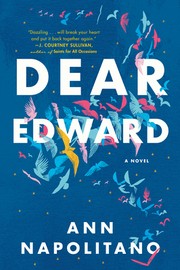
Dear Edward
2,903-word summary 13 min read 352 pages in the book
- First published
- 2020
- Publisher
- Dial Press
- Pages
- 352
- ISBN
- 9781984854780
Reading options
What's inside (8 sections)
I picked up Dear Edward because of the sticker on the cover, the Read with Jenna badge from January 2020, and I expected a straightforward cry. A sad book about a sad boy, tissues required, done by Sunday. What I got instead was slower and stranger than that. Ann Napolitano published it on January 6, 2020 with Dial Press, a 352 page hardcover, and it was her third novel. It debuted at number two on the New York Times bestseller list, became a television series, and later got somewhat eclipsed by her next book, Hello Beautiful. But this is the one that started with a real crash. In May 2010, Afriqiyah Airways Flight 771 went down and the only survivor was a nine year old boy. Napolitano has said that story stayed stuck in her mind until she wrote a set of circumstances that could make such a boy all right. Edward Adler is her answer.
The setup is simple to describe and hard to sit with. Twelve year old Edward Adler, who went by Eddie before, boards a summer morning flight in Newark with his parents and his older brother Jordan. The family is moving to Los Angeles. Everyone else on the plane dies. Edward lives. That is page one knowledge, not a twist, and the book never pretends otherwise. Instead Napolitano splits the novel in two directions at once. One track follows the passengers during the hours of the flight, seat by seat, as they talk, worry, flirt, and make small decisions that will turn out to be their last ones. The other follows Edward in the years after, living with his aunt Lacey and his uncle John in New Jersey, trying to figure out what a saved life is supposed to be for.
The flight
The flight chapters are the engine of the book, and Napolitano runs them like a clock. We meet the Adlers first. Eddie is twelve, squeezed between childhood and something older, watching his brother Jordan with the usual mix of admiration and irritation. Their mother is a writer finishing script pages in first class. Their father manages the logistics of four people relocating across the country. It feels like any family trip, which is exactly the point. Around them the cabin fills with the people the publisher summaries always list, and they are worth meeting one by one. There is a Wall Street young star flying high on money. There is a young woman who has just learned she is pregnant and keeps rehearsing how the news will land. There is an injured veteran coming home from Afghanistan to a desk and an uncertain welcome. There is a rich older businessman used to getting his way at altitude and on the ground. There is a free spirited woman in a skirt with bells on it, running from a controlling husband toward something she cannot yet name.
Napolitano gives each of them interior weather. The pregnant woman wonders whether love can be negotiated. The veteran counts the ways home has changed while he was gone. The businessman reviews his life the way he reviews deals, and finds the numbers less comforting than usual. The woman in the bells talks to seatmates with an openness that reads as either wisdom or exhaustion. None of these people know they are in a tragedy. They complain about legroom and rehearse conversations they will never have, and the reader carries the weight they cannot feel. That imbalance could feel cruel, and sometimes it nearly does, but Napolitano keeps the tone curious rather than leering. She is interested in who they were, not in how they end.
The plane itself stays ordinary for a long time. Drinks, screens, bathroom lines, the particular boredom of cruising altitude. Then ordinary things start to go wrong in small ways that the passengers explain away, because that is what people do. A sound. A tilt. A look on a flight attendant's face that gets smoothed over with training. I found these passages genuinely hard to read, not because they are gory, they are not, but because the book has trained you to like these people by then. When the end comes it comes fast, and Napolitano does not linger on wreckage. The camera, so to speak, stays with Edward. He wakes in a hospital to a world rearranged, and the flight chapters stop. What they leave behind is a question the rest of the book tries to answer. If all these vivid people are gone and he remains, what exactly was he saved for.
Edward after
The after chapters begin with logistics, which felt true to me. Someone has to feed the boy, enroll him in school, answer the press, and decide where he sleeps. That someone is Lacey, his aunt, and her husband John. They take Edward into their New Jersey home with more love than skill, and Napolitano is kind to them about the gap. Lacey grieves her sister while trying to mother a nephew who flinches at kindness. John is steady in the way of men who fix things, except nothing here can be fixed with tools. Their house has its own rhythms and its own quiet, and Edward moves through it like a guest who accidentally stayed for years.
School is its own country. Edward returns to classrooms where everyone knows his face from the news. Teachers lower their voices around him. Classmates stare, then look away, then stare again. He is the miracle boy, a label that functions like a second injury. Strangers feel entitled to his recovery. They want him happy, or faithful, or inspirational on schedule. He mostly wants to be left alone, and alone is the one thing fame will not grant him. His grades wobble. His sleep breaks into pieces. He keeps feeling, as he puts it in his own way, that part of him never landed, that some version of himself is still up there circling with the plane while his body walks around New Jersey. It is a strange image and the book earns it by repetition. Grief does that to time. It splits you into the person who continues and the person who stayed at the scene.
Then there is Shay, the girl next door, who is the best thing in the book and nearly walks off with it. Shay is Edward's age, blunt where he is muffled, and unwilling to treat him like glass. She knocks, she talks, she demands answers to rude questions, and slowly she becomes the one person who relates to Edward rather than to his story. Their friendship builds the way real childhood friendships do, through boredom and routine. Snacks, sidewalks, homework, long afternoons with nothing happening. For a boy whose life became public property, a friend who is bored with his tragedy is medicine. Shay does not fix him. She keeps him company while he stays broken, which turns out to be close to the same thing.
The letters
At some point the mail starts arriving, and this is where the title comes from. People Edward has never met write to him. Dear Edward, they begin, and then they pour out whatever his survival dislodged in them. Some letters thank him for living. Some ask him to live well on their behalf. Some hand him assignments, find God, be happy, make it mean something, as if survival were a job with duties. A few are angry, as if he stole a seat in heaven that belonged to their person. The letters pile up by the hundreds, and Edward cannot read them. He is twelve, then thirteen, then older, and each envelope is another person asking him to carry what they cannot.
Shay takes charge of the letters. She gathers them, sorts them, stores them in boxes, and guards them with a protectiveness that tells you how she understands her friend. Edward is not ready, she decides, and she is right. The boxes sit. Years pass around them. I loved this device and I also distrusted it a little, because it is almost too perfect as a metaphor. Unread mail from the world, stacked in a garage, waiting for the boy to grow into the weight. But Napolitano grounds it in procedure. Rubber bands, boxes, dates, Shay's cataloging mind. It feels like something a real stubborn girl would actually do, not a symbol the author planted. The question of when Edward will open them, and what they will cost him when he does, becomes the quiet suspense holding the back half of the book together.
The letters also let Napolitano say something sharp about public grief. Strangers mean well and still manage to make everything about themselves. Their letters are sincere and self serving at once, full of love that lands like a bill. Anyone who has been on the receiving end of other people's concern after a loss will recognize the dynamic. Comfort arrives with strings, and the strings are always the comforter's needs. Edward senses this before he can articulate it, which is why the boxes stay shut. He knows, without knowing he knows, that opening them means agreeing to be everyone's answer. Shay knows it too. Her protection of the boxes is really protection of him.
Growing up
Time does its slow work. Edward gets taller. His voice changes. High school brings new teachers who never saw the news footage, which is its own relief. He and Shay stay close in the way of two people who grew up inside the same long emergency. There are ordinary milestones rendered with care. A driver's license, a part time job, college applications, the first serious thoughts about what to study and where to live. Napolitano handles these with a light touch, never suggesting that normal life erases anything. Edward still wakes some nights convinced the plane is still falling. He still counts the living and the dead without meaning to. Recovery here is not a curve that rises. It is weather. Some seasons are easier. None are ever fully clear.
What changes is Edward's relationship to the question of purpose. As a child he experienced survival as an accident that happened to him. As a young man he starts to experience it as a fact he has to do something with, and those are different problems. He begins to think about the passengers as people rather than as ghosts. He wonders about the pregnant woman's unborn child, the veteran's family, the Wall Street kid's ambitions, not with the hungry curiosity of a reader but with the heavy responsibility of an heir. He inherited all their unlived lives along with his own, or so it feels. The book follows him toward the boxes in Shay's keeping, toward the choice to finally read what the world wrote to him, and toward whatever comes after reading. I will not detail the final scenes beyond that, because they land better unpreviewed, but they involve Edward deciding, at last, what the letters are and what they are not. They are not orders. They are not debts. They are evidence that strangers briefly loved him, and love from strangers turns out to be both real and insufficient, which is an adult thing to learn.
There is also, running underneath, the slow repair of the household. Lacey and John age through the book from rescuers into parents, with all the friction that promotion requires. Edward tests them the way teenagers test every wall, to see which ones hold. Some of the most moving pages are not dramatic at all. A shared meal. A ride to school. John teaching Edward something small with his hands. Lacey crying in the kitchen and letting Edward see it, which is its own kind of trust. Family here is not the one you are born into, since that one is gone. It is the one that keeps showing up with groceries and patience, and Napolitano writes that showing up with real respect.
What works and what wears thin
Let me say what the book does well first, because it does a lot well. The passenger chapters are humane in a way that surprised me. It would have been easy to make them a parade of types, and at first glance they are types, the tycoon, the soldier, the runaway wife. But Napolitano listens to each of them long enough that the type dissolves. The pregnant woman's chapters especially stayed with me. Her hope is so specific, so tied to landing and phone calls and imagined futures, that her storyline hurts in a clean way rather than a manipulative one. The prose throughout is plain and careful. Short sentences when things happen fast. Longer, looping ones when Edward thinks. Nothing showy. Reviewers at the time called the book uplifting despite its premise, and I understand why. There is dry humor in Shay's dialogue and in Edward's flat observations, and the humor never feels pasted on. It feels like the gallows wit of people who have to keep living.
The structure deserves credit too. Alternating between the doomed flight and the long aftermath sounds like a gimmick, and in lesser hands it would be. Here it creates a specific ache. Every hour Edward survives in New Jersey cost someone over the Atlantic everything, and the book never lets you forget the exchange rate. That moral arithmetic could have been punishing. Instead it becomes the ground Edward has to learn to stand on. How do you accept a life bought at that price. The novel's answer, worked out over hundreds of pages rather than stated, is that you don't pay it back. You live it forward, which is harder and less dramatic than repayment.
Now the criticisms, stated fairly. The middle of the book sags. There is a stretch, roughly the high school years, where the plot idles and scenes start to resemble each other. Edward mopes, Shay prods, Lacey worries, John fixes something, repeat. The rhythm mimics depression accurately, which may be the point, but accuracy is not always readability. A reader who devoured the flight chapters may find these pages slow going. Second, the alternating structure that gives the book its power also caps its suspense. Once the crash is past, the flight chapters are over, and the back half leans entirely on Edward's interior life plus the unopened letters. That is a thinner engine. Third, some passengers never graduate from sketch to person. The tycoon in particular feels assembled from traits rather than grown from history. And Shay, wonderful as she is, sometimes talks with a wisdom that sounds more like the author than like a teenager. Readers allergic to precocious kids may flinch once or twice.
A smaller note. The book's comfort with sentiment means it occasionally reaches for the tear instead of earning it. Most of the time Napolitano earns it. Once or twice a scene swells the music a little early. And anyone coming for plot should adjust expectations. This is a novel of accumulation, not of twists. The crash is the only event in the thriller sense. Everything after is consequence, which is truer to life and less exciting on paper. The Apple TV adaptation ran a single season of ten episodes in 2023 and then stopped, which tells you something about how hard this material is to stretch. As a novel it holds. As television it evidently did not hold enough viewers.
Who should read it
I would hand Dear Edward to readers who like grief rendered honestly and hope rendered without syrup. If you loved books that sit beside loss rather than solving it, this belongs on your shelf. If you teach or counsel or parent teenagers, Shay and Edward's friendship is worth the price alone as a portrait of how young people actually help each other, which is sideways, through presence, not through speeches. The 352 pages move at a medium pace, faster in the air, slower on the ground, and the language stays accessible throughout. No prior knowledge needed. No homework.
Who should skip it. If plane crashes are a personal trigger, take the premise literally and stay away. This book spends real time inside a doomed cabin and does not look away at the end. If you want mysteries, villains, or reversals, look elsewhere. There is no bad guy here except physics and chance, and no revelation waiting in the last chapter. And if you dislike books that ask you to cry, be warned that this one will ask, though I found it asks politely and accepts no for an answer.
I closed it thinking about the boxes. Most of us have some version of Shay's boxes, unanswered mail from the past, other people's expectations stacked in a corner, waiting for us to be strong enough to open them. Edward's solution, when he finds it, is not to answer every letter. It is to read them as what they are, love from strangers, and then to live a life that belongs to him rather than to his survival. That feels like advice worth keeping, whether or not you ever board a plane in a novel. I started the book braced for tears and finished it thinking about how to carry things. That is a better outcome than I expected from a sticker book, and it is why I am glad I read past the badge.
FAQ
Is Dear Edward based on a true story?
Partly. The 2010 crash of Afriqiyah Airways Flight 771, survived by a nine-year-old boy, moved Napolitano to write it, but Edward and the passengers are invented.
Who are the main people in Edward's life after the crash?
His aunt Lacey and uncle John take him in, and Shay, the girl next door, becomes the friend who refuses to let him vanish.
Is there a Dear Edward TV show?
Yes. Apple TV released a ten-episode version in 2023 with Connie Britton and Colin O'Brien as Edward, and it ran one season.
Similar books

Extremely Loud and Incredibly Close
Nine year old Oskar searches New York for a lock matching his father's key after 9/11.
2,999-word summary · 13 min read

The Age of Miracles
A California girl grows up while the Earth's rotation slows, and ordinary adolescence continues alongside slow catastrophe.
2,417-word summary · 11 min read

Peace Like a River
An asthmatic boy in the early 1960s narrates his family's search for his older brother, who is accused of two killings and has escaped custody.
1,969-word summary · 9 min read

We Are Okay
Marin fled San Francisco after her grandfather vanished and stopped answering anyone. When Mabel visits her college dorm, she has to say what happened.
2,253-word summary · 10 min read

The Chosen
A shattered pair of glasses in a 1944 Brooklyn softball game starts a friendship between a Hasidic boy and his Orthodox neighbor, and their fathers pull them…
2,443-word summary · 11 min read

A Spool of Blue Thread
Four generations of the Whitshank family in Baltimore, and the silences, resentments and quiet love they hand down without ever saying so.
2,408-word summary · 11 min read
In an Instant
After a family camper crashes down a snowy mountain, sixteen-year-old Finn watches from the afterlife as survivors make impossible choices and try to live with…
2,130-word summary · 9 min read
And Every Morning the Way Home Gets Longer and Longer
An elderly grandfather, his son, and his grandson share memories and fears as the old man's mind begins to fade, in a short novel about grief and love.
2,078-word summary · 9 min read

The Tiger's Wife
A young doctor in a war-scarred Balkan country chases the stories her grandfather left behind, including a deathless man and a deaf girl who loved an escaped…
2,232-word summary · 10 min read

The Story of Edgar Sawtelle
A mute boy on a Wisconsin dog-breeding farm relives Hamlet as his uncle returns, his father dies in the barn, and the dogs inherit what is left.
2,392-word summary · 11 min read

Someone Like You
Halley and her best friend Scarlett face a summer of grief, a surprise pregnancy, and Halley's dangerous first romance in Sarah Dessen's 1998 young adult novel.
2,218-word summary · 10 min read

Maame
Maddie Wright, 25, has spent years as the responsible one in her Ghanaian British family, and the year she finally tries to live for herself is the year…
2,108-word summary · 9 min read
Foster
A girl spends a summer with relatives on a Wexford farm and is cared for properly for the first time. A spare novella about family and what children notice…
2,043-word summary · 9 min read

Clap When You Land
Two half sisters, one in Sosúa and one in Queens, discover each other after their father dies in a plane crash, in Elizabeth Acevedo's novel in verse.
2,890-word summary · 13 min read
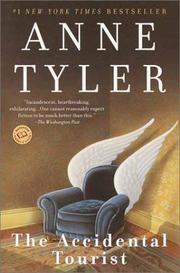
The Accidental Tourist
Grieving Macon writes travel guides for haters of travel, then Muriel intrudes.
2,252-word summary · 10 min read

Kitchen
Orphan Mikage finds home in a kitchen with Yuichi and Eriko after loss.
2,597-word summary · 12 min read

The Berry Pickers
A four year old vanishes from a Maine blueberry camp in 1962, and two families carry the loss for decades until Joe and Norma face the truth.
2,606-word summary · 12 min read
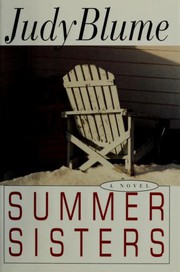
Summer Sisters
Vix and Caitlin share Martha's Vineyard summers from age twelve into adulthood, through first love, grief, marriage, and a disappearance that still haunts Vix.
3,633-word summary · 16 min read
We Are All Completely Beside Ourselves
Rosemary tells of twin sister Fern, a chimp raised as family, and research fallout.
2,058-word summary · 9 min read
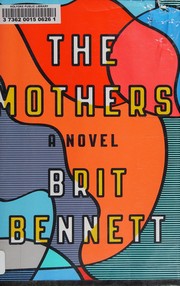
The Mothers
Nadia hides abortion from church Mothers while Luke and Aubrey circle for years.
2,078-word summary · 9 min read

Purple Hibiscus
Kambili, fifteen, watches her devout factory-owner father rule the Enugu house through fear until a Nsukka visit teaches her speech and freedom.
2,595-word summary · 12 min read
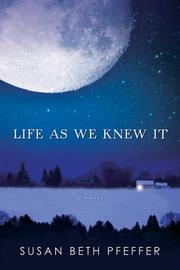
Life As We Knew It
Sixteen-year-old Miranda keeps a diary while an asteroid strike on the moon brings tsunamis, blackouts, and a frozen year of hunger to her Pennsylvania town.
2,485-word summary · 11 min read
A Tale for the Time Being
A diary by bullied Tokyo teen Nao washes up in Canada, pulling novelist Ruth into her family past.
2,148-word summary · 10 min read
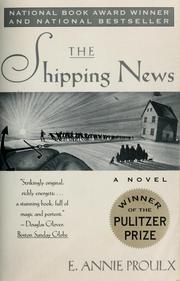
The Shipping News
At thirty-six, failed newsman Quoyle loses his cruel wife and flees to ancestral Newfoundland with his daughters, where a small-paper job slowly rebuilds him.
2,833-word summary · 13 min read
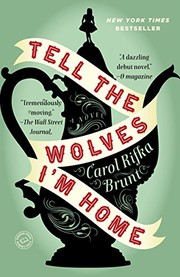
Tell the Wolves I'm Home
A grieving fourteen year old secretly befriends her late uncle's boyfriend in 1980s New York, testing family loyalty and love.
3,014-word summary · 13 min read
Sing, Unburied, Sing
A Mississippi family drives to Parchman prison while ghosts press close, and a dying grandmother holds the house together.
2,871-word summary · 13 min read

The Elegance of the Hedgehog
A Paris concierge hides her brilliant mind while a gifted girl plans her death, until a new tenant sees through them both.
2,248-word summary · 10 min read
The Cider House Rules
Homer Wells grows up in a Maine orphanage under Dr. Larch, who delivers babies and performs illegal abortions.
2,985-word summary · 13 min read
The Namesake
Jhumpa Lahiri follows Gogol Ganguli from a hated namesake to adult loss, marriage, and family reckoning between Calcutta and Boston.
2,878-word summary · 13 min read

The God of Small Things
Twins Rahel and Estha grow up in Kerala in 1969, where family rules and caste lines shape a loss that follows them into adulthood.
2,646-word summary · 12 min read