
Reading options
What's inside (8 sections)
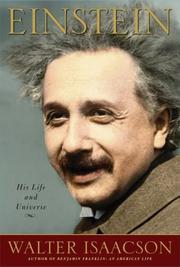
I came to this book with a simple problem. I knew the hair and the tongue photo and E equals mc squared, and not much else that felt solid. I wanted a life that explained how a man who could not get a teaching job ended up rewriting physics, and Walter Isaacson seemed like a safe guide because he had already written about Franklin and later wrote about Jobs. His Einstein book came out from Simon and Schuster in 2007 and runs 675 pages in the first hardcover, and it was the first large biography written after the Einstein papers became widely available. That last part matters. Isaacson could read letters and drafts that earlier writers never saw.
What surprised me right away was how ordinary the start feels. There is no child prodigy myth here, or at least not the clean version people repeat. Einstein is slow to talk as a small boy, or so the family worries. He does well enough in school when the subject interests him and pushes back when it does not. A compass his father shows him at age four or five sticks in his mind for decades. He keeps turning over the same question, why does the needle always point the same way when nothing touches it. That habit, staring at something simple until it looks strange, turns out to be the whole method.
Isaacson keeps coming back to rebellion as a character trait rather than a pose. Einstein hates the drilling and obedience of his Munich school. He hates it enough that he leaves before finishing and then has to scramble to get into the Zurich Polytechnic. He fails the entrance exam the first time, spends a year at a welcoming school in Aarau in Switzerland, and gets in on the second try. Even in Zurich he skips lectures that bore him, borrows notes from friends, and reads the masters on his own. Professors notice the talent and also notice the attitude. When he graduates in 1900, none of them will hire him as an assistant.
That failure shapes the next few years more than most people expect. Einstein wants an academic post and cannot get one. He applies and gets nothing. He ends up in Bern in 1902 as a technical expert, third class, at the Swiss patent office. The job pays, the hours are steady, and the work leaves part of his mind free. Isaacson makes this stretch feel both grim and lucky. Einstein is a young father in a hard marriage, short on money, watching classmates move into university posts. At the same time he has a desk, a stack of applications to judge, and evenings to fill with physics.
Ulm, Munich, and Aarau
Einstein is born in Ulm in 1879 and grows up mostly in Munich, where his father Hermann and his uncle run an electrical business. The family is Jewish but not observant in a strict way. Albert gets some religious feeling as a boy, then drops it and keeps a lifelong suspicion of dogma, religious or otherwise. His sister Maja is the close companion of his childhood. His mother Pauline pushes music, and the violin stays with him all his life, though he never becomes the polished player he wishes he was.
School is the first friction point. The German Gymnasium of that era rewards recitation and respect. Einstein can memorize when he must, but he resents the tone. A teacher tells him he will never amount to much, a story Isaacson treats with care rather than as a simple legend. Whether the exact words were said matters less than the pattern. Einstein learns early that he does his best thinking away from authority.
Leaving Munich at fifteen without a diploma looks reckless from the outside. He joins his family in Italy after the business fails and then talks his way into a Swiss school in Aarau that values visualization and independent thought. There he does well. He imagines riding beside a beam of light and wonders what that would look like. It sounds like a daydream, and Isaacson shows how Einstein kept such thought experiments and refined them for years. The light beam rider from Aarau is still present in the relativity papers of 1905.
Citizenship is part of this too. Einstein gives up his German citizenship to avoid military service and becomes stateless for a while before becoming Swiss in 1901. Isaacson does not treat this as a footnote. It fits a man who distrusted states and uniforms for the rest of his life. When people later call him a prophet or a saint, that early refusal helps explain why he never played the part comfortably.
Zurich, Mileva, and the struggle for work
The Zurich Polytechnic gives Einstein two things that stay with him, physics and Mileva Maric. Mileva is Serbian, smart, and one of very few women studying physics there. She and Einstein fall for each other over shared work and long letters. Isaacson uses the correspondence to show both the warmth and the strain. They debate physics, they complain about professors, they plan a future neither family fully supports.
The academic ending is cold. Einstein graduates, Mileva does not do as well, and no professorship appears. Their first child, Lieserl, is born in 1902 before they marry, and what happened to her remains one of the sad gaps in the record. She likely died young or was given up for adoption, and Isaacson admits what cannot be known instead of filling it in. The couple marries in 1903 and later has two sons, Hans Albert and Eduard. The marriage starts with real partnership and slowly wears down under money pressure, work pressure, and Einstein wandering attention.
I found these chapters harder to read than I expected, in a good way. Isaacson does not hide how cold Einstein grew toward Mileva in later years. He quotes from letters where Einstein is sharp or controlling, and he shows Mileva holding the household together while her own scientific hopes fade. There has been a long argument about whether Mileva deserves credit for the 1905 work. Isaacson looks at the evidence, gives her full weight as a sounding board and checker of math, and concludes the core ideas were Einstein own. Some readers will think he lets Einstein off too easily here. I thought the balance was fair, though the pages on the divorce are painful.
The patent office itself comes alive in a way I had not expected. Einstein reviews devices, learns to pick out the point fast, and jokes with friends that he is soon an expert on other people inventions. In the evenings he meets with Maurice Solovine and Conrad Habicht in a little group they call the Olympia Academy. They read Hume and Poincare and argue late. It reads like graduate school without tuition, run by three young men with cheap food and strong opinions.
1905 and the miracle year
The center of the book is 1905, when Einstein is twenty six and publishes four papers that change physics. Isaacson walks through them one by one without turning the book into a textbook, though some pages still ask for patience. The first paper explains the photoelectric effect by treating light as packets of energy, what we now call photons. The second works out Brownian motion and gives strong evidence that atoms are real. The third sets out special relativity. The fourth gives the relation between mass and energy that becomes famous as E equals mc squared.
What helped me was the way Isaacson keeps tying each paper to a concrete picture. For relativity, the picture is clocks and trains and observers moving past each other, each measuring time in their own frame. There is no absolute clock ticking in the background. Time and space adjust so the speed of light stays the same for everyone. It sounds impossible until Isaacson slows down and shows the steps, and even then part of my brain kept resisting. That resistance is normal. Physicists at the time resisted too.
The human side of 1905 is almost funny in contrast. Einstein is still a patent clerk. He sends the papers to Annalen der Physik and waits. Max Planck notices. Other physicists notice. Job offers still do not arrive right away. It takes until 1908 for a junior academic post in Bern and until 1909 for Zurich to take him back as a professor. Fame in physics moves faster than hiring committees.
Isaacson also handles the priority fights with care. Others were close to parts of relativity, especially Henri Poincare and Hendrik Lorentz. Isaacson gives them credit for the math and the setup, then explains why Einstein step was different. Einstein saw that the strange effects were not mechanical quirks but the actual nature of time and space. That distinction is easy to miss if you only look at equations.
If there is a weakness in this section, it is pace. The chapters on quanta and molecules are clear, but the relativity chapters sometimes pile explanation on explanation. I had to reread a few pages on simultaneity. Readers without much physics may feel the same drag I did. It is worth pushing through, because the payoff lands when Einstein starts asking what gravity must look like if special relativity is true.
Berlin, general relativity, and sudden fame
From 1909 to 1914 Einstein moves from post to post, Zurich to Prague to Zurich again, and then to Berlin in 1914 just as war breaks out. The Berlin offer is rich, with little teaching and much time to think. It also traps him in Germany during the First World War while his marriage falls apart. Mileva takes the boys back to Zurich. Einstein stays, works, visits when he can, and writes letters that swing between guilt and irritation.
The scientific work in these years is the long climb toward general relativity. Einstein senses that gravity and acceleration must be two faces of the same thing. A person falling from a roof feels weightless, at least for a moment, and that simple image grows into a theory where mass bends space and time. Isaacson calls it Einstein happiest thought, and the book earns the phrase. The math is brutal. Einstein needs help from Marcel Grossmann and others to learn the geometry involved. He makes wrong turns, publishes versions he later fixes, and competes with David Hilbert to get the final field equations right in November 1915.
Isaacson is good on the rivalry without turning it into gossip. Hilbert is a great mathematician with his own path to the equations. Einstein gets there with the physics first, and most historians give him the credit for the theory even while noting how close the race was. What matters for the story is how exhausted Einstein is by the end. He has been thinking about gravity for eight years. When the equations hold, he is thrilled and spent at once.
Fame arrives in 1919 when British expeditions measure starlight bending around the sun during an eclipse and the numbers match Einstein prediction. Newspapers that had ignored tensors suddenly love the human story, a German pacifist with wild hair who proved Newton incomplete. Einstein becomes a world figure almost overnight. He dislikes parts of it and uses other parts, raising money for Zionist causes, speaking for disarmament, and trying to help refugees even before Hitler takes power.
The Nobel story is its own small comedy. Einstein wins the 1921 prize, awarded in 1922, but not for relativity. The committee honors the photoelectric effect, safer ground at the time. Isaacson explains the politics without bitterness. Relativity still seemed too strange to some members, and there were personal biases in play. Einstein gives the prize money to Mileva as part of their divorce settlement, which tells you how long that wound had been open.
America, the bomb, and the last lonely search
The second half of the book moves faster through darker years. Einstein leaves Germany in 1932 and 1933 as Hitler rises, settles at the Institute for Advanced Study in Princeton, and lives the rest of his life in America. He becomes a citizen in 1940. He tries to rescue Jewish scholars, speaks against racism in America, clashes with the FBI, and keeps a plain house with a plain routine. Isaacson shows a man who loves sailing badly, plays music with friends, and answers piles of letters from children and strangers.
The atomic bomb chapters are careful and sad. Einstein 1939 letter to Roosevelt, written with Leo Szilard, warns that Germany might build such a weapon and urges research. It is not a design for a bomb, and Einstein later calls signing it a mistake born of fear that Hitler would get there first. He is shut out of the Manhattan Project, partly because of his politics and partly because officials do not trust him with secrets. After the war he argues for civilian control of atomic energy and for world government, positions that win him both praise and suspicion during the Red Scare.
His science in Princeton narrows to the search for a unified field theory that would join gravity and electromagnetism. Year after year the work goes nowhere that other physicists can use. Quantum mechanics, which Einstein helped start, moves on without him. He argues with Niels Bohr about whether God plays dice, dislikes the randomness at the heart of the new physics, and keeps looking for a deeper order. Isaacson respects the stubbornness while admitting the cost. Colleagues see a legend walking the same quiet paths while younger men build the future elsewhere.
The personal ending is quiet. His son Eduard suffers from severe mental illness. His stepdaughters and his secretary Helen Dukas keep the house running. He keeps working, keeps writing, keeps refusing special treatment. He dies in Princeton in 1955. The brain story that follows, removal and study without proper permission, gets a short and sober treatment here. Isaacson refuses to turn it into myth.
I closed the book thinking two things. First, the science chapters taught me more than any short article had, even when they tired me. Second, the man stayed stubbornly human throughout, kind to strangers, difficult at home, brave in public, wrong sometimes about physics and right often about people. Isaacson writes like someone who admires his subject without needing him to be perfect. The middle sags when the unified field search drags on, and a few explanations ask more math than most readers have. But the arc holds, from a boy with a compass to an old man still asking why the needle points north. For a single volume life, this one earns its length.
Why this biography still works
A fair question is whether a 675 page life from 2007 still matters when shorter profiles exist. I think it does, because Isaacson had the papers and used them. Letters to Mileva, drafts with false starts, referee reports, diary notes from travel, all of it lets him show thinking as it happens rather than as a finished statue. Later books add detail, but this one set the shape most readers still meet first.
It also helps that Isaacson is not a physicist showing off. He explains enough to make the ideas feel real and stops before the book becomes a manual. When he reaches the limit of words, he says so and points to the thought experiment again. That honesty kept me going through the harder stretches.
There are limits worth naming. The physics still bunches up in the middle and may lose readers who came for the life story. The politics chapters move fast through Zionism and pacifism and could give more space to people who disagreed with Einstein. And Mileva story, handled with care, still leaves a sting. You finish feeling Einstein was a better friend to the world than to his first family, and Isaacson does not try to talk you out of that feeling.
If you want the short version, here it is. A rebellious student becomes a patent clerk, uses free evenings to rethink time, becomes famous, leaves a Germany he fears, helps warn America about the bomb, and spends his last decades chasing a unity in nature he never finds. The details around that line are what make the book worth the time. Patent files, love letters, eclipse plates, FBI files, violin evenings, all of it adds up to a person rather than a poster. I started with the hair and the formula. I ended with a clearer sense of the stubborn curiosity underneath.
FAQ
When was Einstein: His Life and Universe published?
Simon & Schuster published it in 2007. The first hardcover runs 675 pages, and the edition cited here carries ISBN 9780743264730.
Does the book give Mileva Maric fair weight?
Isaacson uses the couple letters to show real early partnership and later strain. He credits Mileva as a sounding board who checked math, and concludes the core 1905 ideas were Einstein own.
How hard is the physics for a general reader?
The relativity chapters ask for patience and a second pass on simultaneity. Isaacson leans on clocks, trains and falling observers instead of equations, which carries most general readers through.
Similar books
The Emperor of All Maladies
A biography of cancer from Galen to chemo through one doctor cases.
2,255-word summary · 10 min read
Hidden Figures
Black women computers at Langley launch rockets past Jim Crow.
2,385-word summary · 11 min read
A Beautiful Mind
Mathematician John Nash's brilliant game theory rise, schizophrenia collapse, and Nobel return, with wife Alicia's care.
2,142-word summary · 10 min read
Benjamin Franklin: An American Life
Isaacson traces Franklin from Boston runaway to printer, scientist, London agent, Paris diplomat, and founder across 590 vivid pages.
2,149-word summary · 10 min read

Long Walk to Freedom
Mandela's account of a Thembu childhood, a law practice, a banned movement, twenty-seven years in prison, and the negotiation that ended apartheid.
2,454-word summary · 11 min read
The Wright Brothers
David McCullough tells the story of two self-taught Ohio brothers, working largely alone and out of a bicycle shop, who solved the problem of flight before…
2,027-word summary · 9 min read
The Elegant Universe: Superstrings, Hidden Dimensions, and the Quest for the Ultimate Theory
Brian Greene explains relativity, quantum mechanics, and the promise of string theory without requiring a physics degree.
2,110-word summary · 9 min read
The Letters of Vincent van Gogh
Vincent van Gogh's letters to his brother Theo, in a Penguin Classics selection edited by Ronald de Leeuw, trace a decade of work, faith, and obsession.
2,611-word summary · 12 min read
Catherine the Great: Portrait of a Woman
A German princess survives a miserable marriage and a coup to rule Russia for thirty-four years, torn between Enlightenment ideas and absolute power.
2,065-word summary · 9 min read
The Warmth of Other Suns
Three migrants ride north out of Jim Crow toward Chicago and LA.
2,561-word summary · 11 min read
Killing Lincoln
Booth plots as Lincoln pushes war end and reunion in 1865.
2,486-word summary · 11 min read
Wild Swans
Three generations of women survive warlords, revolution, and the Cultural Revolution in Jung Chang's family memoir.
2,356-word summary · 10 min read
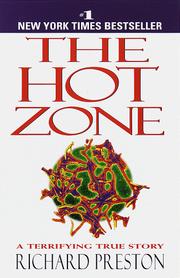
The Hot Zone
Ebola and Marburg move from African outbreaks to a Virginia monkey house and an Army response in suits.
2,291-word summary · 10 min read
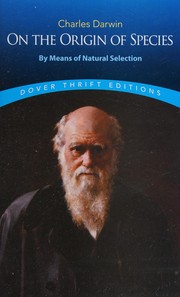
On the Origin of Species
Darwin's 1859 case for evolution by natural selection, from Beagle finches and breeding pigeons to fossils and anatomy.
2,589-word summary · 12 min read
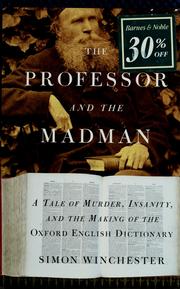
The Surgeon of Crowthorne
James Murray built the Oxford dictionary with Broadmoor inmate William Minor, whose thousands of slips shaped this 1998 HarperCollins story of murder, madness…
2,775-word summary · 12 min read
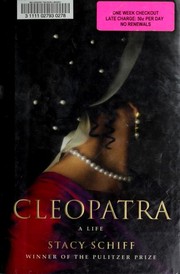
Cleopatra: A Life
Pulitzer winner Schiff restores Cleopatra as a capable ruler, from Ptolemy debts and Caesar to Antony, Actium, and her death in 30 BC, built from coins and…
3,586-word summary · 16 min read
The Splendid and the Vile
Larson follows Churchill circle through Blitz year with diaries and bombing nights.
2,038-word summary · 9 min read
American Sniper: The Autobiography of the Most Lethal Sniper in U.S. Military History
Navy SEAL sniper Chris Kyle recounts Texas roots, SEAL training, four Iraq tours, and the strain combat placed on his marriage and health.
2,011-word summary · 9 min read
Cosmos
Sagan tours galaxies, evolution, and Alexandria to argue for science.
2,416-word summary · 11 min read
Cosmic Music
The first full biography of Alice Coltrane, from Detroit church piano to ashram guru.
2,048-word summary · 9 min read
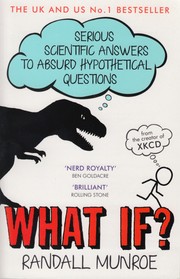
What If?: Serious Scientific Answers to Absurd Hypothetical Questions
Randall Munroe of xkcd answers absurd science questions with real physics, rough math and stick figures, from relativistic baseball to draining the oceans.…
2,932-word summary · 13 min read
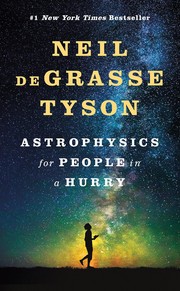
Astrophysics for People in a Hurry
Tyson condenses the Big Bang, dark matter, and exoplanets into twelve short chapters for busy readers.
2,314-word summary · 10 min read
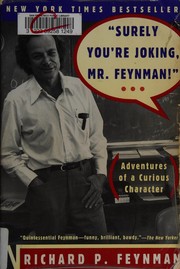
Surely You're Joking, Mr. Feynman!
Feynman drums, cracks safes, and learns by doing from Los Alamos to Caltech classrooms.
1,946-word summary · 9 min read
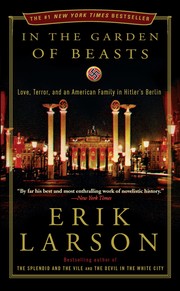
In the Garden of Beasts
Ambassador Dodd takes his family to 1933 Berlin and watches charm curdle into terror.
1,927-word summary · 9 min read
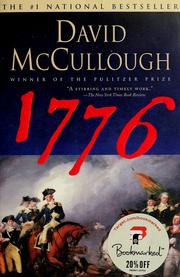
1776
Washington's amateur army from Boston siege to Trenton through mud and doubt.
2,139-word summary · 10 min read
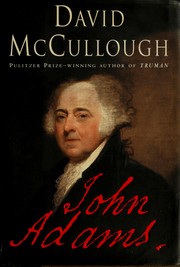
John Adams
McCullough follows Adams from Braintree lawyer to second president.
2,515-word summary · 11 min read
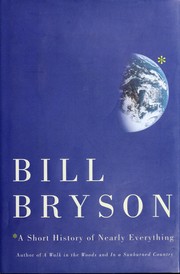
A Short History of Nearly Everything
Bryson asks how we know what we know, from atoms to continents, with humor and awe.
2,134-word summary · 9 min read
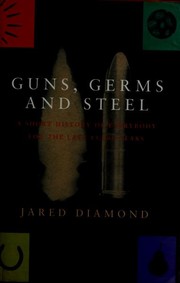
Guns, Germs, and Steel: The Fates of Human Societies
Diamond argues geography and crops explain why some societies expanded faster than others.
3,432-word summary · 15 min read
A Brief History of Time
Hawking walks from ancient spheres to big bang, black holes, and time arrows without equations.
2,210-word summary · 10 min read
Unbroken
Louis Zamperini survives a Pacific crash, sharks and POW camps after running in the Berlin Olympics.
3,263-word summary · 15 min read