
Reading options
What's inside (8 sections)
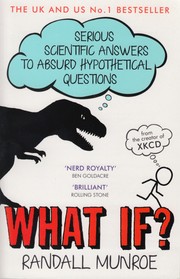
I found What If? the way a lot of people my age did, through a link someone dropped in a group chat with the caption you have to see this baseball one. I already read xkcd, the stick figure webcomic by Randall Munroe, a former NASA roboticist turned cartoonist. I knew his style. Short lines. Dry jokes. Charts that look simple until you notice how much work sits behind them. When I learned he had turned his What If blog into a book, I ordered the UK edition, the John Murray 2014 printing that runs 304 pages. The US edition from Houghton Mifflin Harcourt came out the same year with 320 pages, same text with different layout. I read it in short bursts over two weeks, a chapter with morning coffee, another late at night when my brain wanted a puzzle.
The premise is easy to explain to a friend. Readers send absurd hypothetical questions. Munroe answers with real physics, rough math, and drawings. What would happen if you pitched a baseball close to light speed. Could you cook a steak by dropping it into lava. What if everyone on Earth aimed a laser pointer at the Moon. He treats each silly setup as if it deserved a straight answer, then follows the logic until it breaks in an interesting way.
A blog that turned into a book
The book grew from the What If section on xkcd, where Munroe had been answering reader mail for a couple of years before 2014. People wrote in with questions they had argued about at dinner or in dorm rooms. He picked the ones with a clear physical picture hiding inside a joke.
Early in the book he explains his method without making it sound like a lecture. He looks for the dominant effect first. If you throw something very fast, air matters more than gravity. If you gather a huge number of animals, weight and heat matter more than cuteness. He makes a rough estimate, checks units, then refines only where it changes the outcome. Physicists call this Fermi estimation, after Enrico Fermi, who was famous for getting close answers from almost no data. Munroe is open about error bars. He will say an answer is good within a factor of two or ten, and that is enough to show why an idea fails or, rarely, almost works.
The tone comes straight from the blog. He writes like a smart friend who answers email at midnight. He assumes you took some science in school but forgot half of it. He reminds you what a joule means by comparing it to food or a car crash, not by reciting a definition. He draws himself and his readers as stick figures, which keeps the disasters funny instead of grim. When an answer involves death, and several do, the simple art softens it without hiding the physics.
I liked that he keeps the original question wording at the top of each chapter. You hear the reader voice first, often short and excited, then Munroe voice takes over. That back and forth gives the book momentum. You are not reading a textbook chapter on fluids. You are reading why someone asked about draining the oceans and what Munroe found when he tried.
The 2014 date matters in small ways I will come back to. Some web links and space missions have moved on. But the core habit, take a wild what if and test it with conservation of energy and momentum, has not aged at all.
How he answers anything
Before the big set pieces, it helps to notice his toolkit, because he reuses it across the book. First comes a translation step. He turns words into numbers you can work with. How fast is fast. How much is a lot. How hot is hot. If a question says a baseball pitch, he picks a pro level throw as a baseline and then pushes it to an extreme. If a question says a mole of moles, he treats mole as the chemistry count, not the animal, and asks what that many small bodies would weigh and take up.
Second comes hunting for the bottleneck. In many chapters the naive picture misses one effect that dwarfs the rest. Air resistance at high speed. Heat conduction in rock. Pressure at depth. Radiation dose near fuel. He finds that effect and shows why it controls the story. Rough math plus one key physical law beats pages of detail that miss the point.
Third comes the sanity check with everyday objects. He compares energy to a car, a house, a city power plant, a hurricane. He compares distance to a football field or a drive across a state. American readers will notice he leans on feet and miles and Fahrenheit in places, which I will flag later as a flaw for others. For me those comparisons helped, because I could picture a stadium better than I could picture a raw exponent.
Fourth comes the drawing. A stick figure throws. A stick figure runs. A graph rises and then falls off a cliff. The art looks tossed off, but it carries load. A height chart shows why a model breaks. A map shows where water would go. A two panel cartoon delivers the punchline so the text does not have to strain for jokes.
What I enjoy is that he admits when the answer is boring in the best way. Sometimes physics says no with style. Sometimes it says yes but slowly, over millions of years, which ruins the movie version but teaches something. He never bends the result to please the asker. If draining the oceans takes absurd energy or time, he says so and shows the path that proves it.
He also answers with care about safety. When readers ask about doing dangerous stunts, he explains the harm in plain terms and does not egg anyone on. That steadiness matters because teens read this book. He keeps curiosity alive while making clear which experiments belong on paper only.
Baseball, lava, and a strike of lightning
The opening chapters are the ones everyone quotes, and they deserve it. The relativistic baseball question asks what would happen if a pitcher could throw at a speed close to light speed. Munroe walks through it step by step. At normal speed, a pitch is air and spin and a catch. At extreme speed, air molecules cannot get out of the way. They pile up, heat, and trigger nuclear reactions in the air ahead of the ball. The batter, the catcher, the infield, much of the ballpark, all get caught in a burst of plasma and radiation. The umpire has a difficult call. That deadpan line is typical Munroe, letting understatement carry the blast.
I love this chapter because it teaches relativity without preaching. He does not start with equations. He starts with a game you know, then shows where common sense fails. The ball moves past ordinary fast into something else entirely. Time and mass effects change what fast means. The air becomes a wall. The energy stored in motion becomes enormous. By the end you grasp why physicists care about particle accelerators, which are basically careful versions of this throw, aimed and shielded.
A later food question asks about cooking a steak with lava, perhaps by lowering it into a volcano or holding it near flow. Munroe treats it as heat transfer, not as a cooking show. Lava sits at a heat far above a grill, but rock conducts heat poorly and air above lava is full of hot gas and ash. A steak dropped in would char outside while staying raw in spots, pick up glassy rock and toxic fumes, and fall apart before it became dinner. He talks through crust formation, why the outside insulates the inside, and why breathing near vents is dangerous. The takeaway is general but firm. Extreme heat does not mean good cooking. Control matters more than peak temperature.
The lightning chapter follows a reader who wonders about getting struck often or collecting strikes for power. Munroe asks whether we could gather that energy for the grid. He looks at how much energy a bolt carries, how brief the pulse is, how rarely bolts hit one tower, and what storage would need to survive. The numbers point the same way. A single bolt holds less usable energy than people guess, and it arrives in a flash that fries gear. Power companies would spend far more on towers and capacitors than they would ever get back. He adds notes on safety in storms, where to shelter, why cars and buildings help, why trees and open fields do not. Those asides give the chapter a practical edge beyond the joke.
What links these three is scale thinking. Baseball shows speed scale. Steak shows heat scale. Lightning shows time scale. Each starts with a vivid image, finds the one law that rules, and ends with a picture you will remember the next time you watch a game or a storm.
Moles and pools and empty oceans
The middle of the book goes bigger and stranger, and for me this is where the Fermi habit shines. One famous question asks what would happen if you gathered a mole of moles, meaning the chemistry number applied to the small burrowing animal, and piled them on Earth. Munroe adds up mass and volume in broad strokes. That many bodies would outweigh the planet by a wide margin and cover the surface deep. Pressure at the bottom would squeeze the lower animals into hot, dense matter. Heat from compression and decay would bake the pile. Gravity of the heap would pull in air and crush the center. He does not need a precise count to show the shape of doom. More mass means more weight, more heat, more collapse. The joke becomes a lesson in how mass and gravity feed back on each other.
Another chapter that stuck with me asks about swimming in a spent fuel pool, the deep water basins where nuclear plants cool used fuel rods. The water looks calm and blue from Cherenkov glow, and readers wonder if a swim would cook you. Munroe separates myth from dose. Water shields radiation well, so swimming on the surface above rods stored deep below gives a dose far lower than fear suggests, though diving down close would be lethal. He stresses that plants forbid swimming for good reasons, including contamination and security, not because the surface glows. He walks through inverse square falloff and absorption in plain terms, showing why distance plus water changes everything. I found this one reassuring in method even as it warns against trying. It shows how physicists think about shielding instead of treating radiation as magic.
Then there is the ocean question. What if you opened a drain at the bottom of the sea, or tried to pump the seas dry. Munroe treats the seas as a volume problem first, then as a flow problem. The amount of water is vast beyond daily experience. Any hole or pump we could build would lower sea level by a rate too small to notice on a human timescale. Pressure would crush simple pipes. Energy needs would dwarf our power supply. He also traces side effects. Exposed seabed, salt, climate shifts, shipping stranded, weather changed. Even a partial drain remakes coastlines and storms. The fun is not the drain itself. It is seeing how tightly oceans tie to weather and geology once you try to remove them.
Around these sit other delights I do not want to spoil beat by beat. A question about falling into a bottomless pit becomes a tour of terminal velocity and air drag. A question about a global windstorm becomes a tour of atmospheric energy. A question about reading every email or printing the internet becomes a tour of data storage and paper. Each follows the same arc. Picture the setup, find the limit, test with rough sums, draw the punchline.
Some readers cherry pick favorites. I found reading in order better, because early tools return later. Air drag learned in baseball helps in pits. Energy learned in lightning helps in oceans. The book trains you as it entertains you.
Drawings, jokes, and short weird answers
Between long chapters Munroe tucks short answers and side notes that keep the pace lively. One page might handle if you could type with one hand tied or shout across a canyon. Another might handle how high you could throw or how long a sneeze travels. These quick hits show his range. He can spend ten pages on a mole pile and ten lines on a sneeze, giving each only what it needs.
The stick figures deserve their own praise. They run, fall, burn, float, and stare at graphs with the same blank face. That sameness is the joke and the aid. You never confuse art skill with truth. You focus on arrows, labels, and slopes. A rising curve that bends flat tells you a limit has been hit. A map with shaded water tells you where coasts move. A two frame gag about lawyers or cats lets your brain rest before the next sum.
Footnotes and alt text carry extra jokes and caveats. He will admit a guess about wind or soil, note where a value could shift, and explain why the shift does not save the plan. That honesty builds trust. You learn to read his hedges as part of the answer. When he says roughly or on the order of, he means the conclusion survives even if inputs move.
Humor stays dry rather than cruel. He teases the asker gently, then teases himself for caring about decimal places in an apocalypse. He avoids mocking ignorance. Many questions start from a wrong picture of physics, and he replaces the picture instead of scolding. As a reader who forgot much of high school mechanics, I felt invited rather than tested.
The structure also helps browsing. Each chapter title names the question. You can jump to lightning or moles without losing track. Yet the voice stays steady, so the book does not feel like loose blog posts stapled together. An intro and connective notes frame the collection as one long conversation about how the world resists our wildest plans.
If I had to name the core skill taught here, it is asking what dominates. Beginners list many small factors. Experts find the one that sets size and speed. Munroe models that move again and again until you start doing it yourself at the dinner table.
Who should read it and where it drags
This is a book for curious people who like puzzles more than plots. Teens who enjoy math class but want to see where formulas bite. Adults who watch science videos and wonder if the host skipped steps. Teachers hunting for class openers. Fans of xkcd who want longer answers with the same drawings. If you fall in that group, the 304 pages in the John Murray printing fly by, partly because chapters stand alone and invite dipping.
It is less suited to readers who want stories or who freeze at equations. Munroe keeps math light by popular standards, but he does not remove it. You will meet exponents, rates, and unit conversions. You can skim some sums and still follow the arc, yet full pleasure needs comfort with powers of ten and a willingness to picture big ratios. A friend who hates word problems bounced off after three chapters, while another who loves them finished in four days. Know which friend you are.
Time has touched a few answers. Missions have launched, rockets have landed, web services have changed, prices have moved. The physics holds, but examples tied to 2014 tech can feel dated. Munroe could not know which startups would survive or which spacecraft would fly. I treated those bits as period charm, but a classroom using the book now may need fresh side notes.
The other fair gripe is units and frame. Munroe writes from the US, so miles and feet and dollars appear often, with metric alongside but not always first. Non American readers can follow, yet the defaults remind you where the author lives. A couple of chapters also assume suburban US housing or driving habits for scale. Those choices aid his home audience and mildly tax others.
Density varies too. A brilliant ten page teardown may sit next to two slighter gags that feel like blog filler. I did not mind the mix, because short chapters cleanse the palate, but readers wanting steady depth may notice the rhythm shift.
None of that spoiled the whole for me. I closed the book better at guessing. I catch myself asking what rules here when I hear a wild claim. Air or gravity. Heat or pressure. Time or energy. That habit is the real gift, more lasting than any single answer about baseball or lava or moles.
If you pick it up, try this. Read the baseball chapter first, then the fuel pool, then the oceans. If those three click, commit to the full run. Keep a pencil nearby, not for tests but for drawing your own stick figure falling into your own silly plan. Mine ended up arguing with a seagull over tide math. Munroe would approve. He wrote this book for people who ask odd questions in good faith and who enjoy watching those questions meet the world as it is.
FAQ
Where did What If? come from?
It grew from Munroe's xkcd What If blog, where readers sent absurd hypothetical questions. The UK edition was published by John Murray in 2014 with 304 pages.
Is there a US edition with a different page count?
Yes. The US edition from Houghton Mifflin Harcourt appeared in the same year, 2014, with 320 pages. The content is the same book in a different edition.
Who will enjoy What If??
Teens and adults who enjoy science, math puzzles and dry humor. Readers who dislike equations or US units may find some chapters slow.
Similar books
Surely You're Joking, Mr. Feynman!
Feynman drums, cracks safes, and learns by doing from Los Alamos to Caltech classrooms.
1,946-word summary · 9 min read
The Elegant Universe: Superstrings, Hidden Dimensions, and the Quest for the Ultimate Theory
Brian Greene explains relativity, quantum mechanics, and the promise of string theory without requiring a physics degree.
2,110-word summary · 9 min read
Einstein: His Life and Universe
Isaacson traces Einstein from patent clerk to world fame using newly opened papers, through 1905, relativity, exile, and the long unified theory search.
2,773-word summary · 12 min read
Astrophysics for People in a Hurry
Tyson condenses the Big Bang, dark matter, and exoplanets into twelve short chapters for busy readers.
2,314-word summary · 10 min read
Stiff: The Curious Lives of Human Cadavers
What happens to donated bodies, from crash labs and decay farms to composting and space tests.
2,051-word summary · 9 min read
A Short History of Nearly Everything
Bryson asks how we know what we know, from atoms to continents, with humor and awe.
2,134-word summary · 9 min read
A Brief History of Time
Hawking walks from ancient spheres to big bang, black holes, and time arrows without equations.
2,210-word summary · 10 min read
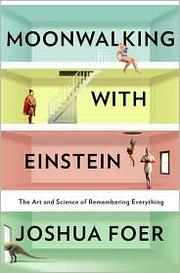
Moonwalking with Einstein: The Art and Science of Remembering Everything
A journalist spends a year training for the U.S. Memory Championship and discovers that extraordinary memory is mostly technique, attention, and a lot of…
2,027-word summary · 9 min read
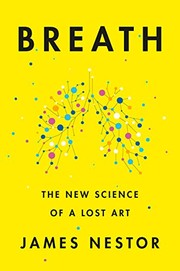
Breath: The New Science of a Lost Art
Journalist James Nestor investigates how modern humans learned to breathe badly, and what researchers, athletes, and breathwork practitioners have found about…
2,011-word summary · 9 min read
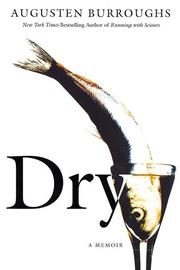
Dry
A memoir of drinking, rehab and relapse, and the strange business of getting sober one morning at a time.
2,643-word summary · 12 min read

Dear Girls: Intimate Tales, Untold Secrets & Advice for Living Your Best Life
Ali Wong's debut collects fourteen letters to her daughters, covering sex, money, work, marriage, Vietnam, and being a working Asian American mother.
2,266-word summary · 10 min read
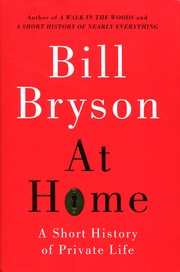
At Home: A Short History of Private Life
Bill Bryson tours his own Norfolk rectory room by room to explain how private life and the modern home got built.
2,334-word summary · 10 min read
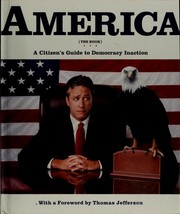
America (The Book): A Citizen's Guide to Democracy Inaction
Jon Stewart and the Daily Show writers turn a high school civics textbook inside out, with a foreword from beyond the grave.
2,511-word summary · 11 min read

Scrappy Little Nobody
Anna Kendrick's essays trace her path from a Portland childhood and Broadway to Hollywood, with jokes, anxiety, and a refusal to pretend fame fixed her.
2,092-word summary · 9 min read

Attached
A psychiatrist and a psychologist explain adult attachment styles and show how anxious, avoidant, and secure patterns shape dating, conflict, and the search…
2,157-word summary · 10 min read

The Emperor of All Maladies
A biography of cancer from Galen to chemo through one doctor cases.
2,255-word summary · 10 min read
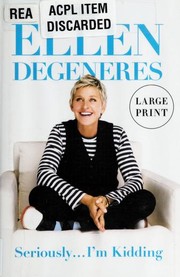
Seriously...I'm Kidding
DeGeneres strings show stories and home jokes into light life advice.
2,292-word summary · 10 min read

Open Book
Simpson replays pop fame, love and drink through recovery work.
2,552-word summary · 11 min read

My Horizontal Life: A Collection of One-Night Stands
Handler turns dating disasters and family chaos into brash comic essays about single life in Los Angeles.
2,304-word summary · 10 min read
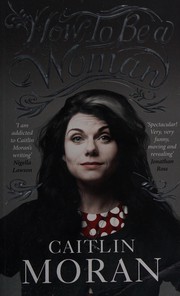
How to Be a Woman
Moran mixes girlhood and work stories into plain feminist advice.
2,600-word summary · 12 min read
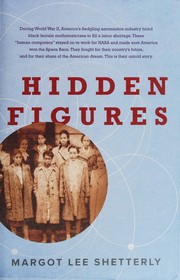
Hidden Figures
Black women computers at Langley launch rockets past Jim Crow.
2,385-word summary · 11 min read
God Is Not Great
Hitchens argues religion poisons life across history and texts.
2,545-word summary · 11 min read
Eats, Shoots & Leaves
Truss defends commas with jokes about pandas and posters.
2,423-word summary · 11 min read
The Hot Zone
Ebola and Marburg move from African outbreaks to a Virginia monkey house and an Army response in suits.
2,291-word summary · 10 min read
On the Origin of Species
Darwin's 1859 case for evolution by natural selection, from Beagle finches and breeding pigeons to fossils and anatomy.
2,589-word summary · 12 min read
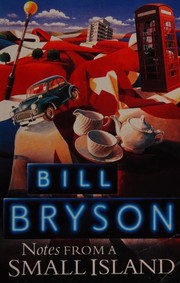
Notes from a Small Island
Bill Bryson's 1995 farewell tour of Britain, funny and fond, from Dover to London, the north, Scotland and Wales.
2,301-word summary · 10 min read
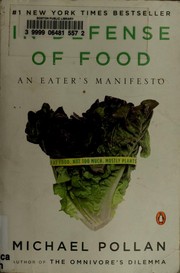
In Defense of Food
Pollan argues we stopped eating food and started eating nutrients, and offers a plain way back.
2,320-word summary · 10 min read

In a Sunburned Country
Bryson revisits Australia by city walks and long trains, with reef trips, critter comedy, and explorer history.
2,387-word summary · 11 min read
Bad Feminist
Gay mixes memoir and pop culture criticism to argue for imperfect feminism, from Sweet Valley to Django to Fifty Shades.
2,493-word summary · 11 min read
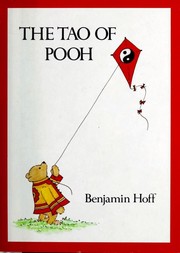
The Tao of Pooh
Hoff explains Taoism through Pooh, Piglet, and Eeyore in gentle chats.
2,006-word summary · 9 min read