
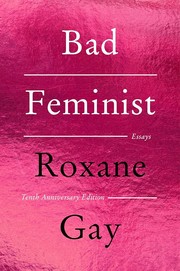
Bad Feminist
2,493-word summary 11 min read 320 pages in the book
- First published
- 2014
- Publisher
- Harper Perennial
- Pages
- 320
- ISBN
- 9780062282729
Reading options
What's inside (8 sections)
- Why calling yourself a bad feminist matters
- Gender, race, and the essays that hit hardest
- Pop culture criticism from Sweet Valley to Django to Fifty Shades
- Bodies, hunger, assault, and telling the truth
- Teaching, writing, arguing, and living online
- Where the book strains and why I still recommend it
- Key takeaways
- FAQ
I picked up Bad Feminist after hearing friends argue about it for years. Some called it the most honest book about being a woman in public. Others said it was messy and uneven. Both descriptions turned out to be right, which is kind of the point. Roxane Gay, a Haitian American writer and teacher, published this collection in 2014 with Harper Perennial, and it runs 320 pages. It is a mix of memoir, cultural criticism, and sharp opinion writing. I read it in short bursts, one or two essays at a time, because almost every piece gave me something to argue with in my head.
Gay writes the way people actually talk when they trust you. She is funny in one paragraph and furious in the next. She admits to loving songs with terrible lyrics about women. She admits to dyeing her hair blonde and feeling strange about it. She admits to caring a lot about likability even while she says women should stop chasing it. That looseness is what makes the book easy to read. It also makes it easy to underestimate. Under the jokes there is a steady argument about power, race, money, and who gets to feel safe.
Why calling yourself a bad feminist matters
The opening essays lay out the title idea. Gay calls herself a feminist, full stop. She believes in political, social, and economic equality. She also says she fails at the performance of perfect feminism all the time.
She loves pink. She loves pop songs that treat women as decoration. She wants to be held and called baby in a relationship even while she rolls her eyes at herself for wanting it. She reads fashion magazines she knows are selling an impossible body. She shaves, or does not shave, depending on mood. She says she is human, and therefore flawed, and therefore a bad feminist if bad means inconsistent.
I liked this move when I first read it, and I still think it works as an invitation. A lot of people, especially younger women and men who agree with equality but feel scolded by the label, hear feminism as a purity test. Gay lowers the gate. She says you do not have to give up every pleasure or pass every quiz to claim the word. You just have to care about equality and keep trying to live it.
At the same time, the label does extra work for her. It lets her hold two truths without pretending they fit neatly. She can praise a show for giving women messy interior lives and then slam it for ignoring women of color. She can enjoy a thriller with a strong heroine and admit the plot depends on punishing that heroine for being strong. The bad feminist frame gives her room to say I love this and it bothers me, without picking one side for the sake of a clean take.
If you want a strict program for action, this opening may frustrate you. Gay is not handing out rules. She is describing a stance. That stance is generous toward ordinary contradiction and hard toward institutions. The generosity is aimed at people. The hardness is aimed at systems.
Gender, race, and the essays that hit hardest
The middle of the book moves from personal confession to reporting and argument. Gay writes about being a Black woman in rooms that are mostly white, mostly male, or both. She writes about academia, publishing, journalism, and public speaking. She names the fatigue of being asked to represent an entire group. She names the anger that builds when people praise diversity in speeches and then hire the same narrow circle.
One thread I kept marking is reproductive freedom. Gay writes about abortion access, clinic harassment, waiting periods, and the way legislators talk about women as vessels rather than people. She points to state laws that add cost and travel and shame, which fall hardest on poor women and rural women. She writes about rape culture too, about how victims get questioned on clothing and drinking and sexual history while attackers get described as promising students with bright futures. These essays felt the most urgent to me, even reading them years later, because the laws she describes have only multiplied.
Race runs through all of it. Gay writes about growing up Haitian American, about colorism, about hair, about respectability advice that tells Black women to smile more and complain less. She writes about how white feminism often centers white middle class problems and treats race as a side topic. She pushes back on that order. For her, gender never sits apart from race and class. A workplace policy that helps a salaried manager with paid leave may do nothing for an hourly worker with an unpredictable schedule. A campaign about street harassment lands differently when you know Black women face both sexism and racism from strangers and from police.
She also writes about men, fatherhood, and friendship. She is clear that men need feminism too, not as a favor to women but as a release from rigid roles. She praises fathers who do care work without expecting applause. She criticizes male writers and editors who treat women's stories as niche. Short paragraphs carry a lot here. One sentence will stop you cold. Then she moves on, which can feel abrupt, but it matches how these insults arrive in real life, one small cut after another.
Pop culture criticism from Sweet Valley to Django to Fifty Shades
The funniest and most quoted section is the pop culture criticism. Gay grew up reading a lot, watching a lot of television, and playing competitive Scrabble, and she brings a fan eye to everything. She can explain why a silly book mattered to her at twelve and why it looks troubling at thirty.
Her essay on Sweet Valley High stuck with me. She read those books as a girl, all those identical blonde twins and tidy moral lessons, and she loved them even though almost nobody in them looked like her. As an adult she sees the narrowness clearly. Thin, rich, white girls get to be good or bad in interesting ways. Everyone else barely exists. Yet she does not pretend she was above it. She admits the pull of those covers, the wish to live in that clean California world for an hour. That honesty makes her criticism land harder than a simple dismissal.
Her writing on Quentin Tarantino, especially Django Unchained, is tougher. She respects craft and performance. She also asks who gets to turn slavery into stylized revenge play. She worries about Black pain used as set dressing for white catharsis. She compares that film with 12 Years a Slave, which she finds more serious about suffering and survival, though far harder to watch. You may disagree with where she lands. I did in places. But she forces the right question, which is not did I enjoy the shootout, but whose history is being reshaped for my enjoyment.
Then there is Fifty Shades of Grey. Gay reads the trilogy closely, which is more than many critics bothered to do, and she is brutal about the writing and the relationship logic. She argues the books confuse control with care, wealth with charm, and persistence with consent. Christian Grey tracks Anastasia Steele, overrides her limits, buys his way past no, and the story frames that as romance because he is handsome and damaged. Gay finds that framing dangerous, far beyond silly. She also notes the prose problems, the repeated phrases, the emails that read like drafts, the way trauma gets used as an excuse for present harm. As someone who sat through the hype, I laughed out loud and then felt uneasy, because she is right that millions of readers absorbed those patterns as love.
She covers television too, including Girls and Scandal and birth control plots and rape storylines that use assault as character seasoning. Her rule seems to be simple. Love what you love, but say what it costs. That stance lets her praise Kerry Washington carrying Scandal while asking why Olivia Pope still spends so much energy cleaning up powerful white men.
Bodies, hunger, assault, and telling the truth
The hardest essays to read concern bodies and violence. Gay writes openly about weight, hunger, discipline, and shame. She describes a childhood as an active, hungry kid who liked food and movement, then a rupture that changed her relationship with her body for decades. At twelve she was gang raped by a boy she trusted and his friends. She writes about telling no one for a long time, about eating to make herself larger and less approachable, about building size as protection.
I want to be careful here because these passages are plain and direct. She does not use assault as a twist or a lesson. She describes aftermath. Trouble trusting. Trouble dating. Trouble feeling at home in her skin. Anger that flares in safe moments. She also describes joy, appetite, sex, tenderness, and humor returning in pieces, not all at once. Reading it felt intimate in a way that made me put the book down and stare out the window.
Her writing on body size connects to that history without reducing everything to it. She writes about airplane seats and doctor visits and clothing stores and dating apps, about strangers who feel free to comment and friends who offer diets as love. She writes about health advice that assumes thin equals healthy and fat equals failure. She is not asking for pity. She is asking for basic respect and for systems that fit more kinds of bodies. She points out how much money and time women are expected to spend shrinking themselves, and how that tax is larger for Black women whose bodies are judged through both sexism and racism.
These essays also address hunger in a wider sense. Hunger for food, for attention, for safety, for sex that feels good and kind. Gay allows herself to want things without apology. That permission feels tied to her feminism. Equality, for her, includes the right to take up space at a table and in a bed and on a page.
A fair warning is due. These sections discuss rape, self harm patterns around food, and medical bias. Gay handles them with care, but she does not soften facts to keep readers comfortable. If you read straight through, pace yourself. I found it helped to pause between essays and let each one settle.
Teaching, writing, arguing, and living online
Another thread follows Gay as a teacher and working writer. She taught composition and creative writing, graded stacks of papers, advised students who were brilliant and broke and tired. She writes about classroom moments with warmth and impatience. She loves students who push back. She gets tired of grade grubbing and plagiarism and the customer service model of college, where course evaluations punish tough women professors.
She writes about her own path into print, years of rejection, small journals, blog posts, then wider notice. She describes learning to take edits without losing her sound. She describes saying yes too often and then learning to say no. For anyone who wants to write, these practical bits are gold. Keep a schedule. Read widely. Accept that early drafts will embarrass you. Send work out before you feel ready.
She also writes about Twitter era fame, which in 2014 was still new for literary writers. She gained a large following for being direct and funny. That visibility brought speaking gigs and book deals. It also brought threats, slurs, and coordinated pile ons, especially when she wrote about race and rape. She describes the strange split of waking to kind notes from students and vile messages from strangers in the same hour. She talks about blocking freely, logging off, protecting her time. She talks about accountability too, about correcting errors in public and paying other writers for their labor.
Her Scrabble stories fit here. She played competitively for years, studied word lists, traveled to tournaments, sat across from older men who underestimated her. I loved these scenes because they show her mind at play. Counting tiles, tracking bingo chances, staying calm under time pressure. It is a different kind of performance than the essay voice, quieter and more tactical. It also shows how she learned to sit with being the only Black woman in a room and win anyway.
Where the book strains and why I still recommend it
No collection this varied lands every punch. Some essays feel thin now because the news cycle moved on. A review of a forgotten controversy or a television season finale reads like a time capsule. A few pieces repeat the same setup. I love this problematic thing, here is why it troubles me, here is why I keep watching. After the tenth version, I wanted more range in structure.
The tone can swing fast. One essay ends in grief. The next opens with a joke about reality TV. That swing is honest to how Gay thinks, but it can leave a reader whiplashed. I also wanted more reporting in places. When she writes about policy, she is strong on moral clarity and light on process detail. How did a specific bill pass. Who funded the opposition. What tactic worked in one state and failed in another. Readers who want a manual will need a companion book.
There is also a limit to the bad feminist idea itself. As a welcome mat, it works. As a theory, it can excuse too much. Loving a song with ugly lyrics is small. Supporting an industry that profits from those lyrics is larger. Gay knows this, and she says so, but some readers may take the label as permission to stop examining their habits. I do not think that is her fault. Still, the risk is real. A slogan that starts as self critique can harden into branding.
Even with those strains, I keep recommending Bad Feminist to friends who say they do not read essays. The sentences are clear. The stakes are clear. The mix of memoir and criticism means you learn about Gay while you learn how to watch more closely. She models a way to stay attached to flawed culture without lying about the flaws. She models how to change your mind in public. She models how to say I was harmed and I am still here, without turning pain into a performance.
What stayed with me after the last page was not a single argument but a habit. Pause before praising a story that uses someone pain as fuel. Ask who is missing from the frame. Ask who pays for the joke. Then keep reading, keep watching, keep arguing. Gay does not ask readers to be perfect allies or perfect fans. She asks them to pay attention and to care enough to say the hard part out loud.
FAQ
When was Bad Feminist published and how long is it?
It was published in 2014 by Harper Perennial and runs 320 pages in the cited edition, collecting previously published and new essays.
Does Gay dislike the pop culture she criticizes?
No. She writes as a fan of books, film, and TV, arguing readers can enjoy flawed work while naming racism, sexism, and consent problems in it.
Is this book only for committed feminists?
No. Gay frames bad feminist as an invitation for anyone who supports equality but feels put off by purity tests, including men and new readers of essays.
Similar books
Dear Girls: Intimate Tales, Untold Secrets & Advice for Living Your Best Life
Ali Wong's debut collects fourteen letters to her daughters, covering sex, money, work, marriage, Vietnam, and being a working Asian American mother.
2,266-word summary · 10 min read
How to Be a Woman
Moran mixes girlhood and work stories into plain feminist advice.
2,600-word summary · 12 min read
Not That Kind of Girl: A Young Woman Tells You What She's Learned
Girls creator Lena Dunham's essays on work, bodies, love, and family, frank and funny with uneven edges.
2,156-word summary · 10 min read
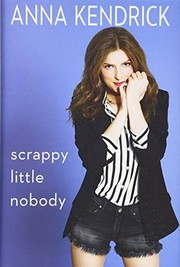
Scrappy Little Nobody
Anna Kendrick's essays trace her path from a Portland childhood and Broadway to Hollywood, with jokes, anxiety, and a refusal to pretend fame fixed her.
2,092-word summary · 9 min read
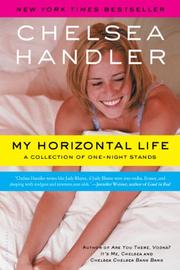
My Horizontal Life: A Collection of One-Night Stands
Handler turns dating disasters and family chaos into brash comic essays about single life in Los Angeles.
2,304-word summary · 10 min read
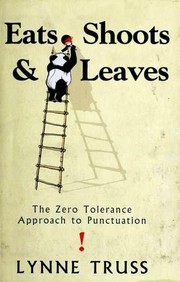
Eats, Shoots & Leaves
Truss defends commas with jokes about pandas and posters.
2,423-word summary · 11 min read
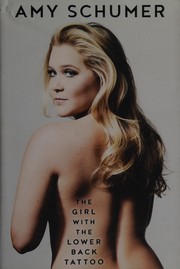
The Girl with the Lower Back Tattoo
Amy Schumer mixes raunchy jokes with frank essays on family, dating, body image, and the shooting that pushed her into gun control advocacy.
2,259-word summary · 10 min read
Calypso
Sedaris buys a Carolina beach house, grieves his sister Tiffany, tends his aging father, and turns illness and marriage into dry family comedy.
2,835-word summary · 13 min read
Are You There, Vodka? It's Me, Chelsea
Handler mines family, jail, dating, and travel for brash essays where oversharing is both joke and shield.
2,186-word summary · 10 min read
Naked
Growing up odd in Carolina, working bad jobs, and learning to watch people closely and kindly.
2,020-word summary · 9 min read
We Should All Be Feminists
Adichie turns her 2012 TEDx talk into a short sharp essay on gender, using stories from Lagos and America to argue equality helps everyone.
2,625-word summary · 12 min read
Dress Your Family in Corduroy and Denim
Sedaris on snow days, rental houses, Dutch Christmas, and the family that made him funny.
3,098-word summary · 14 min read
Bossypants
Tina Fey moves from Pennsylvania childhood through improv and SNL to 30 Rock in this funny 2011 memoir. Expect backstage stories, jokes about work and…
2,301-word summary · 10 min read
Hunger
Roxane Gay traces how assault at twelve shaped her body, appetite, and daily life as a fat Black woman refusing shame.
2,583-word summary · 11 min read

Infidel
Ayaan Hirsi Ali's memoir of a Somali childhood, a forced marriage, a Dutch asylum claim, and the political fight that followed the murder of Theo van Gogh.
2,041-word summary · 9 min read
Dry
A memoir of drinking, rehab and relapse, and the strange business of getting sober one morning at a time.
2,643-word summary · 12 min read
At Home: A Short History of Private Life
Bill Bryson tours his own Norfolk rectory room by room to explain how private life and the modern home got built.
2,334-word summary · 10 min read
America (The Book): A Citizen's Guide to Democracy Inaction
Jon Stewart and the Daily Show writers turn a high school civics textbook inside out, with a foreword from beyond the grave.
2,511-word summary · 11 min read
Why I'm No Longer Talking to White People About Race
Reni Eddo-Lodge traces black British history and shows how institutions, culture, and everyday assumptions keep producing racial inequality.
2,071-word summary · 9 min read
All About Love: New Visions
bell hooks borrows a definition of love as an action rather than a feeling, then spends thirteen chapters showing how hard it is to practice.
2,385-word summary · 11 min read
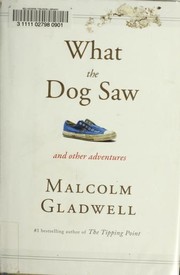
What the Dog Saw and Other Adventures
Nineteen New Yorker essays on pitchmen, ketchup, Enron, profiling, late bloomers and the limits of prediction, arranged in three parts.
2,049-word summary · 9 min read
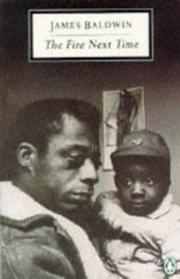
The Fire Next Time
Baldwin writes his nephew and faith on race in America.
2,463-word summary · 11 min read
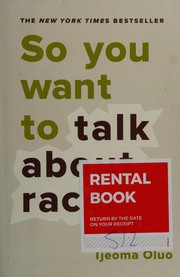
So You Want to Talk About Race
Oluo gives plain rules for talking about race at work and home.
2,597-word summary · 12 min read
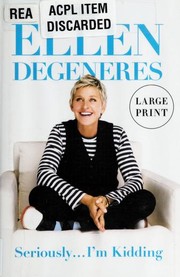
Seriously...I'm Kidding
DeGeneres strings show stories and home jokes into light life advice.
2,292-word summary · 10 min read
Open Book
Simpson replays pop fame, love and drink through recovery work.
2,552-word summary · 11 min read
Notes from a Small Island
Bill Bryson's 1995 farewell tour of Britain, funny and fond, from Dover to London, the north, Scotland and Wales.
2,301-word summary · 10 min read
In a Sunburned Country
Bryson revisits Australia by city walks and long trains, with reef trips, critter comedy, and explorer history.
2,387-word summary · 11 min read
Tiny Beautiful Things: Advice on Love and Life from Dear Sugar
Dear Sugar answers letters on love, grief, and work with tough empathy drawn from her own losses.
2,253-word summary · 10 min read
The Tao of Pooh
Hoff explains Taoism through Pooh, Piglet, and Eeyore in gentle chats.
2,006-word summary · 9 min read
SuperFreakonomics: Global Cooling, Patriotic Prostitutes And Why Suicide Bombers Should Buy Life Insurance
Levitt and Dubner apply incentives to prostitutes, suicide bombers, doctors, and climate fixes with cheeky data.
2,007-word summary · 9 min read