
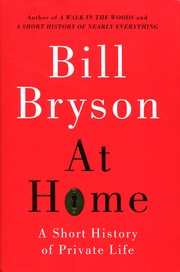
At Home: A Short History of Private Life
2,334-word summary 10 min read 497 pages in the book
- First published
- 2010
- Publisher
- Doubleday
- Pages
- 497
- ISBN
- 9780767919388
Reading options
What's inside (9 sections)
- 1851, and the rector who could afford to be curious
- The kitchen, the larder, and the people who did the work
- The fuse box and the invention of the evening
- Drawing room, dining room, cellar, passage
- The smaller rooms
- What he does with it, and where it strains
- Where to start and who it suits
- Key takeaways
- FAQ
I read At Home in a flat that had no history in it at all. Every object in the place had come out of a factory in the last fifty years, and I had no idea who had decided they should look like that. So I went looking for a book about the house, and Bill Bryson had already written one. It came out in 2010 from Doubleday in New York, 497 pages, ISBN 9780767919388, and the British edition appeared a few months earlier from Doubleday in London. The premise is simple enough to say in one line: Bryson walks through his own old Norfolk rectory, room by room, and uses each room to explain how private life got built. Nineteen chapters, one for nearly every room, and the whole thing hangs on a single year.
1851, and the rector who could afford to be curious
The year is 1851, the year of the Great Exhibition and the Crystal Palace, and Bryson opens there because the house he is living in was built then. The rector it was built for was Thomas J. G. Marsham, and Bryson sketches him with obvious affection. Marsham's income was around £500 a year, which Bryson converts to somewhere near £400,000 today, and the point of the figure is not the money but the free time. Marsham belonged, in Bryson's words, to a class of well-educated, wealthy people who had immense amounts of time on their hands, and in consequence many of them began, quite spontaneously, to do remarkable things. One clergyman, George Bayldon, ran so few services that he turned half his church into a hen house. Another, the Reverend George Garrett, worked out how to build a submarine. The house exists because a rich amateur needed somewhere to live.
Bryson uses that frame to talk about the clergy's slow slide from the centre of English life, and about what the Victorians had already begun to build, since 1851 is the hinge between the old house and the modern one. The chapter called The Setting, which sounds like a chapter about wallpaper, is really about Skara Brae, the Neolithic settlement on the west coast of Mainland Orkney that was occupied from about 3180 BC to around 2500 BC and is now the most complete Neolithic village in Europe, stone furniture and all. It is the sort of fact the whole book is built on: the past arriving without warning in the middle of a sentence about a shelf.
The kitchen, the larder, and the people who did the work
The kitchen is where the book gets busiest, because food in the nineteenth century was a war against spoilage. Bryson works through Samuel Pepys and his complaints about the food of his own day, then the adulteration of everything, then Nicolas Appert's invention of canning in sealed glass, then the Wenham Lake Ice Company and the trade in natural ice cut from Massachusetts lakes, then John Landis Mason and his jar, then Bryan Donkin and his tin can, and then Mrs Beeton's Book of Household Management, which turned cooking into a discipline of thrift. A kitchen with a larder, a scullery and a place for servants is an apparatus for keeping one family alive through a bad harvest.
The scullery and larder chapter is the one that sticks with me, because Bryson uses it to look at the servants who ran those rooms. He discusses the daily round and the treatment of domestic workers, and then the life of Hannah Cullwick, born in 1833 in Shifnal in Shropshire, the daughter of a master saddler, who worked her way through service as a nursemaid, a pot girl in an inn and a kitchen maid. Her diary records her enormous pride in her work, along with the strange rituals of the empire she was employed by, and it has become a key document of what domestic service was like. Then he sets the British servant system against slavery in the American South, which is a comparison other writers make more roughly than he does. He is honest that the comparison is not a clean one, and he is also honest that a lot of the people doing the hard work in this book are described in a paragraph and then never appear again.
The fuse box and the invention of the evening
The chapter called The Fuse Box is the best one in the book, and it is about electricity, but really it is about what people did with the dark. Bryson starts with the fact that the electric light did not create a night-time life, it ended one. Before it, a household burned tallow or beeswax, and the day's business had to fit around the light. Then the Argand lamp with its glass chimney, the oil from whaling, the kerosene that Abraham Gesner figured out how to refine, the gas companies, and finally the electric filament, and with each one the hours of the day moved. He mentions the blackout regulations in Britain during the Second World War, the fact that crime dropped in the dark hours, and how the Industrial Revolution changed how long people slept. The line I quote to friends is his: open your refrigerator door and you summon forth more light than the total amount enjoyed by most households in the eighteenth century.
The same chapter carries his best pictures, because Bryson is at his funniest when the material is absurd. A Rembrandt of a student at a table by candlelight gets a paragraph of its own. The chapter is also where the clocks come in, and where the industrial demand for standard time starts to push at the edges of the house.
Drawing room, dining room, cellar, passage
The drawing room chapter is about furniture, and it starts with the ground being made ready for it: crop rotation, Jethro Tull's seed drill, the domestication of cattle. Then the architects, Vanbrugh, Robert Adam and James Wyatt, then the lumber trade, and then Chippendale. It is a chapter about how a class of people chose to sit down, and what it took to furnish them.
The dining room chapter is about eating, and it is the most argumentative. Bryson takes the discovery of scurvy and the work of Christiaan Eijkman on beriberi, then salt, which was expensive enough to be worth wars, then pepper, and the spice trade, and tea and coffee and the East India Company. The merchants of India, he notes, "arrive with gold and depart with pepper." James I, not content with the crowns he had, added "King of England, Scotland, Ireland, France, Puloway and Puloroon" to his list, which is both very funny and quite accurate about how the spice trade bent European titles. He also stops on salt, calling it the mineral "most vital in dietary terms," and pointing out that we eat on average forty times the amount needed to sustain life. In the introduction he sets the whole thing going with two questions: "Why not pepper and cardamom, say, or salt and cinnamon?" and "Why do forks have four tines and not three or five?"
The cellar is structural history wearing a hard hat. The Erie Canal finished in 1825, which took a water resistant mortar from an obscure engineer named Canvass White, and New York took off afterwards. Brick taxes pushed builders into timber and then into stucco, which is the stucco you see in Regency London, and the timber trade explains a good deal of American log cabin building. Then there is the cost of all this in smoke and death: coal pollution in London, cast iron buildings that collapsed, the Tay Bridge disaster, and Bessemer steel arriving in 1856 to give the industrial age the material it had been waiting for. The passage chapter takes the story to the Eiffel Tower, which took longer to design than to build and had no practical purpose at all, and then to the Gilded Age in America, where the Vanderbilts built on a scale that made the Duke of Marlborough look cautious, and where Biltmore in North Carolina shows how far the private ambitions of one family could travel.
The smaller rooms
The last third of the book moves faster, room by room, and this is where its critics start grumbling. The study is about pests, which is more entertaining than it sounds: the mousetrap of James Henry Atkinson, rats, mites, bedbugs, bats, locusts, and the work of the American microbiologist Charles Gerba on what is actually living in your house. The garden chapter brings in Frederick Law Olmsted and the conversion of burial grounds into public parks, which is a dark origin for a cheerful institution. The plum room is an excuse for architecture, Palladio first, then Monticello and Jefferson, then Mount Vernon and Washington, who are treated as designers rather than as statues. The stairs chapter is about accidents, and includes wallpaper and paint among the household killers, and the plain fact that more people die from falls on stairs than from almost anything else in the house.
The bedroom covers sex, sleep and death. The bathroom covers the history of hygiene, which is mostly a history of not having one. The dressing room is about clothes: the iceman found in the Alps, linen, hemp, wool and silk, the sumptuary laws that told you what you were allowed to wear, wigs worn in Europe from about 1650 to 1800, cosmetics, Beau Brummell, cotton brought home by the ships and the spinning jenny, the water frame, the power loom, corsets, and Victorian fashion in general. The nursery is about childhood and about the gap between the privileged child and the poor one, with the workhouses of the nineteenth century as a reminder of who paid for the other kind of childhood. And the attic ends it with Charles Darwin, and with John Lubbock, the neighbour who became an MP and gave the country bank holidays, and who also spent three months trying to teach his dog to read.
What he does with it, and where it strains
Two things are going on at once in this book, and they do not always get along. The first is a history of ordinary domestic life, and the second is a demonstration of how much history is made of ordinary people doing ordinary things. Bryson puts it plainly in the opening pages: history is masses of people doing ordinary things, and even Einstein spent large parts of his life thinking about his holidays, or a new hammock, or how dainty was the ankle on the young lady getting off the tram. It is a good argument and he keeps making it. Lobsters were once so plentiful in Britain that servants negotiated with their employers not to be served them more than twice a week.
The second thing is his appetite for anecdote, which is what makes the book hard to put down and also what makes it hard to follow. He cannot resist a well turned story, and his asides have asides. One of his chains starts with Edwin Chadwick, who believed that smells caused disease and who also gave Britain the workhouse, and runs to Chadwick's half brother who emigrated to America and is credited with inventing baseball, and then to their father, who taught John Dalton, credited with discovering the atom, and lived with Thomas Paine, and then to a footnote about the footnote. It is funny and it is also a way of covering ground at speed, which is exactly what the last third of the book does with the Industrial Revolution.
The Guardian's judgement was that the book is not really about home at all, and that in its final stretch it becomes a dash through the Industrial Revolution's greatest hits, as if the headmaster had walked in and asked for the facts. Judith Flanders in the Telegraph thought it had better jokes than a sense of history, and still called it a treasure. Both complaints are fair. The pace in the later chapters is a sprint, and the book does end with a small sermon, having spent 500 pages describing a world that made the sermon necessary. I also noticed how lightly the working poor get treated. The rich get rooms, furniture, food and clothes. The servants and the poor get a paragraph, a comparison, and a chapter about workhouses. A history of private life that is mostly a history of private life for people with money is still worth reading, but it is worth knowing that is what it is.
Where to start and who it suits
Read it if you like Bryson's voice anywhere else and want it applied to a subject that is not a mountain or a word. Read it in a house, in order, because the book works as a tour and a single chapter taken out of sequence is just a pile of facts. Read it slowly in winter, when the argument about light and dark makes sense.
The blurb line is the thesis: houses are not refuges from history, they are where history ends up. The book is a convincing argument for that, partly because the tour is a good excuse to keep moving, and partly because the facts are so good that the argument mostly assembles itself. Bryson ends in the attic, and ends with a warning about the age he has just described, which is a slightly awkward place to land after all the jokes. It is also the right place, because a book about how comfortable we have become should not finish in a state of comfort.
The 2010 Doubleday hardcover in New York runs to 497 pages, and the British edition is a slightly longer book. Read either. Then go and stand in a museum gallery of furniture and notice how much of what you own was decided by somebody you have never heard of, usually to make money.
FAQ
When was At Home published and by whom?
Bill Bryson's At Home came out in the UK in May 2010 from Doubleday, and the US edition followed that October from Doubleday in New York. The US hardcover runs 497 pages with ISBN 9780767919388.
What does the book actually cover?
Nineteen chapters follow his house, from the hall and kitchen to the fuse box, dining room, cellar, garden, bedroom, bathroom, dressing room, nursery and attic.
Is At Home a serious history?
It is popular history with real sources behind it, and critics were split. The Guardian said it was not really about home, while Judith Flanders in the Telegraph called it a treasure.
Similar books
This Time Next Year
Two women give birth minutes apart on New Year's Day 1990, and one takes the other's lucky name. Thirty years on, their children meet again.
2,194-word summary · 10 min read
How to Cook Everything: Simple Recipes for Great Food
Bittman's 1998 doorstop taught a generation that dinner is a technique, not a recipe, with master recipes and variations instead of rigid instructions.
2,027-word summary · 9 min read
Notes from a Small Island
Bill Bryson's 1995 farewell tour of Britain, funny and fond, from Dover to London, the north, Scotland and Wales.
2,301-word summary · 10 min read
In a Sunburned Country
Bryson revisits Australia by city walks and long trains, with reef trips, critter comedy, and explorer history.
2,387-word summary · 11 min read
A Short History of Nearly Everything
Bryson asks how we know what we know, from atoms to continents, with humor and awe.
2,134-word summary · 9 min read
The Zookeeper's Wife: A War Story
The directors of the Warsaw Zoo hid roughly three hundred Jews in empty cages and outbuildings after the German invasion, while Jan worked for the resistance.
2,065-word summary · 9 min read

Long Walk to Freedom
Mandela's account of a Thembu childhood, a law practice, a banned movement, twenty-seven years in prison, and the negotiation that ended apartheid.
2,454-word summary · 11 min read
1491: New Revelations of the Americas Before Columbus
Charles C. Mann gathers archaeology, ecology, and demography to argue that the Americas before Columbus were older, fuller, and more deliberately shaped than…
2,712-word summary · 12 min read
The DaVinci Code: A Quest for Answers
A short 2006 dialogue in which three friends test Dan Brown's claims about Jesus, Mary Magdalene, Nicaea, and the canon.
2,088-word summary · 9 min read
Nothing to Envy
Barbara Demick follows six defectors from Chongjin through the North Korean famine, showing how ordinary people lived, believed, and finally left.
2,068-word summary · 9 min read
Down and Out in Paris and London
Orwell's account of washing dishes in Paris hotels and tramping through London does not ask for pity, only for a clear look at how poverty actually works.
2,282-word summary · 10 min read
The Wright Brothers
David McCullough tells the story of two self-taught Ohio brothers, working largely alone and out of a bicycle shop, who solved the problem of flight before…
2,027-word summary · 9 min read
The Magnolia Story
How Chip and Joanna Gaines met, closed their first shop, nearly lost everything in a housing development, and built Fixer Upper.
2,994-word summary · 13 min read
Lone Survivor: The Eyewitness Account of Operation Redwing and the Lost Heroes of SEAL Team 10
Marcus Luttrell's account of the 2005 SEAL mission in Afghanistan that killed three of his team and left him alone.
2,144-word summary · 10 min read
Dry
A memoir of drinking, rehab and relapse, and the strange business of getting sober one morning at a time.
2,643-word summary · 12 min read

Dear Girls: Intimate Tales, Untold Secrets & Advice for Living Your Best Life
Ali Wong's debut collects fourteen letters to her daughters, covering sex, money, work, marriage, Vietnam, and being a working Asian American mother.
2,266-word summary · 10 min read
Bury My Heart at Wounded Knee: An Indian History of the American West
Dee Brown's 1970 retelling of the American West from the point of view of the people it destroyed.
2,233-word summary · 10 min read
America (The Book): A Citizen's Guide to Democracy Inaction
Jon Stewart and the Daily Show writers turn a high school civics textbook inside out, with a foreword from beyond the grave.
2,511-word summary · 11 min read

Scrappy Little Nobody
Anna Kendrick's essays trace her path from a Portland childhood and Broadway to Hollywood, with jokes, anxiety, and a refusal to pretend fame fixed her.
2,092-word summary · 9 min read
Prisoners of Geography: Ten Maps That Tell You Everything You Need to Know About Global Politics
Tim Marshall explains how mountains, rivers, coasts, and resources shape the choices of nations, from Russia's flat borders to the chokepoints of the South…
2,328-word summary · 10 min read
The Lost City of Z: A Tale of Deadly Obsession in the Amazon
David Grann retraces Percy Fawcett's 1925 disappearance in the Amazon and finds that the lost city he sought was not entirely a fantasy.
2,493-word summary · 11 min read
The Letters of Vincent van Gogh
Vincent van Gogh's letters to his brother Theo, in a Penguin Classics selection edited by Ronald de Leeuw, trace a decade of work, faith, and obsession.
2,611-word summary · 12 min read
The World Is Flat: A Brief History of the Twenty-first Century
Thomas L. Friedman's 2005 bestseller argues that technology, trade, and open borders leveled the global playing field, and it names the ten forces that did it.
2,369-word summary · 11 min read
Catherine the Great: Portrait of a Woman
A German princess survives a miserable marriage and a coup to rule Russia for thirty-four years, torn between Enlightenment ideas and absolute power.
2,065-word summary · 9 min read
The Warmth of Other Suns
Three migrants ride north out of Jim Crow toward Chicago and LA.
2,561-word summary · 11 min read
The New Jim Crow: Mass Incarceration in the Age of Colorblindness
How mass incarceration became a racial caste system after civil rights.
2,413-word summary · 11 min read
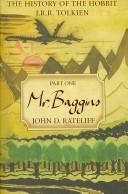
The History of the Hobbit, Part One: Mr. Baggins
Rateliff traces every draft of Bilbo from 1930 notes to print.
2,410-word summary · 11 min read
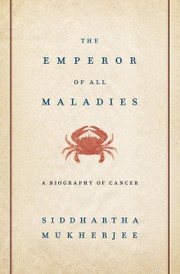
The Emperor of All Maladies
A biography of cancer from Galen to chemo through one doctor cases.
2,255-word summary · 10 min read
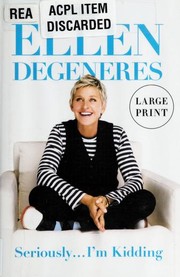
Seriously...I'm Kidding
DeGeneres strings show stories and home jokes into light life advice.
2,292-word summary · 10 min read
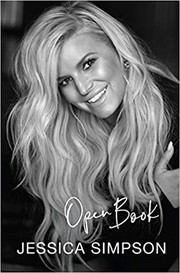
Open Book
Simpson replays pop fame, love and drink through recovery work.
2,552-word summary · 11 min read