
Reading options
What's inside (9 sections)
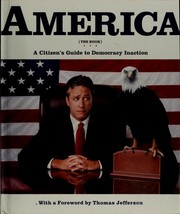
I bought America (The Book) expecting a joke book about the 2004 election and ended up with something stranger: a full civics curriculum, chapters and all, written by the people who make fun of politics for a living. The gags land, and what surprised me is how much of the machinery of American government the book actually gets right while it is busy cracking jokes about the founding fathers.
Warner Books, the trade imprint of Grand Central Publishing, put it on shelves on 20 September 2004. The edition runs 240 pages and carries the ISBN 9780446532686. It is credited to Jon Stewart with Ben Karlin and David Javerbaum, then the executive producer and head writer of The Daily Show, and it borrows the voices of the show's writers, among them Stephen Colbert, Samantha Bee, Rich Blomquist, Steve Bodow, Rob Corddry, Ed Helms, Chris Regan and Jason Ross. The division of labour shows how the book works: individual writers take a corner of the material and deliver it in character.
What you are holding is a parody of a high school civics textbook, complete with a study guide, learning objectives, classroom activities and discussion questions. The students in question are forty-year-olds who used to sit in those seats.
The parody depends on a specific kind of mock seriousness. The book adopts the flat, cheerful voice of instructional material, the voice that says learning objectives are on page six, and it keeps that voice no matter how absurd the content gets. That restraint is what makes it funny. If the writers had been writing jokes about politics, you would have laughed and forgotten them by lunch. Writing in the register of a school text means every joke arrives dressed as curriculum, and the joke has to work on two levels at once, as a funny line and as a textbook line, which is why the book holds up when a teacher reads a passage aloud to a class.
A foreword from beyond the grave
The book opens with a foreword credited to Thomas Jefferson, dead for close to two centuries by the time of publication. That single gag sets the tone for everything that follows: a founder of the republic endorsing a textbook that mangles the founding, and doing it from the other side of the grave.
"I had slaves. Damn, I can't believe I had slaves."
The line is the foreword's best joke and the book's whole thesis in miniature. The founders get to speak for themselves, and what they say is funny and shameful at once.
Then the apparatus arrives. Sidebar boxes called "Were You Aware?", one of which explains that the term "Did You Know" is copyrighted by a rival publisher. Discussion questions of the sort real textbooks never print, such as "Would you rather be a king or slave? Why or why not?" A test. The chapter titles read like a curriculum: Democracy Before America, The Founding of America, The President: King of Democracy, Congress: Quagmire of Freedom, The Judicial Branch: It Rules, Campaigns and Elections: America Changes the Sheets, The Media: Democracy's Guardian Angels, The Future of Democracy: Four Score and Seven Years from Now, and The Rest of the World: International House of Horrors. The hardcover also carried a short "Election 2004" insert mocking both campaigns, which was dropped from printings after the vote, plus a foldout Kerry versus Bush poster that Publishers Weekly said was suitable for pinning up in college dorm rooms.
Who wrote it and how it sounds
The writing credits are unusually long, and they matter. Stewart worked with the Daily Show's bench: Ben Karlin, who was the executive producer, and David Javerbaum, the head writer, plus Stephen Colbert, Samantha Bee, Rich Blomquist, Steve Bodow, Tim Carvell, Rob Corddry, Ed Helms, Chris Regan, Brendan Hay and Jason Ross, among others. Individual writers take a corner of the material and deliver it in their own persona. Colbert's contributions lean toward presidential history and the kind of heavily biased commentary he did on the air, and Bee writes from a Canadian viewpoint, including a contribution about Canadian media that exists mostly to underline how strange American assumptions look from just outside the border.
Stewart told Publishers Weekly that the decision to organize it as a textbook came from a simple idea about the format, and he admitted that the writers did not realize that parodying a textbook "takes an enormous amount of education." The book also makes a point about how little the real textbooks teach, and one of its running targets is the way civics is usually reduced to vocabulary plus a diagram of the three branches of government. When Stewart was asked why, he said that a lot of what was coming out of politics at the time was polemical, and that the point of a book like this was to give people a broader perspective on the whole system.
The dead language of civics
The book's real subject is vocabulary. Americans learn the words checks and balances, the executive branch, the electoral college, judicial review and citizenship as children, and the words arrive long before any sense of what they mean. The book takes the words and looks at them straight. The President's chapter explains why your vote counts but not nearly as much as your money. Congress's chapter calls the institution a quagmire of freedom. The campaign section carries a heading that is closer to the truth than most textbooks manage, Learning to Hate the Land You'll Govern. The media chapter is retitled two pages after it begins, from Democracy's Guardian Angels to Democracy's Valiant Vulgarians, which is the sort of joke that needs the whole book to land.
The politics are nonpartisan in target and partisan in method. Publishers Weekly, which chose the book as its Book of the Year for 2004, read "a serious critique of the two-party system, the corporations that finance it and the 'spineless cowards in the press'" underneath the goofs, and put it in a starred review as "a humorous sendup of American politics [that] never fails to entertain, poke fun and provoke thought." The first chapter even runs the jokes backward into prehistory, with cavemen who, in their pre-cable primitiveness, "had to get their political news from only three networks."
Each chapter takes a real institution and asks what it would look like if you took the official description seriously. The founding chapter treats the revolution as a committee project with a rubric, and the third chapter walks through the Presidency as if the job description had been written by someone who hates the job. The courts get a chapter that explains, cheerfully, why the Supreme Court has the power it has and what that power has been used for. Chapter nine then turns the apparatus on the rest of the world, presenting foreign views of the United States in the way American textbooks have long presented them, and letting the reader notice what the caricature sounds like from the outside.
Campaign material gets its own treatment, including mock buttons and stickers. There is a sticker reading "Undecided Voters for Candidate," and a Humphrey in '68 button with the explanation about Nixon and Watergate printed in type too small to read, which is a joke about footnotes that also happens to be a joke about 1968.
The Supreme Court page
Chapter five contains the most famous spread in the book: the nine justices of the Supreme Court with their heads pasted onto nude bodies, the photographs taken from a nudist website, with cut-out judicial robes on the facing page and a caption asking the reader to restore their dignity by matching each justice with the right robe. It is a classroom activity. There are paper dolls to cut out.
It is also the reason the book had a rough few months. Wal-Mart ordered thousands of copies, then cancelled the order once its distributor flagged the picture, with a spokeswoman saying the company "felt a majority of our customers would not be comfortable with the image." The book stayed on sale at walmart.com, which publisher Jamie Raab called the right call, since "they're within their rights, but I think it's best to let the customer decide." In January 2005 the Jackson-George Regional Library System in Mississippi pulled it from its eight libraries. The library director said it was the only book in forty years he had refused to circulate. The board reversed the ban five to two within days, after a packed meeting and a flood of complaints, with the director reporting that some of the messages said the critics were communists and fascists at the same time.
There was a smaller and pettier fight too. Cartoonist Bruce Tinsley objected to the book's parody of his strip Mallard Fillmore, presented as if it were real, and used his own strip to imply that Stewart was a pedophile. Stewart's response was to have the Teacher's Edition note, in the historian's red ink, that the strip was not real but showed about the same level of humour as the genuine article.
The textbook that ended up in classrooms
Because it looks like a school book, teachers treated it like one. Publishers Weekly reported Cornell and Ohio State ordering it. At a meeting of the American Political Science Association, a professor at Northern Kentucky University said he had dropped his own intro politics textbook in favour of this one, assigned essays in which students sort what is true from what is satire, and estimated the book was 90 percent true. The Daily Show plugged it on every episode. It reached number one on the New York Times nonfiction list and spent fifteen weeks on it, took Publishers Weekly's Book of the Year, and the audiobook won a Grammy for Best Comedy Album in 2005. There were spin-offs too, including America (The Calendar) and, in 2010, Earth (The Book).
It also turned up in shops where nobody was looking for a textbook. A reporter for the Spokesman-Review found a sixteen-year-old in Tucson buying it off the shelf at Target after seeing it there, and wrote that it was becoming a thing among her friends. The same piece collected the reactions of people who teach history for a living, and they split neatly. Some would not touch it. Peggy Altoff, a vice president of the National Council for the Social Studies, said plainly that no teacher should bring the picture of the disrobed justices into a classroom, and Trev Jones, book review editor at School Library Journal, said it would be unusual for school libraries to carry it. Parents and school boards complained. Others were more permissive, on the grounds that a book kids actually pick up beats a book they are assigned.
Ben Karlin made the case for the whole enterprise. You cannot write a book like that, he said, and not have an abiding interest, if not a passion, for history and civics. The historian Joy Hakim, who has spent a career criticising textbooks for flattening history, put the argument more bluntly: the book makes people aware of how dull the stuff is that kids are reading, which is a huge service, and history is heroes, villains and adventures, so how have we made it dull? Karlin's own position was more careful. They would never say in any way that their goal was to educate or inform.
So the classroom story is true in specific places rather than across the board. It caught on with older students, with college courses, and with individual teachers willing to stake their jobs on it.
What the reviewers said
Tom Carson in the New York Times was the most enthusiastic reviewer, writing that the book is "not only more informative about how American government and culture work than the textbooks it burlesques, but gives us a keener sense of having a stake in both." He even nominated it for the history Pulitzer, on the grounds that it belongs on the same shelf as the textbooks it mocks.
Not everyone went along. At the political science conference, one professor said Stewart was not in the league of Mort Sahl and the older political humorists who offered more sophisticated takes on the same material. Others observed that a book everybody can quote without anybody having to own its argument is entertainment that does not stick to you, and that a joke book gets to have it both ways on every question it raises. Nothing in the book argues that the electoral college should be abolished or that the courts should be expanded. The claim is narrower and more useful. The whole pageant has a script, and you ought to know whose it is.
The Teacher's Edition concedes the point in red ink. Stanley K. Schultz, professor emeritus of history at the University of Wisconsin–Madison, corrects the jokes and also flags a few errors that were not meant to be jokes at all. The 2006 paperback update adds a new introduction by the authors and updates the Supreme Court chapter with the newly appointed John Roberts and Samuel Alito, nude like their predecessors, and is marketed as the book for anyone who was too cheap to buy the hardcover.
A joke book, not a civics book
Worth being plain about what this is. It is a comedy book. The facts inside it are comic material, some of them fabrications by design and a few of them honest mistakes, and both kinds get marked up in the Teacher's Edition. The civics apparatus is a costume, and the politics are the delivery system for jokes. If you pick it up expecting a serious argument about how American democracy works, you will find a very funny book about how American democracy is run, and those are not the same purchase.
The gags also date quickly. The administration of the moment is long gone, the media landscape the book mocks has been replaced by several worse ones, and every justice in the famous photograph has left the bench. There is also a matter of register. The book swears, and it jokes about bodily functions, which was always going to be the first thing a school district noticed. That is why the book works best for readers who grew up with The Daily Show, or who read it alongside something factual, and why it is a snapshot of one moment in political comedy rather than a durable civics text.
So read it for what it is. The chapter titles, the Jefferson foreword, the teachers' guide conventions and the mock campaign stickers are where the book is at its best, and the classroom activity about dressing the justices is the bit people are still arguing about. Just find out before you buy it that the nude justices are the reason for the banning, and that the paper dolls on the facing page are the actual joke.
FAQ
Is America (The Book) actually a civics textbook?
No. It is a parody of one, written by Jon Stewart and the writers of The Daily Show. It borrows the layout, chapter titles and classroom activities of a school text, but the facts are comic material rather than a serious political argument.
What is the Teacher's Edition?
A 2006 trade paperback update with a new introduction and corrections in red ink by Stanley K. Schultz, professor emeritus of history at the University of Wisconsin-Madison. It updates the Supreme Court chapters and flags the original's honest errors.
Why was the book controversial?
One chapter included photos of the Supreme Court justices with their heads on nude bodies, plus cut-out robes for readers to dress them in. Wal-Mart stopped stocking it, and a Mississippi library system banned it before reversing the decision days later.
Similar books
Too Much and Never Enough: How My Family Created the World's Most Dangerous Man
Mary L. Trump's 2020 memoir traces how a cold, zero-sum Queens household shaped her uncle, and uses family tax documents to challenge his self-made story.
2,059-word summary · 9 min read
Alexander Hamilton
Orphaned Caribbean immigrant becomes Washington's aide and America's first Treasury secretary, then falls in a duel.
2,004-word summary · 9 min read
A People's History of the United States
A bottom-up history of the United States from Columbus to Clinton, told through workers, women, Native nations and Black voices against elite rule.
2,398-word summary · 11 min read
Nudge: Improving Decisions About Health, Wealth, and Happiness
Thaler and Sunstein show how defaults, framing, and social cues steer choices, and argue for choice architecture with an opt-out.
3,146-word summary · 14 min read

Long Walk to Freedom
Mandela's account of a Thembu childhood, a law practice, a banned movement, twenty-seven years in prison, and the negotiation that ended apartheid.
2,454-word summary · 11 min read
Go the Fuck to Sleep
A rhyming bedtime book for adults in which an exhausted father narrates the fourth hour of a toddler's stalling, one profane couplet at a time.
2,291-word summary · 10 min read
1491: New Revelations of the Americas Before Columbus
Charles C. Mann gathers archaeology, ecology, and demography to argue that the Americas before Columbus were older, fuller, and more deliberately shaped than…
2,712-word summary · 12 min read
Nothing to Envy
Barbara Demick follows six defectors from Chongjin through the North Korean famine, showing how ordinary people lived, believed, and finally left.
2,068-word summary · 9 min read

In Order to Live: A North Korean Girl's Journey to Freedom
A young North Korean girl crosses the Yalu, survives trafficking in China, and rebuilds her life in Seoul in this unsparing memoir.
2,027-word summary · 9 min read

Infidel
Ayaan Hirsi Ali's memoir of a Somali childhood, a forced marriage, a Dutch asylum claim, and the political fight that followed the murder of Theo van Gogh.
2,041-word summary · 9 min read
Down and Out in Paris and London
Orwell's account of washing dishes in Paris hotels and tramping through London does not ask for pity, only for a clear look at how poverty actually works.
2,282-word summary · 10 min read
The Girl with Seven Names: A North Korean Defector's Story
Hyeonseo Lee crossed the frozen Yalu River at seventeen, spent years hidden in China, escaped to South Korea, and later returned to rescue her family.
2,404-word summary · 11 min read
The Wright Brothers
David McCullough tells the story of two self-taught Ohio brothers, working largely alone and out of a bicycle shop, who solved the problem of flight before…
2,027-word summary · 9 min read
Columbine
Ten years of reporting on the 1999 school massacre, including a journalist's correction of the myths he helped create in the first hours.
2,232-word summary · 10 min read
Hogfather
Death fills in for a missing Father Christmas, Susan Sto Helit hunts the Hogfather, and the twentieth Discworld novel turns Santa into a management problem.
2,871-word summary · 13 min read
Dry
A memoir of drinking, rehab and relapse, and the strange business of getting sober one morning at a time.
2,643-word summary · 12 min read
Dear Girls: Intimate Tales, Untold Secrets & Advice for Living Your Best Life
Ali Wong's debut collects fourteen letters to her daughters, covering sex, money, work, marriage, Vietnam, and being a working Asian American mother.
2,266-word summary · 10 min read
Bury My Heart at Wounded Knee: An Indian History of the American West
Dee Brown's 1970 retelling of the American West from the point of view of the people it destroyed.
2,233-word summary · 10 min read
At Home: A Short History of Private Life
Bill Bryson tours his own Norfolk rectory room by room to explain how private life and the modern home got built.
2,334-word summary · 10 min read
Why I'm No Longer Talking to White People About Race
Reni Eddo-Lodge traces black British history and shows how institutions, culture, and everyday assumptions keep producing racial inequality.
2,071-word summary · 9 min read
Travels with Charley
Steinbeck drives across America with his poodle Charley, looking for the country he remembers and finding a place that has changed.
2,039-word summary · 9 min read
Scrappy Little Nobody
Anna Kendrick's essays trace her path from a Portland childhood and Broadway to Hollywood, with jokes, anxiety, and a refusal to pretend fame fixed her.
2,092-word summary · 9 min read
Red Notice
An American financier in Moscow exposes a $230 million tax fraud, watches his lawyer die in prison, and turns the case into an international human rights law.
2,008-word summary · 9 min read
Prisoners of Geography: Ten Maps That Tell You Everything You Need to Know About Global Politics
Tim Marshall explains how mountains, rivers, coasts, and resources shape the choices of nations, from Russia's flat borders to the chokepoints of the South…
2,328-word summary · 10 min read
Catch and Kill: Lies, Spies, and a Conspiracy to Protect Predators
Ronan Farrow recounts how NBC killed his Harvey Weinstein reporting, then how The New Yorker published it and helped ignite #MeToo.
2,057-word summary · 9 min read
The World Is Flat: A Brief History of the Twenty-first Century
Thomas L. Friedman's 2005 bestseller argues that technology, trade, and open borders leveled the global playing field, and it names the ten forces that did it.
2,369-word summary · 11 min read
The Zombie Survival Guide: Complete Protection from the Living Dead
Max Brooks's deadpan survival manual explains the Solanum virus, the only ways to destroy the living dead, fortifying a home, and the outbreaks history quietly…
2,650-word summary · 12 min read
Evicted: Poverty and Profit in the American City
Desmond follows eight Milwaukee families and two landlords through a year of evictions, showing how losing a home causes poverty rather than just reflecting it.
2,032-word summary · 9 min read
A Connecticut Yankee in King Arthur's Court
Hank Morgan, a Connecticut factory man, wakes in King Arthur's England, rises to chief adviser, and rebuilds the kingdom until his own inventions turn on him.
2,193-word summary · 10 min read
The Warmth of Other Suns
Three migrants ride north out of Jim Crow toward Chicago and LA.
2,561-word summary · 11 min read