
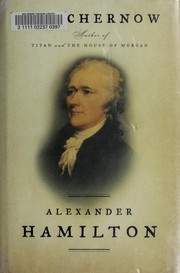
Alexander Hamilton
2,004-word summary 9 min read 832 pages in the book
- First published
- 2004
- Publisher
- Penguin Press
- Pages
- 832
- ISBN
- 9781594200090
Reading options
What's inside (7 sections)
I came to this book sideways, the way a lot of people did. I had the songs from the musical stuck in my head for months before I ever opened Chernow, and I figured I knew the story: brilliant immigrant, Washington's right hand, duel with Burr. The first surprise of the biography is how much of that outline survives contact with 832 pages, and how much stranger and sadder the full version is. Chernow published it in 2004 with Penguin Press, and it reads like a man determined to rescue his subject from two centuries of caricature, the scheming monarchist of Jeffersonian legend, and replace him with something harder to dismiss.
An orphan who wrote his way off an island
Hamilton's childhood sounds invented until you check it twice. He was born out of wedlock on Nevis in the West Indies, probably in 1755, though the records of the time are thin enough that 1757 gets argued too, and Chernow is upfront that the date cannot be pinned down with total certainty. His father drifted away. His mother, Rachel, died when Hamilton was about thirteen. A cousin who took him in killed himself. By his early teens Hamilton was clerking for a firm of merchants on St. Croix, handling cargo and money with a competence that startled grown men.
Then came the hurricane. In 1772 a brutal storm tore across the islands, and the teenage Hamilton wrote an account of it so vivid that it was printed in the local paper. Readers passed it around. A group of local men took up a collection to send the boy to North America for schooling. Think about that for a second. A community fund, raised for one bright fatherless clerk, on the strength of a letter about bad weather. Chernow treats this as the founding scene of Hamilton's life, and he is right to. Everything after follows the same pattern: Hamilton writes something remarkable, and someone powerful opens a door.
He landed in New York around 1772 or 1773 and enrolled at King's College, the school that became Columbia. He was young, foreign, broke, and burning to be noticed. When the quarrel with Britain turned hot, he started firing off pamphlets defending the colonial cause, long anonymous essays full of legal history and sarcasm. His 1774 pamphlet answering loyalist writers, and its longer sequel the next year, were so learned that readers assumed the author must be far older. He drilled with a volunteer artillery company. By 1776 he was a captain, and his guns covered part of the retreat from New York. Washington noticed the boy officer who kept his cannon firing while everything collapsed around him. That attention changed everything.
Washington's aide and the price of proximity
In March 1777, at twenty-one or twenty-two, Hamilton joined Washington's staff as an aide-de-camp with the rank of lieutenant colonel. For four years he was effectively the commander's pen. He drafted letters, orders, and appeals to Congress. He managed the flow of paper that kept a starving army stitched together. Chernow makes a convincing case that this desk job mattered as much as any battlefield command. The Revolution was held together by correspondence, and Hamilton wrote a large share of it.
But Hamilton hated the desk. He wanted a field command and the glory that came with it, and he said so, repeatedly, which created a friction with Washington that Chernow handles with unusual care. The two men admired each other enormously and annoyed each other constantly. Washington was reserved and slow to give praise. Hamilton was hungry and thin-skinned. In 1781, after a perceived slight, Hamilton resigned from the staff in a huff, then scrambled for the combat posting he had always wanted.
He got it at Yorktown. When the allied armies trapped Cornwallis in Virginia that fall, Hamilton led the night assault on Redoubt 10, one of the British earthworks ringing the town. The attack went in with bayonets, no loaded muskets, and it worked. Men died on both sides in minutes of close fighting. Chernow does not linger on gore, but he makes clear what the episode cost and what it bought: Hamilton finally had his battle, and the war ended weeks later. Friends noted that he seemed more at peace afterward, as if a debt to himself had been settled, though his hunger for public life never dimmed for long.
In the middle of all this he married. In December 1780 he wed Elizabeth Schuyler, called Eliza, the daughter of General Philip Schuyler, one of the great landowning families of New York. It was a love match by every account, and Eliza would outlive him by half a century, guarding his papers and his reputation into old age. The marriage tied the penniless immigrant to the Hudson Valley elite. Hamilton now had a family, a patron in Washington, and a record. He was twenty-five and already one of the most connected young men in America.
Inventing the money of a new country
The 1780s nearly broke Hamilton's faith in the country he had fought for. Congress under the Articles of Confederation could not tax, could not pay soldiers, could not keep its promises. As a New York lawyer and assemblyman, Hamilton watched the states bicker while the economy sagged. He pushed for a stronger union, attended the Annapolis meeting in 1786, and showed up at the Philadelphia convention in 1787, where he gave a famously long speech proposing a muscular central government that alarmed even his allies. He signed the Constitution and then set out to sell it.
The selling took the form of The Federalist Papers. Along with James Madison and John Jay, writing as Publius, Hamilton produced 51 of the 85 essays in a span of months in 1787 and 1788, explaining and defending the new Constitution to skeptical New Yorkers. The speed alone is startling. So is the quality. His essays on the judiciary, on energy in the executive, on the dangers of faction are still quoted by judges. Chernow walks through the arguments without turning the chapters into a civics lecture, and he is good on the irony that Hamilton's closest collaborator on the project, Madison, would soon become his fiercest enemy.
That enmity came from money. As the first secretary of the Treasury, serving from 1789 to 1795, Hamilton built the American financial system from almost nothing. He pushed the federal government to assume the states' war debts and pay its own at full value. He chartered the Bank of the United States. He set up customs collection, a mint, and policies to encourage manufacturing. The logic was plain: a nation that pays its debts can borrow, and a nation that can borrow can survive. When western farmers rose up against the whiskey tax in 1794, Hamilton pressed Washington to answer with force, and the new government marched troops into Pennsylvania to prove federal law meant something. Thomas Jefferson and Madison saw something else in all of this, a scheme to enrich speculators and rot the republic's virtue. The fight between them was not just personal, though it got personal fast. It was a genuine argument about what America should be, farms or workshops, states or union, and we are still living inside it.
The dinner-table bargain of 1790 still shapes the map. Hamilton needed votes for his debt plan, and Jefferson and Madison wanted the permanent capital planted in the South. Over dinner, they traded: assumption of debts in exchange for a capital on the Potomac. Chernow tells the story briskly, and it lands because it is so human. The financial architecture of the United States and the location of Washington, D.C. came out of one negotiation.
Scandal, feuds, and the duel
Hamilton left the Treasury in 1795, poorer than he should have been, and returned to his law practice. But he could not leave politics alone, and politics would not leave him alone. The Republicans accused him of corruption, of using his office to enrich himself. In answering them he detonated his own reputation. Years earlier, in 1791, he had begun an affair with a woman named Maria Reynolds, whose husband then blackmailed him. When the scandal threatened to surface as a corruption charge, Hamilton published a pamphlet in 1797 confessing to the affair in mortifying detail to prove the payments were blackmail, not graft. Eliza stayed with him. The public never quite forgot.
The family paid a worse price a few years later. The Hamiltons had eight children, and the eldest, Philip, handsome and hot-tempered like his father, was killed in a duel in 1801 after defending his father's name. Hamilton sat with the dying boy and never fully recovered. When his own duel came three years later on nearly the same ground, Eliza lost a husband and the children lost both brothers in spirit and father in fact. Chernow tells this stretch without melodrama, which makes it hit harder.
Chernow is at his best in these chapters, sympathetic without lying. He shows a man whose honesty about money and dishonesty about marriage kept colliding. He also shows Hamilton picking fights he did not need. His feud with John Adams split the Federalist Party and helped hand the election of 1800 to Jefferson. His contempt for Aaron Burr, whom he considered unprincipled and dangerous, was open and relentless.
The duel grew out of that contempt. Burr, humiliated after losing Hamilton's support more than once, demanded satisfaction over remarks Hamilton had supposedly made. They met at Weehawken, New Jersey, on the morning of July 11, 1804. Burr shot Hamilton, who died the next afternoon. He was forty-nine, or forty-seven, depending on which birth year you accept. Eliza lived on until 1854, raising funds for an orphanage, sorting his letters, insisting the world remember him whole. Chernow's closing pages about her are among the most moving in the book, and they reframe the whole biography: this is the story Eliza spent fifty years trying to get told.
What the book gets right and where it drags
Let me be plain about the flaws, because the book is long and you should know before committing. At 832 pages it has slow stretches. The chapters on public finance, thorough and admiring, will test readers who came for duels and battles. Chernow clearly loves his subject, and that warmth sometimes shades into advocacy. Jefferson comes off as slippery and paranoid, Adams as vain and brittle, and while both men gave Chernow plenty of material, a reader should remember whose side the biographer is on. Specialists have also quibbled with a few of his certainties, the birth year among them, and with his reading of some contested episodes.
None of that undid the book for me. What Chernow proves, document by document, is that Hamilton was the most forward-looking of the founders, the one who saw the country as it would become rather than as it was. The financial system, the strong executive, the manufacturing economy, the outward-facing republic: strip those away and modern America is unrecognizable. The biography won the George Washington Book Prize, and a few years later Lin-Manuel Miranda picked it up on vacation and saw a musical in it, which tells you something about the narrative drive buried in all those pages.
Who should read it? Anyone who wants the founders as people rather than statues. Anyone curious why money works the way it does in America. Readers who enjoy immersive histories in the vein of McCullough will feel at home, though Chernow argues his case harder than McCullough ever did. And anyone who suspects, as I did, that the musical was mostly invention. It turns out the truth was dramatic enough. Hamilton really was the orphan who wrote his way into history, and he really was killed by a vice president. Chernow just supplies the receipts, hundreds of pages of them, and trusts you to feel the weight.
FAQ
When was Alexander Hamilton published?
Penguin Press published it in 2004. The hardcover runs 832 pages with ISBN 9781594200090.
Is Alexander Hamilton part of a series?
No. It is a standalone biography, though Chernow has written other lives of American financiers and founders.
Do I need to know economics to enjoy it?
No. Chernow explains funded debt, the bank, and the mint in plain terms, though the finance chapters are the slowest stretch.
Similar books

Long Walk to Freedom
Mandela's account of a Thembu childhood, a law practice, a banned movement, twenty-seven years in prison, and the negotiation that ended apartheid.
2,454-word summary · 11 min read

Too Much and Never Enough: How My Family Created the World's Most Dangerous Man
Mary L. Trump's 2020 memoir traces how a cold, zero-sum Queens household shaped her uncle, and uses family tax documents to challenge his self-made story.
2,059-word summary · 9 min read

Infidel
Ayaan Hirsi Ali's memoir of a Somali childhood, a forced marriage, a Dutch asylum claim, and the political fight that followed the murder of Theo van Gogh.
2,041-word summary · 9 min read

The Girl with Seven Names: A North Korean Defector's Story
Hyeonseo Lee crossed the frozen Yalu River at seventeen, spent years hidden in China, escaped to South Korea, and later returned to rescue her family.
2,404-word summary · 11 min read
The Wright Brothers
David McCullough tells the story of two self-taught Ohio brothers, working largely alone and out of a bicycle shop, who solved the problem of flight before…
2,027-word summary · 9 min read
America (The Book): A Citizen's Guide to Democracy Inaction
Jon Stewart and the Daily Show writers turn a high school civics textbook inside out, with a foreword from beyond the grave.
2,511-word summary · 11 min read
Cleopatra: A Life
Pulitzer winner Schiff restores Cleopatra as a capable ruler, from Ptolemy debts and Caesar to Antony, Actium, and her death in 30 BC, built from coins and…
3,586-word summary · 16 min read
The Autobiography of Malcolm X
Malcolm X traces his life from Michigan childhood through Harlem, prison, and the Nation of Islam to Mecca in this 1965 memoir told to Alex Haley.
2,816-word summary · 13 min read
Becoming
Michelle Obama traces her path from South Side Chicago through Princeton, Harvard law and the White House years in this warm, candid memoir of family, work and…
2,143-word summary · 10 min read

Sybil
A 1973 case study of a woman treated for multiple personalities, and the book that made dissociative identity disorder a household phrase.
2,054-word summary · 9 min read
Nudge: Improving Decisions About Health, Wealth, and Happiness
Thaler and Sunstein show how defaults, framing, and social cues steer choices, and argue for choice architecture with an opt-out.
3,146-word summary · 14 min read
1491: New Revelations of the Americas Before Columbus
Charles C. Mann gathers archaeology, ecology, and demography to argue that the Americas before Columbus were older, fuller, and more deliberately shaped than…
2,712-word summary · 12 min read
Nothing to Envy
Barbara Demick follows six defectors from Chongjin through the North Korean famine, showing how ordinary people lived, believed, and finally left.
2,068-word summary · 9 min read

In Order to Live: A North Korean Girl's Journey to Freedom
A young North Korean girl crosses the Yalu, survives trafficking in China, and rebuilds her life in Seoul in this unsparing memoir.
2,027-word summary · 9 min read

Down and Out in Paris and London
Orwell's account of washing dishes in Paris hotels and tramping through London does not ask for pity, only for a clear look at how poverty actually works.
2,282-word summary · 10 min read
Columbine
Ten years of reporting on the 1999 school massacre, including a journalist's correction of the myths he helped create in the first hours.
2,232-word summary · 10 min read

Life
The Rolling Stones guitarist tells his own story: a Dartford childhood, the band's first gigs, the drug raids, the tax years and Patti Hansen.
2,761-word summary · 12 min read
Bury My Heart at Wounded Knee: An Indian History of the American West
Dee Brown's 1970 retelling of the American West from the point of view of the people it destroyed.
2,233-word summary · 10 min read

Why I'm No Longer Talking to White People About Race
Reni Eddo-Lodge traces black British history and shows how institutions, culture, and everyday assumptions keep producing racial inequality.
2,071-word summary · 9 min read
The Blind Side: Evolution of a Game
Michael Lewis traces how the left tackle became a premium position and tells the story of Michael Oher, a homeless Memphis teenager whose size and speed made…
2,038-word summary · 9 min read
Red Notice
An American financier in Moscow exposes a $230 million tax fraud, watches his lawyer die in prison, and turns the case into an international human rights law.
2,008-word summary · 9 min read
Prisoners of Geography: Ten Maps That Tell You Everything You Need to Know About Global Politics
Tim Marshall explains how mountains, rivers, coasts, and resources shape the choices of nations, from Russia's flat borders to the chokepoints of the South…
2,328-word summary · 10 min read
Catch and Kill: Lies, Spies, and a Conspiracy to Protect Predators
Ronan Farrow recounts how NBC killed his Harvey Weinstein reporting, then how The New Yorker published it and helped ignite #MeToo.
2,057-word summary · 9 min read
The Letters of Vincent van Gogh
Vincent van Gogh's letters to his brother Theo, in a Penguin Classics selection edited by Ronald de Leeuw, trace a decade of work, faith, and obsession.
2,611-word summary · 12 min read
The World Is Flat: A Brief History of the Twenty-first Century
Thomas L. Friedman's 2005 bestseller argues that technology, trade, and open borders leveled the global playing field, and it names the ten forces that did it.
2,369-word summary · 11 min read
The Stranger Beside Me
Ann Rule's classic memoir of her friendship with Ted Bundy, written by the true-crime author who knew him long before the world learned what he had done.
2,481-word summary · 11 min read
Catherine the Great: Portrait of a Woman
A German princess survives a miserable marriage and a coup to rule Russia for thirty-four years, torn between Enlightenment ideas and absolute power.
2,065-word summary · 9 min read
The Warmth of Other Suns
Three migrants ride north out of Jim Crow toward Chicago and LA.
2,561-word summary · 11 min read
The New Jim Crow: Mass Incarceration in the Age of Colorblindness
How mass incarceration became a racial caste system after civil rights.
2,413-word summary · 11 min read

The Emperor of All Maladies
A biography of cancer from Galen to chemo through one doctor cases.
2,255-word summary · 10 min read