
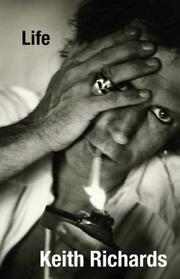
Life
2,761-word summary 12 min read 564 pages in the book
- First published
- 2010
- Publisher
- Little, Brown and Company
- Pages
- 564
- ISBN
- 9780316034388
Reading options
What's inside (10 sections)
- Dartford, a guitar on a shelf, and a band with no name
- The managers, the image, the money
- Redlands, and what came after
- The tax years and the French years
- Anita, the children, and Patti
- 1977, and the year that nearly finished him
- The eighties fracture, the solo years, and getting back together
- What the book is, and what it is worth
- Key takeaways
- FAQ
I read this in the middle of a winter and then went back to the first chapter twice, because I wanted to hear how he gets his guitar in the first place. The American edition is the first US hardcover from Little, Brown and Company, 564 pages plus 32 pages of plates, ISBN 9780316034388. The British edition, from Weidenfeld & Nicolson, and the American one both appeared on October 26, 2010, and there is a trade paperback from Little, Brown Paperbacks if you want the cheaper object. The book is signed to Keith Richards and James Fox, and the name on the cover is the one that sold it. Fox, a journalist who had interviewed Richards in the seventies, spent five years and, by his own account, hundreds of hours sitting with him at his home in the Caribbean and in the UK, taping him, letting the subject dart about in time rather than moving strictly forward. When the manuscript was finished, Fox read the whole thing aloud to Richards and cut where the sound was wrong.
That method tells you most of what you need to know about the book. It is fast, funny, specific, and unembarrassed, and it reads like a man who has been talking for fifty years and finally got a good listener. It is also half confession and half construction, and that split is the thing the reviews argued about when it came out.
Dartford, a guitar on a shelf, and a band with no name
The childhood chapter is the part I liked best, and it is not the one people expect. Richards was born on December 18, 1943, at Livingston Hospital in Dartford, Kent, the only child of Doris Richards, whose maiden name was Dupree, and Herbert Richards, a factory worker who was wounded in Normandy. His maternal grandfather, Augustus Theodore Dupree, toured Britain with a jazz big band and was the reason a guitar existed in that house at all. Dupree teased the boy with an instrument on a shelf he could not reach until Keith worked out how to climb, and when he finally got it, his grandfather taught him Malagueña and let him keep the thing. He called it the prize of the century.
What strikes me is the class geography of it. The Richardses were a Labour family. Both sets of paternal grandparents, Ernie and Eliza, were local socialists and civic leaders who helped create the Walthamstow Labour Party and each served as mayor of the borough. Keith went to Dartford Technical, sang in a choir, sat his exams late because of illness, got expelled in 1959 for truancy, and ended up at Sidcup Art College, where he met Dick Taylor and learned most of Chuck Berry's solos. His mother played the records that filled the house, and his father, he says plainly, was not interested. The music came from his mother's record player and from a grandfather who had toured Britain with a jazz band.
Then the Jagger reunion. They had been neighbours and school friends in Dartford until Jagger's family moved in 1954, and they picked each other up again on a railway platform in October 1961, when Jagger was carrying Chuck Berry and Muddy Waters records and Richards recognised the taste. Jagger and Taylor had a garage band, called the Blues Boys and also billed as Little Boy Blue and the Blue Boys, and Richards joined them. In March 1962 they read about Alexis Korner's rhythm and blues band at the Ealing Jazz Club, sent a tape, and turned up in April. That trip brought them Brian Jones on slide guitar, Ian Stewart on piano, and Charlie Watts on drums.
Jones placed an ad in Jazz News in the week of May 2, 1962, and Stewart was the first to answer. By June the six of them were together and practising, with no name and no plan. Richards's own account of the naming is the best small story in the book: Jones was on the phone to a journalist when a Muddy Waters LP lying on the floor gave him the answer, and the band went out as "the Rollin' Stones" for their first show at the Marquee Club on July 12, 1962, spelling changed soon after. The personnel churned early, with Tony Chapman on drums for that first gig and Bill Wyman auditioning for bass in a pub. What matters is how young and how broke they were, and how fast they went from a bedroom scene to a business.
The managers, the image, the money
Their first manager was Giorgio Gomelsky, who booked the early clubs and then moved on. In 1963 Andrew Loog Oldham came in with Eric Easton, and Oldham was the one who understood that the band had a product to sell before they had a record to sell it on. He also advised Richards to drop the s from his name, on the grounds that Keith Richard looked more pop and echoed Cliff Richard. The stage name stuck for fifteen years; in 1978 Richards went back to his legal name in private as well as public life.
Oldham also pushed songwriting, which is the hinge of the whole story. He believed the band could not depend on other people's songs, so Jagger and Richards started writing together in 1963. Their first chart hits were somebody else's records: Gene Pitney singing "That Girl Belongs to Yesterday", and then the song they wrote for Marianne Faithfull, "As Tears Go By", in 1964. Then came "The Last Time" in 1965, followed by "(I Can't Get No) Satisfaction", their first international number one. Richards says the riff woke him up in his sleep and he recorded it on a cassette player by the bed.
The Decca years are told at speed and with detail that will not date. Studio arguments about sound, the early American tours, the growing sense that they were better than the business was. And then the business started working, which is where the first of the book's great subjects appears: money. Tax, contracts, publishing, percentages, the difference between being rich and being able to keep it. Nearly everything bad that happens to this band over the next twenty years starts as an accounting problem.
Redlands, and what came after
February 1967. Police raid the Sussex farmhouse at Redlands while Richards, Jagger and friends are there. Jagger is convicted of possession of four amphetamine tablets and sentenced to three months; Richards is convicted of allowing cannabis to be smoked on his property and sentenced to a year. Jagger goes to Brixton, Richards to Wormwood Scrubs, and both are released on bail the next day pending appeal. The Times runs an editorial on July 1 under the heading "Who breaks a butterfly upon a wheel?", and public opinion swings hard in the band's favour. A month later the appeal court throws out Richards's conviction for lack of evidence and gives Jagger a conditional discharge.
Richards tells the bust as a comedy, which is the book's method working properly. The police are funny, the paperwork is absurd, the sentence is treated as an absurd interruption to a good weekend. And the reason the chapter matters is that it is not the end of it. There are the two trials in 1973, the Canadian case in 1977, the plea in 1978, the pill years with the rest of the band, the missing teeth, and the decade of raids, helicopters, taped calls and informants.
The book is candid in a way that is hard to fake. The drugs are not glamorous: they are a schedule of coping. And the sex, which everyone expects to be the fun part, gets its own treatment with the 1960s groupies, the famous faces, and the sense of a man who liked the party more than the music of it.
The tax years and the French years
After Sticky Fingers came out in March 1971, their financial manager Prince Rupert Loewenstein told them to get out of the country before the next financial year. The band had not paid tax for seven years while being assured it was handled, and the amount owed was described in the book as a fortune. Richards rented the Villa Nellcotte in the south of France, sublet rooms to the band and its entourage, and they recorded in the basement with the mobile studio. Exile on Main St. came out in May 1972 and went to number one on both sides of the Atlantic. The 1972 American tour is the one filmed by Robert Frank, in the unreleased Cocksucker Blues and the released Ladies and Gentlemen: The Rolling Stones.
Those years are the best writing in the book, or close to it. What makes them work is not the exotic detail of villas and tax dodges, it is the way the exile turns into an actual working life. The band is bigger than ever, the money is bigger, the risk is bigger, and the band is also in exile from its own country. The Nellcotte burglary in July 1971, the robbery and the fire at his rented house in Los Angeles in 1975, the endless relocation, all of it reads like a long working holiday for men who cannot go home.
Anita, the children, and Patti
The women are not a chapter, they are half the book. Anita Pallenberg comes in through Morocco in 1967, after Richards pulls her away from Brian Jones, and stays until 1980. The book treats her as a full person and treats Richards's behaviour towards her as something he has to live with, which is not the same as admiring it.
Three children came out of that relationship: Marlon, born in August 1969; Dandelion Angela, born in April 1972; and Tara Jo Jo, born in March 1976 and dead by June, at ten weeks old. Richards describes the loss at close range and does not dress it up. There is also the detail that his own mother blamed Anita and took one of the children to live with her, which is the kind of sentence that tells you what the family was like.
Patti Hansen, a model, turns up in 1979 and they marry on December 18, 1983, his fortieth birthday. Two daughters follow, Theodora in 1985 and Alexandra in 1986. The Patti chapters are warmer and funnier than the Anita ones, partly because by then Richards knows what the arrangement costs, and partly because Patti is not a scene. There are also passages about the women who were not wives and the bandmates who were not always friends, including a claim about Jagger and Anita that she has always denied.
1977, and the year that nearly finished him
Then there is the sequence that runs through the middle of the book like a fault line. On February 27, 1977, the Royal Canadian Mounted Police find heroin in Richards's room at the Harbour Castle Hilton in Toronto and charge him with possession for the purpose of trafficking, an offence that could have meant seven years to life. His passport is confiscated. He and his family are stuck in Canada until April 1, when he is allowed into the United States on a medical visa for treatment. The charge is eventually reduced to simple possession. In October 1978 he pleads guilty, takes a suspended sentence and probation, and is ordered to continue treatment and to play a benefit concert for the Canadian National Institute for the Blind, which he does with the band and the New Barbarians at Oshawa in April 1979.
In the same year he describes the night at Redlands when he collapsed after snorting cocaine and came close to dying, an episode he says left him certain he had seen his own death. It is the most frightening thing in the book and the least dramatised. The prose goes flat and practical, because that is how he remembers it.
What makes the 1977 material land is the paperwork. It is all procedure: jurisdictions, charges, bonds, visas, a family stuck in a hotel, a band that keeps working while its guitarist is on a bail condition. Some Girls, still their biggest-selling record, is made during those years. The 1970s are not a party in this book. They are an administration of damage.
The eighties fracture, the solo years, and getting back together
The 1980s are the section where the memoir gets genuinely hard to read, because the band is falling apart while the prose is full of pride. Jagger takes a solo deal with CBS and starts writing for his own records. Dirty Work in 1986 is recorded in Paris with Jagger often absent and Richards keeping the sessions moving. The Stones nearly break up. Jagger's She's the Boss comes out in 1985, Primitive Cool in 1987, and Richards answers with Talk Is Cheap in 1988, recorded with his own band, the X-Pensive Winos, built around the drummer and producer Steve Jordan with Waddy Wachtel, Bobby Keys, Ivan Neville and Charley Drayton. Main Offender follows in 1992.
Then the band comes back together. They are inducted into the Rock and Roll Hall of Fame in 1989, make Steel Wheels, and go out on the Steel Wheels and Urban Jungle tour, their first world tour in seven years, documented in the Live at the Max film and the Flashpoint album. Bill Wyman leaves in 1993, and Voodoo Lounge follows in 1994.
The book is unsentimental about Jagger, and the fallout was enormous when it came out, with the press treating every line as a score settlement. His view is that Jagger is a great musician and a difficult man, and that the two facts are not in tension. Readers who want the version where two men simply love each other will not find it here.
What the book is, and what it is worth
The complaints about Life are standard and mostly fair. It is a myth being built by the man with the most to gain from the myth, and a memoir is a genre in which the unreliable narrator is the point rather than a flaw. Dates drift. The anecdotes are wonderful and untestable. The name-dropping has a rhythm that can become a fog, and the stories of sex and excess have the same shape as the stories everyone has already told about the sixties. The score with Jagger is a score with Jagger, and a reader who was there may hear it differently.
Two further gripes. Fox's method means the book occasionally flattens into a monologue that feels performed for a microphone, and the author's voice is so distinctive that it can feel like a character rather than a person. And for all the candour, the man who comes through the pages is a man who has thought about how this will read.
And yet it is better than its reputation for being a party book. The early chapters on Dartford and the guitar on the shelf are warm and specific, and the tax years and the Canadian case are the work of a man who has been closer to the edge than the legend admits. The musical detail is the real reward. How the Telecaster is set up in open G with the low string removed, how the two guitars weave, how the band actually got to the sound everyone copied afterwards, how a riff works from the inside. He also includes the small domestic notes that make a life, including his advice about how much onion a shepherd's pie needs.
The book was a huge commercial event, sitting at number one on the New York Times hardcover nonfiction list for a fortnight and spending six weeks on the USA Today list, and it won the 2011 Norman Mailer Prize for biography. The audiobook took two Audie Awards and was read by Richards himself with Johnny Depp and Joe Hurley. Later, of course, the band carried on without Charlie Watts, who died in August 2021, and the remaining three kept touring, including the sixtyth anniversary run.
I am glad I read it in winter rather than in the glow of a hype cycle, because it is not a book about a myth being born. It is a book about a man who was handed a lot and then spent his life finding out what it cost, and who has decided the best way to pass on that information is to be funny about it, at length, with names attached.
FAQ
Who wrote Keith Richards' autobiography?
It is signed to Keith Richards and James Fox, the journalist who interviewed him over five years. Weidenfeld & Nicolson published the British edition on October 26, 2010, and Little, Brown and Company brought out the first US hardcover the same month.
How long is Life and how long does it take to read?
The Little, Brown and Company first edition runs 564 pages plus 32 pages of plates. The audiobook runs about 22 hours and was read by Richards himself with Johnny Depp and Joe Hurley.
Does the book cover the Stones' tax exile and the 1977 drug charge?
Yes, both in detail. The exile in the south of France came after Sticky Fingers in 1971, and the February 1977 heroin charge in Toronto ended in a guilty plea, probation and benefit concerts in 1979.
Similar books

Long Walk to Freedom
Mandela's account of a Thembu childhood, a law practice, a banned movement, twenty-seven years in prison, and the negotiation that ended apartheid.
2,454-word summary · 11 min read

Infidel
Ayaan Hirsi Ali's memoir of a Somali childhood, a forced marriage, a Dutch asylum claim, and the political fight that followed the murder of Theo van Gogh.
2,041-word summary · 9 min read

The Girl with Seven Names: A North Korean Defector's Story
Hyeonseo Lee crossed the frozen Yalu River at seventeen, spent years hidden in China, escaped to South Korea, and later returned to rescue her family.
2,404-word summary · 11 min read
The Letters of Vincent van Gogh
Vincent van Gogh's letters to his brother Theo, in a Penguin Classics selection edited by Ronald de Leeuw, trace a decade of work, faith, and obsession.
2,611-word summary · 12 min read
The Stranger Beside Me
Ann Rule's classic memoir of her friendship with Ted Bundy, written by the true-crime author who knew him long before the world learned what he had done.
2,481-word summary · 11 min read

Open Book
Simpson replays pop fame, love and drink through recovery work.
2,552-word summary · 11 min read
Wild Swans
Three generations of women survive warlords, revolution, and the Cultural Revolution in Jung Chang's family memoir.
2,356-word summary · 10 min read
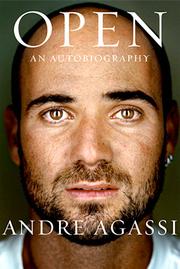
Open
Tennis star Andre Agassi recalls hating tennis, falling to No. 141, and rebuilding his life on his own terms.
2,352-word summary · 10 min read
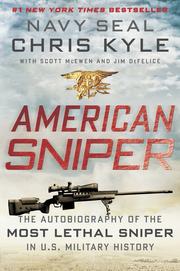
American Sniper: The Autobiography of the Most Lethal Sniper in U.S. Military History
Navy SEAL sniper Chris Kyle recounts Texas roots, SEAL training, four Iraq tours, and the strain combat placed on his marriage and health.
2,011-word summary · 9 min read
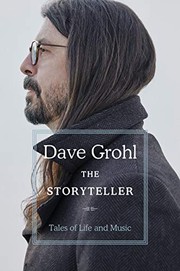
The Storyteller: Tales of Life and Music
Foo Fighters frontman recalls Nirvana, drumming, fatherhood, and life on the road.
2,307-word summary · 10 min read
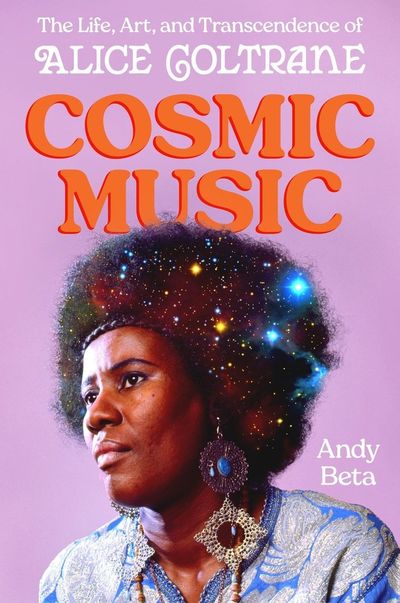
Cosmic Music
The first full biography of Alice Coltrane, from Detroit church piano to ashram guru.
2,048-word summary · 9 min read
This Is Going to Hurt
Adam Kay retells his junior doctor diaries with humour and strain, from labour ward nights to leaving medicine.
2,869-word summary · 13 min read
The Autobiography of Malcolm X
Malcolm X traces his life from Michigan childhood through Harlem, prison, and the Nation of Islam to Mecca in this 1965 memoir told to Alex Haley.
2,816-word summary · 13 min read
Just Kids
Patti Smith recalls broke young years with Robert Mapplethorpe in 1960s New York, from Brooklyn rooms to the Chelsea Hotel, art, music, and a kept promise.
2,401-word summary · 11 min read
Spare
Prince Harry recalls Diana's death in 1997, two tours in Afghanistan, and stepping back from royal life with Meghan in this frank 2023 memoir of grief, love…
2,586-word summary · 11 min read
I Am Malala: The Story of the Girl Who Stood Up for Education and Was Shot by the Taliban
Malala grows up in Swat, blogged for school under ban, and survives a bus shooting.
2,015-word summary · 9 min read

Becoming
Michelle Obama traces her path from South Side Chicago through Princeton, Harvard law and the White House years in this warm, candid memoir of family, work and…
2,143-word summary · 10 min read
Sybil
A 1973 case study of a woman treated for multiple personalities, and the book that made dissociative identity disorder a household phrase.
2,054-word summary · 9 min read

In Order to Live: A North Korean Girl's Journey to Freedom
A young North Korean girl crosses the Yalu, survives trafficking in China, and rebuilds her life in Seoul in this unsparing memoir.
2,027-word summary · 9 min read
Too Much and Never Enough: How My Family Created the World's Most Dangerous Man
Mary L. Trump's 2020 memoir traces how a cold, zero-sum Queens household shaped her uncle, and uses family tax documents to challenge his self-made story.
2,059-word summary · 9 min read
Same Kind of Different as Me
An art dealer and a formerly homeless sharecropper tell the story of the friendship that began at a Fort Worth mission and the woman who insisted on it.
2,023-word summary · 9 min read
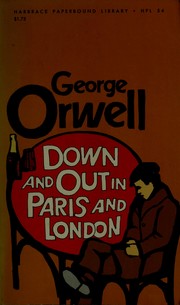
Down and Out in Paris and London
Orwell's account of washing dishes in Paris hotels and tramping through London does not ask for pity, only for a clear look at how poverty actually works.
2,282-word summary · 10 min read
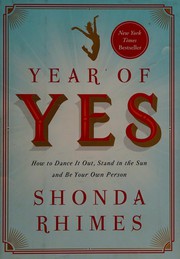
Year of Yes: How to Dance It Out, Stand in the Sun and Be Your Own Person
Shonda Rhimes takes her sister’s accusation seriously and spends a year saying yes to the things that frighten her, from live television to her own reflection.
2,585-word summary · 11 min read
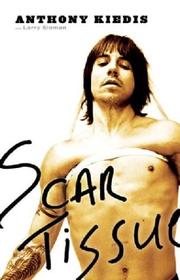
Scar Tissue
Kiedis's memoir follows the Red Hot Chili Peppers from Hollywood house parties to fame, heroin, and the long work of staying clean.
2,217-word summary · 10 min read
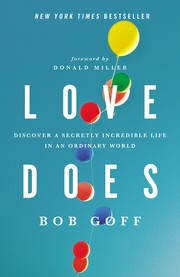
Love Does
A lawyer and activist tells stories of saying yes, showing up, and loving people through ordinary, often ridiculous actions.
2,411-word summary · 11 min read
The Wright Brothers
David McCullough tells the story of two self-taught Ohio brothers, working largely alone and out of a bicycle shop, who solved the problem of flight before…
2,027-word summary · 9 min read
Beautiful Boy: A Father's Journey Through His Son's Addiction
David Sheff recounts watching his son Nic slide into meth addiction, and his own desperate, humbling search for how to help without destroying them both.
2,076-word summary · 9 min read
The Magnolia Story
How Chip and Joanna Gaines met, closed their first shop, nearly lost everything in a housing development, and built Fixer Upper.
2,994-word summary · 13 min read
Lone Survivor: The Eyewitness Account of Operation Redwing and the Lost Heroes of SEAL Team 10
Marcus Luttrell's account of the 2005 SEAL mission in Afghanistan that killed three of his team and left him alone.
2,144-word summary · 10 min read
Dry
A memoir of drinking, rehab and relapse, and the strange business of getting sober one morning at a time.
2,643-word summary · 12 min read