
Reading options
What's inside (9 sections)
A friend who works as a nurse told me to read this one on a night shift break. She said it was the only book that made her laugh out loud in the staff room and then made her go quiet on the next page. I bought it expecting jokes about hospitals. I got the jokes, but I also got a pretty clear picture of why someone would walk away from a job they spent years training for.
The full title is This Is Going to Hurt: Secret Diaries of a Junior Doctor. It was published in 2017 by Picador and the standard edition runs 288 pages. Adam Kay wrote it from diaries he kept while working for the National Health Service in Britain between 2004 and 2010. He trained as a doctor, specialised in obstetrics and gynaecology, then left medicine and became a comedy writer. Years later, during a public fight about junior doctors pay and hours, he went back to those old diaries and turned them into this book.
What makes it different from a normal memoir is the shape. It is not one long story told looking back. It reads as dated entries with short notes about where he was in the training ladder. You get a house officer who is lost, then a senior house officer who is a bit more useful, then a registrar who is trusted with more, then a senior registrar who is supposed to have answers. The tone stays light even when the hours are brutal. That mix is the whole point.
Why he wrote it down in the first place
Kay did not start the diary because he wanted to be an author. When he was training, junior doctors were told to keep a reflective journal. You were supposed to log interesting cases and think about what you learned. Most people wrote the minimum to keep their supervisors happy. He kept his, filed it away, and forgot about it after he quit.
He left medicine in 2010. About five years later he was formally removed from the medical register, which is what happens when you stop practising for a long stretch. He was clearing out boxes of old paperwork around that time and reread the journals. At almost the same moment, junior doctors in England were in a bitter contract dispute with the government. Jeremy Hunt, who was Health Secretary then, was arguing in public that the new contract was fair and that doctors were being unreasonable. Kay felt that was false based on everything he had lived through.
So he put the diaries together, cut out anything that could identify patients, and added short explanations for readers who have never worked in a hospital. He has said he wanted the public to see what the rota actually looked like. Long nights. Missed meals. Decisions made on very little sleep. The comedy was already in the diaries. He had always written things down in a dry way. The politics came later, when he realised those funny stories also showed a system that was asking too much of young staff.
I appreciated that origin because it explains the uneven feel. Some entries are two lines. Some run for pages. Some are mostly a punchline. Others stop being funny halfway through. That is how a real work diary looks. You do not write a neat chapter at the end of a twelve hour shift. You write what you can remember before you fall asleep.
Starting out lost in 2004
The early part covers 2004, when Kay starts as a house officer. A house officer in the UK system at that time was a newly qualified doctor doing the first practical rotations. You have a medical degree but very little sense of how wards actually run. He describes getting bleeped constantly, trying to look confident while having no idea what the right dose was, and asking nurses for help without wanting to admit how lost he felt.
There are a lot of A and E nights in this stretch. He writes about removing odd objects from rectums, which becomes a running joke. Four cases get mentioned in the early pages, each more unlikely than the last. He also writes about his first time being the person who actually saves a life, and how strange it felt to walk out of the room afterwards and eat toast like nothing had happened. No one claps. You just move to the next patient.
What stuck with me was the tiredness. He would finish a day shift and be straight back for a night shift. He would try to sleep in a mess room with a broken blind and a phone that kept ringing. He missed birthdays and dinners and kept telling his partner that things would calm down next rotation. They did not calm down. The rota just changed shape.
He is honest about mistakes too. He talks about ordering the wrong test, about taking too long to get bloods back, about feeling sick before procedures he had only seen once. Senior doctors appear briefly, sometimes kind, sometimes short tempered. Nurses often save him. That felt true to what my nurse friend told me. New doctors lean on experienced nurses a lot in the first year, and good wards know it.
If you have never worked nights, this section gives a decent sense of it. Your body clock breaks. You eat at odd times. You start laughing at things that are not really funny because you are too tired to react normally. Kay keeps the jokes coming, but you can see the pattern forming. The job takes more hours than it gives back in rest.
Picking babies and choosing gynae
By August 2005 he is a senior house officer and has to pick a direction. He chooses obstetrics and gynaecology. In the book he shortens it to a rude nickname about brats and twats, which tells you a lot about the humour of the specialty. It is intimate, unpredictable, often joyful, sometimes devastating, and it happens at all hours.
The middle entries are full of labour ward life. There are fast births where everything goes well and the parents cry and he gets to hold a newborn for a minute before the midwife takes over. There are slow labours that go on for hours with very little progress. There are fertility clinics where couples have waited years for an appointment and hang on every word. There are sexual health clinics with awkward conversations that he handles with jokes to put people at ease.
He gets better at procedures here. He learns how to manage bleeding, how to read a trace, when to call for help and when to stay calm and carry on. He also learns the social side. How to tell someone they have miscarried. How to sit with a teenager who is scared. How to deal with a partner who is angry because he feels helpless. Those scenes are short but they carry weight because Kay does not dress them up.
One theme keeps returning. Positive moments kept him going. He calls himself something like a low grade superhero when a difficult delivery ends well. Couples who had struggled to conceive would send cards. Mothers would remember his name. On a good night he might deliver several babies and walk out feeling like the exhaustion was worth it. That feeling did not last into the daylight, but it was enough to stop him quitting for a while.
He also shows the other side of the specialty. Gynaecology wards deal with pain, heavy bleeding, ectopic pregnancies, terminations, cancers. It is not all happy births. He writes about breaking bad news in side rooms with thin walls, hearing the ward noise outside, trying to find words that are honest without being cold. He was in his mid twenties doing this, often after being awake for most of the previous day.
Nights, weekends and a life put on hold
The strongest thread through the whole book is time. Not medical skill. Time. Hours worked for no extra pay. Weekends lost. Holidays cancelled because no one could cover. Kay writes about sleeping in his car in the hospital car park because going home and coming back would leave him with even less sleep. He writes about working through lunch, through dinner, through the point where hunger turns into a headache.
Pay comes up a lot. His starting wage as a junior doctor worked out so poorly per hour that he jokes he would have earned more per hour working in fast food. That line gets quoted a lot. It is not a precise accounting claim, more a way to show how the maths felt when you added up a seventy hour week. Later, as a registrar, the pay improves but the responsibility jumps faster than the salary.
Relationships suffer. He misses events with his partner. He cancels plans at the last minute. He tries to be present when he is home but falls asleep on the sofa. Friends outside medicine stop inviting him because they assume he will say no. Friends inside medicine understand but are too tired themselves to do much beyond complain over coffee. His health slips too. He eats badly, stops exercising, gets colds that linger.
What bothered me reading this was how normal it all sounded to him. Staying three hours late was not exceptional. It was expected. Asking for sick leave felt impossible because it meant dumping work on someone equally tired. Asking for annual leave meant finding your own cover months in advance. He rarely blames individual consultants. He blames a rota that had no slack in it. If one person called in sick, the whole day wobbled.
A fair point to raise is that some readers will find this repetitive. He makes the same complaint in different rotations. Long shift, no food, no thanks, repeat. I felt that drag around the middle too. But I also thought the repetition was doing work. It showed that the problem was not one bad placement. It followed him from surgery to medicine to obs and gynae. That consistency is part of his argument about the NHS relying on goodwill.
Funny on the surface, heavy underneath
People buy this book for the humour and Kay delivers plenty. There are misunderstandings about symptoms. There are patients who Google everything and arrive convinced they have a rare disease. There are anxious fathers in the labour room who faint and need more attention than the person giving birth. There are elderly patients who are sharp and rude in a way that makes the whole bay laugh. Midwives get some of the best lines, usually at his expense.
He is good at deflating his own status. He presents himself as tired, clumsy, sometimes squeamish, often out of his depth. That makes the funny stories land. You are laughing with tired staff, not at patients. He changes details to protect privacy, so you should not read these as exact transcripts. They read as types of nights most junior doctors will recognise.
Under the jokes there is a lot of fear. Fear of missing something. Fear of being the most senior person in the room when you still feel junior. He writes about nicking the cheek of a baby with a scalpel during a caesarean when he was exhausted on a night shift. The cut was small and the baby was fine, but he carried the guilt for a long time. He writes about infertility appointments where he had no good news to give. He writes about infections that keep coming back because the underlying housing or relationship problem has not changed.
I thought the balance mostly worked. The humour keeps you turning pages. The sad moments stop you from treating it all as entertainment. Twice I laughed at a story about a clinic mix up and then felt uneasy for laughing, because the patient in the story was clearly frightened. Kay seems aware of that tension. He often follows a comic entry with a quiet line about how little time he had to explain properly.
If comedy about bodies puts you off, parts of this will test you. There is blood, placenta, vomit, discharge, and a lot of talk about genitals. He does not write it to shock. In obs and gynae those things are the working day. But he does not look away either. Readers who want a clean memoir about medicine should pick something else.
December 2010 and the decision to leave
The final clinical stretch covers his time as a registrar from August 2007 and then senior registrar from August 2010. Senior registrar meant he was the person others called when things went wrong. That responsibility changed the texture of the entries. Less confusion about doses, more dread about being the last line.
On 5 December 2010 he describes a caesarean that went badly. The patient had an undiagnosed placenta praevia, where the placenta covers the cervix. In this case Kay delivered the placenta first and then the baby, who could not be revived. The placenta coming away caused severe bleeding. He and the consultants who came to help could not stop it. After about two hours and a loss of around twelve litres of blood, they performed a hysterectomy to save the mother, who was moved to intensive care.
Kay is clear that best practice was followed and that the missed diagnosis should have been picked up on earlier scans. He still blamed himself. He kept going over whether he could have spotted the praevia before the operation. That kind of self questioning is common after an obstetric disaster, and he writes about it without trying to sound noble. He just sounds stuck.
What happened next matters as much as the surgery. He asked for time off and was expected back the next day. No debrief that helped. No counselling offered. He went back to the labour ward while still replaying the case. He became low and withdrawn. A few months later he resigned. It was not a dramatic speech. He just realised he could not keep doing a job where one bad night could stay with him like that while the rota rolled on unchanged.
I found this part hard to read, which I think is intentional. After hundreds of pages of jokes, the flat tone hits harder. He does not build it up with foreshadowing. One entry is normal. The next is the case. Then work continues. That abruptness mirrors how trauma interrupts ordinary weeks. Life on the ward did not pause. He had to.
What works, what drags and who should read it
As an argument about the health service, the book is effective. Kay shows rather than lectures. Unpaid extra hours. No proper breaks. Difficulty taking sick leave. Pressure to act cheerfully for patients while running on empty. Public applause for doctors paired with private strain. By the time you reach the 2015 dispute context, you understand why he took the contract fight personally. He had lived the version of the job where goodwill covered staffing gaps.
As a piece of writing, it has limits. The diary form means some characters never develop. Consultants come and go. The partner stays mostly in the background. If you want a full portrait of his home life, you will not get it. The focus stays on work, which makes sense for a work diary but can feel narrow over 288 pages. A few jokes fall flat, especially the ones that rely on bodily fluids for shock. Readers outside Britain may miss some NHS references, though the main points translate easily.
The awards help explain its reach. It won Blackwell's Debut of the Year and a Books Are My Bag readers award for non fiction in 2017, and it was shortlisted for other prizes. It spent a long time on bestseller lists in Britain. In 2022 the BBC turned it into a seven part drama with Ben Whishaw playing Kay, which brought the stories to people who never read the memoir. An extract even turned up in a GCSE English exam in 2024, which tells you how widely it entered school reading.
Who is it for. Anyone curious about what junior doctors actually do all night. Anyone who likes gallows humour but can handle sad turns. Medical students and new nurses may see their own wards in it. People who want policy detail should look elsewhere. Kay gives you lived days, not staffing tables. He is open about that. He is retelling what he saw, not claiming to speak for every doctor.
I closed it thinking about my nurse friend. She was right about the laugh then quiet pattern. The early pages made me grin on the train. The last clinical pages made me put the book down and stare out the window. That shift felt honest. Medicine gave Kay some of the best nights of his working life and then gave him one night he could not carry. He chose to leave, and he wrote this so readers would understand why that choice made sense to him.
FAQ
When was This Is Going to Hurt published?
It was published in 2017 by Picador and runs 288 pages. The full title adds the subtitle Secret Diaries of a Junior Doctor.
Why did Adam Kay leave medicine?
After a December 2010 case with an undiagnosed placenta praevia ended in a baby death and severe bleeding, he felt unable to continue and resigned months later.
Is the book only comedy?
No. Early entries are comic about A and E nights and births, but later sections cover exhaustion, low pay, and grief after a traumatic loss.
Similar books
More like This Is Going to Hurt →
The Autobiography of Malcolm X
Malcolm X traces his life from Michigan childhood through Harlem, prison, and the Nation of Islam to Mecca in this 1965 memoir told to Alex Haley.
2,816-word summary · 13 min read

Shoe Dog
Phil Knight tells how Blue Ribbon Sports grew from a trunk of Japanese running shoes into Nike.
2,824-word summary · 13 min read

On Writing
Stephen King blends memoir and blunt writing advice on reading daily, drafting fast, and cutting hard.
2,702-word summary · 12 min read

Just Kids
Patti Smith recalls broke young years with Robert Mapplethorpe in 1960s New York, from Brooklyn rooms to the Chelsea Hotel, art, music, and a kept promise.
2,401-word summary · 11 min read

Heaven Is for Real
A Nebraska pastor's four-year-old survives a burst appendix, then describes angels, Jesus, and relatives he never met.
2,679-word summary · 12 min read
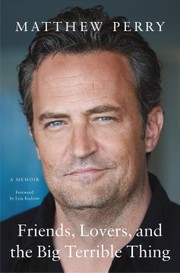
Friends, Lovers, and the Big Terrible Thing
Matthew Perry revisits Friends fame and a long struggle with addiction, from junior tennis to Chandler Bing to a 2018 health crisis, with blunt humor.
2,258-word summary · 10 min read