
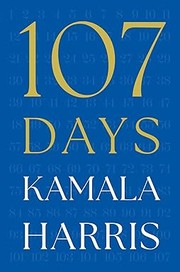
107 Days
2,132-word summary 9 min read 320 pages in the book
- First published
- 2025
- Publisher
- Simon & Schuster
- Pages
- 320
- ISBN
- 9781668211656
Reading options
What's inside (7 sections)
I picked this up partly because of the title. Most political memoirs announce themselves with a grand sweep, a whole life laid out from childhood to the present, with a campaign or a presidency as the grand finale. This one names itself by a length of time. One hundred and seven days. That number turns out to be the whole argument of the book, because Kamala Harris had exactly that long between the moment she became the likely Democratic nominee and the moment the votes were counted. It was published by Simon & Schuster on 23 September 2025, a hardcover of 320 pages, and it was written with the novelist and journalist Geraldine Brooks out of a journal Harris kept during the campaign. That journal is the book's quiet engine. It is why the thing reads less like a polished retrospective and more like a record made while the ground was still shifting underfoot.
The span is precise. It runs from 21 July 2024, when President Joe Biden called to say he would not seek reelection, to Election Day on 5 November. Harris opens at the beginning of that stretch with a scene I kept coming back to. It is a Sunday morning, she is eating pancakes with her grandnieces, and the phone rings. The call is Biden's, and it changes the shape of the next three and a half months. She sets the domestic detail against the political one without making a speech about it. Pancakes, grandnieces, a ringing phone, and then a race for the White House. The contrast does a lot of work in very few words, and it announces the kind of book this is going to be: one attentive to the small human moments that sit inside enormous events.
She also reaches back, briefly, to note that she was given the Secret Service codename Pioneer when she became the first woman elected vice president. The detail sits oddly and well in a book about a sprint. Pioneer suggests someone breaking ground, and so much of what follows is about a candidate trying to move through a political system that had not fully made room for her. I am not sure Harris means the codename as a symbol, and I would not want to overread a single line, but the placement is hard to miss.
A record kept in the middle of things
What follows is a day by day account, and the day by day quality matters more than the phrase usually suggests. Harris moves through strategy meetings, rallies, debate preparation under a level of scrutiny she clearly felt keenly, television appearances, podcasts and ad buys. The list is not glamorous. Much of a modern campaign is scheduling and repetition, the same arguments delivered to slightly different rooms, the same messages cut into slightly different advertisements. By staying close to that routine, the book conveys something that a highlight reel could not. You feel the pressure of time not as an abstraction but as a series of days that keep arriving whether or not the campaign is ready.
The journal form gives the prose a particular texture. There are passages where Harris seems to be writing to remember, to pin down what was said in a room before the next room swallowed it. That is the useful part of a diary written in the moment. It preserves the confusion and the small slights that a later, more careful account might smooth away. It also has a cost. Events that would benefit from distance sometimes arrive here without it, reported at the temperature of the day they happened. When she is annoyed, the writing is annoyed. When she feels boxed in, you can feel the box closing. This is not a flaw in the strict sense, since a book built from a journal could hardly do otherwise, but readers looking for calm analysis should know what they are getting.
The collaboration with Geraldine Brooks is worth noting too. Brooks is a novelist, and her hand is visible in the shaping of scenes and the pacing of a chapter, but the voice stays Harris's. That is a delicate balance and mostly it holds. The book never reads as ghostwritten in the sense of being flattened into a generic political voice. It reads as a politician's account that has been helped into shape, which is a different and more honest thing.
The relationship that runs through the whole book
The thread I found most absorbing concerns Harris's relationship with Biden and the people around him. Publishers Weekly, in its review, called it a complicated relationship, and that word is doing careful work. Harris is candid about what she believes was a failure of the Biden camp to promote her, to get behind her candidacy with the enthusiasm that the moment required. She believes that the inner circle did not do what it should have done. The book returns to this grievance more than once, and it is clearly one of the reasons she wanted to write it at all.
One scene captures the tension better than a page of argument. Biden calls just before a debate to relay that power brokers in Philadelphia would not back her because of things she had said about him. The message arrives at the worst possible moment, on the eve of a high stakes debate, and it is not support. It is a report about other people's reluctance, delivered by the man whose endorsement mattered most. Harris does not editorialize the moment into a grand accusation. She lets the timing speak. I thought about that call long after I finished the chapter, because it shows how a campaign can be undermined by something that looks, from the outside, like a phone call of encouragement.
The Pennsylvania anecdote is stranger and, in its own way, more revealing. Harris describes Pennsylvania governor Josh Shapiro talking to the manager of her residence at the Naval Observatory about arranging loans of Pennsylvania artists' work, on the assumption that he would be vice president. Read one way, it is a small story about a governor getting ahead of himself. Read another way, it is a snapshot of the entire campaign's peculiar atmosphere: everyone was already imagining the positions they would hold after a win that had not happened yet. Harris includes it because it says something about the mood in the room. The machinery of a hypothetical administration was being assembled while the actual election was still out in front of them. That sort of detail is the book at its best, concrete and a little awkward, and far more telling than a poll number.
Defending the choices
Harris does not write this book as an apology, and that becomes clear in the sections where she takes on specific criticisms. Two stand out. The first concerns Gaza protesters, and the second concerns the frequency with which Liz Cheney campaigned alongside her. Both were flashpoints during the race, and both are the kind of thing a candidate usually leaves to a press secretary. Harris addresses them directly. She offers her reasoning for how she handled the protests and for why Cheney was such a visible presence, and she plainly thinks the criticism was unfair or misplaced.
I found these passages differently persuasive. On the question of her own conduct, a memoir written by the person who made the choices can only go so far. She is arguing her own case, and she knows it. But the directness is still worth something. A reader who wants to understand how she saw those decisions will find it here in her own words, rather than filtered through a reporter's account or an opponent's advertisement. That is the genuine value of a political memoir written close to the event, even when the author is plainly invested in the outcome.
She also states, without hedging, that she believes she was the candidate best placed to win. That claim sits near the center of the book. It is not presented as a poll result or an argument built from data, but as a conviction, and the last chapter explains why she thinks the race went the way it did. Her explanation is time. She attributes the loss chiefly to having too little of it, to not having enough days to connect with voters across the country in the way a candidate needs to. It is a simple explanation, perhaps too simple, and it is also the one that the title has been pointing toward from the first page. One hundred and seven days is not a normal runway for a presidential campaign. The book's final position is that the clock, more than the message or the opponent, decided the result.
What the critics saw, and where I agree
The most useful criticism of the book came from Publishers Weekly, which found it rich in intraparty sniping but short on campaign postmortem. I think that is fair, and it is the fairest way to describe why the book can frustrate a reader. Harris is very good on the slights, the calls, the assumptions people made about who would be vice president, the sense that her own camp did not back her as fully as it should have. She is much less interested in examining her own missteps. When the book turns to what went wrong, it tends to point at the clock and at the people around her rather than at the decisions she herself made.
This does not make the book worthless. It makes it a particular kind of document. Read as a postmortem, it will leave you unsatisfied, because a postmortem requires a willingness to cut into the decisions of the person telling the story, and that willingness is mostly absent here. Read as a record of what one candidate lived through during an extraordinary contraction of a campaign, it is excellent. The two readings are not the same, and I would tell anyone going in to decide which one they want before they start.
There is also the question of whom the book is for. A reader looking for a thorough account of the 2024 election will need to go elsewhere, because this is not that book. It covers one candidate's view of one stretch of the race, and it makes no attempt to be a complete history. A reader who wants to understand how a sudden change at the top of a ticket feels from the inside will find something here that no outside account could supply. The pancake scene, the debate call, the artists' loans, these are the things the journal preserved, and they are the things a campaign biographer writing years later would never be able to recover with the same immediacy.
The value of a short, angry, specific book
By the end, what stayed with me was not the verdict about why the election was lost. Verdicts about elections are argued for decades and rarely settled. What stayed with me was the texture of those 107 days as Harris recorded them: the interrupted Sunday breakfast, the call before the debate, the conversation about borrowed paintings, the long hours of preparation under scrutiny that she felt was relentless. These are small, particular things, and they are the reason the book was written from a journal instead of assembled from memory after the fact. Memory would have kept the argument and lost the pancakes.
That is also the limit of the achievement. A book that is strong on the felt details of a campaign is not necessarily strong on the causes of its outcome. Harris gives us a close account of a race run at an unnatural pace, and she gives us her own defense of her choices. She does not give us a full accounting of the campaign, and the Publishers Weekly review is right to note the gap. I finished the book admiring the parts that were specific and impatient with the parts that were defensive, often within the same chapter.
For a general reader, I would say this. If you want a campaign memoir that examines itself as closely as it examines its rivals, this is not it. If you want to see how a historic candidacy looked to the person running it, day by day, with the irritation and the exhaustion still intact, there is nothing else quite like it. The title promises a finite stretch of time, and the book keeps that promise. It stays inside those 107 days, and it reports them with a vividness that a more polished and fuller account might have sanded away. Whether that vividness is enough to make the case she wants to make is a question the book leaves, in the end, to the reader.
FAQ
What does the title 107 Days refer to?
It is the stretch from 21 July 2024, when President Joe Biden called to say he would not seek reelection, to Election Day on 5 November 2024.
Who wrote 107 Days and when was it published?
Kamala Harris wrote it with Geraldine Brooks, drawing on a journal she kept during the campaign. Simon & Schuster published it in hardcover on 23 September 2025 at 320 pages.
What is the main criticism of the book?
Publishers Weekly called it rich in intraparty sniping but short on campaign postmortem, arguing that Harris sidesteps her own missteps and points instead to the clock and the people around her.
Similar books
Motherland: A Feminist History of Modern Russia, from Revolution to Autocracy
A feminist history of modern Russia told through women's lives, from the revolutionaries of 1917 to Pussy Riot and the politics of today.
2,191-word summary · 10 min read
The Ride of a Lifetime: Lessons Learned from 15 Years as CEO of the Walt Disney Company
Bob Iger's 2019 memoir on leading Disney through Pixar, Marvel, Lucasfilm and a global rebuild, told through the lessons he learned along the way.
2,475-word summary · 11 min read

Long Walk to Freedom
Mandela's account of a Thembu childhood, a law practice, a banned movement, twenty-seven years in prison, and the negotiation that ended apartheid.
2,454-word summary · 11 min read

Infidel
Ayaan Hirsi Ali's memoir of a Somali childhood, a forced marriage, a Dutch asylum claim, and the political fight that followed the murder of Theo van Gogh.
2,041-word summary · 9 min read

The Girl with Seven Names: A North Korean Defector's Story
Hyeonseo Lee crossed the frozen Yalu River at seventeen, spent years hidden in China, escaped to South Korea, and later returned to rescue her family.
2,404-word summary · 11 min read

I Feel Bad About My Neck: and Other Thoughts on Being a Woman
In short, funny essays written just after her sixty-fifth birthday, Nora Ephron takes on aging, vanity, a White House summer, and the daily upkeep of looking…
2,099-word summary · 9 min read
Mountains Beyond Mountains: The Quest of Dr. Paul Farmer, a Man Who Would Cure the World
Tracy Kidder travels with Dr. Paul Farmer from Haiti to Peru, tracing how a Harvard doctor built a health system for the poor and what that work cost him.
3,095-word summary · 14 min read

Mother Mary Comes to Me
Arundhati Roy's memoir circles her mother, Mary Roy, a formidable Kerala school founder whose love and cruelty made her the writer she became and then resented…
2,413-word summary · 11 min read
Careless People
A former New Zealand diplomat recounts seven years at Facebook, from a Myanmar launch to a hospital bed where the job followed her between contractions.
2,413-word summary · 11 min read
All or Nothing: How Trump Recaptured America
Wolff's fourth Trump book reconstructs the 2024 campaign and the return to the White House from Mar-a-Lago sources, phone monologues and unnamed confidants.
2,248-word summary · 10 min read
In Order to Live: A North Korean Girl's Journey to Freedom
A young North Korean girl crosses the Yalu, survives trafficking in China, and rebuilds her life in Seoul in this unsparing memoir.
2,027-word summary · 9 min read

Too Much and Never Enough: How My Family Created the World's Most Dangerous Man
Mary L. Trump's 2020 memoir traces how a cold, zero-sum Queens household shaped her uncle, and uses family tax documents to challenge his self-made story.
2,059-word summary · 9 min read

Down and Out in Paris and London
Orwell's account of washing dishes in Paris hotels and tramping through London does not ask for pity, only for a clear look at how poverty actually works.
2,282-word summary · 10 min read
Year of Yes: How to Dance It Out, Stand in the Sun and Be Your Own Person
Shonda Rhimes takes her sister’s accusation seriously and spends a year saying yes to the things that frighten her, from live television to her own reflection.
2,585-word summary · 11 min read

Life
The Rolling Stones guitarist tells his own story: a Dartford childhood, the band's first gigs, the drug raids, the tax years and Patti Hansen.
2,761-word summary · 12 min read
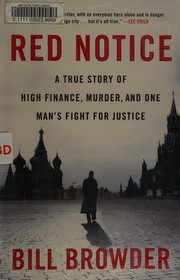
Red Notice
An American financier in Moscow exposes a $230 million tax fraud, watches his lawyer die in prison, and turns the case into an international human rights law.
2,008-word summary · 9 min read

The Letters of Vincent van Gogh
Vincent van Gogh's letters to his brother Theo, in a Penguin Classics selection edited by Ronald de Leeuw, trace a decade of work, faith, and obsession.
2,611-word summary · 12 min read
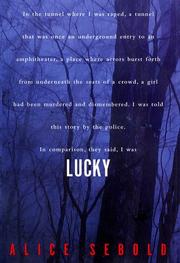
Lucky
Alice Sebold's memoir of the 1981 rape she survived as a college freshman, the courtroom that followed, and a conviction later proven to be a case of mistaken…
2,091-word summary · 9 min read
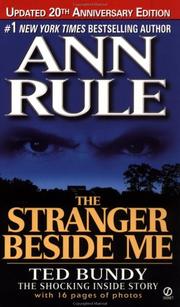
The Stranger Beside Me
Ann Rule's classic memoir of her friendship with Ted Bundy, written by the true-crime author who knew him long before the world learned what he had done.
2,481-word summary · 11 min read
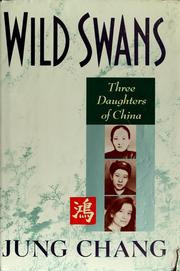
Wild Swans
Three generations of women survive warlords, revolution, and the Cultural Revolution in Jung Chang's family memoir.
2,356-word summary · 10 min read
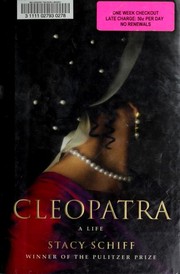
Cleopatra: A Life
Pulitzer winner Schiff restores Cleopatra as a capable ruler, from Ptolemy debts and Caesar to Antony, Actium, and her death in 30 BC, built from coins and…
3,586-word summary · 16 min read
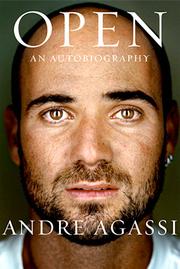
Open
Tennis star Andre Agassi recalls hating tennis, falling to No. 141, and rebuilding his life on his own terms.
2,352-word summary · 10 min read
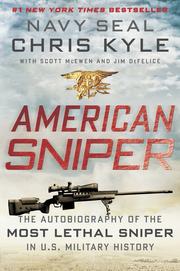
American Sniper: The Autobiography of the Most Lethal Sniper in U.S. Military History
Navy SEAL sniper Chris Kyle recounts Texas roots, SEAL training, four Iraq tours, and the strain combat placed on his marriage and health.
2,011-word summary · 9 min read
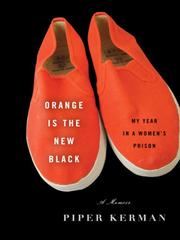
Orange Is the New Black: My Year in a Women's Prison
A Smith graduate serves a year in Danbury for an old drug crime and learns how women share, fight and survive inside.
2,583-word summary · 11 min read
Nickel and Dimed: On (Not) Getting By in America
A journalist works waitress, cleaning, retail, and care jobs undercover to test whether full-time work keeps a person housed and fed.
2,328-word summary · 10 min read
Alexander Hamilton
Orphaned Caribbean immigrant becomes Washington's aide and America's first Treasury secretary, then falls in a duel.
2,004-word summary · 9 min read
A Promised Land
First-volume memoir from Iowa 2008 through the 2011 bin Laden raid, crisis management and doubt.
2,243-word summary · 10 min read
The Autobiography of Malcolm X
Malcolm X traces his life from Michigan childhood through Harlem, prison, and the Nation of Islam to Mecca in this 1965 memoir told to Alex Haley.
2,816-word summary · 13 min read
Spare
Prince Harry recalls Diana's death in 1997, two tours in Afghanistan, and stepping back from royal life with Meghan in this frank 2023 memoir of grief, love…
2,586-word summary · 11 min read
Between the World and Me
Coates writes to his son about the Black body in America, from Howard to the loss of Prince Jones.
2,234-word summary · 10 min read