
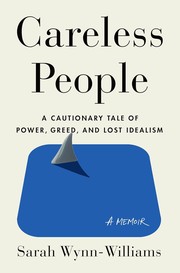
Careless People
2,413-word summary 11 min read 400 pages in the book
- First published
- 2025
- Publisher
- Flatiron Books
- Pages
- 400
- ISBN
- 9781250391230
Reading options
What's inside (10 sections)
I picked up Careless People expecting a standard Silicon Valley confession, the sort of book where an insider lists a billionaire's strange habits and presents each one as a revelation. What I found was stranger and more human. This is a memoir about a New Zealand diplomat who wanted to make the world better, landed a job at Facebook, and spent seven years trying to reconcile the company she believed in with the company she was actually working for. The title comes from The Great Gatsby, and the careless people of the subtitle are Mark Zuckerberg and Sheryl Sandberg. The full subtitle, A Cautionary Tale of Power, Greed, and Lost Idealism, tells you where the book stands before you have turned a page.
It arrived in March 2025, published in the United States by Flatiron Books on the eleventh of the month at 400 pages, with Macmillan bringing out a British edition two days later at 416 pages. The difference in length is a small curiosity, a reminder that this is a book whose editions were managed as carefully as its message. It became a number-one bestseller and a New York Times Notable Book, and was named a best book of the year by Time, The New Yorker and NPR. That is a remarkable amount of attention for a first-person account of a job. The interest has something to do with the company, something to do with the timing, and a great deal to do with the fact that Meta tried to stop the book before it appeared.
A diplomat in a hoodie
Wynn-Williams was a diplomat before she was a Facebook executive, and that detail is the key to the whole memoir. Diplomats are trained to read rooms, to choose their words with care, and to work out what a government really means when it says something polite. She carried that habit into the company's offices, and much of the book's drama comes from watching a diplomatic sensibility collide with a business that presented itself as a scrappy startup and a generous force in the world. She joined Facebook in 2011 and stayed for seven years, eventually becoming its director of global public policy. That title is the hinge of the story. Global public policy is the part of a social network that has to deal with governments, and governments are where idealism gets tested first and hardest.
A person in that role spends her life in translation. She has to explain to a company why a foreign ministry is worried, and explain to a foreign ministry why a company cannot simply do what it is asked. The book is full of that kind of interpretation, and Wynn-Williams is good at it. She understands that a meeting is rarely about what is written on the agenda. She notices who sits where, who avoids a question, who says something twice. None of this is invented. It is the professional equipment she brought with her, and it makes her a more useful guide than the usual tech memoirist, who tends to see only the product and the stock price.
The hospital bed
The Guardian's Stuart Jeffries, reviewing the book, opens with the scene that best explains why this memoir is unlike the others. Wynn-Williams is lying in a hospital bed with her feet in stirrups, her waters have broken, and she is typing talking points between contractions. The subject is an upcoming trip to oversee Facebook's bid to launch in Myanmar, and she is sending the notes to Sheryl Sandberg before giving birth to her first child.
It is a startling picture, and it is doing serious work. It tells you what the job demanded, that the work followed her into the most private moment she could have imagined, and that she went along with it. Read one way, it is a portrait of total commitment. Read another, it is a portrait of a workplace that had swallowed the boundaries of a person's life. The book holds both readings at once, and that tension is the reason it is difficult to dismiss. She is not presenting herself as a victim of a job she chose, nor as a hero of it. She is showing you the moment when the two descriptions stop being separable.
That scene also explains the book's peculiar tone. Wynn-Williams writes about enormous institutions in the language of a person navigating a difficult office, and she writes about a difficult office in the language of geopolitics. The two registers keep crossing. A conversation about content moderation reads like a negotiation between states, while a negotiation with a state reads like a quarrel with a difficult colleague. It is a way of seeing that suits her subject. The women and men running these companies really do treat the world as their backyard, and the joke, such as it is, is that they are often right.
Myanmar and the trouble with good intentions
Myanmar is the book's central case and its bleakest. Wynn-Williams went there to help Facebook launch in a country emerging from decades of military rule, at a moment when the promise of connection seemed inseparable from the promise of political opening. She writes about stumbling encounters with juntas and about the private-jet schemes that make executive life feel like a different species of existence. She also writes about the grinding question of what a platform owes a place whose government might use it to do harm.
The book does not resolve that question, and it is honest enough not to pretend to. What it does is put a thoughtful observer in the room and let her describe how decisions get made, or fail to get made. These chapters are the strongest part of the memoir because they concern a genuine dilemma rather than a personality clash. A social network that connects a country can also become a tool for whoever controls the country. Wynn-Williams was hired to bring about the first outcome and had to live with the possibility of the second. She does not offer a clean answer, and the lack of one is the point.
The people who built the platform were intelligent enough to see the problem and still found reasons to proceed. That is a more interesting claim than the usual accusation of ignorance or greed. It suggests that the hard choices were visible, that they were discussed, and that the institution had ways of setting them aside. Her account of the Myanmar launch is less a scandal than a study of how a large organization talked itself through a risk it understood. The dark humor she brings to the rest of the book drains away here. She is too angry at the gap between the company's language and its conduct to make jokes about it.
Beijing and the line she describes
The other major controversy concerns China. Wynn-Williams writes that Facebook negotiated with Beijing over censorship tools that would have allowed China to control content in exchange for market access. This is precisely the sort of claim a company fights hard, and Meta has fought it. The company says it ultimately decided not to go ahead with the ideas it explored, and it disputes her framing of the discussions.
The fair way to read the chapter is as an account of ideas that were considered, not a deal that was completed. Its value is not that it proves a conspiracy. It is that it shows how a market the size of China bends the thinking of a company that likes to describe itself as connecting the world. Whether the tools were actually built or merely discussed matters a great deal, and the memoir is at its best when it keeps that distinction open rather than closing it for the sake of a punchline.
Wynn-Williams understands that the most interesting corporate decisions are the ones a company almost made. Those are the moments when stated values and commercial instincts sit in the same room and nobody wants to write down what happened. A decision that is abandoned still tells you what the company was willing to consider. That is the quiet force of this chapter. She is not claiming that Facebook became a censor for a foreign government. She is claiming that the company reached a point where that trade was on the table, and that the reach itself is worth recording.
Leaning in, from the inside
Woven through the geopolitics is a memoir of working motherhood. Wynn-Williams describes raising children inside a pressure-cooker workplace while Sheryl Sandberg urged employees to lean in. That slogan is an ideal target for a book like this, and she aims at it squarely. Her argument is that the language of empowerment was doing something complicated. It asked women to push harder inside a system that was not built to accommodate them, and then left them to absorb the cost when the effort did not pay off.
This is the section many readers will recognize most sharply, and it is written with a dry, dark humor. She is very good on the small absurdities of office life, on the way a meeting about principle turns into a meeting about appearances, on how a title can be at once a real responsibility and a costume. The hospital-bed scene belongs here as much as anywhere else, because it is ultimately a story about what a job asked of a new mother and how she answered. She does not claim that nobody warned her. She claims that the warnings and the encouragement arrived in the same voice, and that the encouragement was louder.
There is a broader point buried in these pages, and it is worth stating plainly. The idealism Wynn-Williams brought to Facebook was genuine, and so was the ambition. She wanted the company to succeed because she believed success would mean something good for the world, and she was willing to work extremely hard to make that happen. The memoir is at its most honest when it admits that this combination, belief and ambition, is exactly what a demanding institution wants from its employees. It is the reason people like her are recruited, and it is also the reason they are so easily used.
The people in the story
Two figures dominate the book's portraits of power. Sandberg is the operator whose can-do philosophy animated the company, and Zuckerberg is the founder whose idealism Wynn-Williams treats as real but untested by consequence. She also alleges misconduct by her former boss, Joel Kaplan. It is here that the memoir shifts from an account of a company into an account of a working relationship that soured, and it is here that a reader needs to slow down.
When Facebook learned of the role it had played in Donald Trump's election, she writes, Zuckerberg was shaken. That is a small and useful detail, because it shows a founder confronting a result he had not imagined when he started out. But the book's portraits of individuals are necessarily the portraits of a former employee with a grievance, and they should be read with that in mind. Several of the central claims are contested rather than established. That does not make them false. It makes them disputed, and the difference matters when you are weighing a memoir against a public record.
The strongest passages are the ones where she reports what she saw rather than what she concluded. A founder who is shaken by an election result is a detail a reader can hold and think about. A claim about what that founder really believed is a different kind of statement, and it needs evidence the book does not always supply. This is not a failure of nerve. It is the natural result of writing from inside a system where motives are hidden and actions are documented. She had access to the meetings, not to the minds of the people in them.
What Meta did next
Before publication, Meta won an emergency ruling from the American Arbitration Association ordering Wynn-Williams to stop promoting the book and to retract disparaging comments. She in turn filed a whistleblower complaint with the SEC alleging that Meta had misled investors, a charge the company denies. None of this is background. It frames the entire reading experience, turning the book into a contested document rather than a settled one.
I found that I trusted the memoir most when it stayed close to her own experience: the flights, the meetings, the strange etiquette of dealing with officials, the exhaustion of being a parent and a senior executive at the same time. I trusted it least when it moved from what she witnessed to conclusions about what people intended. That is not a criticism of her honesty. It is a limit of the form. A memoir can tell you what one life felt like from the inside. It cannot establish what a company meant, and it cannot settle a dispute about who was responsible for a decision. The arbitration ruling and the SEC complaint both point to the same conclusion, which is that the facts here are still being argued over.
How to read it
The fairest description of Careless People is that it is darkly funny, deeply personal, and one-sided. Sympathetic reviewers said as much even while praising it. If you want a balanced institutional history of Facebook, you will not find it here. If you want to know how it felt to be an earnest employee trying to do good work inside a machine that kept producing harm, it would be hard to beat. The book is strongest when Wynn-Williams stays near the scenes she actually lived: the hospital bed, the encounters with junta officials, the arguments over a slogan that was supposed to make everything easier. It is weakest when it reaches for a verdict the evidence cannot carry.
Read it as one person's account of a job that changed her, and it has genuine value. Read it as the last word on a company, and it will frustrate you. Either way, you will come away with a clearer sense of the distance between the language institutions use about themselves and the work their employees actually do. That gap is the real subject of the book, and it is a subject worth your time.
FAQ
What does the title Careless People refer to?
It quotes The Great Gatsby. The careless people of the subtitle are Mark Zuckerberg and Sheryl Sandberg, and the full subtitle is A Cautionary Tale of Power, Greed, and Lost Idealism.
Did Meta try to stop the book?
Yes. Before publication Meta won an emergency ruling from the American Arbitration Association ordering Wynn-Williams to stop promoting the book and retract disparaging comments. She also filed an SEC whistleblower complaint alleging Meta misled investors, which the company denies.
Is Careless People a balanced history of Facebook?
No. Sympathetic reviewers noted it is a darkly funny but one-sided account from a former employee with a grievance, and several of its central claims are contested rather than established.
Similar books
Motherland: A Feminist History of Modern Russia, from Revolution to Autocracy
A feminist history of modern Russia told through women's lives, from the revolutionaries of 1917 to Pussy Riot and the politics of today.
2,191-word summary · 10 min read
Apple in China
A former Financial Times reporter argues that Apple poured about $275 billion into China, training a generation of engineers and leaving itself dependent on…
2,094-word summary · 9 min read

Infidel
Ayaan Hirsi Ali's memoir of a Somali childhood, a forced marriage, a Dutch asylum claim, and the political fight that followed the murder of Theo van Gogh.
2,041-word summary · 9 min read
The World Is Flat: A Brief History of the Twenty-first Century
Thomas L. Friedman's 2005 bestseller argues that technology, trade, and open borders leveled the global playing field, and it names the ten forces that did it.
2,369-word summary · 11 min read
Source Code
Bill Gates's first memoir retells his Seattle childhood, from a grandmother's Ritz crackers to nights sneaking out to code. It stops just before the MS-DOS…
2,473-word summary · 11 min read
Men Explain Things to Me
A short collection of essays that begins with a man explaining Solnit's own book to her and expands into an argument about who gets believed, who gets heard…
2,019-word summary · 9 min read
Flash Boys: A Wall Street Revolt
Michael Lewis follows a Canadian trader and his band of Wall Street outsiders as they discover how speed was used to rig the stock market, then build an…
3,009-word summary · 13 min read
Breakneck: China's Quest to Engineer the Future
Dan Wang argues that America is run by lawyers and China by engineers, from a bicycle ride through Guizhou to the human cost of the one-child policy.
2,281-word summary · 10 min read
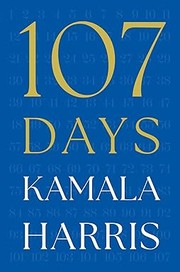
107 Days
Kamala Harris's memoir of the 107 days between Biden's withdrawal and Election Day, drawn from a journal kept during a campaign she believes she was best…
2,132-word summary · 9 min read
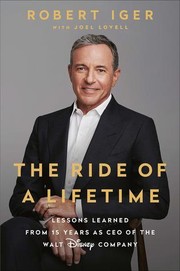
The Ride of a Lifetime: Lessons Learned from 15 Years as CEO of the Walt Disney Company
Bob Iger's 2019 memoir on leading Disney through Pixar, Marvel, Lucasfilm and a global rebuild, told through the lessons he learned along the way.
2,475-word summary · 11 min read

Long Walk to Freedom
Mandela's account of a Thembu childhood, a law practice, a banned movement, twenty-seven years in prison, and the negotiation that ended apartheid.
2,454-word summary · 11 min read

In Order to Live: A North Korean Girl's Journey to Freedom
A young North Korean girl crosses the Yalu, survives trafficking in China, and rebuilds her life in Seoul in this unsparing memoir.
2,027-word summary · 9 min read

Too Much and Never Enough: How My Family Created the World's Most Dangerous Man
Mary L. Trump's 2020 memoir traces how a cold, zero-sum Queens household shaped her uncle, and uses family tax documents to challenge his self-made story.
2,059-word summary · 9 min read

Down and Out in Paris and London
Orwell's account of washing dishes in Paris hotels and tramping through London does not ask for pity, only for a clear look at how poverty actually works.
2,282-word summary · 10 min read
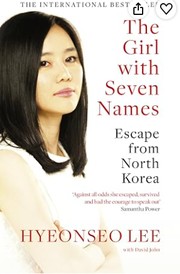
The Girl with Seven Names: A North Korean Defector's Story
Hyeonseo Lee crossed the frozen Yalu River at seventeen, spent years hidden in China, escaped to South Korea, and later returned to rescue her family.
2,404-word summary · 11 min read

The Magnolia Story
How Chip and Joanna Gaines met, closed their first shop, nearly lost everything in a housing development, and built Fixer Upper.
2,994-word summary · 13 min read

Dear Girls: Intimate Tales, Untold Secrets & Advice for Living Your Best Life
Ali Wong's debut collects fourteen letters to her daughters, covering sex, money, work, marriage, Vietnam, and being a working Asian American mother.
2,266-word summary · 10 min read

Why I'm No Longer Talking to White People About Race
Reni Eddo-Lodge traces black British history and shows how institutions, culture, and everyday assumptions keep producing racial inequality.
2,071-word summary · 9 min read
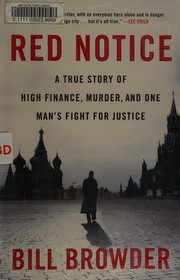
Red Notice
An American financier in Moscow exposes a $230 million tax fraud, watches his lawyer die in prison, and turns the case into an international human rights law.
2,008-word summary · 9 min read
How to Be a Woman
Moran mixes girlhood and work stories into plain feminist advice.
2,600-word summary · 12 min read
Hunger
Roxane Gay traces how assault at twelve shaped her body, appetite, and daily life as a fat Black woman refusing shame.
2,583-word summary · 11 min read
Empire of Pain: The Secret History of the Sackler Dynasty
How the Sackler family sold OxyContin and shaped an overdose crisis while giving to museums.
2,048-word summary · 9 min read
Not That Kind of Girl: A Young Woman Tells You What She's Learned
Girls creator Lena Dunham's essays on work, bodies, love, and family, frank and funny with uneven edges.
2,156-word summary · 10 min read
Invisible Women: Data Bias in a World Designed for Men
Data treating men as default harms women in medicine, work, transit, and design, with fixes from studies worldwide.
2,316-word summary · 10 min read

Reading Lolita in Tehran: A Memoir in Books
Seven women meet in secret in Tehran to read Lolita, Gatsby, and Austen while revolution presses in.
2,916-word summary · 13 min read
21 Lessons for the 21st Century
Twenty one essays on work, liberty, truth, and meaning when algorithms flood the world with noise.
2,101-word summary · 9 min read
Nickel and Dimed: On (Not) Getting By in America
A journalist works waitress, cleaning, retail, and care jobs undercover to test whether full-time work keeps a person housed and fed.
2,328-word summary · 10 min read
Know My Name
Chanel Miller reclaims her story after the Stanford assault case, tracing family support, trial strain, her viral 2016 statement, and leaving Emily Doe for her…
3,092-word summary · 14 min read
Zen and the Art of Motorcycle Maintenance
Father and son ride west while lectures on Quality and past madness intrude.
2,180-word summary · 10 min read
A Promised Land
First-volume memoir from Iowa 2008 through the 2011 bin Laden raid, crisis management and doubt.
2,243-word summary · 10 min read