
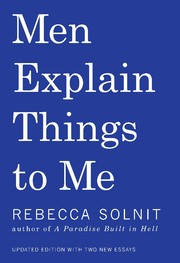
Men Explain Things to Me
2,019-word summary 9 min read 130 pages in the book
- First published
- 2014
- Publisher
- Haymarket Books
- Pages
- 130
- ISBN
- 9781608463862
Reading options
What's inside (8 sections)
The party
The essay that gave this collection its title begins at a party. A man Solnit has just met learns that she has written books and becomes eager to explain one of them to her. He describes its thesis, its structure and its importance with considerable confidence. He has, it emerges, read a review. He has not read the book. He is explaining it to its author, and he will not be interrupted.
The scene became famous after it was published in 2008 and then collected here in 2014. Readers recognized it immediately. The behavior was later named "mansplaining," a word Solnit never used in the essay and has since rejected, largely because she thinks the problem is not men as such but a structure of power that anyone can inhabit. What interests her is not the awkwardness of the conversation. It is the assumption underneath it: that a man knows more than a woman does, about anything, regardless of what she says.
She makes the stakes clear quickly. A woman who is routinely talked over and discredited is not merely annoyed. Her account of harassment, of abuse, of rape, even of a man trying to kill her, is less likely to be believed. Silencing is not a social inconvenience. It is a safety issue. That move, from a party anecdote to a question of who gets believed in a crisis, is the characteristic motion of the whole book. The small slight and the large injustice are the same phenomenon at different scales.
What makes the scene more than an anecdote is Solnit's patience with it. She does not write the man as a monster. She writes him as someone who has been taught, by a thousand small confirmations, that his uncertainty is a form of politeness and her knowledge is a kind of accident. He is probably doing what he believes is helpful. That is the unsettling part. The condescension does not require malice, only a lifetime of being taken seriously. Solnit's larger point is that a person who has never had to doubt their own authority cannot recognize it as a privilege. It looks to them like being reasonable.
The essay also has a great deal of fun with the form of the explanation itself. She catalogues the way the man keeps talking through her attempts to disagree, the way he lowers his voice to include her in a confidence, the way he arrives at conclusions she had already stated. It is very funny until it is not. The turn comes when she reminds the reader that the same structure, with a little more force behind it, is how a woman's account of a crime gets treated in a courtroom or a newsroom.
The longest war
The second essay, "The Longest War," surveys violence against women: murder by husbands and partners, abuse, rape and assault. Solnit treats these not as a series of private tragedies but as a continuing war, which is what the title means. Her central example is Jyoti Singh, the young woman raped and killed in New Delhi in 2012, whose death became an emblem of everyday violence against women. She is careful about what the case meant in India and what it was used to mean elsewhere. The essay argues that online communities facilitate and enable the environment in which such violence is excused or minimized.
This is the most painful essay in the collection and the one that has aged least comfortably, because the subject has not gone away. Solnit writes about the way public discussion of rape tends to turn immediately to the victim's behavior, her clothes, her drinking, her judgment in being out at all. The logic of blame is a way of avoiding the question of why men keep doing this. She is not interested in that avoidance. The essay is short, but it is unsparing.
Solnit is also interested in what the internet did to this war. She does not write about social media as it would later be built, but she sees the mechanism clearly: communities form around the enjoyment of humiliating women, and the sheer volume of the harassment becomes a form of policing. A woman who speaks in public learns to expect the punishment, and many stop speaking. That is the point. The abuse does not need to be physically carried out if the threat of it changes behavior. She calls the enforcers a volunteer police force later in the book, and this essay is where the argument begins.
What I found most useful is her refusal to separate the online from the offline. The men who post the threats and the men who commit the violence are not two different categories in her account. They are the same culture expressing itself in different media. That was a sharper observation in 2014 than it might sound now, when the connection has become obvious.
Power, at the IMF and at home
"Worlds Collide in a Luxury Suite" takes up Dominique Strauss-Kahn, then head of the International Monetary Fund, and the rape allegation made by Nafissatou Diallo, a hotel worker. Solnit draws a parallel between the IMF's exploitation of formerly colonized nations and powerful men's sexual exploitation of women less privileged than themselves. It is a bold comparison, and the essay's argument is that both rest on the same assumption: that some people's bodies and some countries' resources are available to those above them.
The connection is more than rhetorical. She is interested in the way impunity is organized. A man with enough power is presumed innocent in advance, and a woman without it is presumed to be making things up. The same machinery that lets an institution extract wealth from a poor country lets an individual take what he wants from a worker. The essay does not try to prove the specific case. It asks what the reaction to the case reveals about who is assumed to be trustworthy.
"In Praise of the Threat" argues that the backlash against same-sex marriage came from ideological misogyny and a fear of gender-equal unions. Because same-sex partners are equals, Solnit writes, such marriages threaten a structure built on female subservience. She explicitly praises that threat. This is the essay most likely to surprise a reader who assumes the collection is only about men talking over women. Solnit's subject is the whole architecture of hierarchy, and marriage is one of its load-bearing walls.
The web and the dark
"Grandmother Spider" examines what Solnit calls the symbolic annihilation of women across history and law. Her image is of women weaving the web of the world while never being caught in it. The examples are concrete: English marriage laws that made wives their husbands' property, family trees that list only men, the homemaker role that confined women and then erased them from the record. The essay is a compact history of being present everywhere and counted nowhere.
The image of the web is doing several jobs at once. It suggests that women's labor holds the world together, that this labor is invisible because it is treated as natural, and that the records people keep of themselves are structured to leave women out. Solnit moves from a mythic grandmother figure to the fine print of English property law without changing gear, and the effect is to make both seem like parts of the same arrangement. A family tree is a myth with a different kind of authority behind it.
"Woolf's Darkness" is the outlier, a meditation on Virginia Woolf's line that the future is dark, which is the best thing about it. Solnit reads that darkness as possibility. A future that is already known is a cage. Uncertainty is fluid and open, and the fear of it is often a fear of women's freedom rather than a reasonable caution. It is the least polemical piece here and, for me, one of the most memorable.
The original 2014 volume collected seven essays written between 2009 and 2014. Later expanded editions added "Cassandra Among the Creeps" and "#YesAllWomen: Feminists Rewrite the Story," bringing the total to nine. The first of these uses Cassandra to ask who gets believed and why, returning to the question at the heart of the title essay. The second responds to the Isla Vista killings and reflects on the power of naming in feminist history, on terms such as sexual harassment, domestic violence and rape culture. Solnit's argument is that naming a thing does not solve it, but that it changes what can be said, and what can be said changes what can be done.
Pandora and the volunteer police
The closing essay, "Pandora's Box and the Volunteer Police Force," is both a warning and a call to action. The fight is not over, she writes, and a volunteer police force enforces rape culture, especially online, through the threat of retribution. Anyone who has written about these subjects recognizes the phenomenon: the strangers who arrive to punish you for speaking, without anyone having asked them to.
Pandora's box is her metaphor for why that enforcement never quite works. Once the ideas are out, they cannot be put back. Like the spirits released from a box that looked like a coffin, the demand for equality cannot be killed or recalled. This is a hopeful ending to a book that has spent most of its length cataloguing the ways women are disbelieved. It is hope without comfort, which is the honest kind.
The title essay's influence is hard to overstate. The New Republic credited it with launching the term "mansplaining," and the book was translated into many languages and became a touchstone of fourth-wave feminism. That reception is part of the story of the book, but it also flattens it. Read only as the origin of a buzzword, the collection looks smaller than it is. The title anecdote is a door into an argument about law, economics, literature, myth and language, not the argument itself.
I should say something about the editions, because it affects what the book is. The original Haymarket paperback from 2014 has seven essays and runs about 130 pages. Expanded printings add the two later essays and run to around 170 pages. Some editions credit illustrations to Ana Teresa Fernández, and there is a Spanish translation, Los hombres me explican cosas. If you read the book and then encounter a copy with nine essays, you are not imagining the difference. It is worth looking for the expanded version if you want the full arc of the argument, particularly the piece on naming.
What the collection leaves out
The essays are short, and that is both their strength and their limit. Solnit writes in flashes, and the connections between pieces are often implied rather than developed. A reader looking for a sustained theory of power will not find one here. There is also a breadth problem. The book moves from a party in California to New Delhi to the IMF to Virginia Woolf, and it does not always pause long enough to make the transitions feel earned. The leaps are often brilliant, but they are leaps.
Some readers have also questioned the usefulness of the framework she sets up around men and women. Solnit herself rejected the word mansplaining, and the collection is more careful about power than the reputation suggests, but the framing can still feel binary in a way that some contemporary readers will find limiting. The essays about marriage equality and gender push against that reading, but they do not eliminate it.
What remains is the clarity of the central question. Who gets to speak, who gets believed, and what happens to a person whose account of her own life is treated as unreliable? Solnit asks that question of a party conversation, a rape trial, a marriage law and a fairy tale about a box. The answers differ in detail and not in shape. That is a small book doing a large amount of work, and the work is still necessary.
FAQ
Did Rebecca Solnit invent the term 'mansplaining'?
No. The title essay was credited with launching the term, but Solnit never used the word in it and has since rejected it, arguing that the problem is a structure of power rather than men as such.
How many essays are in Men Explain Things to Me?
The original 2014 Haymarket edition collects seven essays written between 2009 and 2014. Expanded editions add two more, Cassandra Among the Creeps and #YesAllWomen, for a total of nine.
What is the essay 'Grandmother Spider' about?
It examines the symbolic annihilation of women in history and law, using the image of women weaving the web of the world while never being caught in it. Solnit cites marriage laws, family trees and the erased labor of homemakers.
Similar books
We Should All Be Feminists
Adichie turns her 2012 TEDx talk into a short sharp essay on gender, using stories from Lagos and America to argue equality helps everyone.
2,625-word summary · 12 min read
Dear Ijeawele, or A Feminist Manifesto in Fifteen Suggestions
Adichie answers a friend's question about raising a feminist daughter with fifteen direct suggestions, framed as a warm letter full of dry wit and practical…
2,609-word summary · 12 min read

Why I'm No Longer Talking to White People About Race
Reni Eddo-Lodge traces black British history and shows how institutions, culture, and everyday assumptions keep producing racial inequality.
2,071-word summary · 9 min read
One Day, Everyone Will Have Always Been Against This
From a viral 2023 post, Omar El Akkad builds a furious short argument about Western promises, silence and complicity during the Gaza war.
2,218-word summary · 10 min read
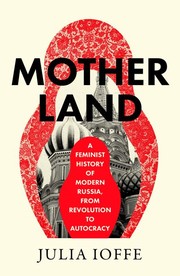
Motherland: A Feminist History of Modern Russia, from Revolution to Autocracy
A feminist history of modern Russia told through women's lives, from the revolutionaries of 1917 to Pussy Riot and the politics of today.
2,191-word summary · 10 min read
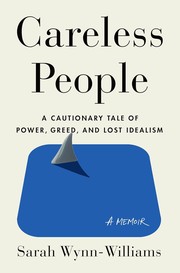
Careless People
A former New Zealand diplomat recounts seven years at Facebook, from a Myanmar launch to a hospital bed where the job followed her between contractions.
2,413-word summary · 11 min read
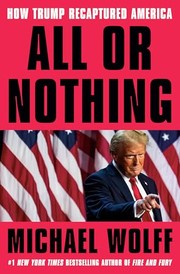
All or Nothing: How Trump Recaptured America
Wolff's fourth Trump book reconstructs the 2024 campaign and the return to the White House from Mar-a-Lago sources, phone monologues and unnamed confidants.
2,248-word summary · 10 min read
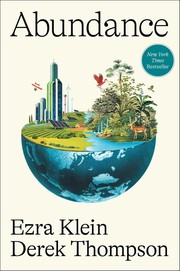
Abundance
Two journalists argue that rules written to fix the abuses of the 1970s now block the housing, energy and clean construction the 2020s need, and propose a…
2,306-word summary · 10 min read
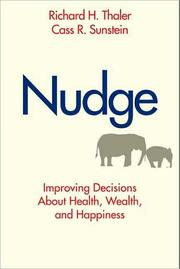
Nudge: Improving Decisions About Health, Wealth, and Happiness
Thaler and Sunstein show how defaults, framing, and social cues steer choices, and argue for choice architecture with an opt-out.
3,146-word summary · 14 min read
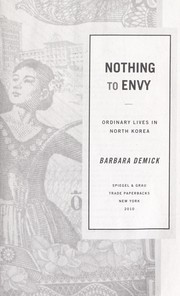
Nothing to Envy
Barbara Demick follows six defectors from Chongjin through the North Korean famine, showing how ordinary people lived, believed, and finally left.
2,068-word summary · 9 min read

Infidel
Ayaan Hirsi Ali's memoir of a Somali childhood, a forced marriage, a Dutch asylum claim, and the political fight that followed the murder of Theo van Gogh.
2,041-word summary · 9 min read

Dear Girls: Intimate Tales, Untold Secrets & Advice for Living Your Best Life
Ali Wong's debut collects fourteen letters to her daughters, covering sex, money, work, marriage, Vietnam, and being a working Asian American mother.
2,266-word summary · 10 min read
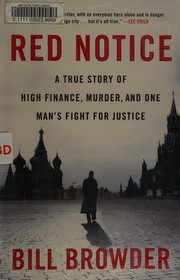
Red Notice
An American financier in Moscow exposes a $230 million tax fraud, watches his lawyer die in prison, and turns the case into an international human rights law.
2,008-word summary · 9 min read
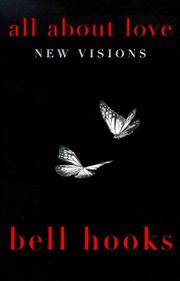
All About Love: New Visions
bell hooks borrows a definition of love as an action rather than a feeling, then spends thirteen chapters showing how hard it is to practice.
2,385-word summary · 11 min read
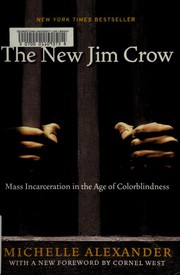
The New Jim Crow: Mass Incarceration in the Age of Colorblindness
How mass incarceration became a racial caste system after civil rights.
2,413-word summary · 11 min read
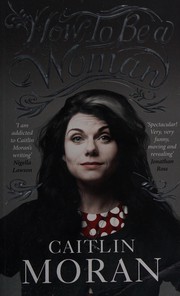
How to Be a Woman
Moran mixes girlhood and work stories into plain feminist advice.
2,600-word summary · 12 min read

How to Be an Antiracist
Kendi blends memoir and history to argue that fair policy, not self fixing, creates an equal society.
2,513-word summary · 11 min read
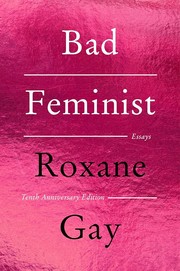
Bad Feminist
Gay mixes memoir and pop culture criticism to argue for imperfect feminism, from Sweet Valley to Django to Fifty Shades.
2,493-word summary · 11 min read
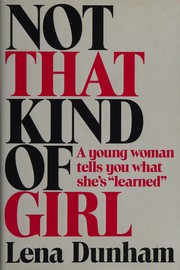
Not That Kind of Girl: A Young Woman Tells You What She's Learned
Girls creator Lena Dunham's essays on work, bodies, love, and family, frank and funny with uneven edges.
2,156-word summary · 10 min read
Invisible Women: Data Bias in a World Designed for Men
Data treating men as default harms women in medicine, work, transit, and design, with fixes from studies worldwide.
2,316-word summary · 10 min read
21 Lessons for the 21st Century
Twenty one essays on work, liberty, truth, and meaning when algorithms flood the world with noise.
2,101-word summary · 9 min read

Zeitoun
A Syrian-American contractor rides out Hurricane Katrina by canoe, rescuing neighbors and stray dogs, until a routine arrest turns into twenty-three days…
2,097-word summary · 9 min read
The Innocent Man: Murder and Injustice in a Small Town
Grisham's first nonfiction book tells how Ron Williamson lost eleven years on death row for a murder he did not commit in Ada, Oklahoma.
2,245-word summary · 10 min read

I Feel Bad About My Neck: and Other Thoughts on Being a Woman
In short, funny essays written just after her sixty-fifth birthday, Nora Ephron takes on aging, vanity, a White House summer, and the daily upkeep of looking…
2,099-word summary · 9 min read

Women Who Run with the Wolves
A Jungian analyst reads fairy tales as maps to a woman's instinctual self, from La Loba to Bluebeard and Vasalisa.
2,331-word summary · 10 min read

The Paris Express
Emma Donoghue turns the real 1895 Montparnasse rail disaster into a crowded historical thriller, following a bomb-carrying anarchist and a carriage of…
2,785-word summary · 12 min read
Mountains Beyond Mountains: The Quest of Dr. Paul Farmer, a Man Who Would Cure the World
Tracy Kidder travels with Dr. Paul Farmer from Haiti to Peru, tracing how a Harvard doctor built a health system for the poor and what that work cost him.
3,095-word summary · 14 min read

I Am America (And So Can You!)
Stephen Colbert's 2007 debut extends his Colbert Report pundit into print, a mock-conservative tour of American life with margin notes, stickers and Fun Zones.
2,635-word summary · 12 min read
Breakneck: China's Quest to Engineer the Future
Dan Wang argues that America is run by lawyers and China by engineers, from a bicycle ride through Guizhou to the human cost of the one-child policy.
2,281-word summary · 10 min read
Apple in China
A former Financial Times reporter argues that Apple poured about $275 billion into China, training a generation of engineers and leaving itself dependent on…
2,094-word summary · 9 min read