
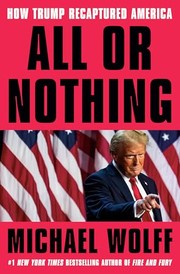
All or Nothing: How Trump Recaptured America
2,248-word summary 10 min read 400 pages in the book
- First published
- 2025
- Publisher
- Crown
- Pages
- 400
- ISBN
- 9780593735381
Reading options
What's inside (8 sections)
I read this book in a couple of long sittings, and I kept having the same odd sensation: I was watching a man through a keyhole while he thought he was alone. Michael Wolff has built a whole career on that vantage point. This is his fourth book about Donald Trump, after Fire and Fury, Siege and Landslide, and it picks up just before the 2024 election and follows the return to the White House. Crown published it in February 2025, four hundred pages of political nonfiction that reads less like a campaign postmortem and more like a long, unguarded telephone call someone forgot to hang up on. If you have read the earlier books, you know what you are getting into. If you have not, this one still works on its own, though you may miss the earlier rhythm of the marriage and the courtiers. Wolff's great subject across these four books has never been policy or legislation or the mechanics of governing. It is what power does to the people standing closest to it, and what it does to the man himself when the pretending stops. That is the thread I kept pulling on, and it is the reason I finished four hundred pages about a figure I thought I was tired of reading about.
The raid that became a campaign
Wolff's big structural claim is about timing. He argues that the campaign did not really begin with a launch rally or a policy speech. It began in August 2022, when FBI agents seized classified documents at Trump's Florida club. That raid, in his telling, was the gift that kept giving. Loyalists responded with roughly twenty-two million dollars in donations, and the grievance became the fuel. From that point on, every indictment functioned as a fundraising email with a pulse. You can almost hear Wolff admiring the efficiency of it, even as he clearly finds the whole operation sickening. That double reaction is the book's engine, and it never quite resolves.
There were four criminal cases. Wolff's argument is the counterintuitive one: the indictments made Trump stronger rather than weaker. He rose about fifty points in the Republican primary by doing something simpler than any campaign strategy, which was to make every prosecutor and every judge his enemy. Once the law was arrayed against him, the story wrote itself. His supporters did not have to defend a policy record. They only had to object to the people with the badges and the gavels. Wolff returns to this point from several angles, as if he cannot get over the neatness of it, the way an injury became a weapon.
The convictions did not alter the arithmetic. He was found guilty on thirty-four counts connected to the Stormy Daniels hush-money payment, and he won anyway. Wolff lingers on the mechanics of this, less interested in the legal fine print than in what the trials did to the people around him. The courtroom is a stage in this book, and the people on it are mostly small. That is a choice, and a controversial one. A different writer would have used the space to discuss the law. Wolff uses it to show us a lawyer fumbling and a family fracturing.
The people in the room
Take Todd Blanche, Trump's lawyer. Wolff dwells on his courtroom weakness, the hesitant ums, the moment a judge or a prosecutor drew a rebuke. It is a small thing, but it tells you what Wolff is actually collecting. He is not building a case. He is assembling a ledger of small humiliations, the kind that never make the official record but that define a room's temperature. I found myself reading these passages twice, partly for the detail and partly to see whether the repetition was doing something. By the third or fourth such scene, I decided it was. The accumulating smallness is the argument.
The private judgment of Melania Trump is the sharpest of these. A confidant on the Mar-a-Lago patio tells Wolff, in effect, that she hates him, and adds that she had not enjoyed a single day in the White House. Whether that is reportage or gossip is exactly the question the book keeps dodging, because Wolff gives us the voice of the confidant and not the woman herself. The line is devastating and unverifiable at the same time, which is the book's signature move. I wanted to hear Melania's own voice and never do. What I got instead was a secondhand verdict delivered with the confidence of a firsthand witness.
Ivanka Trump and Jared Kushner, Wolff writes, decamped to Miami after January 6. Kushner compared Trump's prospects to Nixon's, and the comparison was not flattering. When a Washington Post piece rejecting antisemitism claims after October 7 needed signatures, Kushner declined to put their names to it. These are not the actions of a family closing ranks. They are the actions of people quietly making other plans while the Boss is still talking. Wolff does not gloat over this. He simply lines the details up and lets the pattern show itself: the people with the most to lose financially are the first to look for a door.
Wolff also reports releasing tapes in which Jeffrey Epstein described close social ties to Trump. The tapes arrive in the narrative like a character walking in from a previous, darker book. They are not dwelled on, which is almost stranger. The association is dropped into the stream of anecdotes as one more fact about who was around the table, as though it explained nothing and everything at once. I kept waiting for the tapes to become a set piece. They never do, and that restraint, if that is what it is, left me more unsettled than a big reveal would have.
The voice from the phone
What gives the book its peculiar energy is the voice Wolff reconstructs from telephone monologues and unnamed confidants. Trump muses that Michelle Obama would be called Mike because of her very big shoulders. In debate preparation, he brands Kamala Harris with a vile epithet more than a hundred times. He is frightened of Gretchen Whitmer, who leaves him feeling cornered and exposed. These are not policy positions. They are the thoughts of a man alone with a phone, and Wolff's wager is that the thoughts matter more than the positions. Reading them back to back, I felt the old argument about character and fitness dissolve into something simpler. Here is the man, unfiltered, and here is what fills his head.
It is worth saying how the book is put together, because the method is half the story. Wolff reconstructs everything from his Mar-a-Lago sources, from telephone monologues and from numerous unnamed confidants. He was not in the room for most of this. The result has the texture of a transcript and the status of hearsay, and the book never tells you which is which. I found that I believed the small things, the ums and the aside about a shoulders joke, more readily than the large claims, which is probably exactly backwards.
There is a run of smaller, stranger details that I found hard to shake. He floats Maria Bartiromo as a running mate. He compares himself to Nelson Mandela. He considers suing Democrats over Biden's withdrawal, as if a lawsuit could reverse a calendar. He jokes that Jill Biden would take her husband to hospice. Each item is brief, almost tossed off, and the accumulation is what does the work. You start to understand why Wolff keeps returning to the phone. The man is most himself when he thinks nothing is on the record, and the result is a portrait that feels intimate and possibly distorted at the same time. I do not know which troubles me more.
A youngish aide's lovestruck letters to Trump form a strange closing thread. I am not sure Wolff knows quite what to do with them, and that uncertainty is revealing. The letters are too earnest to be satire and too strange to be ordinary flattery. They sit at the end of the book like a prop left on a stage after the actors have gone home. I read them as the saddest thing in the book, though Wolff never says so. Whoever wrote them believes in a person the rest of the book has spent four hundred pages taking apart.
Back in the building
When Trump returns to office, Wolff says he calls himself a king, and billionaires prostrate themselves accordingly. It would be easy to stop there, with the image of the court and the throne. Wolff does not. He keeps noticing the limits around the man. There is his age. There are term limits. There is the lame-duck status that arrives sooner than anyone in the room wants to admit. Trump himself speaks of a third term, which is the title of the book in one sentence. All, or nothing. The crown or the grave, with no ordinary presidency in between.
The title, once you reach this part, is doing more work than it first appeared to. All or nothing is not simply a campaign phrase here. It is the logic of a man who cannot accept a capped, ordinary version of power, and of a movement that has decided that half a presidency is the same as losing. Wolff is at his sharpest when he lets that logic sit next to the boring facts of an election calendar. The end, when it comes, is not dramatic. It is administrative.
This is where the book is at its best, in the gap between the spectacle and the arithmetic. The king is real to the people in the room and imaginary to the Constitution. Wolff holds both ideas at once without resolving them, and the tension is the point. He is not writing a polemic about the end of democracy. He is writing about a man who wants the whole thing or none of it, and the people who enable him because they want the same. The billionaires prostrating themselves are not characters in a morality play. They are people who have done the math and decided that proximity is worth the price. Wolff sees them clearly, and his contempt for them is the most consistent emotion in the book.
The argument about the book itself
Reception was sharp on both sides, and the sharpness belongs in any honest account of this book. Nicolas Niarchos in The New York Times found it undeniably gripping, a veritable harvest of slime, sycophancy and sleaze. Lloyd Green in The Guardian saw Wolff as simultaneously mesmerized and disdainful, exposing marital strife and animosity. Both reviews recognized that the book's power and its problem are the same thing. The man is fascinating, and the messenger cannot decide whether he is appalled or delighted. That ambiguity is a large part of the reading experience. There are pages where Wolff sounds like a man who cannot look away, and pages where he sounds like a man who has been looking too long.
Trump dismissed it as a total fake job. His communications director called Wolff a lying sack of shit. That response is not a rebuttal so much as a confirmation of the portrait, and Wolff knows it. The people who object loudest are the people whose behavior fills the pages. It is a neat trap, maybe too neat, and a skeptical reader can feel it snap shut more than once. I found myself wanting a chapter where Wolff stepped back from the trap and admitted what he was doing. It never came.
Kirkus was unconvinced, calling the book mordant and murkily sourced, reliant on anonymous anecdotes impossible to verify. That is the fair criticism, and it is worth sitting with. So much of this account rests on a voice on a patio, a lawyer's ums, a confidant's report of a marriage. I finished the book believing the world it describes and unable to prove most of it. Wolff would probably say that is the nature of the world he is describing. He may be right. He is also the only person who can tell us, which is the uncomfortable part. The reader is asked to accept a great deal on trust, and the people being described have every reason to dispute it.
What I took away
I closed the book thinking about that keyhole feeling again. The anecdotes will be quoted and argued over, and the arguments will mostly be about whether you believe them. What stays with me is quieter. It is the picture of a man calling himself a king while the people around him quietly calculate the exit, the aide writing letters, the wife supposedly counting the days, the son-in-law already in Miami. The title promises a man who will take everything or lose everything. The book shows a man who is already losing the room and cannot tell.
That gap, between the crown he claims and the arithmetic Wolff keeps placing beside it, is the reason to read this. Not for the epithets, which are cheap, and not for the Epstein tapes, which are lurid. Read it for the moment when the monologue stops and the ordinary facts of age and term limits and an unhappy marriage walk back into the frame. The king is still talking. The room has already emptied.
FAQ
Is All or Nothing part of a series?
It is the fourth volume in Wolff's running account of Trump, after Fire and Fury, Siege and Landslide, but it stands on its own.
When was it published, and how long is it?
Crown published it on 25 February 2025. The hardcover runs 400 pages, with ISBN 9780593735381.
What is the main criticism of the book?
Kirkus called it mordant and murkily sourced, relying on anonymous anecdotes that readers cannot verify, a concern about Wolff's method.
Similar books
One Day, Everyone Will Have Always Been Against This
From a viral 2023 post, Omar El Akkad builds a furious short argument about Western promises, silence and complicity during the Gaza war.
2,218-word summary · 10 min read
Mountains Beyond Mountains: The Quest of Dr. Paul Farmer, a Man Who Would Cure the World
Tracy Kidder travels with Dr. Paul Farmer from Haiti to Peru, tracing how a Harvard doctor built a health system for the poor and what that work cost him.
3,095-word summary · 14 min read
Nothing to Envy
Barbara Demick follows six defectors from Chongjin through the North Korean famine, showing how ordinary people lived, believed, and finally left.
2,068-word summary · 9 min read
Men Explain Things to Me
A short collection of essays that begins with a man explaining Solnit's own book to her and expands into an argument about who gets believed, who gets heard…
2,019-word summary · 9 min read
Apple in China
A former Financial Times reporter argues that Apple poured about $275 billion into China, training a generation of engineers and leaving itself dependent on…
2,094-word summary · 9 min read
Abundance
Two journalists argue that rules written to fix the abuses of the 1970s now block the housing, energy and clean construction the 2020s need, and propose a…
2,306-word summary · 10 min read
107 Days
Kamala Harris's memoir of the 107 days between Biden's withdrawal and Election Day, drawn from a journal kept during a campaign she believes she was best…
2,132-word summary · 9 min read
Nudge: Improving Decisions About Health, Wealth, and Happiness
Thaler and Sunstein show how defaults, framing, and social cues steer choices, and argue for choice architecture with an opt-out.
3,146-word summary · 14 min read

Long Walk to Freedom
Mandela's account of a Thembu childhood, a law practice, a banned movement, twenty-seven years in prison, and the negotiation that ended apartheid.
2,454-word summary · 11 min read

Infidel
Ayaan Hirsi Ali's memoir of a Somali childhood, a forced marriage, a Dutch asylum claim, and the political fight that followed the murder of Theo van Gogh.
2,041-word summary · 9 min read

The Girl with Seven Names: A North Korean Defector's Story
Hyeonseo Lee crossed the frozen Yalu River at seventeen, spent years hidden in China, escaped to South Korea, and later returned to rescue her family.
2,404-word summary · 11 min read
America (The Book): A Citizen's Guide to Democracy Inaction
Jon Stewart and the Daily Show writers turn a high school civics textbook inside out, with a foreword from beyond the grave.
2,511-word summary · 11 min read

Why I'm No Longer Talking to White People About Race
Reni Eddo-Lodge traces black British history and shows how institutions, culture, and everyday assumptions keep producing racial inequality.
2,071-word summary · 9 min read
Catch and Kill: Lies, Spies, and a Conspiracy to Protect Predators
Ronan Farrow recounts how NBC killed his Harvey Weinstein reporting, then how The New Yorker published it and helped ignite #MeToo.
2,057-word summary · 9 min read
The Stranger Beside Me
Ann Rule's classic memoir of her friendship with Ted Bundy, written by the true-crime author who knew him long before the world learned what he had done.
2,481-word summary · 11 min read
The Warmth of Other Suns
Three migrants ride north out of Jim Crow toward Chicago and LA.
2,561-word summary · 11 min read
Killing Lincoln
Booth plots as Lincoln pushes war end and reunion in 1865.
2,486-word summary · 11 min read
How to Be an Antiracist
Kendi blends memoir and history to argue that fair policy, not self fixing, creates an equal society.
2,513-word summary · 11 min read

Cleopatra: A Life
Pulitzer winner Schiff restores Cleopatra as a capable ruler, from Ptolemy debts and Caesar to Antony, Actium, and her death in 30 BC, built from coins and…
3,586-word summary · 16 min read
Benjamin Franklin: An American Life
Isaacson traces Franklin from Boston runaway to printer, scientist, London agent, Paris diplomat, and founder across 590 vivid pages.
2,149-word summary · 10 min read
21 Lessons for the 21st Century
Twenty one essays on work, liberty, truth, and meaning when algorithms flood the world with noise.
2,101-word summary · 9 min read
Alexander Hamilton
Orphaned Caribbean immigrant becomes Washington's aide and America's first Treasury secretary, then falls in a duel.
2,004-word summary · 9 min read
A People's History of the United States
A bottom-up history of the United States from Columbus to Clinton, told through workers, women, Native nations and Black voices against elite rule.
2,398-word summary · 11 min read
John Adams
McCullough follows Adams from Braintree lawyer to second president.
2,515-word summary · 11 min read
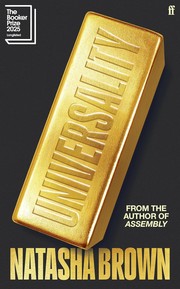
Universality
Natasha Brown's short second novel turns a lockdown fracas over a gold bar into a sharp satire of money, identity and public argument.
2,302-word summary · 10 min read

Motherland: A Feminist History of Modern Russia, from Revolution to Autocracy
A feminist history of modern Russia told through women's lives, from the revolutionaries of 1917 to Pussy Riot and the politics of today.
2,191-word summary · 10 min read
Mark Twain
Ron Chernow's 1,200-page biography follows Samuel Clemens from the Mississippi River to worldwide fame, weighing a literary genius against a lifetime of…
2,501-word summary · 11 min read

I Am America (And So Can You!)
Stephen Colbert's 2007 debut extends his Colbert Report pundit into print, a mock-conservative tour of American life with margin notes, stickers and Fun Zones.
2,635-word summary · 12 min read
Hiroshima
In 1946 John Hersey followed six ordinary people through the atomic bombing of Hiroshima and its aftermath, using a plain style that made the reporting feel…
2,991-word summary · 13 min read
Careless People
A former New Zealand diplomat recounts seven years at Facebook, from a Myanmar launch to a hospital bed where the job followed her between contractions.
2,413-word summary · 11 min read