
Reading options
What's inside (7 sections)
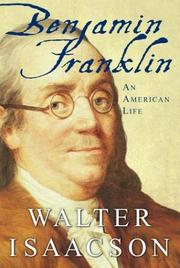
I picked up this book because Franklin always felt like a mascot to me rather than a person. Kite, bifocals, a face on the hundred dollar bill. Walter Isaacson, who wrote about Kissinger before this and later wrote about Einstein and Steve Jobs, makes the case that Franklin is the most interesting of the founders precisely because he was not born into the elite. The book came out from Simon and Schuster in 2003 and runs 590 pages in the first hardcover, and it follows Franklin from a Boston candle shop to the signing of the Constitution. What stayed with me is Isaacson's main argument: Franklin built an American identity out of middle class habits like hard work, thrift, tolerance, and a habit of joining clubs to fix things.
The opening chapters move fast and they are my favorite part of the book. Franklin is born in Boston in 1706, the fifteenth of seventeen children of a soap and candle maker named Josiah. There is no money for college. At twelve he is apprenticed to his older brother James, a printer, and the shop is strict. Young Ben loves to read and wants to write, but James will not print his work, so at sixteen Ben invents Silence Dogood, a made up widow with strong opinions, and slips essays under the print shop door at night. The letters are funny and sharp, and readers love them. When James finds out who wrote them, he is furious.
That fight matters more than it looks. Isaacson shows a boy learning that words give him power and that authority will try to box him in. When the apprenticeship turns sour, Franklin runs. He is seventeen. He talks his way onto a boat, lands in New York, finds nothing, and walks and sails on to Philadelphia with almost no money and three puffy rolls of bread in his pockets. I laughed at the bread detail and then felt for him. His future wife, Deborah Read, watches this damp teenager walk past her door. They will marry years later, after a long and painful delay.
Ink, paper, and getting ahead in Philadelphia
The Philadelphia chapters read like a startup story from the 1700s. Franklin works for a printer named Keimer, impresses the governor with his skill, and gets talked into sailing to London on promises of backing that turn out to be empty. He spends about a year and a half in London, from late 1724 into 1726, working in print shops, swimming in the Thames to show off, writing a clumsy pamphlet about free will that he later regrets, and learning how big city shops run. He comes home tougher and more practical.
Back in Philadelphia he builds his own shop with a partner, then on his own, and he outworks everyone. He gets the contract to print Pennsylvania's paper money. He buys a newspaper and makes it lively. He marries Deborah Read in 1730 in a common law arrangement, takes in his motherless son William, born out of wedlock around 1730, and raises him alongside the family. Deborah runs the shop and the store while Franklin chases side projects. Isaacson is honest that she gets little glamour in return, and this is one place where I wished he had pressed harder on how lopsided the marriage became.
What I admired here is the club habit. In 1727 Franklin starts the Junto, a Friday night group of young working men who argue about morals, politics, and business and agree to help each other get ahead. Out of the Junto come bigger things: a lending library in 1731, a fire company, a hospital, an academy that grows into the University of Pennsylvania. Franklin's trick is that he proposes these as community projects and lets others take the credit. People say yes because nobody feels used.
Then comes Poor Richard. Starting in 1732, Franklin writes and prints Poor Richard's Almanack under the name Richard Saunders, packing it with weather tables, jokes, and maxims about money and work. Sayings like early to bed and early to rise come from these pages. The almanac sells extremely well and makes him comfortable. By 1748, at forty two, he retires from daily printing, leaving the shop to a partner, and turns to science and public life. That early retirement always seemed strange to me. Who quits at forty two. But Isaacson shows it was the plan all along: earn enough to think.
Sparks, stoves, and glasses
The science section is the most fun in the book, and also the part where Isaacson the former science writer clearly enjoys himself. In the 1740s Franklin starts playing with electricity, which at the time is mostly parlor tricks with rubbed glass tubes. He and his friends in Philadelphia run systematic tests. He coins terms people still use, like battery, positive, and negative. He works out that lightning is electrical and proposes the pointed rod to protect buildings. The famous kite experiment happens in 1752, though Isaacson notes the details are debated and Franklin himself wrote about it briefly rather than turning it into legend.
Honors pour in. He wins the Royal Society's Copley Medal in 1753. Universities give him honorary degrees. He invents practical things along the way: a cleaner burning stove that still carries his name, the lightning rod, later bifocals and a flexible catheter for his brother's bladder stone. Some inventions he patents and some he gives away. He refuses a patent on the stove on principle, saying the public should benefit. That gesture fits the man Isaacson keeps describing: a printer who measures himself by usefulness.
There is loss mixed into these busy years, and Isaacson does not skip it. Franklin's son Francis, called Franky, dies of smallpox in 1736 at age four. Franklin later writes about the grief plainly and urges parents to inoculate their children, which took courage when inoculation was controversial. His daughter Sarah, called Sally, is born in 1743. His mother Abiah dies in 1752. These passages are short but they land, because the rest of the book is so full of motion.
If I have a complaint about this stretch, it is that the experiments sometimes get more space than the people. Deborah nearly disappears for long runs. William grows up mostly offstage. I understand the choice, since the science made Franklin world famous, but the family chapters feel thin right when the marriage starts to strain under his long absences.
The long road from loyal Englishman to rebel
This is the longest part of the book and the slowest, though it holds the key to Franklin the politician. For years Franklin thinks of himself as a loyal Englishman. He proposes the Albany Plan of Union in 1754, a scheme for the colonies to coordinate defense, and it goes nowhere. He goes to London as Pennsylvania's agent in 1757 and stays until 1762, lobbying, making scientific friends, and enjoying the city. He goes back again in 1764 and stays nearly eleven years. He likes London. He likes the coffeehouses and the Royal Society and the feeling of being near power.
Isaacson is patient here, maybe too patient. Chapter after chapter follows petitions, parliamentary debates, and colonial infighting. The Stamp Act crisis of 1765 puts Franklin in an awkward spot. His son William, now the royal governor of New Jersey, backs the crown line, while Franklin tries to get the act repealed without breaking with England. Deborah stays in Philadelphia, manages their property, and begs him to come home. He keeps delaying. She dies in 1774 while he is still in London, and he does not make it back for her. I found this the hardest passage in the book. Isaacson reports it with sympathy for both sides, but I wanted him to judge Franklin more directly for staying away so long.
The break finally comes in public and in private. In 1774 Franklin is hauled before the Privy Council in the Cockpit and lectured for an hour by the solicitor general over leaked letters from a Massachusetts official. He stands silent in old fashioned clothes while the room laughs. That humiliation finishes his loyalty. Around the same time he cuts ties with William, who stays loyal to the king. The father and son never reconcile. When Franklin returns to America in 1775, he is done negotiating. He serves in the Continental Congress and sits on the committee of five assigned to draft the Declaration of Independence in 1776, reading Jefferson's draft and suggesting edits. The birth of his grandson Temple, William's son, adds one more knot to the family story: Franklin raises the boy and takes him to France, while William sits in patriot custody.
Paris, peace, and the last great compromise
The France chapters are a pleasure after the London grind. Franklin arrives in Paris in December 1776 at seventy, gouty, and famous. French society adores him. He wears a plain brown coat and a fur cap instead of a wig, plays the scientist-philosopher, and lets fashionable ladies call him charming. Behind the performance he runs a serious operation: begging arms and money, managing spies and rival American agents, and charming the foreign minister Vergennes into a formal alliance in early 1778. Without French guns, ships, and loans, the war likely drags on past American endurance. Yorktown in 1781, won with French troops and a French fleet blocking the sea, proves the point.
Isaacson is good on how Franklin negotiates. He waits. He lets the British think America might make a separate deal. He lets the French worry America might collapse. He keeps John Adams and John Jay, both difficult colleagues in different ways, inside the tent even when they distrust him. The Treaty of Paris, signed in September 1783, gives the new nation generous borders. Franklin's patience deserves much of the credit, and Isaacson shows the paperwork to prove it rather than just praising him.
The ending moves me more than I expected. Franklin comes home in 1785 to crowds and ringing bells. He is old, in pain from gout and kidney stones, but he agrees to attend the Constitutional Convention in 1787. At eighty one he is the oldest delegate, carried in a chair, napping through some debates, and speaking rarely. His great moment is the closing speech, which another delegate reads aloud because Franklin is too weak. He admits the Constitution is imperfect and asks doubters to support it anyway. He also makes a final break with his own past on slavery. A man who once owned enslaved household workers and ran ads for the sale of enslaved people in his newspaper becomes president of the Pennsylvania Abolition Society and signs a petition asking Congress to end slavery. He dies in April 1790 at eighty four, with twenty thousand people at the funeral, and his will frees the two enslaved men still in his household.
What the book gets right and where it drags
Let me say what works first, because a lot works. Isaacson keeps the paperwork visible. He quotes from letters and council minutes, explains money and printing contracts, and shows how Franklin's famous virtues like industry and frugality were business tools before they were moral lessons. The Autobiography, which Franklin wrote in pieces across his later years and left unfinished, gets smart treatment: Isaacson uses it without trusting it, checking its stories against letters. The kite, the almanac, the Junto, all of it gets placed in order so you can see a life compounding.
The criticism, fairly stated, is about proportion and softness. The London lobbying chapters in the middle run long. I understand they show Franklin changing slowly, which is the truth, but several chapters in a row of petitions and parliamentary maneuvering test a casual reader. A reader who came for kites and revolutions may stall around page three hundred. Isaacson also goes easy on Franklin as a husband and father. Deborah's loneliness, William's betrayal and its causes, Sally's long wait for attention: these get reported more than examined. And the slavery turn, real as it was, arrives late in the book with less self reckoning than I wanted. Franklin changed, which counts, but the book could have faced his earlier compromises more bluntly.
Who should read it. If you like biographies that explain how someone worked, not just what happened, this one pays off. Printers, negotiators, and anyone curious about the Revolution beyond the battlefield will find plenty. If you want a short life of Franklin, this is not it; the book earns its length but it is still a commitment. Read the Boston and Philadelphia chapters first, push through London, and you will be rewarded with Paris and the Convention. I closed it thinking Franklin would have liked the review system of the modern internet: practical, a little vain, and always testing what works.
FAQ
When was Benjamin Franklin: An American Life published?
Simon & Schuster published it in July 2003. The first hardcover runs 590 pages and carries ISBN 9780684807614.
Does the book deal with Franklin and slavery?
Yes. Isaacson reports that Franklin owned enslaved household workers in his middle years, later freed them, led the Pennsylvania Abolition Society, and signed a petition asking Congress to end slavery.
Is this biography too long for a casual reader?
It is a commitment, and the middle chapters on London lobbying are slow. Readers who push through are rewarded with the Paris diplomacy and the Constitutional Convention chapters.
Similar books
Einstein: His Life and Universe
Isaacson traces Einstein from patent clerk to world fame using newly opened papers, through 1905, relativity, exile, and the long unified theory search.
2,773-word summary · 12 min read

Long Walk to Freedom
Mandela's account of a Thembu childhood, a law practice, a banned movement, twenty-seven years in prison, and the negotiation that ended apartheid.
2,454-word summary · 11 min read
The Warmth of Other Suns
Three migrants ride north out of Jim Crow toward Chicago and LA.
2,561-word summary · 11 min read
The Emperor of All Maladies
A biography of cancer from Galen to chemo through one doctor cases.
2,255-word summary · 10 min read
Killing Lincoln
Booth plots as Lincoln pushes war end and reunion in 1865.
2,486-word summary · 11 min read
Hidden Figures
Black women computers at Langley launch rockets past Jim Crow.
2,385-word summary · 11 min read
Cleopatra: A Life
Pulitzer winner Schiff restores Cleopatra as a capable ruler, from Ptolemy debts and Caesar to Antony, Actium, and her death in 30 BC, built from coins and…
3,586-word summary · 16 min read
A Beautiful Mind
Mathematician John Nash's brilliant game theory rise, schizophrenia collapse, and Nobel return, with wife Alicia's care.
2,142-word summary · 10 min read
Team of Rivals: The Political Genius of Abraham Lincoln
Lincoln beat three famous rivals for the 1860 nomination, then put them in his cabinet and held them together through the Civil War.
2,675-word summary · 12 min read
A People's History of the United States
A bottom-up history of the United States from Columbus to Clinton, told through workers, women, Native nations and Black voices against elite rule.
2,398-word summary · 11 min read
John Adams
McCullough follows Adams from Braintree lawyer to second president.
2,515-word summary · 11 min read
Nothing to Envy
Barbara Demick follows six defectors from Chongjin through the North Korean famine, showing how ordinary people lived, believed, and finally left.
2,068-word summary · 9 min read

Infidel
Ayaan Hirsi Ali's memoir of a Somali childhood, a forced marriage, a Dutch asylum claim, and the political fight that followed the murder of Theo van Gogh.
2,041-word summary · 9 min read

Down and Out in Paris and London
Orwell's account of washing dishes in Paris hotels and tramping through London does not ask for pity, only for a clear look at how poverty actually works.
2,282-word summary · 10 min read

The Girl with Seven Names: A North Korean Defector's Story
Hyeonseo Lee crossed the frozen Yalu River at seventeen, spent years hidden in China, escaped to South Korea, and later returned to rescue her family.
2,404-word summary · 11 min read
The Wright Brothers
David McCullough tells the story of two self-taught Ohio brothers, working largely alone and out of a bicycle shop, who solved the problem of flight before…
2,027-word summary · 9 min read
America (The Book): A Citizen's Guide to Democracy Inaction
Jon Stewart and the Daily Show writers turn a high school civics textbook inside out, with a foreword from beyond the grave.
2,511-word summary · 11 min read
Prisoners of Geography: Ten Maps That Tell You Everything You Need to Know About Global Politics
Tim Marshall explains how mountains, rivers, coasts, and resources shape the choices of nations, from Russia's flat borders to the chokepoints of the South…
2,328-word summary · 10 min read

The Letters of Vincent van Gogh
Vincent van Gogh's letters to his brother Theo, in a Penguin Classics selection edited by Ronald de Leeuw, trace a decade of work, faith, and obsession.
2,611-word summary · 12 min read
Exodus
Leon Uris's sweeping 1958 novel follows Jewish refugees, Haganah fighters, and Holocaust survivors from Cyprus to the founding of Israel and the 1948 war.
2,529-word summary · 11 min read
The World Is Flat: A Brief History of the Twenty-first Century
Thomas L. Friedman's 2005 bestseller argues that technology, trade, and open borders leveled the global playing field, and it names the ten forces that did it.
2,369-word summary · 11 min read
Catherine the Great: Portrait of a Woman
A German princess survives a miserable marriage and a coup to rule Russia for thirty-four years, torn between Enlightenment ideas and absolute power.
2,065-word summary · 9 min read
The New Jim Crow: Mass Incarceration in the Age of Colorblindness
How mass incarceration became a racial caste system after civil rights.
2,413-word summary · 11 min read
Edge of Eternity
Five families cross civil rights, Cold War and Berlin Wall to the eighties.
2,489-word summary · 11 min read
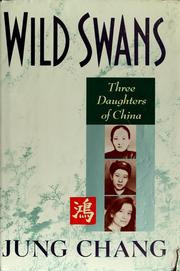
Wild Swans
Three generations of women survive warlords, revolution, and the Cultural Revolution in Jung Chang's family memoir.
2,356-word summary · 10 min read
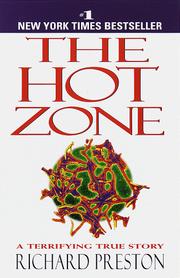
The Hot Zone
Ebola and Marburg move from African outbreaks to a Virginia monkey house and an Army response in suits.
2,291-word summary · 10 min read
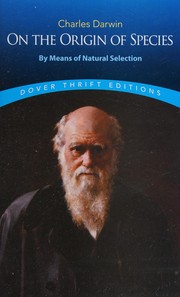
On the Origin of Species
Darwin's 1859 case for evolution by natural selection, from Beagle finches and breeding pigeons to fossils and anatomy.
2,589-word summary · 12 min read
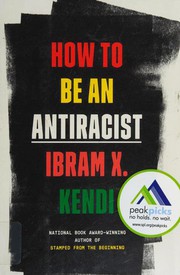
How to Be an Antiracist
Kendi blends memoir and history to argue that fair policy, not self fixing, creates an equal society.
2,513-word summary · 11 min read
Empire of Pain: The Secret History of the Sackler Dynasty
How the Sackler family sold OxyContin and shaped an overdose crisis while giving to museums.
2,048-word summary · 9 min read
The Surgeon of Crowthorne
James Murray built the Oxford dictionary with Broadmoor inmate William Minor, whose thousands of slips shaped this 1998 HarperCollins story of murder, madness…
2,775-word summary · 12 min read