
Reading options
What's inside (8 sections)
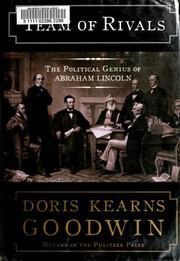
I picked up this book because I wanted to understand Lincoln beyond the memorial statue version. You know the outline already. Tall hat, Civil War, freed the slaves, shot at Ford's Theatre. What I did not understand was how a one term congressman from Illinois with almost no Washington experience beat three famous men for the Republican nomination in 1860 and then talked all three into working for him. That is the story Doris Kearns Goodwin tells here, published in 2005 by Simon and Schuster in a first hardcover that runs 944 pages. It is long. It earns most of that length, and in a couple of stretches it makes you earn it too.
The method is simple and clever. Instead of a straight life of Lincoln, Goodwin follows four men from childhood to the White House, then follows them together through the war. William H. Seward of New York, Salmon P. Chase of Ohio, and Edward Bates of Missouri all wanted the presidency in 1860. Lincoln took it from them, then named Seward secretary of state, Chase secretary of the treasury, and Bates attorney general. Around them she keeps the rest of the cabinet in view, especially Gideon Welles at the Navy Department, Montgomery Blair as postmaster general, and Edwin Stanton, who replaced Simon Cameron at the War Department and became one of the central figures of the administration.
Four men waiting for Chicago
The book opens in May 1860, with the four contenders scattered in their hometowns waiting for telegrams from Chicago. Goodwin loves this cross cut, and it works. Seward is the clear favorite. He is a senator from New York, handsome in a rumpled way, optimistic by temperament, famous for speeches against slavery, and backed by the powerful political manager Thurlow Weed. Everyone in Washington assumes the new Republican Party will pick him.
Chase is second in most guesses. He is governor of Ohio, tall and solemn, deeply opposed to slavery on moral and religious grounds, able and hardworking, but stiff with people. He does not make friends easily and he trusts almost no one with his campaign, which turns out to matter.
Bates is the elder, a respected judge and former congressman from St. Louis, conservative, courteous, from a border state. His backers think he can hold the lower North and the border while not frightening moderates.
And then there is Lincoln. A prairie lawyer from Springfield, funny and melancholy by turns, who served a single undistinguished term in Congress more than a decade earlier and lost two Senate races. He is known for debating Stephen Douglas in 1858, but nationally he is still a curiosity. His own friends describe him as the dark horse who might place second and go home satisfied.
Goodwin lingers on what each man expects. Seward expects a coronation. Chase expects his record to carry him. Bates expects decency to count. Lincoln expects very little, which frees his managers to work. His team in Chicago, led by David Davis and Norman Judd, promises everything short of the man himself, finds delegates whose first choice cannot win, and offers Lincoln as the acceptable second choice. When Seward fails to win on the first ballot, his support softens. Lincoln gains on the second ballot, then wins on the third. The telegrams go out. Seward is stunned. Chase is bitter. Bates is gracious in public and hurt in private.
I found this section the most readable in the whole book. You see Lincoln's particular skill already. He does not bully. He does not give a great speech that changes everything. He stays friendly with everyone, avoids making enemies, and lets his managers do the sharp work while he stays above it.
How each of them grew up
Before Chicago, Goodwin rewinds all the way. Some readers will love these early chapters. Others will check the page number and sigh. I landed in between.
Seward grows up in upstate New York, bright and ambitious, a Union College graduate who marries into a thoughtful antislavery family and builds a career as a reform governor and senator. He likes company, wine, talk, and late nights. People enjoy being around him.
Chase grows up with loss piled on loss. His father dies early. He is raised partly by an uncle, a bishop, works hard, studies law, moves to Cincinnati, and becomes the lawyer who defends fugitive slaves when that work paid little and cost friends. He marries three times. Each wife dies young. He raises daughters while building a political base in Ohio. Goodwin shows how grief made him rigid rather than soft. He believes he is right, he usually is right on slavery, and he cannot understand why being right does not make people love him.
Bates grows up in Virginia and Maryland society, moves to St. Louis when it is still close to the frontier, and becomes the steady lawyer everyone trusts. He marries Julia Coalter, they have a large family, suffer the ordinary and terrible losses of the period, and he settles into the role of wise counselor.
Lincoln's youth is the one you half know. Kentucky birth, Indiana woods, Illinois storekeeper and surveyor and lawyer, a mother dead when he is nine, a sister dead young, a hard father he never quite pleased, a stepmother he did love. Years of reading by firelight, failed businesses, debt, a broken engagement, marriage to Mary Todd, a Lexington belle with a sharp tongue and her own sorrows, four boys, one stable law practice built story by story. Goodwin does not add new facts here for specialists. Her point is contrast. Seward is at ease in rooms. Chase is at ease in principles. Bates is at ease in standing. Lincoln is at ease nowhere except with ordinary people, and that turns out to be the room that matters.
The fair criticism belongs here. These biographical chapters run several hundred pages before the war even starts. If you came for cabinet intrigue, you wait. I thought the Chase material justified itself because it explains so much later. The Bates material felt generous for a man who leaves the cabinet midway. Still, when the four lives converge, the payoff is real because you know what each man gave up to be in that room.
The country splits and a new party forms
The middle of the century arrives like bad weather in these pages. The Missouri Compromise fails. The Kansas Nebraska Act of 1854 lets settlers decide on slavery and turns Kansas into a bleeding preview of war. The Whig Party collapses. The Republican Party forms from the pieces. The Dred Scott decision says Black people have no rights a white court must respect. John Brown raids Harpers Ferry. Every compromise that used to hold, men like Henry Clay and Daniel Webster and John Calhoun and their successors patched together, stops holding.
Goodwin is good at showing where each of our four stands while the floor shifts. Seward gives a speech calling the fight between freedom and slavery an irrepressible conflict, which thrills friends and frightens moderates for years. Chase is consistent and severe. Bates tries to hold the center and finds the center shrinking. Lincoln returns to politics after years away, speaks against the extension of slavery in calm and plain language, loses to Douglas in the 1858 Senate race in Illinois, and wins nationally because the printed debates make his name.
What stayed with me here was Lincoln's patience with public feeling. He hates slavery and says so, plainly calling it a moral wrong. He also says the country cannot end it at once without breaking. He moves when voters can follow, explains each step, and waits. To modern eyes that can look slow. Goodwin argues it was how a democracy had to move, and she shows Seward and Chase pressing harder and losing support they needed.
Lincoln hires the men who beat him, on paper
After the election of November 1860, the South begins to leave. South Carolina goes first, then others. President James Buchanan dithers. Lincoln waits in Springfield, grows a beard, receives office seekers by the hundred, and writes his cabinet list in private.
Then comes the move that gives the book its title. Lincoln offers Seward the State Department, Chase the Treasury, and Bates the attorney generalship. It had never been done quite this way. Every one of them is better known and more experienced in national office than he is. Friends warn him they will overshadow him. He answers, in effect, that the country needs the best men and he can handle hurt feelings.
Getting them in is a small drama of its own. Seward accepts, then wobbles when his allies fail to get other posts, then tries to withdraw on the eve of the inauguration. Lincoln holds firm without humiliating him. Chase wants the Treasury but angles for terms and guarantees, suspicious that Seward will dominate. Bates accepts out of duty and age. For the remaining seats Lincoln picks Gideon Welles, a former Democrat with a beard like a sea captain who knows the navy better than anyone expected, Montgomery Blair of the feuding Blair family as postmaster general, and Simon Cameron of Pennsylvania for the War Department, a practical and corrupt choice Lincoln soon regrets.
Goodwin is excellent on the first months. Washington is full of plots and leaks. Seward decides Lincoln is inexperienced and tries to run things himself, even sending a memo suggesting he take charge of policy. Lincoln answers quietly, keeps Seward's friendship, and never mentions the insult again. That pattern repeats. Lincoln absorbs slights, answers in private, waits for the other man to need him.
Cameron fails at the War Department, where contracts vanish and paperwork piles up. After consulting Seward and Chase among others, Lincoln replaces him with Edwin Stanton, a gruff Ohio lawyer and former attorney general who once snubbed Lincoln openly and called him a fool to his face. Stanton accepts, works like a machine, fights with generals and contractors and cabinet mates, and slowly becomes Lincoln's right arm for the daily grind of war. Welles keeps the ships building and the blockade tightening. Blair fights with Chase and with generals and with almost everyone, which Lincoln tolerates because the border states need a Blair in the room.
Managing generals, egos, and bad news
The war itself fills the center of the book, and this is where Goodwin's cabinet lens pays off most. You watch the same battle reports arrive for different men and produce different politics.
George McClellan builds the Army of the Potomac into a fine instrument and refuses to use it. He despises Lincoln in private letters, calls him names, keeps troops in camp while the press and Congress scream. Lincoln visits, urges, jokes, pleads, and finally removes him. Other generals cycle through. John Pope fails. Ambrose Burnside fails at Fredericksburg. Joseph Hooker fails at Chancellorsville. George Meade wins at Gettysburg and lets the Confederate army escape. Ulysses Grant finally uses the army Lincoln built, and pays the price in casualties that sickens the North through 1864.
Inside the cabinet, each setback becomes an argument about who is to blame. Stanton rages and works. Welles writes it all down in a diary that Goodwin mines beautifully. Blair accuses Chase of scheming. Chase does scheme, or lets friends scheme for him. He wants the presidency in 1864, Nurses his Treasury empire, plants stories against Seward, offers to resign whenever cornered, and is surprised each time Lincoln takes the letter seriously and files it away. Lincoln's habit of pocketing Chase's resignations instead of accepting them tells you almost everything about his method. He needs Chase raising money for the war. He will not give him the satisfaction of martyrdom. He keeps him working until keeping him costs more than letting him go.
Seward changes most. The confident rival becomes the president's late night companion. Lincoln walks to Seward's house, stretches his long legs by the fire, tells stories, hears gossip and counsel, and returns steadier. When radical senators try to force Seward out in late 1862, Lincoln defends him and keeps the cabinet intact. When Seward is stabbed on the night Lincoln is shot, the friendship gives the tragedy a second edge. Goodwin handles this without sentimentality, mostly through letters and diaries, and it lands.
Bates fades here, through no fault of the author. He does solid work on legal questions, supports emancipation, grows tired, and resigns in 1864 when Lincoln needs the seat for a political balance. If the early pages gave him equal weight, the war pages admit what happened. Lincoln outgrew his need for a border state elder.
The criticism that belongs in this stretch is about battle narrative. Goodwin summarizes campaigns clearly, but she is not a military writer first. Readers who want maps and orders will find the politics sharper than the tactics. I did not mind, because the point is how civilian leaders argued while armies stalled, but friends who love campaign histories should know what they are getting.
Emancipation, reelection, and the end
The moral center of the book is Lincoln's slow public move against slavery. Goodwin tracks it meeting by meeting. Lincoln believes slavery is wrong and also believes the Constitution as then read limits what he can do. He starts with containment, no extension into the territories. He proposes compensated emancipation to the border states. They refuse. He meets Black leaders and floats colonization schemes that read badly now and read as evasive even to some allies then. Military need presses in. Slaves free themselves by running to Union lines. Congress abolishes slavery in the capital and in the territories. Generals ask what to do with people who escape to camp.
In July 1862 Lincoln tells the cabinet he will issue an emancipation proclamation. Seward advises him to wait for a victory so it does not look like desperation. Lincoln waits. Antietam gives him the opening. The preliminary proclamation warns the Confederacy. The final one, on January 1, 1863, frees enslaved people in rebelling states and opens the army to Black soldiers. About 180,000 Black men eventually serve, a fact Goodwin ties directly to the decision. Later Lincoln pushes the Thirteenth Amendment through Congress, a grinding story of votes and favors that Steven Spielberg later made into a film, and puts Chase on the Supreme Court as chief justice in part to protect the legal result.
Chase's presidential intrigue peaks in 1864 and collapses. His friends circulate a pamphlet against Lincoln. Lincoln is renominated anyway, picks Andrew Johnson for balance, watches Grant grind down Robert E. Lee, watches William Sherman take Atlanta just in time to lift Northern spirits, and wins reelection. His second inaugural address, short and grave, asks the country to finish the work without malice and with charity. Weeks later, at Ford's Theatre, John Wilkes Booth shoots him. Stanton weeps openly and runs the government through the night. The cabinet that quarreled for four years sits together around the deathbed.
Goodwin ends quickly after that, which feels right. She does not follow Reconstruction far. She lets the loss sit.
So who should read 944 pages? If you like political management, friendship under pressure, and meeting notes that decide lives, this is a feast. If you want Lincoln the private man, Mary Lincoln, the boys, the depressions, you get them in flashes but not as the subject. If you want the war from the viewpoint of enslaved people or common soldiers, you get it at second hand. Goodwin knows this and says her subject is leadership through other leaders. Within that frame, the case she makes is strong. Lincoln won because he could hear what rivals needed, forgive public slights, tell a story that let opponents change sides, and keep his eye on the vote that mattered next. That sounds simple. Watching him do it for four years, against men as gifted as Seward and as stubborn as Chase, is anything but simple.
FAQ
When was Team of Rivals published and by whom?
Doris Kearns Goodwin published Team of Rivals in 2005 with Simon & Schuster. The first hardcover runs 944 pages and it is a standalone history.
Which rivals joined Lincoln's cabinet?
William H. Seward became secretary of state, Salmon P. Chase took the Treasury, and Edward Bates became attorney general. Edwin Stanton later replaced Simon Cameron at the War Department.
Is this book only for Lincoln specialists?
Yes, if you like political management and biography. Readers who want battlefield detail or a short book should start elsewhere, since the full account is long.
Similar books

Long Walk to Freedom
Mandela's account of a Thembu childhood, a law practice, a banned movement, twenty-seven years in prison, and the negotiation that ended apartheid.
2,454-word summary · 11 min read

Cleopatra: A Life
Pulitzer winner Schiff restores Cleopatra as a capable ruler, from Ptolemy debts and Caesar to Antony, Actium, and her death in 30 BC, built from coins and…
3,586-word summary · 16 min read
Benjamin Franklin: An American Life
Isaacson traces Franklin from Boston runaway to printer, scientist, London agent, Paris diplomat, and founder across 590 vivid pages.
2,149-word summary · 10 min read

Nothing to Envy
Barbara Demick follows six defectors from Chongjin through the North Korean famine, showing how ordinary people lived, believed, and finally left.
2,068-word summary · 9 min read

Infidel
Ayaan Hirsi Ali's memoir of a Somali childhood, a forced marriage, a Dutch asylum claim, and the political fight that followed the murder of Theo van Gogh.
2,041-word summary · 9 min read

Down and Out in Paris and London
Orwell's account of washing dishes in Paris hotels and tramping through London does not ask for pity, only for a clear look at how poverty actually works.
2,282-word summary · 10 min read

The Girl with Seven Names: A North Korean Defector's Story
Hyeonseo Lee crossed the frozen Yalu River at seventeen, spent years hidden in China, escaped to South Korea, and later returned to rescue her family.
2,404-word summary · 11 min read
The Wright Brothers
David McCullough tells the story of two self-taught Ohio brothers, working largely alone and out of a bicycle shop, who solved the problem of flight before…
2,027-word summary · 9 min read
Prisoners of Geography: Ten Maps That Tell You Everything You Need to Know About Global Politics
Tim Marshall explains how mountains, rivers, coasts, and resources shape the choices of nations, from Russia's flat borders to the chokepoints of the South…
2,328-word summary · 10 min read
The Letters of Vincent van Gogh
Vincent van Gogh's letters to his brother Theo, in a Penguin Classics selection edited by Ronald de Leeuw, trace a decade of work, faith, and obsession.
2,611-word summary · 12 min read
Exodus
Leon Uris's sweeping 1958 novel follows Jewish refugees, Haganah fighters, and Holocaust survivors from Cyprus to the founding of Israel and the 1948 war.
2,529-word summary · 11 min read

The World Is Flat: A Brief History of the Twenty-first Century
Thomas L. Friedman's 2005 bestseller argues that technology, trade, and open borders leveled the global playing field, and it names the ten forces that did it.
2,369-word summary · 11 min read
Catherine the Great: Portrait of a Woman
A German princess survives a miserable marriage and a coup to rule Russia for thirty-four years, torn between Enlightenment ideas and absolute power.
2,065-word summary · 9 min read
The Warmth of Other Suns
Three migrants ride north out of Jim Crow toward Chicago and LA.
2,561-word summary · 11 min read
The New Jim Crow: Mass Incarceration in the Age of Colorblindness
How mass incarceration became a racial caste system after civil rights.
2,413-word summary · 11 min read

The Emperor of All Maladies
A biography of cancer from Galen to chemo through one doctor cases.
2,255-word summary · 10 min read
Killing Lincoln
Booth plots as Lincoln pushes war end and reunion in 1865.
2,486-word summary · 11 min read
Hidden Figures
Black women computers at Langley launch rockets past Jim Crow.
2,385-word summary · 11 min read
Edge of Eternity
Five families cross civil rights, Cold War and Berlin Wall to the eighties.
2,489-word summary · 11 min read

Wild Swans
Three generations of women survive warlords, revolution, and the Cultural Revolution in Jung Chang's family memoir.
2,356-word summary · 10 min read

How to Be an Antiracist
Kendi blends memoir and history to argue that fair policy, not self fixing, creates an equal society.
2,513-word summary · 11 min read
Empire of Pain: The Secret History of the Sackler Dynasty
How the Sackler family sold OxyContin and shaped an overdose crisis while giving to museums.
2,048-word summary · 9 min read
The Surgeon of Crowthorne
James Murray built the Oxford dictionary with Broadmoor inmate William Minor, whose thousands of slips shaped this 1998 HarperCollins story of murder, madness…
2,775-word summary · 12 min read
Say Nothing
Patrick Radden Keefe traces Jean McConville's 1972 disappearance through the Price sisters, Brendan Hughes, and Gerry Adams, using Boston College tapes to…
2,846-word summary · 13 min read
The Splendid and the Vile
Larson follows Churchill circle through Blitz year with diaries and bombing nights.
2,038-word summary · 9 min read
American Sniper: The Autobiography of the Most Lethal Sniper in U.S. Military History
Navy SEAL sniper Chris Kyle recounts Texas roots, SEAL training, four Iraq tours, and the strain combat placed on his marriage and health.
2,011-word summary · 9 min read

A Beautiful Mind
Mathematician John Nash's brilliant game theory rise, schizophrenia collapse, and Nobel return, with wife Alicia's care.
2,142-word summary · 10 min read
Cosmic Music
The first full biography of Alice Coltrane, from Detroit church piano to ashram guru.
2,048-word summary · 9 min read
The Radium Girls: The Dark Story of America's Shining Women
Young painters trusted glowing paint, suffered poisoning, then fought companies for safety.
2,044-word summary · 9 min read
The Communist Manifesto
Marx and Engels trace class struggle from bourgeoisie to proletarians, review rival socialisms, and close with a call to opposition parties. Notes on the 1848…
2,570-word summary · 11 min read