
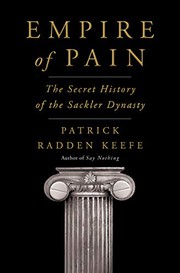
Empire of Pain: The Secret History of the Sackler Dynasty
2,048-word summary 9 min read 560 pages in the book
- First published
- 2021
- Publisher
- Doubleday
- Pages
- 560
- ISBN
- 9780385545686
Reading options
What's inside (8 sections)
I expected a book about pills and ended up reading a century of American medicine, advertising, and philanthropy. That is the point. The opioid crisis did not start with one launch meeting. It grew from habits about pain, sales, and reputation built over decades. First published in 2021 by Doubleday, at 560 pages in hardcover, Empire of Pain is standalone nonfiction that traces the Sackler family from Brooklyn to boardrooms to museum wings.
The family story starts with three brothers, Arthur, Mortimer, and Raymond Sackler, children of immigrants who became doctors and businessmen. Arthur saw that drug companies sold badly and taught them to sell hard through journals, reps, and friendly experts. Mortimer and Raymond built Purdue Frederick and later Purdue Pharma. A later generation, led by Richard Sackler, pushed OxyContin as a safe answer for chronic pain. People died in large numbers while the family gave to galleries and universities.
Keefe builds from court files, memos, and interviews. He names names and shows paper trails. The book reads like Say Nothing, his earlier book on this site, in its patience with archives and its care for victims, but here the crime is corporate and the silence was bought with lawyers and gifts.
Arthur and the invention of selling
Arthur Sackler is the hinge. Trained as a psychiatrist, he saw asylums and wanted better drugs, but he also saw money in Mid century medicine. He bought a medical ad agency and changed how pills reached doctors. Instead of dry notices, he offered glossy journals, paid speakers, and reps who brought lunch and charts. He blurred lines between education and promotion in ways that now look normal because he made them normal.
His big wins included Valium. Arthur helped market tranquilizers for everyday worry, funding voices that calledBC anxiety a chemical issue best solved by prescription. Sales soared. Side effects and dependence were downplayed in ads while doctors were told relief outweighed risk. That playbook, minimize harm, widen use, pay friendly experts, returns with OxyContin decades later.
Arthur also collected art and gave to museums. The Sackler name went onto wings and schools while the source money stayed vague to visitors. Keefe shows how philanthropy bought respectability and access. Trustees welcomed checks and avoided questions. That bargain matters because it later shields the family. A name on a wall feels like proof of virtue, even when the money behind it hurts.
Family splits start here. Arthur died in 1987 before OxyContin, and his estate later distanced him from Purdue's later acts. Mortimer and Raymond owned the company that became Purdue Pharma. Their children and spouses ran it forward. Keefe is careful with who knew what and when, but he shows a shared culture. Sell hard, deny harm, hire lawyers early.
I found these chapters the most surprising because Arthur is often praised as a patron. Keefe does not deny his eye or energy. He shows how a gift for persuasion curdled when applied to addictive drugs without strong guardrails. Good intentions about pain relief mixed with hunger for growth. That mix repeats.
Purdue and the OxyContin push
The middle of the book details how Purdue launched OxyContin in 1996 for chronic pain beyond cancer. The pill used a timed coating meant to last twelve hours. Purdue claimed low addiction risk, citing a short letter about hospital use and early studies that did not fit long term home use. Reps were trained to say less than one percent get hooked, a line that spread faster than evidence.
Sales tactics were intense. Reps ranked doctors by prescribing volume and visited high writers often. They brought graphs that showed pain as a vital sign to treat aggressively. They paid speakers to tell peers that chronic pain was undertreated and that fear of addiction was old thinking. They funded patient groups that echoed the message. Doctors who worried were called cruel to sufferers.
Regulators failed in key spots. The FDA allowed a label claim about reduced abuse potential that Purdue used as a shield. A former official later joined Purdue, a move that looks bad because it was bad for trust even if legal. Insurers paid for pills more readily than for therapy or coordinated care. The system wanted a cheap, scalable answer, and Purdue sold one.
Abuse followed quickly. People crushed the coating to get a rush. Rural clinics, pharmacies, and pill mills saw floods. Overdoses rose. Purdue blamed bad patients and bad doctors while sales grew. Internal emails show worry about reputation more than about deaths. Reps were told to keep calling on high volume prescribers even after flags. That choice is damning in plain memos.
Richard Sackler appears as driven and thin skinned, obsessed with legacy and with proving himself beyond Arthur's shadow. He pushes growth targets, dismisses warnings, and frames critics as anti progress. Keefe quotes his words from depositions and messages, letting tone speak. You do not need commentary to feel the chill when sales outrank safety in a sentence.
Doctors, reps, and small towns
Keefe grounds big sales in places. A coal town clinic with long waits. A dentist who means well and writes too freely. A mother who trusts a doctor in a white coat. A rep who needs bonus to pay a mortgage and learns not to ask about overdoses. These short portraits keep the book from becoming only boardrooms.
Pain is real, which complicates blame. Many patients needed relief and got brief help before dependence. Doctors faced time pressure and few options for physical therapy or mental care. Purdue exploited that bind by offering a simple story. Pain is measurable, pills fix it, fear addiction less. Simple stories win in busy rooms.
Reps are shown with mixed sympathy. Some believed the pitch. Some saw harm and quit. Most kept going because pay and praise rewarded refills. Training taught how to answer concerns with pivots. If a doctor mentioned addiction, show the twelve hour chart. If a pharmacist called, mention the label. Doubt was treated as a sales obstacle, not as data.
Towns tried to respond with pill counts, lock boxes, and watch lists. Pharmacists flagged early refills and faced angry customers. Police chased mills while new ones opened. Treatment beds stayed scarce. Keefe shows how a legal drug with aggressive marketing can outrun local controls faster than illegal drugs, because trust in doctors and labels slows alarm.
Victims speak in brief, painful chapters. A teen who stole from parents. A worker hurt on the job who never got off pills. A parent who found a child cold. Keefe does not linger for shock. He gives names, jobs, and a line about what they loved. Then he returns to paper that allowed it. That rhythm respects grief while keeping focus on cause.
Lawyers, labels, and denial
As deaths mounted, Purdue hired lawyers and experts to defend the label and the sales story. Studies were funded to show OxyContin worked long term with low risk. Critics were painted as outliers or as activists with agendas. When states sued, Purdue settled without admitting fault and kept selling. Fines became costs of business next to billions in revenue.
The book details key cases and hearings with care. Congressional questions, state attorneys general, and journalists press for documents. Purdue fights disclosure line by line. Some memos slip out and reveal knowledge of abuse early. Executives plead or settle. The company pays hundreds of millions while family members take billions out in distributions. Those numbers sit on the page without need for adjectives.
Bankruptcy becomes a shield late. Purdue files and proposes a settlement that would protect family members from future suits in exchange for money. Victims and states split over whether to take the deal. Courts argue about whether a company court can grant such releases to people who did not file. Keefe explains this tangle clearly, which is a feat. Law that sounds dull decides who gets paid and who gets heard.
Science gets its due too. Pain specialists explain why long term opioids often raise sensitivity and lower function. Addiction doctors explain dependence versus use disorder in plain terms. The book does not claim pills never help. It shows how broad, high dose, long term use for common aches was oversold, and how tapering without support harms too. Nuance survives inside outrage, which I respected.
The FDA thread hurts most. A system meant to check claims became a partner in language that misled. Keefe does not allege simple bribes. He shows meetings, language edits, and career moves that create soft capture. That softer failure is harder to fix than one bad actor, and the book leaves you uneasy about current labels for new drugs.
Money, museums, and names
Philanthropy runs through every era as strategy and as self image. Sackler gifts built wings at the Met, Harvard, the Smithsonian, and many others. Curators and deans praised generosity while avoiding the source. When activists later demanded names come down, institutions hesitated. Contracts, friendships, and fear of losing donors slowed action.
Keefe interviews protesters, including photographer Nan Goldin, who survived addiction and led die ins in museum halls. Those scenes bring moral clarity without simplifying. Staff who clean galleries watch bodies on floors and must decide whether to call police or listen. Some museums remove names. Others wait. Each choice reveals what a name on a wall means. Honor, history, or a receipt.
Family members respond in varied ways. Some deny knowledge. Some blame regulators or patients. Some give to addiction programs while refusing blame for addiction. Keefe quotes letters where tone deafness shocks. Talk of reputation risk while parents bury kids reads as cold because it is cold. The book lets those letters sit without punchlines.
Money flows are traced with patience. Distributions to family trusts, offshore layers, and art holdings complicate recovery. Lawyers argue about what counts as company versus personal. Victims hear billions taken and millions offered and feel the math as insult. Keefe keeps numbers straight across years, which helps readers follow without a spreadsheet.
I kept thinking about ordinary donors in contrast. A local library gift gets a plaque and thanks. A Sackler wing gets galas. Scale changes duty. When money comes from mass harm, thanks should pause for audit. The book makes that case through facts rather than slogans, which is why museum chapters hit even readers tired of corporate sagas.
What the book proves and where it strains
The strength is documentation. Keefe cites memos, labels, and testimony so claims rest on paper, not vibes. He is fair about uncertainty where records thin, especially around who approved exact ad lines in early years. He corrects myths too, noting Arthur died before OxyContin and that blame must be specific. That care builds trust for hard conclusions.
Scope is also a cost. At 560 pages, early family history runs long before pills arrive. Readers who came for OxyContin may skim the art and agency chapters. I would not skip them, because they explain the playbook, but pacing sags around generation charts and marriages. A firmer edit could save thirty pages there.
Tone stays calm, which suits evidence but can feel distant in victim chapters. Keefe avoids purple prose, so grief pages read brief. Some readers will want more time with families and less with lawyers. I understood the choice to center systems, yet I missed the warmth he gave to Troubles families in Say Nothing. Pain here gets respect but fewer pages per person.
Still, as nonfiction on this site beside history, true crime, business, and politics shelves, it belongs high. It pairs with Say Nothing for method and with medical histories for context. If you want a fast true crime rush, look to shorter titles. If you want to understand how a legal drug caused mass death while names stayed on museums, read this with a pencil. Mark the label change, the bonus plan, and the name removal vote. Those three tell the story.
Read the appendices and source notes if you have time. Keefe lists where each memo sits and which interview supports which claim. That trail lets you check work and follow threads into court records. It also shows how much was hidden before suits forced light. Transparency arrived late, and only under order.
FAQ
When was Empire of Pain published?
Doubleday published Empire of Pain in 2021. The hardcover runs 560 pages and is standalone nonfiction.
Who are the Sacklers in the book?
Arthur, Mortimer, and Raymond Sackler built a drug ad empire. Later Richard Sackler pushed OxyContin sales while the family denied harm.
Similar books
Say Nothing
Patrick Radden Keefe traces Jean McConville's 1972 disappearance through the Price sisters, Brendan Hughes, and Gerry Adams, using Boston College tapes to…
2,846-word summary · 13 min read

The World Is Flat: A Brief History of the Twenty-first Century
Thomas L. Friedman's 2005 bestseller argues that technology, trade, and open borders leveled the global playing field, and it names the ten forces that did it.
2,369-word summary · 11 min read

Long Walk to Freedom
Mandela's account of a Thembu childhood, a law practice, a banned movement, twenty-seven years in prison, and the negotiation that ended apartheid.
2,454-word summary · 11 min read
Nothing to Envy
Barbara Demick follows six defectors from Chongjin through the North Korean famine, showing how ordinary people lived, believed, and finally left.
2,068-word summary · 9 min read

Down and Out in Paris and London
Orwell's account of washing dishes in Paris hotels and tramping through London does not ask for pity, only for a clear look at how poverty actually works.
2,282-word summary · 10 min read
Red Notice
An American financier in Moscow exposes a $230 million tax fraud, watches his lawyer die in prison, and turns the case into an international human rights law.
2,008-word summary · 9 min read
Prisoners of Geography: Ten Maps That Tell You Everything You Need to Know About Global Politics
Tim Marshall explains how mountains, rivers, coasts, and resources shape the choices of nations, from Russia's flat borders to the chokepoints of the South…
2,328-word summary · 10 min read
Catch and Kill: Lies, Spies, and a Conspiracy to Protect Predators
Ronan Farrow recounts how NBC killed his Harvey Weinstein reporting, then how The New Yorker published it and helped ignite #MeToo.
2,057-word summary · 9 min read
The New Jim Crow: Mass Incarceration in the Age of Colorblindness
How mass incarceration became a racial caste system after civil rights.
2,413-word summary · 11 min read
The Hot Zone
Ebola and Marburg move from African outbreaks to a Virginia monkey house and an Army response in suits.
2,291-word summary · 10 min read

How to Be an Antiracist
Kendi blends memoir and history to argue that fair policy, not self fixing, creates an equal society.
2,513-word summary · 11 min read
The Library Book
Susan Orlean investigates the 1986 Los Angeles Central Library fire and suspect Harry Peak while tracing library history, her mother's influence, and the…
2,319-word summary · 10 min read
Cleopatra: A Life
Pulitzer winner Schiff restores Cleopatra as a capable ruler, from Ptolemy debts and Caesar to Antony, Actium, and her death in 30 BC, built from coins and…
3,586-word summary · 16 min read
The Wager: A Tale of Shipwreck, Mutiny and Murder
Thirty starved men reach Brazil as heroes in 1742, then three more land in Chile calling them mutineers, and Grann sorts the wreck.
2,995-word summary · 13 min read
Helter Skelter
Prosecutor Bugliosi builds Tate-LaBianca case against Manson Family.
2,838-word summary · 13 min read
The Big Short: Inside the Doomsday Machine
Outsiders who read the bonds shorted subprime and watched the machine eat itself in 2008.
2,194-word summary · 10 min read
The 48 Laws of Power
Robert Greene turns court history into 48 blunt power laws, each taught through stories like Fouquet and Louis XIV, plus reversals that show when each law…
2,846-word summary · 13 min read
David and Goliath: Underdogs, Misfits, and the Art of Battling Giants
Gladwell argues disadvantages can become advantages, from biblical sling to dyslexia and class size.
3,197-word summary · 14 min read
A Promised Land
First-volume memoir from Iowa 2008 through the 2011 bin Laden raid, crisis management and doubt.
2,243-word summary · 10 min read
A People's History of the United States
A bottom-up history of the United States from Columbus to Clinton, told through workers, women, Native nations and Black voices against elite rule.
2,398-word summary · 11 min read
Bad Blood
How Theranos sold finger prick miracles, faked tests, and silenced staff who knew patients were at risk.
2,021-word summary · 9 min read
The Prince
Machiavelli advises Lorenzo on rule through fear and love, fortune, cruelty and mercy.
2,204-word summary · 10 min read
Killers of the Flower Moon: The Osage Murders and the Birth of the FBI
In 1920s Oklahoma, Osage oil wealth makes tribal members targets for murder, forcing the young FBI under Tom White to expose the conspiracy behind the Reign of…
2,403-word summary · 11 min read
Between the World and Me
Coates writes to his son about the Black body in America, from Howard to the loss of Prince Jones.
2,234-word summary · 10 min read

The Devil in the White City
Architect Burnham builds the 1893 Chicago Fair while H.H. Holmes builds his murder hotel nearby.
2,020-word summary · 9 min read

The Zookeeper's Wife: A War Story
The directors of the Warsaw Zoo hid roughly three hundred Jews in empty cages and outbuildings after the German invasion, while Jan worked for the resistance.
2,065-word summary · 9 min read
The E-Myth Revisited
Gerber argues that most small businesses are run by technicians who own a job rather than a business, and that the fix is a system that runs without them.
2,169-word summary · 10 min read
Nudge: Improving Decisions About Health, Wealth, and Happiness
Thaler and Sunstein show how defaults, framing, and social cues steer choices, and argue for choice architecture with an opt-out.
3,146-word summary · 14 min read

1491: New Revelations of the Americas Before Columbus
Charles C. Mann gathers archaeology, ecology, and demography to argue that the Americas before Columbus were older, fuller, and more deliberately shaped than…
2,712-word summary · 12 min read
The DaVinci Code: A Quest for Answers
A short 2006 dialogue in which three friends test Dan Brown's claims about Jesus, Mary Magdalene, Nicaea, and the canon.
2,088-word summary · 9 min read