
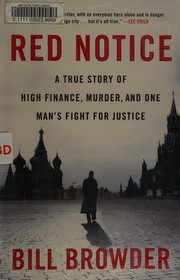
Red Notice
2,008-word summary 9 min read 396 pages in the book
- First published
- 2015
- Publisher
- Simon & Schuster
- Pages
- 396
- ISBN
- 9781476755717
Reading options
What's inside (8 sections)
Red Notice reads like a thriller, which is exactly why it works. Bill Browder is not a neutral observer. He is a participant, a beneficiary, and eventually a target, and he tells the story in the first person with the pace of someone who is still angry. The book is about finance, but it is also about what happens when a person who believes in rules runs into a system where rules are for sale. By the end, the financial details matter less than the body count.
Browder's family history is the first surprise. His grandfather, Earl Browder, was the head of the Communist Party USA. His father, Felix Browder, was a mathematician. Bill grew up in Chicago, went to Stanford, and then to Salomon Brothers. He was good at finding undervalued assets, and he was aggressive about it. In the 1990s he moved to London and founded Hermitage Capital, a fund that invested in Russia after the collapse of the Soviet Union. The country was selling off state assets at prices that looked absurdly low, and Browder saw an opportunity.
The early chapters are a crash course in how the Russian privatization worked. Vouchers, auctions, insider deals, and a small group of men who became enormously rich. Browder is not an innocent in this world. He buys shares, pushes for better management, and uses the legal system to challenge the oligarchs. He is trying to make money, and he is also trying to prove that shareholder activism can work in a country that has no real tradition of it. For a while, it does. Hermitage becomes one of the largest foreign portfolio investors in Russia, and Browder becomes a visible figure in Moscow.
The turning point is not a single crime. It is a series of them. Browder exposes corruption at companies such as Gazprom and Sidanco. He clashes with powerful people. In November 2005 he is stopped at the airport and told he is a threat to national security. He is barred from Russia. His visa is canceled, and he cannot return. The fund keeps operating, but Browder is on the outside. That is the first sign that the rules have changed. The second is the raid.
The raid and the stolen companies
In June 2007, Russian police raid the Hermitage offices in Moscow. They seize documents, computers, and the company seals. The seals matter. In Russia, a company seal is a legal instrument, and whoever holds it can act in the company's name. The officers who carry out the raid are not random criminals. They are from the Interior Ministry. They take the seals and the corporate documents and use them to transfer ownership of three Hermitage subsidiaries to a group of Russian criminals. Then those companies, now under new ownership, claim a tax refund of $230 million from the Russian government. The refund is paid. The money disappears.
The fraud is audacious, and it is also very Russian. It combines legal paperwork, official access, and a complete disregard for the people whose names are on the documents. Browder's fund is left with nothing. The companies have been stolen, the taxes have been refunded to the thieves, and the Russian state has either participated in the fraud or allowed it to happen. Browder hires a lawyer named Sergei Magnitsky to investigate. Magnitsky is young, methodical, and stubborn. He traces the ownership transfers, identifies the officials involved, and testifies. That is when the case turns from theft into something worse.
Magnitsky
Sergei Magnitsky is the moral center of the book. He is not a crusader in the romantic sense. He is a tax lawyer who does his job carefully. He finds the paper trail that links the stolen companies to the tax refund, and he names the people who signed the documents. In November 2008 he is arrested. The charge is tax evasion, which is a dark joke, since he was the one who exposed the tax fraud. He is held in pre-trial detention for almost a year. He is denied medical care. He develops pancreatitis and gallstones. He is moved from cell to cell, beaten, and kept in conditions that are designed to break him.
On November 16, 2009, he is taken to an isolation cell and beaten by guards. He dies that day. He was thirty-seven. The official explanation is that he died of a heart attack, but the evidence, including the testimony of other prisoners and the findings of later investigations, points to a beating. His death becomes a scandal inside Russia and a cause outside it. Browder, who is already grieving and furious, turns his anger into a campaign. He wants the people responsible to be held accountable, and he wants other countries to stop pretending that Russia is a normal place to do business.
The campaign is the second half of the book. Browder testifies before the United States Congress. He works with human rights organizations, journalists, and politicians. He pushes for a law that would deny visas and freeze the assets of the Russian officials involved in Magnitsky's death and the tax fraud. The result is the Magnitsky Act, signed into law by President Obama in December 2012. It is a rare case of a single crime producing a lasting policy change. The act is also a personal victory for Browder, though it does not bring Magnitsky back.
The Russian response is predictable and alarming. Browder is tried in absentia and convicted of tax evasion. The trial is a show. Magnitsky is also tried after his death, and he is convicted. Russian officials accuse Browder of being a CIA agent, a fraudster, and an enemy of the state. Interpol issues a red notice for his arrest, which is where the title comes from. Browder spends years fighting the notice and traveling carefully. He is not safe, and he knows it.
What the book is good at
The book is excellent at explaining financial crime in plain language. Browder is a good teacher. He explains how the theft worked, why the seals mattered, and how the tax refund was processed. He does not assume the reader knows anything about Russian corporate law, and he does not hide behind jargon. The result is a story that is easy to follow and hard to dismiss. The details are specific, and the specificity is what makes the outrage credible.
The pacing is also strong. Browder structures the book like a thriller, with short chapters and frequent cliffhangers. He introduces a cast of characters that includes oligarchs, lawyers, investigators, and politicians, and he keeps them distinct. The Moscow settings are vivid. The airport scenes, the courtrooms, the prison cells, and the offices all feel real. The book is not literature, but it is very readable. It is the kind of book that keeps you up late.
The personal story is what gives the book its emotional weight. Browder is angry about more than the money. He is angry about the betrayal. He believed in the possibility of a new Russia, and he watched that possibility being dismantled by people who were supposed to be building it. His relationship with Magnitsky is not sentimental. They are professional colleagues, and Browder admits that he did not know him well. That makes the loss more painful, not less. Magnitsky was a man doing his job, and he was killed for it.
The red notice
The title of the book refers to the Interpol notice that Russia used to try to arrest Browder. A red notice is a request to law enforcement around the world to locate and detain a person pending extradition. It is supposed to be used for serious crimes, and it is supposed to be reviewed. In Browder's case, the notice was based on the same politically motivated charges that Russia had used to convict him in absentia. He could not travel freely. He had to worry about being stopped in countries that might cooperate with Moscow. The notice became a tool of harassment, and Browder spent years fighting it.
That detail is important because it shows how far the retaliation went. The Russian state was not content to steal the companies and kill the lawyer. It also tried to make Browder a fugitive. The campaign for the Magnitsky Act was partly a response to that. Browder wanted to turn the machinery of international law back on the people who had abused it. The act was more than a memorial. It was a weapon. It denied visas and froze assets, and it gave other countries a model. Since the book was published, versions of the law have been adopted in several countries. That is a rare kind of legacy for a single case.
What the book gets wrong
The first criticism is obvious. Browder is a wealthy financier who made a lot of money in a country that was being looted, and the book does not spend much time examining his own role in that system. He was not one of the oligarchs, but he was a foreign investor who benefited from the same privatization that created them. The book presents him as a clean operator, and there may be truth to that, but the reader should remember that he is telling his own story. He is not a disinterested witness.
The second criticism is that the book simplifies Russian politics. It has heroes and villains, and the villains are almost all corrupt officials or oligarchs. That is understandable given the subject, but it leaves out the wider context. Not every Russian official is a criminal, and not every Western investor is a victim. The book is a memoir, not a history, and it should be read as one. It is also dated. It was published in 2015, and a lot has happened since then. Readers who want the full story will need to look elsewhere for the later chapters.
The third criticism is that the book can feel like a campaign document. Browder is advocating for the Magnitsky Act, and he is not shy about it. That is not a flaw in itself, but it means the book has a purpose beyond telling a story. Some readers will find the moral certainty exhausting. Others will find it refreshing. I was somewhere in the middle. I believed the core of the story, and I also noticed how carefully Browder constructs his own image.
Why it matters
Red Notice is a book about the cost of impunity. It shows how a system that is supposed to protect people can be turned into a machine for stealing from them. It shows how one death can become a symbol, and how a symbol can become a law. It also shows how difficult it is to hold powerful people accountable, even when the evidence is overwhelming. Browder's campaign took years, and it required allies in governments, media, and civil society. It was not a single heroic act.
The book is also a reminder that corruption is not abstract. It has names, dates, and victims. Magnitsky was not a statistic. He was a lawyer who liked his job, loved his family, and made a choice to testify. The people who killed him were not faceless either. They had names, and some of them are still walking around. That is the part that stays with me. The book is a thriller, but its subject is a real man who died in a real prison, and the people responsible have not been punished in any way that matches the crime.
I would recommend Red Notice to readers who like true crime, financial journalism, or political thrillers. It is not a balanced account, and it is not trying to be. It is a first-person story of a man who lost something and decided to fight back. That is a powerful narrative, and it is told with skill. Just remember that the narrator is also a character in the story, and that the story is not over.
FAQ
Who was Sergei Magnitsky?
He was a Russian tax lawyer who investigated the theft of Hermitage companies and the $230 million tax refund fraud, and died in prison in 2009.
What is a red notice?
It is an Interpol request asking law enforcement to locate and detain a person pending extradition, which Russia used against Browder.
Did Red Notice lead to a real law?
Yes. The Magnitsky Act, signed in the United States in 2012, imposed sanctions on Russian officials linked to the fraud and Magnitsky's death.
Similar books

Long Walk to Freedom
Mandela's account of a Thembu childhood, a law practice, a banned movement, twenty-seven years in prison, and the negotiation that ended apartheid.
2,454-word summary · 11 min read

In Order to Live: A North Korean Girl's Journey to Freedom
A young North Korean girl crosses the Yalu, survives trafficking in China, and rebuilds her life in Seoul in this unsparing memoir.
2,027-word summary · 9 min read

Too Much and Never Enough: How My Family Created the World's Most Dangerous Man
Mary L. Trump's 2020 memoir traces how a cold, zero-sum Queens household shaped her uncle, and uses family tax documents to challenge his self-made story.
2,059-word summary · 9 min read

Infidel
Ayaan Hirsi Ali's memoir of a Somali childhood, a forced marriage, a Dutch asylum claim, and the political fight that followed the murder of Theo van Gogh.
2,041-word summary · 9 min read

Down and Out in Paris and London
Orwell's account of washing dishes in Paris hotels and tramping through London does not ask for pity, only for a clear look at how poverty actually works.
2,282-word summary · 10 min read
The Girl with Seven Names: A North Korean Defector's Story
Hyeonseo Lee crossed the frozen Yalu River at seventeen, spent years hidden in China, escaped to South Korea, and later returned to rescue her family.
2,404-word summary · 11 min read
Catch and Kill: Lies, Spies, and a Conspiracy to Protect Predators
Ronan Farrow recounts how NBC killed his Harvey Weinstein reporting, then how The New Yorker published it and helped ignite #MeToo.
2,057-word summary · 9 min read
Lucky
Alice Sebold's memoir of the 1981 rape she survived as a college freshman, the courtroom that followed, and a conviction later proven to be a case of mistaken…
2,091-word summary · 9 min read
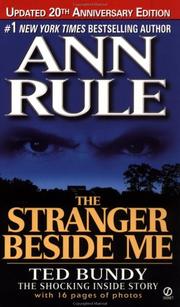
The Stranger Beside Me
Ann Rule's classic memoir of her friendship with Ted Bundy, written by the true-crime author who knew him long before the world learned what he had done.
2,481-word summary · 11 min read
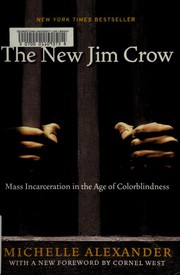
The New Jim Crow: Mass Incarceration in the Age of Colorblindness
How mass incarceration became a racial caste system after civil rights.
2,413-word summary · 11 min read
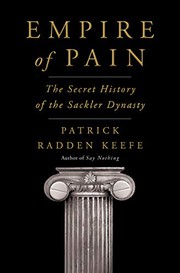
Empire of Pain: The Secret History of the Sackler Dynasty
How the Sackler family sold OxyContin and shaped an overdose crisis while giving to museums.
2,048-word summary · 9 min read
Say Nothing
Patrick Radden Keefe traces Jean McConville's 1972 disappearance through the Price sisters, Brendan Hughes, and Gerry Adams, using Boston College tapes to…
2,846-word summary · 13 min read
A Stolen Life
Kidnapped at eleven in 1991, Jaycee Dugard survived eighteen years in an Antioch backyard and tells her own story of endurance and motherhood.
2,807-word summary · 12 min read
Orange Is the New Black: My Year in a Women's Prison
A Smith graduate serves a year in Danbury for an old drug crime and learns how women share, fight and survive inside.
2,583-word summary · 11 min read
Nickel and Dimed: On (Not) Getting By in America
A journalist works waitress, cleaning, retail, and care jobs undercover to test whether full-time work keeps a person housed and fed.
2,328-word summary · 10 min read
Know My Name
Chanel Miller reclaims her story after the Stanford assault case, tracing family support, trial strain, her viral 2016 statement, and leaving Emily Doe for her…
3,092-word summary · 14 min read
Just Mercy
A young lawyer defends Walter McMillian on Alabama death row and children in adult prisons.
2,232-word summary · 10 min read
A Promised Land
First-volume memoir from Iowa 2008 through the 2011 bin Laden raid, crisis management and doubt.
2,243-word summary · 10 min read
Between the World and Me
Coates writes to his son about the Black body in America, from Howard to the loss of Prince Jones.
2,234-word summary · 10 min read
Nudge: Improving Decisions About Health, Wealth, and Happiness
Thaler and Sunstein show how defaults, framing, and social cues steer choices, and argue for choice architecture with an opt-out.
3,146-word summary · 14 min read

Nothing to Envy
Barbara Demick follows six defectors from Chongjin through the North Korean famine, showing how ordinary people lived, believed, and finally left.
2,068-word summary · 9 min read
Same Kind of Different as Me
An art dealer and a formerly homeless sharecropper tell the story of the friendship that began at a Fort Worth mission and the woman who insisted on it.
2,023-word summary · 9 min read
The Total Money Makeover: A Proven Plan for Financial Fitness
Dave Ramsey lays out seven Baby Steps, from a $1,000 starter fund to a paid-off house, with the debt snowball at the center.
2,663-word summary · 12 min read
Year of Yes: How to Dance It Out, Stand in the Sun and Be Your Own Person
Shonda Rhimes takes her sister’s accusation seriously and spends a year saying yes to the things that frighten her, from live television to her own reflection.
2,585-word summary · 11 min read
Love Does
A lawyer and activist tells stories of saying yes, showing up, and loving people through ordinary, often ridiculous actions.
2,411-word summary · 11 min read

Beautiful Boy: A Father's Journey Through His Son's Addiction
David Sheff recounts watching his son Nic slide into meth addiction, and his own desperate, humbling search for how to help without destroying them both.
2,076-word summary · 9 min read
Columbine
Ten years of reporting on the 1999 school massacre, including a journalist's correction of the myths he helped create in the first hours.
2,232-word summary · 10 min read

The Magnolia Story
How Chip and Joanna Gaines met, closed their first shop, nearly lost everything in a housing development, and built Fixer Upper.
2,994-word summary · 13 min read
Lone Survivor: The Eyewitness Account of Operation Redwing and the Lost Heroes of SEAL Team 10
Marcus Luttrell's account of the 2005 SEAL mission in Afghanistan that killed three of his team and left him alone.
2,144-word summary · 10 min read
Life
The Rolling Stones guitarist tells his own story: a Dartford childhood, the band's first gigs, the drug raids, the tax years and Patti Hansen.
2,761-word summary · 12 min read