
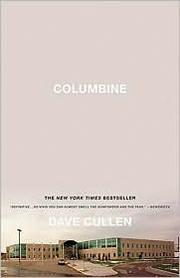
Columbine
2,232-word summary 10 min read 417 pages in the book
- First published
- 2009
- Publisher
- Twelve
- Pages
- 417
- ISBN
- 9780446546928
Reading options
What's inside (9 sections)
The reporter who got there first
The first thing worth knowing about Dave Cullen's book is that its author was on the ground within hours of the shooting, and was for a while part of the story he later spent a decade taking apart. He drove down Highway 6 toward the Rocky Mountains on 20 April 1999, looking for a high school he had never heard of, where shots had been reported but no injuries. He filed his first report by phone to Salon from the car. Then he turned on the radio and heard a story he did not recognise.
That gap between what he had seen and what the country decided had happened is the engine of the whole volume. It was published in 2009 by Twelve, the imprint launched by Grand Central Publishing Group, and it is built in two halves that alternate, a "before" story running alongside an "after" story, with shorter passages set inside the attack itself, plus a timeline and endnotes at the back. The edition cited here is the 2010 paperback, 417 pages, which adds an afterword.
Cullen frames everything around the question the networks asked for a week straight: why. He never hands you a tidy answer to carry away. What he gives instead is an account of two teenagers, and then of what a Colorado town did with the wreckage for the next ten years.
No motive. No lesson. Just the long work of getting it right.
The five sections carry plain titles that read like a police file. Female down is the radio call that brought the first deputies to the school. Then After and before, The downward spiral, Take back the school, and Judgment day, with a timeline of the year before printed at the front. The book opens in an assembly hall four days before the massacre, with Principal Frank DeAngelis talking to a room of students on the last Friday before prom weekend, and then it cuts back to the morning of the twentieth.
A morning in Littleton
The attack began shortly before 11:20 in the morning on 20 April 1999 at Columbine High School in Littleton, Colorado. Two students, Eric Harris, 18, and Dylan Klebold, 17, both seniors, had filled the building with homemade bombs in the hope of detonating them over the cafeteria. The bombs failed. What followed was roughly fifty minutes of shooting, and then the end of it in the library, where both young men killed themselves.
Thirteen people died. Twelve of them were students. The thirteenth was a teacher, Dave Sanders, who was killed trying to walk students out of the way. More than twenty others were wounded. One of them, Anne Marie Hochhalter, was shot in the chest and back in the cafeteria and spent twenty-six years in a wheelchair. She died in 2025, and a coroner later ruled her death a homicide, so the number the attack is remembered by today is fourteen.
Thirteen. Then fourteen, twenty-six years later.
Cullen argues, with documents behind him, that the shooting was the fallback rather than the point. Harris had been assembling bombs for months with Oklahoma City in mind, and the two of them wrote in their own journals about mowing down survivors of the burning building for the entertainment value. The New York Times of 23 April 1999 ran a front page piece stating that the killers had been targeting athletes, side by side with a report about the two large propane bombs discovered in the cafeteria. Both stories ran under a single banner about destroying the school. Cullen keeps that layout in the book as a specimen of how a story gets built.
Two boys, and the myth built around them
The "before" chapters are the part of the book I kept thinking about. Cullen works from the killers' own websites, journals and videotapes, from police files, and from the specialists the FBI brought in, whose retrospective diagnoses he quotes: Harris as a textbook psychopath, Klebold as an angry depressive. Two boys who were, on the surface, popular at school. Two boys who went to a prom, Klebold three days before the shooting. Cullen's Klebold is suicidally depressed, a young man whose journals are full of longing to be loved and of a wish to die.
What Cullen refuses is the tidy motive. There was no bullying vendetta, no quarrel with a jock, no row over a girlfriend, and no moment that set it off. The pair were not hunting particular people. They were after a body count, and the bombs were supposed to deliver a number in the hundreds.
The groundwork was laid in plain sight for years. When Harris was fifteen he built a private site on America Online to host levels for the Doom and Quake games he designed, and he wrote the blog on it himself, calling his vandalism "mission logs". By the end of 1997 the site carried instructions for making pipe bombs and a threat to kill and injure as many people as he could. In January 1998 the two of them were arrested for breaking into a van near Littleton and stealing tools and computer equipment, and were given a year of juvenile diversion, which meant anger management classes and a diversion officer. Harris wrote a school paper on school shootings and a poem from the point of view of a bullet. Cullen is unsparing about the adults who saw the signs and did not act on them, and just as unsparing about the fact that two of the boys were also funny, and liked, and popular.
That last point is where Cullen's handling of the private material matters. He uses the killers' own journals, the videos they made at school and their drawings. He keeps one girl in the book under the name Harriet, a pseudonym he gives her in Klebold's diary entries, rather than printing the name of a student who did nothing more than exist near him.
That is where the second myth gets dismantled. Within days the story had hardened into two bullied loners from the Trench Coat Mafia taking revenge on the popular crowd, and into a Christian romance in which a girl killed in the library, Cassie Bernall, was remade as a martyr after she reportedly answered Harris's question about God. Cullen shows where that story came from: a surviving student mixed Cassie up with another student, Valeen Schnurr, and the error hardened as fact. He also traces the fever inside the evangelical community, where a tidy answer to a massacre was worth a great deal, and where parents were being told to explain the deaths to their children.
The long after
The second half of the book follows what happened after the cameras left, and this is the part less quoted. Principal Frank DeAngelis tries to get his school back. A student who spent the last hour of the shooting looking out of a window becomes "the boy in the window", Patrick Ireland, and spends years afterwards carrying what he saw. FBI Supervisory Special Agent Dwayne Fuselier works out how the killers planned, and how close the whole thing came to killing more people at once. Cullen sits with the families of Daniel Rohrbough and of Dave Sanders, the teacher who died moving students toward the exit, and with the investigators who had to decide what to charge and what to ask.
There is a harder thread too, and Cullen does not flinch from it. A grand jury convened years later examined the decision by the sheriff's office not to disclose that an investigator had drafted a search warrant for Harris's house more than a year before the shooting and never filed it. Cullen is unsparing about the adults around the school who had pieces of the picture and never put them together.
In the town itself the making of meaning was just as fast. Within days, candles and crosses went up on the hill above Clement Park, fifteen of them for the thirteen people who died and the two who killed themselves, and many parents were furious when they learned that the two young men's crosses stood among the others. They came down. What replaced them, eventually, was a memorial that took eight years to fund and agree on. Cullen treats that squabbling as part of the story rather than as an epilogue to it, because in his account the fight over who gets a cross is the same fight as the fight over whose story this is.
The 2010 afterword is the part I would hand to a sceptical reader. It adds something nobody expected: the account of four secret meetings Cullen had with all four parents of the two attackers, including the Harris family, who cooperated with investigators and then lived with the consequences of their son's actions. The afterword also updates three people whose positions on forgiveness Cullen had reported in 2009 and found incompatible: Linda Mauser, the mother of a murdered student, Bob Curnow, the father of another, and Valeen Schnurr, a survivor who was in the library. Their answers do not agree with each other. Cullen leaves them standing where they stand.
The story Cullen got wrong himself
Here is the part that keeps the book honest, and the part some readers find maddening. Cullen did not only debunk other people's myths. He debunked one of his own making, and he says so plainly, in a chapter that is really an apology.
On the drive home from Littleton he had filed what was essentially a body count, and the radio told him the "why" had already been solved: the killers had gone after jocks and black people, and had been lashing out at bullies. The next morning he read the newspapers, saw the death count being corrected from twenty-five to fifteen, and saw the bullying story being repeated as established fact. He changed his story to match. It took him years to establish that the jock theory rested on four words shouted once in the library while other slurs were shouted alongside, and that the bomb plan, uncovered two days later, made the targeting story impossible.
His own summary of the first week is worth keeping: myths are for ever. Reporters who got it wrong mostly published corrections nobody read, and by then the country had a permanent shape in its head. Cullen also wrote in a Slate piece that ran five years before the book, "The Depressive and the Psychopath", reporting the diagnosis of the killers by the FBI team before the official findings were published. His arc is from a reporter who repeated a story to the man who spent a decade explaining how the story was manufactured, including his own part in manufacturing it.
What it is like to read
The praise is well earned. Reviews in Time, Newsweek, People, The New York Observer and Entertainment Weekly were all glowing, and the Columbia Journalism Review said no parent of a teenager should read it without a sense of discomfort. It won an Edgar Award, and the honours kept coming.
The complaints are fair too. It is a long book, and the pacing is uneven: some chapters of the "before" story run like a slow build, others sit on the same ground again. Janet Maslin's review in the New York Times made the sharpest charge, that Cullen does not only dissect the events but invites the reader to relive them, replaying the planning and execution for maximum dramatic effect. She was writing about the replayed passages of the attack, and anyone who has read the book knows the feeling. There is also a stretch in the middle where Cullen keeps returning to his own error, hunting for the moment he went wrong, and a reader who wants the motive story will find those pages slow.
He has spoken publicly about how the reporting broke into him, and about how long it took to get back out. That is worth remembering when the prose gets flat and the reporting gets relentless. The book was a hit, eight weeks on the New York Times bestseller list and a peak at number three, and Cullen went on to write about Parkland in 2019, which means the long middle of his career is spent in the same county of attention.
What is left at the end
The question the media asked that week was why, and the book is honest enough to say that there is no satisfying why to be had. What Cullen substitutes is more useful and harder to summarise: two boys, one of them a monster and the other a depressed kid who had attached himself to one, and a set of ordinary people afterwards who had to decide what to do with what had happened to them.
That is the reason the book still matters. The killers' names are known to millions of people. Their victims are known to their families, to their town, and to a small number of readers who go looking for them in the book's later chapters, where the story finally belongs to them. Cullen was there on day one and he was wrong about the story. The book is the record of what it took to get the record right, and of how long the wrong version survived.
FAQ
How many people were killed at Columbine?
Thirteen people died on 20 April 1999: twelve students and the teacher Dave Sanders. One wounded student, Anne Marie Hochhalter, died in 2025 and the coroner ruled her death a homicide, so the toll now stands at fourteen.
What does Dave Cullen get wrong about the massacre?
He repeats the early myth himself. Driving home from Littleton he heard the radio blaming bullied jocks, and the next morning he changed his story to match the newspapers. The book spends years correcting that first-day mistake.
What does the book say about why the massacre happened?
Cullen argues there was no trigger: no bullying vendetta and no quarrel with a jock. The pairing of a psychopath, Eric Harris, with a suicidally depressed teenager, Dylan Klebold, and the adults who ignored the warnings explain more than any single grievance.
Similar books
Sybil
A 1973 case study of a woman treated for multiple personalities, and the book that made dissociative identity disorder a household phrase.
2,054-word summary · 9 min read
What Happened to You?
Oprah Winfrey and psychiatrist Bruce Perry explain how early experience shapes the brain, and why asking what happened to someone works better than asking what…
2,238-word summary · 10 min read

Too Much and Never Enough: How My Family Created the World's Most Dangerous Man
Mary L. Trump's 2020 memoir traces how a cold, zero-sum Queens household shaped her uncle, and uses family tax documents to challenge his self-made story.
2,059-word summary · 9 min read
Catch and Kill: Lies, Spies, and a Conspiracy to Protect Predators
Ronan Farrow recounts how NBC killed his Harvey Weinstein reporting, then how The New Yorker published it and helped ignite #MeToo.
2,057-word summary · 9 min read
What the Dog Saw and Other Adventures
Nineteen New Yorker essays on pitchmen, ketchup, Enron, profiling, late bloomers and the limits of prediction, arranged in three parts.
2,049-word summary · 9 min read
The Stranger Beside Me
Ann Rule's classic memoir of her friendship with Ted Bundy, written by the true-crime author who knew him long before the world learned what he had done.
2,481-word summary · 11 min read
A Stolen Life
Kidnapped at eleven in 1991, Jaycee Dugard survived eighteen years in an Antioch backyard and tells her own story of endurance and motherhood.
2,807-word summary · 12 min read
The Psychopath Test
A journalist scores CEOs and Broadmoor men on the Hare checklist.
1,937-word summary · 9 min read
The Body Keeps the Score
A psychiatrist explains how trauma lives in the body and what helps people recover, from EMDR to movement and connection.
2,172-word summary · 10 min read
In Cold Blood
Capote reconstructs the Clutter murders and the killers' flight in the book that invented true crime.
1,965-word summary · 9 min read
Nudge: Improving Decisions About Health, Wealth, and Happiness
Thaler and Sunstein show how defaults, framing, and social cues steer choices, and argue for choice architecture with an opt-out.
3,146-word summary · 14 min read

1491: New Revelations of the Americas Before Columbus
Charles C. Mann gathers archaeology, ecology, and demography to argue that the Americas before Columbus were older, fuller, and more deliberately shaped than…
2,712-word summary · 12 min read
The Courage to Be Disliked: The Japanese Phenomenon That Shows You How to Change Your Life and Achieve Real Happiness
A philosopher and an angry young man argue over five nights about Adlerian psychology, trauma, approval, and the freedom to be disliked.
2,054-word summary · 9 min read
Nothing to Envy
Barbara Demick follows six defectors from Chongjin through the North Korean famine, showing how ordinary people lived, believed, and finally left.
2,068-word summary · 9 min read

In Order to Live: A North Korean Girl's Journey to Freedom
A young North Korean girl crosses the Yalu, survives trafficking in China, and rebuilds her life in Seoul in this unsparing memoir.
2,027-word summary · 9 min read
Moonwalking with Einstein: The Art and Science of Remembering Everything
A journalist spends a year training for the U.S. Memory Championship and discovers that extraordinary memory is mostly technique, attention, and a lot of…
2,027-word summary · 9 min read
The Total Money Makeover: A Proven Plan for Financial Fitness
Dave Ramsey lays out seven Baby Steps, from a $1,000 starter fund to a paid-off house, with the debt snowball at the center.
2,663-word summary · 12 min read
Don't Sweat the Small Stuff ... and It's All Small Stuff: Simple Ways to Keep the Little Things from Taking Over Your Life
Richard Carlson’s 1997 bestseller offers one hundred short chapters on lowering the volume on daily irritations, and it is more pragmatic than its title…
2,502-word summary · 11 min read
The Wright Brothers
David McCullough tells the story of two self-taught Ohio brothers, working largely alone and out of a bicycle shop, who solved the problem of flight before…
2,027-word summary · 9 min read
Made to Stick: Why Some Ideas Survive and Others Die
The Heath brothers break down why some ideas vanish on contact while others lodge in memory, tracing six traits that make a message stick.
2,527-word summary · 11 min read
Four Thousand Weeks: Time Management for Mortals
Oliver Burkeman turns the whole productivity project on its head, arguing that a human lifespan of roughly four thousand weeks is not a problem to optimize…
2,447-word summary · 11 min read
Cultish: The Language of Fanaticism
Amanda Montell argues that the real machinery of a cult is its vocabulary, and she traces how loaded language from 1960s communes to modern wellness brands and…
2,087-word summary · 9 min read
Beautiful Boy: A Father's Journey Through His Son's Addiction
David Sheff recounts watching his son Nic slide into meth addiction, and his own desperate, humbling search for how to help without destroying them both.
2,076-word summary · 9 min read
Bury My Heart at Wounded Knee: An Indian History of the American West
Dee Brown's 1970 retelling of the American West from the point of view of the people it destroyed.
2,233-word summary · 10 min read
America (The Book): A Citizen's Guide to Democracy Inaction
Jon Stewart and the Daily Show writers turn a high school civics textbook inside out, with a foreword from beyond the grave.
2,511-word summary · 11 min read
The Road Less Traveled: A New Psychology of Love, Traditional Values and Spiritual Growth
M. Scott Peck argues that maturity begins with accepting difficulty, then builds discipline, love, and spiritual growth through honest, often painful work.
2,200-word summary · 10 min read
Smoke Gets in Your Eyes: And Other Lessons from the Crematory
A young medieval history graduate takes a job at an Oakland crematory and becomes a mortician, confronting the physical reality of death and the funeral…
2,003-word summary · 9 min read
Red Notice
An American financier in Moscow exposes a $230 million tax fraud, watches his lawyer die in prison, and turns the case into an international human rights law.
2,008-word summary · 9 min read

Attached
A psychiatrist and a psychologist explain adult attachment styles and show how anxious, avoidant, and secure patterns shape dating, conflict, and the search…
2,157-word summary · 10 min read
Lucky
Alice Sebold's memoir of the 1981 rape she survived as a college freshman, the courtroom that followed, and a conviction later proven to be a case of mistaken…
2,091-word summary · 9 min read