
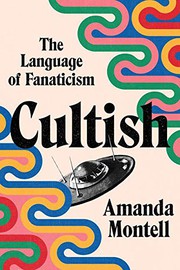
Cultish: The Language of Fanaticism
2,087-word summary 9 min read 320 pages in the book
- First published
- 2021
- Publisher
- Harper Wave
- Pages
- 320
- ISBN
- 9780062993151
Reading options
What's inside (9 sections)
The usual way to talk about cults is with the word brainwashing, and Montell's opening move is to point out how thin that explanation really is. Brainwashing suggests something done to a passive mind, a kind of psychological override that leaves no residue you could examine. Cults do not work like that. They work, she argues, through something much more ordinary and much harder to notice: the words people learn to use. A group does not need a compound in the desert. It needs a vocabulary, and then it needs to make you glad you learned it.
I picked up Cultish because I had already noticed this effect in small doses. I have sat in meetings where a piece of jargon I did not know marked me as an outsider within thirty seconds. I have watched people adopt a company's phrasing and become, quite visibly, more loyal to the company afterward. That is a minor version of what this book is about, and Montell is interested in the major versions, from Jonestown to SoulCycle, which is a range that sounds absurd until you have read her argument for why the range is legitimate.
The book is a work of popular linguistics rather than of clinical psychology, and that distinction matters for how you read it. Montell is a linguist and a journalist, the author of an earlier book about the slurs and slang women use, and she approaches cultish language the way a phonologist approaches sound, as a system with rules, functions, and payoffs. She is not diagnosing anyone. She is doing something closer to translation, taking material that most people find baffling and rendering it in terms anyone can follow.
The argument, stated plainly
The thesis underneath every chapter is that language does the recruiting before the doctrine ever arrives. Specific mechanisms keep recurring across groups that otherwise share very little: the invention of private terms for ordinary things, the loading of words with emotional charge so that ordinary speech starts to feel dangerous, the euphemisms that make extreme requests sound mild, and the clichés that let a member repeat a thought without having to defend it.
Anthropologists and scholars of new religious movements have been saying versions of this for decades, which is one reason academic reviewers have been generous to a book they could easily have dismissed as oversimplified. A scholar quoted in the reception of Cultish put the point dryly: the book is a nonacademic telling academics what they already know, with a clarity that reads like revelation. That is both the compliment and the limit. Nothing here is likely to surprise a specialist. Everything here is likely to reorganize how a general reader hears a conversation.
Montell's particular gift is for showing the mechanism operating at the level of the sentence. When a leader renames something, a tax becomes an offering, a punishment becomes a correction, a lie of omission becomes protection of the group, the leader has not just changed a label. They have changed what the listener is able to think while the word is in their mouth. The vocabulary arrives ahead of the belief, and the belief grows into the shape the vocabulary has already made.
The groups she walks through
The book moves through a series of case studies, and the order is doing work. It opens in the twentieth century with groups whose endings are public knowledge, so you can watch the language doing its job without having to reserve judgment about the outcome.
Jonestown and Heaven's Gate give her the starkest material, since both groups left recordings and written material, and both show how a shared vocabulary of commitment made each escalation sound like continuity rather than rupture. Scientology supplies the most quotable internal language, with its elaborate private terminology, and Montell uses her own training against it effectively, noting that when a group requires you to look up its own definitions of basic words, it has taken grammar itself hostage.
Synanon carries an extra weight the book is honest about, because Montell has a family connection to it through her father. That connection could have made her either harsher or softer than the material warrants, and what it mostly makes her is specific. She is not describing an abstraction when she describes what a commune's language did to the people inside it.
NXIVM and the multi-level marketing world bridge the book toward the present, and this is where the argument earns its subtitle. The techniques available to a leadership training seminar selling an upline and a downline, the special terms for recruits, the reframing of constant selling as personal mission, are recognizably the same techniques, attenuated but present, that the older groups used at full strength.
The modern end of the spectrum
The chapters that will get the most attention are the ones about groups we still belong to. Montell walks into fitness communities with serious followings, SoulCycle, CrossFit, Peloton, and takes their language apart with a straight face: the collective nicknames for instructors, the mantras, the shared vocabulary of suffering that turns a workout into a ritual, the way a class becomes a membership in something.
There is a real risk of cheap equivalence in this kind of move, and the book is at its weakest when it skims close to the edge of implying that a spin class and a doomsday sect belong in one sentence. Montell generally protects herself by staying descriptive. She is not saying your gym is a cult. She is saying the same linguistic tools, group-specific names, emotionally loaded reframes, repetition of shared slogans, appear across the spectrum, and that noticing them in the mild places is how you learn to recognize them in the dangerous ones.
QAnon gets similar treatment, which dates the book in a way that also shows how fast the terrain moves. Online conspiratorial communities, in her account, are cultish in precisely the ways her framework predicts: they generate their own lexicon, they reward members for using it, and fluency in the vocabulary becomes proof of belonging. The person typing the jargon is signaling that they are inside, and the signal costs them nothing except the ability to be understood by anyone who is not.
What a linguist notices
Several threads run through the book that a reader interested in how language works will enjoy for their own sake. One is the way euphemism functions under pressure. Another is how repetition of a set phrase relieves a person of the burden of generating a fresh thought, which is comforting, and comfort is one of the products every group is selling. Another is the role of ridicule and taboo words, which mark the boundary of the community as effectively as any ritual does: there are words we do not use here, and obeying the rule is the membership card.
Montell is also good on what happens inside the mouth. People who have spent years in a group speak differently afterward, with rhythms and phrasing that can sound odd to outsiders, and she treats that as a genuine transformation of the person rather than an act they are putting on. The claim is uncomfortable because it implies that the entrance is not a dramatic moment. Nobody agrees to be manipulated in a single sentence. They agree to learn a few words, and the words do the rest.
There is humor here, too, which reviewers consistently note, and the humor is load-bearing rather than decorative. Cults are frightening partly because they are absurd, and a book that refused to laugh at the mantras would be a book that let the mantras keep their dignity.
Where it is soft
The book's limitations are the limitations of its form, and they are worth stating before you buy it.
Montell is more convincing on how than on why. She can show you, in detail, how a group's vocabulary constructs loyalty. She has much less to say about why one person walks out of a meeting free and another walks out committed, and the human variability in that question, temperamental, circumstantial, historical, gets less attention than the linguistics does. A reader hoping for an account of vulnerability will find sympathy for it rather than an explanation of it.
The personal register that makes the book readable also occasionally gets in its way, as at least one review noted, when a digression about the author's own life arrives at a moment when the analysis was doing something sharper. These passages are short and they are clearly a choice. They are also the only parts where the argument slows down without earning the slowdown.
And there is the matter of framing. The book says, correctly and repeatedly, that recognition is the point, that knowing the language is the defense. But recognition at a distance is easy, and the whole difficulty of cultish speech is that it sounds reasonable from inside the room. The book is better at giving you the vocabulary for the phenomenon than at simulating how it feels to be persuaded by it while it is happening.
The defense the book offers
Montell does not leave the reader with only a diagnosis, and her prescription is consistent with everything that precedes it: learn to hear the language, because hearing it is the only reliable early warning system a person gets. Groups rarely announce themselves. They announce a vocabulary. The moment a community starts giving ordinary things private names, starts treating a question as a sign of disloyalty, starts repeating a slogan where a reason would do, the machinery she describes has already begun.
She is careful to keep this practical rather than paranoid. Lots of groups, from hospitals to fan clubs, use in-group language, and using it is usually harmless. The warning signs she points to are the ones where the vocabulary starts doing your thinking for you: where you notice that you can no longer explain a belief outside the group's own words, or where hearing a disagreement produces irritation instead of curiosity. Those are cheap things to notice in yourself, and noticing them costs nothing, which is the whole point. The most quotable thing in the book is close to a rule of thumb: if you cannot say it in plain language, someone else may be holding the pen.
This is also where the book connects back to its larger cultural argument. The same verbal reflexes show up in marketing, in politics, in the way a workplace talks about itself, and Montell treats literacy in those reflexes as a civic skill rather than a parlor trick. You do not have to join anything, or quit anything, to benefit from it. You just have to start listening for the moment when a sentence stops carrying information and starts carrying membership.
What stayed with me
The test of a book like this is whether you hear anything differently afterward, and with Cultish I did. I noticed, for instance, how quickly a piece of shared jargon shortens a conversation inside a group and slows it to a stop at the boundary, and I noticed how pleased people are, including me, to use a term correctly in front of someone who does not know it. That small pleasure, Montell would say, is the whole mechanism at a scale nobody objects to.
I also finished the book with a revised sense of what recruitment actually consists of. The stories we tell about it involve coercion, isolation, dramatic rupture. The reality she documents is closer to an education: learn these words, use them a few times, hear how good they sound in your own mouth, and by the time the group asks you for something difficult you are already speaking its language. Language is the cheapest infrastructure in the world, which is exactly why it is the one that scales.
For readers who want a clinical or academic treatment, there are denser books on new religious movements, and scholars in the field will tell you this one simplifies. For a general reader who wants to understand, in a working way, how ordinary speech becomes a tool of control, and who would like to be able to recognize that transformation wherever it appears, from a company's all-hands meeting to an online mob, this is a clear, funny, and genuinely clarifying place to start. It made me pay attention to words I had been using on autopilot, and that attention has not worn off yet.
FAQ
What is Cultish about?
It is a book about how language creates group identity and coercion, using examples from Jonestown and Heaven's Gate through to MLMs, soul-cycle-style fitness, and QAnon.
Is Cultish written by a psychologist?
No. Amanda Montell is a linguist and journalist, and the book is framed around language rather than clinical psychology.
Does Cultish name real organizations?
Yes. It discusses identifiable groups and brands, including Scientology, NXIVM, and various MLM companies, alongside historical cults.
Similar books

Made to Stick: Why Some Ideas Survive and Others Die
The Heath brothers break down why some ideas vanish on contact while others lodge in memory, tracing six traits that make a message stick.
2,527-word summary · 11 min read
What the Dog Saw and Other Adventures
Nineteen New Yorker essays on pitchmen, ketchup, Enron, profiling, late bloomers and the limits of prediction, arranged in three parts.
2,049-word summary · 9 min read
Talking to Strangers
Gladwell asks why we misread strangers, from spies and frauds to traffic stops, and why good intentions still fail.
2,836-word summary · 13 min read
The Tipping Point: How Little Things Can Make a Big Difference
How tiny shifts push ideas and products past a tipping point into epidemics.
2,014-word summary · 9 min read
Outliers: The Story of Success
Success comes from practice, timing, and hidden chances more than talent alone.
1,934-word summary · 9 min read

Sybil
A 1973 case study of a woman treated for multiple personalities, and the book that made dissociative identity disorder a household phrase.
2,054-word summary · 9 min read
Nudge: Improving Decisions About Health, Wealth, and Happiness
Thaler and Sunstein show how defaults, framing, and social cues steer choices, and argue for choice architecture with an opt-out.
3,146-word summary · 14 min read

What Happened to You?
Oprah Winfrey and psychiatrist Bruce Perry explain how early experience shapes the brain, and why asking what happened to someone works better than asking what…
2,238-word summary · 10 min read

The Courage to Be Disliked: The Japanese Phenomenon That Shows You How to Change Your Life and Achieve Real Happiness
A philosopher and an angry young man argue over five nights about Adlerian psychology, trauma, approval, and the freedom to be disliked.
2,054-word summary · 9 min read

Too Much and Never Enough: How My Family Created the World's Most Dangerous Man
Mary L. Trump's 2020 memoir traces how a cold, zero-sum Queens household shaped her uncle, and uses family tax documents to challenge his self-made story.
2,059-word summary · 9 min read

Moonwalking with Einstein: The Art and Science of Remembering Everything
A journalist spends a year training for the U.S. Memory Championship and discovers that extraordinary memory is mostly technique, attention, and a lot of…
2,027-word summary · 9 min read

The Total Money Makeover: A Proven Plan for Financial Fitness
Dave Ramsey lays out seven Baby Steps, from a $1,000 starter fund to a paid-off house, with the debt snowball at the center.
2,663-word summary · 12 min read
Don't Sweat the Small Stuff ... and It's All Small Stuff: Simple Ways to Keep the Little Things from Taking Over Your Life
Richard Carlson’s 1997 bestseller offers one hundred short chapters on lowering the volume on daily irritations, and it is more pragmatic than its title…
2,502-word summary · 11 min read
Four Thousand Weeks: Time Management for Mortals
Oliver Burkeman turns the whole productivity project on its head, arguing that a human lifespan of roughly four thousand weeks is not a problem to optimize…
2,447-word summary · 11 min read
Beautiful Boy: A Father's Journey Through His Son's Addiction
David Sheff recounts watching his son Nic slide into meth addiction, and his own desperate, humbling search for how to help without destroying them both.
2,076-word summary · 9 min read
Columbine
Ten years of reporting on the 1999 school massacre, including a journalist's correction of the myths he helped create in the first hours.
2,232-word summary · 10 min read
The Road Less Traveled: A New Psychology of Love, Traditional Values and Spiritual Growth
M. Scott Peck argues that maturity begins with accepting difficulty, then builds discipline, love, and spiritual growth through honest, often painful work.
2,200-word summary · 10 min read
Smoke Gets in Your Eyes: And Other Lessons from the Crematory
A young medieval history graduate takes a job at an Oakland crematory and becomes a mortician, confronting the physical reality of death and the funeral…
2,003-word summary · 9 min read

Attached
A psychiatrist and a psychologist explain adult attachment styles and show how anxious, avoidant, and secure patterns shape dating, conflict, and the search…
2,157-word summary · 10 min read
All About Love: New Visions
bell hooks borrows a definition of love as an action rather than a feeling, then spends thirteen chapters showing how hard it is to practice.
2,385-word summary · 11 min read
Evicted: Poverty and Profit in the American City
Desmond follows eight Milwaukee families and two landlords through a year of evictions, showing how losing a home causes poverty rather than just reflecting it.
2,032-word summary · 9 min read
The Choice
Auschwitz survivor and therapist turns prison into a guide for healing.
2,472-word summary · 11 min read
How to Stop Worrying and Start Living
Carnegie offers day-tight routines for worry built from interviews and worker stories.
2,505-word summary · 11 min read
Dare to Lead
Research on courage shows how leaders build trust through vulnerability and clear values.
2,442-word summary · 11 min read

Behind the Beautiful Forevers: Life, Death, and Hope in a Mumbai Undercity
Life in a Mumbai slum near the airport, where families hustle for a better future.
2,406-word summary · 11 min read
10% Happier
An ABC newsman panics on air, then finds meditation without losing his edge.
2,590-word summary · 12 min read
Think Again
Adam Grant argues for holding views loosely and testing them like a scientist, moving past preacher, prosecutor, and politician habits at work and in debate.
3,204-word summary · 14 min read
The Black Swan
Taleb argues rare shocks shape history more than models admit, and urges safer exposure over prediction.
2,588-word summary · 12 min read
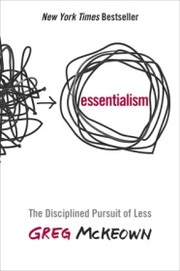
Essentialism
McKeown argues for less but better: discern the vital few, refuse the trivial many, and use buffers, small wins, and steady routines so key work gets done well…
2,421-word summary · 11 min read
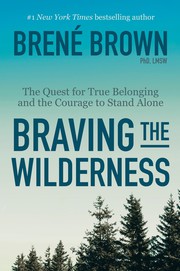
Braving the Wilderness: The quest for true belonging and the courage to stand alone
Belonging to yourself first lets you stand alone and still stay close to others.
2,004-word summary · 9 min read