
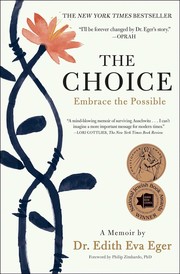
The Choice
2,472-word summary 11 min read 288 pages in the book
- First published
- 2017
- Publisher
- Scribner
- Pages
- 288
- ISBN
- 9781501130786
Reading options
What's inside (8 sections)
I came to The Choice after hearing Edith Eger speak in a clip about prisons we build in our minds. I expected a Holocaust memoir. It is that, but it is also a therapist casebook and a book about American family life after horror. Edith Eger published it in 2017 with Scribner. The US hardback runs 288 pages. It moves between Kassa in Hungary in the 1940s, El Paso in later decades, and her therapy office where veterans, couples, and grieving parents sit across from her. I read it in four sittings, underlining less than usual because I kept just sitting still.
Eger was born in 1927 in Kassa, then Hungary, now Kosice in Slovakia. She was the youngest of three sisters, a bright student, a trained ballet dancer and gymnast who dreamed of the Olympics. Her family was Jewish, middle class, cultured. Her father Laci was a tailor who loved books. Her mother Ilona was sharp, strict, loving in a forthright way. Her eldest sister Clara was a violinist studying away. Her middle sister Magda was her closest companion. Home life sounds full of music, practice, teasing, school pressure, the ordinary friction of sisters sharing rooms and dreams.
That ordinary life ends in spring 1944. Hungary, allied with Germany, turns fully on its Jewish population after occupation. The Egers are forced into a brick factory ghetto, then packed into cattle cars to Auschwitz. Eger writes the transport with sensory memory. Heat. Thirst. A mother passing small sips. Whispers about where they are going. Arrival at night with lights, shouting, dogs, selection lines. This is the most famous passage of her story and she tells it plainly. Josef Mengele points. Her mother is sent one way with another group. Edith and Magda are sent the other. It is the last time she sees her parents. They were killed that day.
Auschwitz and Mauthausen
Eger was sixteen at Auschwitz. She and Magda stayed together, which saved them more than once. They learned camp rules fast. Do not look up wrong. Do not lag. Share crumbs. Memorize numbers. Keep shoes. She writes about hunger as a constant noise, about cold water washes, about roll calls that lasted hours, about the smell from the crematoria that told everyone what selection meant.
Two scenes have followed her public telling for years and both are in the book. Mengele, who had learned she was a dancer, ordered her to dance for him in the barracks. She danced to music she made in her head, closing her eyes to a theater in Budapest that no longer existed for her. He threw money, or bread by some retellings, and she used it to share. Eger frames that moment not as triumph but as a first choice. She could dance with hate for the man watching or dance for her mother in memory and for Magda beside her. She chose the second. That idea, choosing what the act means inside even when you cannot choose the act itself, becomes the spine of the whole book.
The sisters survived Auschwitz into 1945, then were forced on marches and trains as the Nazis moved prisoners west. They passed through Mauthausen and ended in Gunskirchen, a subcamp in Austria where conditions were worst of all. Little food. Crowded tents and huts. Bodies on the ground. Eger weighed almost nothing at liberation in May 1945. American soldiers found her in a pile, alive but unable to walk at first. She remembers a soldier holding her, a young man who wept. She and Magda held each other and learned their parents were gone. Clara, away studying, had survived in hiding. That reunion, partial and broken, shapes the postwar chapters.
Eger does not linger on gore for effect. She notes what she saw and moves to what it did inside. Survivor guilt starts early. Why did I live when my mother did not. Did I dance while she died. Could I have pulled her to our line. She writes those questions as a teen would carry them, wordless and heavy, then as an adult therapist would name them. That double view, young memory plus older understanding, gives the camp chapters their steadiness. She is not asking for pity. She is showing how a mind starts to prison itself right inside the trauma.
After: marriage, America, silence
After the war Edith recovered slowly, studied, joined a dance troupe, married Bela Eger, another survivor who had fought and lost family. They had a daughter, lived in Czechoslovakia as communism closed in, then fled in 1949 with almost nothing after Bela was threatened for political reasons. They reached the United States with a baby and a few dollars, moving finally to El Paso, Texas. Bela worked, studied, built a business. Edith raised children, taught dance, learned English, kept house, smiled for neighbors.
For years she did not speak about Auschwitz except in fragments. She told herself America meant starting clean. She had nightmares, startle responses, stomach pain, rages she did not understand. She avoided German accents, avoided books about the war, avoided questions from her children. She describes herself as a cheerful hostess with a locked room inside. Bela carried his own silence. They loved each other and hurt each other in the ways of two people who agreed not to open certain doors. Their arguments flared around control, money, parenting, the small things that stand in for big unsaid fears.
The thaw came slowly. In the 1960s she returned to school for psychology, earning a degree and then a PhD in her forties from the University of Texas at El Paso. She studied because she needed tools for herself as much as for others. She trained, interned, worked with veterans, addicts, couples, teens. Reading about Viktor Frankl, himself an Auschwitz survivor and author of a famous book about meaning, gave her a model. She later met Frankl, who encouraged her to write and to speak. That encouragement sat in her for years before she acted on it.
A turning point she returns to often is a return trip to Auschwitz decades later with Magda and with family, arranged around speaking work. Walking the ground as a grown woman, a mother, a therapist, she faced the guilt she had carried about her mother. She lay on the grass, spoke aloud, grieved fully for the first time. She stopped running from the place by letting herself feel it without bargaining. Readers who expect a single catharsis should note how Eger frames it. The visit helped because of years of work before it, not as magic. Healing was already underway in classrooms, in therapy training, in raising children and failing and repairing.
The prison and the tools
About a third of the book is clinical. Eger sits with patients and shows how the same camp lessons apply in ordinary lives. A Vietnam veteran who cannot forgive himself for surviving when friends died. A woman who stays in a violent marriage because prison feels familiar. A grieving mother who refuses food and joy after losing a child. A man who drinks to mute shame about childhood abuse. A teenager who cuts. Eger tells these stories with names and details changed, focusing on dialogue and homework rather than labels.
Her core image is simple. Most suffering, she argues, comes not only from what happened but from the prison we build after. Victimhood as identity. Secrets. Shame. Rigid rules. I will never trust. I must be perfect. I deserved it. She teaches patients to notice the bars. Then she offers moves to loosen them. Speak the secret to someone safe. Reframe the story from happened to me into choices I can make now. Practice forgiveness as release, not pardon. Use the body. Breathe. Move. Eat. Sleep. Small acts count.
Her language about choice can sound blunt. She tells patients, and readers, that we cannot always choose what happens but we can choose how we respond. For survivors of assault, war, or loss, that line needs care, and Eger knows it because she lives it. She stresses that choice does not mean blame. It means you still have moves. You can ask for help. You can set a boundary. You can stop rehearsing the past as proof you are worthless. She repeats that forgiveness is for the forgiver. You forgive so your hands are free for your own life, not because the other person earned it. Some readers will find that freeing. Others will find it too fast for fresh wounds. Eger would likely say timing matters, and that she offers it as invitation rather than order, though the prose sometimes sounds more certain than that.
Family, forgiveness, and Frankl
The family chapters in America carry quiet weight. Bela and Edith love each other, build a business, raise three children, host parties, argue about discipline. Bela wants order after chaos. Edith wants closeness after loss. Both overprotect the children, then feel guilty for overprotecting. Their daughter Marianne and later children ask about numbers on arms, about accents, about why mother cries at certain music. Eger answers in pieces as they grow. She regrets the years of silence and also understands why she needed them. Parents will recognize that bind. You want to shield children from horror and you want them to know you truly. Both urges make sense. She learns to tell age sized truths and to apologize when old fear makes her controlling.
Forgiveness in this book has three layers. First, forgiving herself for surviving, for dancing on order, for teenage thoughts she judged as an adult. Second, forgiving her mother for strictness she once resented and for dying in a way that left Edith with questions. Third, the harder public layer people ask about, forgiving Nazis, Mengele, guards. Eger answers carefully. She does not excuse. She does not forget. She refuses to let hate run her present. She writes a letter she does not send. She says the men were broken humans who did evil, and she will not give them her sleep and appetite for the rest of her life. Readers can take or leave that framing for themselves. Eger presents it as what freed her hands, not as a rule for all survivors.
What holds up and what strains
What holds up is the blend. Few books combine camp memoir and therapy office so evenly.
Now honest strains, because no book about this much pain lands perfectly for everyone. The self help framing repeats. Prison, bars, choice, freedom recur in nearly every chapter. Repetition helps patients remember, but on the page it can feel like a chorus that arrives on cue. I found myself predicting the turn. Story of hurt, then the question about what prison this built, then the tool. Useful, but patterned. Readers who love memoir and dislike advice may skim the clinical refrains.
Timeline jumps occasionally blur. Eger moves from 1944 to 1970s El Paso to a 1980s therapy session within pages. Most transitions are signposted, but a few are not, and I had to flip back to place a sister or a child at the right age. A simple family tree or clearer dates at chapter heads would have helped. With only 288 pages to cover seventy years plus dozens of patients, compression is inevitable. Some figures thin out. Bela, so central in life, can feel sketched in the book. Colleagues and supervisors barely appear. The focus stays tight on Edith and her patients, which is fair, but the world outside can feel narrow.
The forgiveness emphasis will not fit every reader, and Eger knows her audience includes people harmed recently. She tries to soften the demand by saying forgive when ready, forgive for yourself, forgive in steps. Still, the moral weight of an Auschwitz survivor urging forgiveness can feel hard to refuse even when refusal is healthy for a time. A reader in fresh grief or ongoing abuse might need a clearer permission slip to set the chapter aside. Eger gives that permission in asides, but a stronger early note would help. Forgiveness as one tool among many, not the test of healing.
Finally, the prose sometimes smooths horror with uplift faster than I wanted. A devastating camp memory resolves into a lesson within pages. That pacing reflects Eger as therapist, always moving toward use. As a reader I occasionally wanted more dwelling, more unsolved ache, before the tool arrived. The last chapters, where she revisits Auschwitz and speaks to soldiers, land better because grief and use sit together longer there without rushing.
None of those strains undid the book for me. They are the cost of trying to do two hard things at once. Witness and guide. Eger does both with unusual steadiness. Where she overstates choice, her own story corrects it. She did not choose Auschwitz. She did not choose her parents murder. She chose, later, in small daily ways, to stop obeying those events in the present. That distinction, held firmly, is why the book has lasted.
Who should read it
Read The Choice if you want a Holocaust memoir that continues past liberation into marriage, parenting, school, and work. Many memoirs end at the gates. Eger shows the next fifty years, which is rarer and just as important. Read it if you like therapy books grounded in stories rather than systems. Each patient teaches one move you can try. Read it if you carry guilt about surviving something others did not, whether war, illness, accident, or family loss. She names that guilt without flinching and offers steps that do not insult it.
Do not read it expecting a history of the Holocaust or a full account of Hungarian deportations. Eger gives what she lived and saw, not a survey. Pair it with a history if you need context on 1944 Hungary, Auschwitz Birkenau organization, death marches, Gunskirchen. Do not read it as clinical manual. It suggests, not prescribes. If you are in acute trauma or in an unsafe home, read with support and skip what feels too soon. Eger would be the first to say safety comes before insight.
I finished thinking less about happiness and more about hands. Eger often asks what your hands are holding. Grievance. Secret. Numbness. Or a pen, a child hand, a broom, a phone to call for help. At ninety when this book came out, later still speaking into her nineties, she offers her own hands as proof. Dancer hands. Mother hands. Therapist hands. Hands that once lifted in a barracks on order and later learned to lift in greeting by will. That image, plain and physical, stays with me more than any slogan. Choose the next move you can live with. Then the next. Freedom, in her telling, is not a place you arrive. It is a practice you keep.
FAQ
When was The Choice published?
Scribner published The Choice in 2017. The US hardback runs 288 pages with ISBN 9781501130786.
Who is Edith Eger?
Edith Eger is an Auschwitz survivor, dancer, and psychologist in El Paso. She treats veterans, couples, and grieving parents using choice and forgiveness work.
Is The Choice part of a series?
No. It is a standalone memoir with therapy cases, linked to Viktor Frankl as mentor but not part of a series.
Similar books
What Happened to You?
Oprah Winfrey and psychiatrist Bruce Perry explain how early experience shapes the brain, and why asking what happened to someone works better than asking what…
2,238-word summary · 10 min read

Too Much and Never Enough: How My Family Created the World's Most Dangerous Man
Mary L. Trump's 2020 memoir traces how a cold, zero-sum Queens household shaped her uncle, and uses family tax documents to challenge his self-made story.
2,059-word summary · 9 min read
Beautiful Boy: A Father's Journey Through His Son's Addiction
David Sheff recounts watching his son Nic slide into meth addiction, and his own desperate, humbling search for how to help without destroying them both.
2,076-word summary · 9 min read
Smoke Gets in Your Eyes: And Other Lessons from the Crematory
A young medieval history graduate takes a job at an Oakland crematory and becomes a mortician, confronting the physical reality of death and the funeral…
2,003-word summary · 9 min read
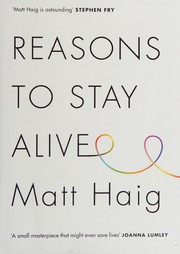
Reasons to Stay Alive
Matt Haig's memoir of the breakdown that nearly killed him at twenty four and the three years of unglamorous recovery that followed.
2,065-word summary · 9 min read
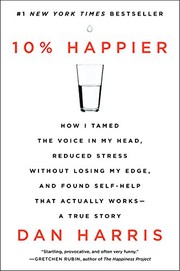
10% Happier
An ABC newsman panics on air, then finds meditation without losing his edge.
2,590-word summary · 12 min read
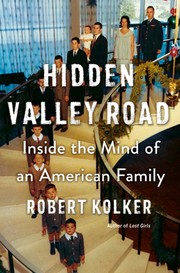
Hidden Valley Road: Inside the Mind of an American Family
The Galvin family raises twelve children while six sons develop schizophrenia across decades of shifting science.
2,492-word summary · 11 min read
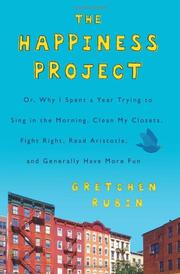
The Happiness Project
Gretchen Rubin spends a year testing monthly resolutions on energy, marriage, work, parenting, and play, tracking small habits to build a happier ordinary…
3,516-word summary · 16 min read
The Hiding Place: The Triumphant True Story of Corrie Ten Boom
The Ten Booms hide Jews in Haarlem, suffer Ravensbruck, lose Betsie, and learn forgiveness.
2,593-word summary · 12 min read
Maybe You Should Talk to Someone
Therapist Lori Gottlieb counsels John, Julie and Rita while seeing her own therapist Wendell after a breakup.
2,234-word summary · 10 min read
Man's Search for Meaning
Psychiatrist Viktor Frankl survived Auschwitz and argued that humans can endure anything by finding meaning in it.
2,012-word summary · 9 min read
Night
Elie Wiesel's account of Sighet, the cattle cars, Auschwitz and Buchenwald, told in short flat sections by a boy about fifteen. Why the book carries the year…
2,594-word summary · 12 min read
The Zookeeper's Wife: A War Story
The directors of the Warsaw Zoo hid roughly three hundred Jews in empty cages and outbuildings after the German invasion, while Jan worked for the resistance.
2,065-word summary · 9 min read
Sybil
A 1973 case study of a woman treated for multiple personalities, and the book that made dissociative identity disorder a household phrase.
2,054-word summary · 9 min read
Nudge: Improving Decisions About Health, Wealth, and Happiness
Thaler and Sunstein show how defaults, framing, and social cues steer choices, and argue for choice architecture with an opt-out.
3,146-word summary · 14 min read

Long Walk to Freedom
Mandela's account of a Thembu childhood, a law practice, a banned movement, twenty-seven years in prison, and the negotiation that ended apartheid.
2,454-word summary · 11 min read
The Courage to Be Disliked: The Japanese Phenomenon That Shows You How to Change Your Life and Achieve Real Happiness
A philosopher and an angry young man argue over five nights about Adlerian psychology, trauma, approval, and the freedom to be disliked.
2,054-word summary · 9 min read

In Order to Live: A North Korean Girl's Journey to Freedom
A young North Korean girl crosses the Yalu, survives trafficking in China, and rebuilds her life in Seoul in this unsparing memoir.
2,027-word summary · 9 min read
Same Kind of Different as Me
An art dealer and a formerly homeless sharecropper tell the story of the friendship that began at a Fort Worth mission and the woman who insisted on it.
2,023-word summary · 9 min read
Moonwalking with Einstein: The Art and Science of Remembering Everything
A journalist spends a year training for the U.S. Memory Championship and discovers that extraordinary memory is mostly technique, attention, and a lot of…
2,027-word summary · 9 min read

Infidel
Ayaan Hirsi Ali's memoir of a Somali childhood, a forced marriage, a Dutch asylum claim, and the political fight that followed the murder of Theo van Gogh.
2,041-word summary · 9 min read
The Total Money Makeover: A Proven Plan for Financial Fitness
Dave Ramsey lays out seven Baby Steps, from a $1,000 starter fund to a paid-off house, with the debt snowball at the center.
2,663-word summary · 12 min read
The Happiest Man on Earth
Eddie Jaku's memoir follows a Leipzig childhood, Buchenwald, Auschwitz, a death march, and the slow rebuilding of a life in Australia.
2,597-word summary · 12 min read

Down and Out in Paris and London
Orwell's account of washing dishes in Paris hotels and tramping through London does not ask for pity, only for a clear look at how poverty actually works.
2,282-word summary · 10 min read
Year of Yes: How to Dance It Out, Stand in the Sun and Be Your Own Person
Shonda Rhimes takes her sister’s accusation seriously and spends a year saying yes to the things that frighten her, from live television to her own reflection.
2,585-word summary · 11 min read

The Girl with Seven Names: A North Korean Defector's Story
Hyeonseo Lee crossed the frozen Yalu River at seventeen, spent years hidden in China, escaped to South Korea, and later returned to rescue her family.
2,404-word summary · 11 min read
Love Does
A lawyer and activist tells stories of saying yes, showing up, and loving people through ordinary, often ridiculous actions.
2,411-word summary · 11 min read
Don't Sweat the Small Stuff ... and It's All Small Stuff: Simple Ways to Keep the Little Things from Taking Over Your Life
Richard Carlson’s 1997 bestseller offers one hundred short chapters on lowering the volume on daily irritations, and it is more pragmatic than its title…
2,502-word summary · 11 min read
Made to Stick: Why Some Ideas Survive and Others Die
The Heath brothers break down why some ideas vanish on contact while others lodge in memory, tracing six traits that make a message stick.
2,527-word summary · 11 min read
Four Thousand Weeks: Time Management for Mortals
Oliver Burkeman turns the whole productivity project on its head, arguing that a human lifespan of roughly four thousand weeks is not a problem to optimize…
2,447-word summary · 11 min read