
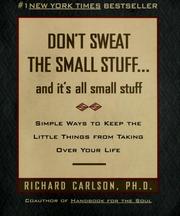
Don't Sweat the Small Stuff ... and It's All Small Stuff: Simple Ways to Keep the Little Things from Taking Over Your Life
2,502-word summary 11 min read 248 pages in the book
- First published
- 1997
- Publisher
- Hyperion
- Pages
- 248
- ISBN
- 9780786881857
Reading options
What's inside (9 sections)
The gate agent announces the fourth delay and the man beside me says something to his phone that I will not repeat. A woman across the aisle has been sighing at fifteen second intervals for an hour. I am not exempt. I have been composing a letter of complaint in my head to an airline that will not read it, about a delay that is nobody's fault in particular and that I will forget by Thursday.
That is the exact condition Richard Carlson wrote about in 1997, and it is why the book sold the way it did. Not because the advice was new. Because the advice was aimed at a specific moment, the one where a small irritation gets promoted to an emergency without anyone making the promotion out loud.
The title is a joke that also happens to be the thesis. "Don't sweat the small stuff" is the instruction. "It's all small stuff" is the part that annoys people, and Carlson knows it, and he spends a hundred short chapters trying to make the annoyance productive.
I came to it suspicious. A book with a title that cute, from the decade of the chicken soup franchise, with a cover that promises calm in a font usually reserved for greeting cards, is not the sort of thing I would pick up on my own. What I found was more pragmatic than the packaging suggests. It is not a psychology book. It is a collection of interruptions.
One hundred chapters, no system
Carlson was a psychotherapist and a stress consultant, and the book is built from that practice rather than from research. Each chapter runs about two pages: a small anecdote, a principle, a suggestion. There is no sequence, no cumulative argument, no exercise you are supposed to complete before moving on. You can open it anywhere.
That sounds like a weakness and is actually the design. The book is meant to be read one chapter at a time, ideally in the morning, ideally before the day has given you a reason to need it. It is a daily dose rather than a course. Carlson says as much in the framing, and the structure enforces it: there is no chapter that depends on the one before.
It sold millions of copies and turned into a franchise, which tells you something about the appetite for this kind of thing in the late nineties. It also tells you something about the book's limits. A bestseller that spawns sequels and calendars and gift editions is answering a market, and markets reward repetition.
The repetition is the method, though, and I want to be fair to it. Carlson is not trying to surprise you. He is trying to get a sentence into your head at the moment you need it, and sentences get into heads through repetition. The book is closer to a devotional than to a treatise. Read as a treatise, it collapses in twenty pages.
Deliberately unoriginal is the right description. Most of what Carlson says can be found in the Stoics, in Buddhist writing about attachment, in any competent therapist's waiting room, and in your grandmother. He does not pretend otherwise. He is not citing sources. He is trying to say the obvious thing in a way that arrives at the right time.
Life isn't an emergency
The most useful chapter in the book is also the shortest kind of idea. Repeat to yourself, "Life isn't an emergency."
That is the whole tool. It works because it does not argue with the feeling. It interrupts it. When the email lands badly or the printer jams or someone cuts you off in traffic, the body responds as if a predator has entered the room: heart rate up, attention narrowed, a chemical instruction to do something immediately. The phrase does not tell you the feeling is wrong. It gives you a half second in which the feeling is not the only information available.
Carlson is good on this mechanism, and he is good on the way a mood becomes an interpretation. Become aware of your moods, he says, because a mood colors the day and also writes a theory about it. In a bad mood, the same email reads as an insult; in a good mood, it reads as a request. Noticing the mood does not dissolve it, but it puts a small gap between the mood and the story the mood is telling.
The related chapter, "Learn to Tolerate Discomfort," is the one I underlined. His argument is that most of us treat discomfort as a signal that something has gone wrong and must be fixed, when very often it is simply the cost of doing something worthwhile or the residue of being alive. The urge to flee a difficult conversation, a boring task, a mild physical discomfort, is not wisdom. It is a reflex, and reflexes can be sat with.
I have used the emergency phrase in a hospital waiting room, which is either the best or the worst place to test it. It did not make the waiting pleasant. It did make me notice that I had been holding my shoulders somewhere near my ears for an hour, and that the situation did not actually require it. That is a small return. Over a year, small returns compound.
The funeral, and other perspective tricks
The chapter people remember is "Imagine Yourself at Your Own Funeral." Carlson asks you to picture the room, the people, what they would say about you, and what you would regret. It is not meant to be morbid. It is meant to shrink the thing that has been occupying your whole field of vision until you can see its actual size.
I have seen this exercise dismissed as a cliché, and it is one, but clichés get that way by working on enough people. The version in the book is gentle. There is no ledger of achievements, no judgment about whether you were important. The question is closer to: what would the people who actually knew you say, and does that match what you have been spending your days on?
The same instinct shows up in "Keep Asking Yourself, 'What's Really Important?'" which is the question I would put on a card if I were making a card. Most daily conflicts fail this test immediately. The argument about the dishes, the need to correct a stranger on the internet, the grudge about a meeting that was scheduled badly: none of it survives the question, and yet it consumes hours.
Then there is "Surrender to the Fact That Life Isn't Fair," which is the chapter that separates Carlson from the optimists. He is not saying things will work out. He is saying the expectation of fairness is a machine for producing resentment, and that you can stop feeding it. Not because unfairness is acceptable. Because keeping score has never once made you happier or the world more just.
"Be Grateful" and "Think of What You Have, Not What You Want" are the softer versions of the same move. Gratitude, in Carlson's hands, is not a mood you are supposed to perform. It is a redirection of attention from the missing thing to the present thing, and it works for roughly the same reason that counting your breaths works: it gives the mind a job that is not worry.
The small tools for ordinary days
The middle of the book is a toolbox, and like most toolboxes it contains a few things you will use and a few things you will forget you own.
"Choose Your Battles" is the one I would keep. Carlson's point is not that you should be passive. It is that energy is finite, and most people spend it on the wrong fights because the wrong fights are the ones that present themselves. The right fight usually requires initiative. The wrong one is delivered to your door.
"Let Go of the Need to Be Right" is adjacent, and harder. Being right is often more expensive than being kind, not because truth does not matter, but because the need to establish it in every conversation is a tax on the relationship. Carlson is not arguing for dishonesty. He is arguing that the compulsion to win is separate from the value of being correct.
"Learn to Say No" is a chapter that has aged well, since overcommitment has only become easier. His framing is simple: every yes is a no to something else, and people who cannot say no are not generous, they are frightened. That is a little harsh, and I think it is meant to be.
"Become a Better Listener" is the chapter I expected to be filler and was not. Listening, in his account, is a practice of getting out of your own head long enough to hear what the other person is actually saying, which is rarer than it sounds. Most of us listen the way we wait for a turn.
"Do One Thing at a Time" is the one that made me put the book down and look at my desk. Carlson's claim is that multitasking is a story we tell about efficiency, and that the story is mostly a way of avoiding the discomfort of doing one difficult thing. The chapter is not a productivity system. It is an observation about attention, and it is correct.
Then there is "Practice Patience," which treats patience as a skill rather than a personality trait. That distinction matters. If patience is a trait, you either have it or you do not, and the book is useless to you. If it is a skill, it can be practiced, badly at first, in traffic and in line and on hold with the airline.
Imperfection, acceptance, and the discipline of being bored
"Make Peace with Imperfection" is the load-bearing chapter. Carlson's argument is that the demand for perfection, from yourself, from other people, from situations, creates most of the friction in a life. The imperfect email gets sent. The imperfect dinner gets eaten. The imperfect person gets loved. The alternative is not excellence. The alternative is paralysis dressed as standards.
"Accept What Is" is the one most likely to be misread. Carlson is careful to say that acceptance is not approval. It is dropping the fight with reality so that you can act on reality. You cannot change a thing you are still arguing with. This is an old idea, and it is stated plainly enough here to be usable.
"Allow Yourself to Be Bored" is the strangest chapter and maybe the most prophetic. Carlson noticed that people will fill any gap in stimulation, and that the refusal of boredom fills a life with noise. He was writing before the smartphone, which makes the chapter feel like a message from a slightly luckier century. The suggestion is not to seek boredom. It is to stop treating it as an emergency.
"Practice Random Acts of Kindness" belongs in this section too, though it is the most bumper-sticker of the titles. The mechanism Carlson describes is not complicated: small anonymous generosity moves attention off the self, and the self is often the source of the problem. It is hard to be consumed by your own irritation while you are doing something useful for someone else.
Where the book gets thin
Here is the honest part. Carlson's book is not equipped for serious trouble. It has no account of trauma, depression, poverty, grief, or chronic illness. The advice to tolerate discomfort is good advice for a person with a mild aversion to the gym and questionable advice for a person in an abusive relationship. Carlson does not make that distinction, and the book's format gives him no room to.
The "it's all small stuff" line is the most dangerous thing in it. Used well, it is a corrective to catastrophizing. Used badly, it is a way to tell someone in real pain that they are overreacting, which is one of the cheapest moves available to a person who does not want to help. The book never quite supplies the test for telling a small thing from a big thing, and that is the whole question.
It can also read as an argument for lowering your standards. Carlson would say he is arguing against perfectionism, not against ambition, and mostly he is. But the chapters blur together after a while, and the cumulative effect can be a gentle fog of accommodation. There is a difference between choosing your battles and declining to have any.
The prose is anecdotal and occasionally glib. Some chapters are two pages of setup for a sentence you already knew. The 1990s context shows: the examples are about car phones, office politics, and a kind of middle-class American life that assumes a certain amount of stability. And the franchise around the book has not helped its reputation. Anything that becomes a mug is easy to dismiss, and this book became several.
What actually stuck
Three things survived the year for me, which is a better return than most books in this category manage.
The first is the phrase. "Life isn't an emergency" is now something I say to myself in traffic, in line, and before opening a message I already know will annoy me. It is not a philosophy. It is a circuit breaker.
The second is the funeral exercise, which I think about less often but which does more work when I do. It is hard to stay furious about a scheduling conflict while holding in mind the room where people will one day summarize your life.
The third is choosing battles. That one has changed behavior as well as mood. I decline more arguments now, not because I have become serene, but because I have started asking what the argument is for.
The rest of the book I could not reconstruct from memory, and I do not think that is a failure. Carlson wrote something meant to be sipped, not memorized, and the chapters that do not stick were never going to. The book's real gift is permission: permission to stop escalating, to let the email sit, to be imperfect in public, to admit that most of what ruins a Tuesday is not worth the Tuesday.
I finished it on a Sunday afternoon, which felt appropriate. The house was quiet by then. I put the book on the arm of the chair and looked out the window at nothing in particular, and for about ten minutes I did not think about the unpaid bill, the email, or the letter of complaint I will never write. Then I thought about all three. That is the honest version of what this kind of book can do. Not change you. Interrupt you, often enough that the interruptions start to count.
FAQ
Is Don't Sweat the Small Stuff a psychology book?
It is a collection of short essays by a psychotherapist, not a research-based psychology text. The chapters offer practical suggestions rather than a clinical program.
How should I read Don't Sweat the Small Stuff?
Carlson designed it to be read one short chapter at a time, in any order. Reading it straight through makes the repetition more obvious.
Does the book apply to serious problems?
It is weakest on trauma, grief, poverty, and illness. The advice is aimed at ordinary irritations, and the book does not supply a clear test for telling small problems from large ones.
Similar books

The Courage to Be Disliked: The Japanese Phenomenon That Shows You How to Change Your Life and Achieve Real Happiness
A philosopher and an angry young man argue over five nights about Adlerian psychology, trauma, approval, and the freedom to be disliked.
2,054-word summary · 9 min read

Four Thousand Weeks: Time Management for Mortals
Oliver Burkeman turns the whole productivity project on its head, arguing that a human lifespan of roughly four thousand weeks is not a problem to optimize…
2,447-word summary · 11 min read
How to Stop Worrying and Start Living
Carnegie offers day-tight routines for worry built from interviews and worker stories.
2,505-word summary · 11 min read
Braving the Wilderness: The quest for true belonging and the courage to stand alone
Belonging to yourself first lets you stand alone and still stay close to others.
2,004-word summary · 9 min read
The Gifts of Imperfection
Shame research turned into ten guideposts for dropping perfectionism and living with courage and connection.
2,799-word summary · 12 min read
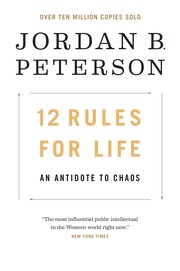
12 Rules for Life
Twelve essays on responsibility from posture to truth to petting cats.
2,045-word summary · 9 min read
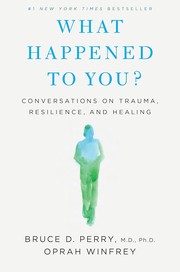
What Happened to You?
Oprah Winfrey and psychiatrist Bruce Perry explain how early experience shapes the brain, and why asking what happened to someone works better than asking what…
2,238-word summary · 10 min read

Moonwalking with Einstein: The Art and Science of Remembering Everything
A journalist spends a year training for the U.S. Memory Championship and discovers that extraordinary memory is mostly technique, attention, and a lot of…
2,027-word summary · 9 min read
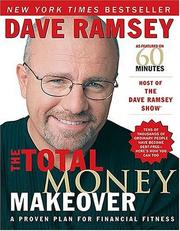
The Total Money Makeover: A Proven Plan for Financial Fitness
Dave Ramsey lays out seven Baby Steps, from a $1,000 starter fund to a paid-off house, with the debt snowball at the center.
2,663-word summary · 12 min read
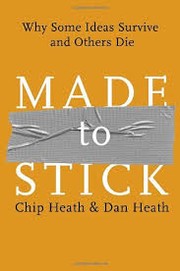
Made to Stick: Why Some Ideas Survive and Others Die
The Heath brothers break down why some ideas vanish on contact while others lodge in memory, tracing six traits that make a message stick.
2,527-word summary · 11 min read
The Magic of Thinking Big
Schwartz's 1959 self-help classic argues that success follows from the size of your thinking, supported by sales anecdotes, vocabulary drills and goal setting.
2,579-word summary · 11 min read
The Road Less Traveled: A New Psychology of Love, Traditional Values and Spiritual Growth
M. Scott Peck argues that maturity begins with accepting difficulty, then builds discipline, love, and spiritual growth through honest, often painful work.
2,200-word summary · 10 min read
The 5 AM Club
A struggling entrepreneur and artist are mentored by a billionaire who teaches them to reclaim the first hour of the day.
2,205-word summary · 10 min read
Attached
A psychiatrist and a psychologist explain adult attachment styles and show how anxious, avoidant, and secure patterns shape dating, conflict, and the search…
2,157-word summary · 10 min read
All About Love: New Visions
bell hooks borrows a definition of love as an action rather than a feeling, then spends thirteen chapters showing how hard it is to practice.
2,385-word summary · 11 min read
The War of Art
Pressfield names Resistance and urges daily professional work.
2,565-word summary · 11 min read
Dare to Lead
Research on courage shows how leaders build trust through vulnerability and clear values.
2,442-word summary · 11 min read
10% Happier
An ABC newsman panics on air, then finds meditation without losing his edge.
2,590-word summary · 12 min read
Essentialism
McKeown argues for less but better: discern the vital few, refuse the trivial many, and use buffers, small wins, and steady routines so key work gets done well…
2,421-word summary · 11 min read

The Untethered Soul
Singer names the noisy inner voice and shows how watching thoughts, loosening old hurt, and keeping the heart open through surrender can ease daily suffering…
2,752-word summary · 12 min read
The Power of Positive Thinking
Peale's 1952 guide to faith, affirmations, picturing success, prayer, and worry control, retold chapter by chapter with stories, limits, and small daily habits…
2,742-word summary · 12 min read
The Art of Happiness
The Dalai Lama and psychiatrist Howard Cutler link lasting happiness to training the mind, human warmth, compassion, and basic spiritual values for daily life.
3,394-word summary · 15 min read
Drive: The Surprising Truth About What Motivates Us
Pink argues fair pay plus autonomy, mastery, and purpose at work beat carrots and sticks, using FedEx days, ROWE, flow, and clear Goldilocks tasks to explain…
2,339-word summary · 10 min read
Grit
A psychologist argues sustained passion plus perseverance beats raw talent, and shows how grit can be grown.
2,432-word summary · 11 min read
Emotional Intelligence
Goleman argues self awareness and empathy shape success more than IQ alone.
2,026-word summary · 9 min read
Make Your Bed: Little Things That Can Change Your Life...And Maybe the World
SEAL lessons from bed making to never ringing the bell, from McRaven's 2014 Texas speech and 144 page book.
2,974-word summary · 13 min read
Influence: The Psychology of Persuasion
Six levers plus unity explain why people say yes, learned undercover in salesrooms and labs.
2,030-word summary · 9 min read
The Happiness Project
Gretchen Rubin spends a year testing monthly resolutions on energy, marriage, work, parenting, and play, tracking small habits to build a happier ordinary…
3,516-word summary · 16 min read

A New Earth
Tolle maps ego pain and shows how presence can loosen roles, thoughts, and suffering.
1,909-word summary · 8 min read
Think and Grow Rich
Hill teaches desire, faith and autosuggestion, distilling lessons from Carnegie interviews into thirteen principles for success.
2,458-word summary · 11 min read