
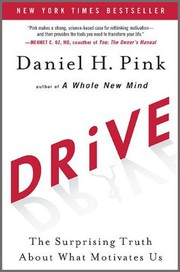
Drive: The Surprising Truth About What Motivates Us
2,339-word summary 10 min read 288 pages in the book
- First published
- 2009
- Publisher
- Riverhead Books
- Pages
- 288
- ISBN
- 9781594484803
Reading options
What's inside (7 sections)
I picked up Drive because my team at work was tired in a way pizza parties did not fix. Bonuses helped for a week. Then everyone slid back. A friend said this book explains why. Riverhead Books published it in December 2009, 288 pages in the hardback, and I read it with a pencil because almost every chapter ends with something to try on Monday. Pink is not a lab scientist. He is a translator. He reads Deci and Harlow and Csikszentmihalyi and the odd candle puzzle, then tells managers what to do differently.
His claim is simple. Carrots and sticks worked for routine work. They fail for creative work. Pay people fairly, then give them autonomy, mastery, and purpose. He calls the old model Motivation 2.0 and the new one Motivation 3.0. He sorts people into Type X, driven by outside rewards, and Type I, driven by interest and meaning. Type I, he says, does better work and feels better doing it. I rolled my eyes at the labels at first. By page fifty I was using them in meetings.
This summary walks the book in order, with the stories Pink uses and the places where I pushed back.
Carrots and sticks break for creative work
Pink opens with puzzles. In the 1940s, Harry Harlow gave monkeys mechanical puzzles with no food reward. The monkeys solved them anyway, for fun, and got better with practice. When Harlow added raisin rewards, performance got worse. The outside prize got in the way of the inner interest. Edward Deci later ran similar tests with college students and Soma cubes. Pay people to play, then stop paying, and they play less than people never paid at all. Money can turn play into work in the mind.
Pink stacks more cases. The candle problem, made famous by Sam Glucksberg, asks people to fix a candle to a wall with only a box of tacks. People offered cash for fast times did worse than people offered nothing, because the prize narrowed focus when the task needed a wide view. Dan Ariely and others found big bonuses helped for simple tasks but hurt for tasks needing thought. Open source projects, Wikipedia, Linux, Firefox in that era, grew because skilled people worked for free for pride and use and community.
He names the culprit Motivation 2.0. If you do this, you get that. It assumes people are lazy and must be prodded. Pink says it still fits for pure routine, like stamping forms all day. For anything with judgment, it backfires in seven ways he lists early. It kills inner drive. It narrows thought. It feeds short term wins. It can invite cheating. It becomes habit, so you must pay more each time. It feels controlling. It also has a name for the damage to play. The Sawyer effect, after Tom Sawyer whitewashing a fence for fun when it was framed as privilege rather than chore. Work can feel like play if framed right. Play can feel like work if priced wrong.
I found this section convincing and a little too neat. The studies are real, but Pink smooths the edges. Deci's work has critics about size and setting. The candle results shift with instructions. Still, the direction holds across labs. Pay as a motivator has limits. Every manager who has watched a bonus season produce gaming and grumbling will nod.
Pink is clear on one point people misquote. He is not saying money does not matter. He says pay enough to take money off the table. If people worry about rent or feel cheated next to peers, no purpose speech will help. Fair base, clear benefits, some say on process. Then stop waving cash for each idea.
Type I and Type X and why autonomy wins
After the setup, Pink introduces Type X and Type I. Type X chases outside signs. Grades, pay bumps, titles, praise. Type I runs on inner reasons. Curiosity, craft, service. He admits few people are pure types. Most slide by day and task. But he argues Type I behavior can be built, and firms should design for it.
Autonomy is the first leg. People need say over task, time, team, and technique. Pink gives examples I still quote. Atlassian, the Australian software firm, runs FedEx days. Teams get twenty four hours to build anything they want, then deliver overnight. Demos follow. Many fixes and small tools that became real products started there. Google famously allowed twenty percent time, one day a week for side projects. Gmail and Google News trace roots to that slack, though Pink notes the policy later tightened and the lesson is about guarding slack, not worshipping one firm.
Then ROWE. Best Buy tried a Results Only Work Environment in some offices. No schedules. No required meetings. Work where and when you like if the work gets done. Turnover fell. Output rose. Parents and night owls thrived. Pink loves this because it treats adults as adults. He also tells the story of a call center that let agents choose how to handle calls within bounds and saw satisfaction climb. Control the what, he says. Release the how.
The Sawyer effect returns here as advice. Turn chores into choice where you can. Let a support rep write her own replies. Let a teacher pick the novel for a unit. Let a coder choose the language for a prototype. Small choices feed ownership. Ownership feeds care.
I tried a light version after reading. I told my team Fridays were theirs until lunch for fixes they hated. No status reports. Just demos. Two annoying bugs died in three weeks. One demo went nowhere. Morale still rose because the time felt respected. That matches Pink. Autonomy is not absence of goals. It is choice inside clear goals.
A fair worry Pink underplays is coordination. FedEx days work when shipping is easy and teams are small. ROWE works when output is easy to see. In hospitals or kitchens or newsrooms on deadline, freedom needs rails. Pink nods to this but moves on fast to keep the story bright.
Mastery and the ache of Goldilocks tasks
Mastery is the second leg, and my favorite chapter to reread. Pink leans on Mihaly Csikszentmihalyi and flow, that state when time thins and work clicks. Flow comes when challenge meets skill. Too easy brings boredom. Too hard brings worry. He calls the sweet spot Goldilocks tasks. Not too hot, not too cold.
He argues mastery is painful by nature. It asks for practice we fail at. He cites the ten year idea from studies of musicians and chess players, long deliberate practice with feedback, not just hours. He tells stories of weekend painters and young athletes and coders who stay late not for pay but to get a hard thing right. He praises environments that allow that ache. Clear goals. Fast feedback. A little stretch.
Pink offers rules for managers. Make learning the metric for some weeks. Praise effort and strategy, not talent. Build time for peer review where the point is craft, not rank. He dislikes gold stars for every step because they train kids and staff to chase stars. He likes report cards that show progress over time.
He also warns that mastery never ends. That is the point and the problem. A Type I person will leave a job that stops teaching. Pink tells firms to plan for it. Rotate tasks. Fund courses. Let a good analyst teach. If you try to keep people with title bumps alone, you will lose the curious ones first.
My pushback here is small. Pink writes as if flow is available to all jobs equally. It is easier to find flow in code or design than in data entry or dishwashing. He would answer that even routine jobs can be reshaped with autonomy and purpose, and he gives examples of cleaners in hospitals who saw their work as healing and did it better. True, but reshaping has limits when staffing is thin. A tired nurse on double shift does not need a lecture on Goldilocks tasks. She needs rest and pay. Pink knows pay matters, yet the mastery chapter can read as if mindset fixes structure.
Still, the core landed for me. I started blocking ninety minutes twice a week for hard writing with phone off. Output doubled. Not because I was bribed. Because the task fit and feedback was fast.
Purpose and the purpose maxim
Purpose is the third leg. People want to be part of something larger than quota. Pink traces this through open source, where programmers fixed software they used, through nonprofits that pay less yet keep talent, through firms that tie profit to service. He offers what he calls the purpose maxim. Find language that names the service in human terms, then let people hear from those served.
He gives concrete cases. A hospital that let cleaners meet patients who got better saw cleaning scores rise. A software firm that read user letters at all hands saw bug fix speed rise. Universities that told callers raising funds exactly which scholarship their calls funded raised more. People work harder when they see the face their work helps.
He also covers profit with purpose. He praises firms that cap pay ratios or donate time, not as charity but as design. He notes the rise of B corps and mission lines in annual reports. He is careful not to preach. He says purpose without profit dies, but profit without purpose empties.
The strongest pages here are about words. Pink shows how a mission line changes behavior when it is specific. Help desk scripts that say solve the worry, not close the ticket, produce longer calls and happier users. A school motto that says make readers, not raise scores, changes which books get taught. I rewrote my own team line after this chapter from ship fast to remove one worry per release. Small change. Clearer choices.
The weak spot is evidence depth. Purpose stories are mostly anecdotes and firm visits, not trials. That does not make them false, but it makes them easier to admire than to copy. A skeptic could say successful firms can afford purpose talk after winning. Pink would say purpose helped them win. Both can be true. I wanted more on failure, firms that tried purpose and still stumbled, so readers could see limits.
Toolkit, pay, and where I argue back
The last third is a toolkit. Pink splits it for people, firms, and families. For individuals he suggests practices like tracking flow, keeping a done list, scheduling autonomy time, writing a personal motto in one sentence. For firms he suggests FedEx days, ROWE pilots, peer feedback, non cash rewards like choice of project, open salary bands, time for mastery. For parents and teachers he suggests praise for effort, choice in homework, class FedEx days, less if then bribing for reading.
Some tools are excellent. The personal motto exercise forced me to write serve the reader in plain words, which now sits over my desk. The idea of a FedEx day for kids, build anything and show it, beats another worksheet. Open pay talks, handled well, cut rumor.
Some tools feel corporate in a 2009 way. Praise walls, fun budgets, hack days photographed for blogs. Useful, but they favor office workers with slack. Pink tries to include schools and homes to widen the lens, yet most examples come from tech and design. A retail clerk or driver will find less to use directly. That is the corporate slant critics note, and it is fair.
My larger criticisms after living with the book:
First, it is anecdote heavy. Stories carry chapters where a chart should sit. Atlassian and Google and Best Buy get long loving visits. Counter cases get a line. A reader new to research may leave thinking the science is settled and simple. It is suggestive and strong, not settled.
Second, pay and fairness get one good chapter then fade. Pink says pay fairly and often. Good. But what is fair when markets differ? How should a small firm with thin margins set bands? How do race and gender gaps in starting pay warp Type I hopes? He gestures at fairness and moves on. I wanted a harder section on audits, ranges, and how to fix gaps without breaking trust.
Third, the book can sound as if inner drive fixes bad jobs. It does not. Autonomy helps a call center. It does not replace safe staffing. Mastery helps a teacher. It does not replace prep time. Purpose helps a cleaner. It does not replace gloves and pay. Pink would agree in person, I think. On the page the balance tips toward mindset.
Why still read it in 288 pages that move fast? Because the frame works where bonuses failed me. I stopped offering cash for ideas. I fixed base complaints first. I gave choice on method. I set Goldilocks tasks with fast review. I named the user in each project. Output steadied. Sick days fell. One quiet staffer who never spoke in bonus meetings gave the best demo of the year during FedEx time.
Pink closes without a grand speech. He asks readers to run small tests. Try one autonomy pilot. Try one mastery block. Try one purpose line. Measure. Keep what helps. Drop what does not. That modesty suits the topic. Drive does not promise happy teams forever. It promises fewer self inflicted wounds from old carrots and sticks, and more days when work feels like the fence Tom Sawyer made fun. Chosen, shared, and worth doing for its own sake.
What I kept doing after the last page was simple. I wrote fair pay at the top of every plan. I asked where choice could grow without harm. I looked for one task each week that stretched skill just enough. I named who each release helped. None of this felt grand. All of it beat another bonus memo.
FAQ
What is Motivation 3.0 in Drive?
Motivation 3.0 means fair pay first, then autonomy, mastery, and purpose. Motivation 2.0 means if you do this, you get that, which fails for creative work.
What is the Sawyer effect?
The Sawyer effect says framing changes drive. Work framed with choice can feel like play, while play framed with prizes can start to feel like work.
Does Pink say money does not matter?
No. Riverhead published it in December 2009 at 288 pages, and Pink says pay enough to remove money worry, then stop using cash for each idea.
Similar books
Deep Work: Rules for Focused Success in a Distracted World
Cal Newport's Deep Work in full: what focused work actually is, why shallow busyness wins by default, and the four philosophies he recommends for protecting…
2,138-word summary · 10 min read

The Total Money Makeover: A Proven Plan for Financial Fitness
Dave Ramsey lays out seven Baby Steps, from a $1,000 starter fund to a paid-off house, with the debt snowball at the center.
2,663-word summary · 12 min read
Don't Sweat the Small Stuff ... and It's All Small Stuff: Simple Ways to Keep the Little Things from Taking Over Your Life
Richard Carlson’s 1997 bestseller offers one hundred short chapters on lowering the volume on daily irritations, and it is more pragmatic than its title…
2,502-word summary · 11 min read

Made to Stick: Why Some Ideas Survive and Others Die
The Heath brothers break down why some ideas vanish on contact while others lodge in memory, tracing six traits that make a message stick.
2,527-word summary · 11 min read
The Magic of Thinking Big
Schwartz's 1959 self-help classic argues that success follows from the size of your thinking, supported by sales anecdotes, vocabulary drills and goal setting.
2,579-word summary · 11 min read
How to Stop Worrying and Start Living
Carnegie offers day-tight routines for worry built from interviews and worker stories.
2,505-word summary · 11 min read
Dare to Lead
Research on courage shows how leaders build trust through vulnerability and clear values.
2,442-word summary · 11 min read
Think Again
Adam Grant argues for holding views loosely and testing them like a scientist, moving past preacher, prosecutor, and politician habits at work and in debate.
3,204-word summary · 14 min read
The Black Swan
Taleb argues rare shocks shape history more than models admit, and urges safer exposure over prediction.
2,588-word summary · 12 min read
Essentialism
McKeown argues for less but better: discern the vital few, refuse the trivial many, and use buffers, small wins, and steady routines so key work gets done well…
2,421-word summary · 11 min read
The Five Dysfunctions of a Team
New CEO Kathryn unites warring execs through trust, conflict, and care.
2,029-word summary · 9 min read
SuperFreakonomics: Global Cooling, Patriotic Prostitutes And Why Suicide Bombers Should Buy Life Insurance
Levitt and Dubner apply incentives to prostitutes, suicide bombers, doctors, and climate fixes with cheeky data.
2,007-word summary · 9 min read
Predictably Irrational
Behavioral economist Dan Ariely shows why we overpay, procrastinate, and misjudge through simple experiments.
2,183-word summary · 10 min read
Emotional Intelligence
Goleman argues self awareness and empathy shape success more than IQ alone.
2,026-word summary · 9 min read
Influence: The Psychology of Persuasion
Six levers plus unity explain why people say yes, learned undercover in salesrooms and labs.
2,030-word summary · 9 min read
The 48 Laws of Power
Robert Greene turns court history into 48 blunt power laws, each taught through stories like Fouquet and Louis XIV, plus reversals that show when each law…
2,846-word summary · 13 min read
Never Split the Difference
Ex-FBI hostage negotiator Chris Voss shares tools for high stakes talks, from mirroring to calibrated questions. His 2016 book is direct, story driven, and…
2,965-word summary · 13 min read
David and Goliath: Underdogs, Misfits, and the Art of Battling Giants
Gladwell argues disadvantages can become advantages, from biblical sling to dyslexia and class size.
3,197-word summary · 14 min read
Start with Why
Great leaders start with Why before How and What, from Apple to King.
2,206-word summary · 10 min read
12 Rules for Life
Twelve essays on responsibility from posture to truth to petting cats.
2,045-word summary · 9 min read
Think and Grow Rich
Hill teaches desire, faith and autosuggestion, distilling lessons from Carnegie interviews into thirteen principles for success.
2,458-word summary · 11 min read
Who Moved My Cheese?
A tiny parable about two mice and two little people hunting cheese in a maze, and why adapting to change beats waiting for old days to return.
2,533-word summary · 11 min read
The Power of Habit
Why we do what we do: the cue routine reward loop, keystone habits, and how companies and movements use the same science, from toothpaste to the bus boycott.
2,207-word summary · 10 min read
The Tipping Point: How Little Things Can Make a Big Difference
How tiny shifts push ideas and products past a tipping point into epidemics.
2,014-word summary · 9 min read
Outliers: The Story of Success
Success comes from practice, timing, and hidden chances more than talent alone.
1,934-word summary · 9 min read
The E-Myth Revisited
Gerber argues that most small businesses are run by technicians who own a job rather than a business, and that the fix is a system that runs without them.
2,169-word summary · 10 min read

Sybil
A 1973 case study of a woman treated for multiple personalities, and the book that made dissociative identity disorder a household phrase.
2,054-word summary · 9 min read
Nudge: Improving Decisions About Health, Wealth, and Happiness
Thaler and Sunstein show how defaults, framing, and social cues steer choices, and argue for choice architecture with an opt-out.
3,146-word summary · 14 min read

What Happened to You?
Oprah Winfrey and psychiatrist Bruce Perry explain how early experience shapes the brain, and why asking what happened to someone works better than asking what…
2,238-word summary · 10 min read

The Courage to Be Disliked: The Japanese Phenomenon That Shows You How to Change Your Life and Achieve Real Happiness
A philosopher and an angry young man argue over five nights about Adlerian psychology, trauma, approval, and the freedom to be disliked.
2,054-word summary · 9 min read