
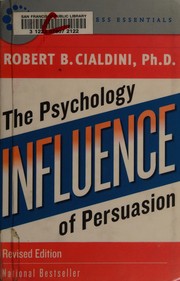
Influence: The Psychology of Persuasion
2,030-word summary 9 min read 336 pages in the book
- First published
- 1984
- Publisher
- Collins
- Pages
- 336
- ISBN
- 9780061241895
Reading options
What's inside (13 sections)
I read Influence because everyone quotes scarcity and social proof without knowing the source. Robert B. Cialdini published it in 1984, with my reading following the 336 page Collins paperback of the revised edition. Six principles explain why people say yes, plus unity added later, all backed by decades of experiments and fieldwork. It is the persuasion classic that marketers study and citizens should read defensively.
Cialdini, experimental social psychologist at Arizona State, spent years undercover in salesrooms, fundraisers, and ad agencies after lab work left him curious about real world compliance. He wanted to know which psychological principles move people to agree. What he found distilled into six universals. Reciprocation. Commitment and consistency. Social proof. Liking. Authority. Scarcity. The 2021 expansion added unity, shared identity, as seventh. Each gets chapters of studies plus street stories that make lab findings vivid. Read to persuade ethically. Read equally to defend.
Six levers, then seven
Reciprocation opens because it is oldest. Give something and obligation follows. Hare Krishna flowers pressed into hands. Free samples that purchase guilt. Those tactics work across cultures because cooperation needed ledgers before coin. Cialdini shows the lever and its guard. Accept gifts mindfully. Give back on your terms, not theirs. That defense preserves generosity without becoming sucker contract. The book's ethics shine here. Understanding does not require cynicism. Give freely yourself. Decline strings attached.
Commitment and consistency plus social proof form the book's practical core. Get small yeses and big yeses follow to protect self image. Car dealers lowball then revise. Petition signers donate later. Crowds cue uncertain newcomers, laugh tracks and testimonials both. Those mechanisms explain sales funnels and social media virality in one stroke. Defenses involve listening to stomach signals before consistency traps spring. Ask whether you would agree knowing what you know now. That question breaks trance usefully. The book teaches it as mantra worth posting near phones.
Liking, authority, and scarcity complete the original six with uncomfortable familiarity. We obey attractive experts in coats, chase limited offers, and comply with friends bearing requests. Studies cited, from Milgram style obedience to real estate listing language, hold up well enough decades later to still sting. The 2021 unity principle extends liking into shared identity. Family. Tribe. Co creation. Marketers now segment by we while readers nod. Recognize the pronoun and pause. Who profits from this us. Ask before enlisting.
Fieldwork among persuaders
Cialdini's undercover years deserve emphasis as the book's credibility engine and best stories. He answered ads for sales training, sat through pitches, and took notes while marks around him signed. Car showrooms. Charity call centers. Advertising bullpens. Those trenches taught what labs could not. Real pressure. Real money. Real time limits. His anecdotes from these stints read like capers with footnotes. Posing as trainee while studying trainers. Getting sold siding he did not need. Each humiliation became data. That willingness to be fooled publicly gives the book rare authority. Expert as mark first. Teacher second. Trust that order.
What the fieldwork revealed beyond principles was professionals' artistry in combination. Best persuaders stack levers without naming them. Free gift plus limited time plus expert praise in single pitches. Recognizing stacks matters more than spotting single levers because real attacks come layered. Cialdini trains readers to hear chords rather than notes. Listen for reciprocity harmonizing with scarcity under authority melody. That musical listening takes practice the book provides through exercises disguised as examples. Work through them actively. Pause before signing anything that plays all three at once. Your wallet will thank you.
Unity and modern tribes
The seventh principle, unity, deserves extended treatment because it updates the classic six for algorithmic age. Shared identity moves people more than arguments do. Family. Team. Co created meaning. Marketers now segment by we, crafting tribes around products that function as membership badges. Recognize the pronoun in pitches and pause. Who profits from this us. That question defends better than cynicism because it permits genuine belonging while filtering manufactured kind. Join teams mindfully. Leave ones that bill identity monthly. The book's newest chapters map these dynamics onto feeds where tribes form hourly. Read them twice. Practice once daily.
What unity costs when weaponized appears through cults and extremism that the book addresses with care new to this edition. Belonging needs can be farmed by groups offering certainty in exchange for autonomy. Cialdini distinguishes healthy tribes from harvesting operations through exit costs. Can you leave freely. If yes, community. If no, trap. That test simplifies complex judgments usefully. Apply to memberships, subscriptions, and movements alike. Doors should open both ways. Check hinges before bonding. The principle serves defense as much as persuasion when understood fully.
Defending without cynicism
The book's ethical core deserves emphasis because persuasion manuals often slide into manipulation guides. Cialdini insists throughout on using principles honestly and defending against misuse, with examples of refusal modeled explicitly. Say no to gifts with strings. Demand time before consistency traps. Check crowds before joining lines. Those defenses preserve trust that makes persuasion possible at all. Burnt marks stop buying from anyone. Ethical use sustains markets. That long view separates professional from predator. The book trains both offense and defense deliberately. Learn moves. Refuse dirty ones. Teach others guards.
What ethical persuasion looks like in practice gets concrete chapters on honest scarcity, genuine authority, and real liking. State true limits. Show real credentials. Like people actually rather than performing warmth. Those counsels sound obvious until contrasted with tactics that fake each. False deadlines. Rented lab coats. Mirrored body language deployed instrumentally. Readers learn to distinguish through felt sense the book sharpens with examples. Authenticity has texture that performance lacks under attention. Practice noticing. The skill compounds across negotiations, interviews, and family debates alike. All of life persuades. Do it cleanly.
Unity and modern tribes
The seventh principle, unity, deserves extended treatment because it updates the classic six for algorithmic age. Shared identity moves people more than arguments do. Family. Team. Co created meaning. Marketers now segment by we, crafting tribes around products that function as membership badges. Recognize the pronoun in pitches and pause. Who profits from this us. That question defends better than cynicism because it permits genuine belonging while filtering manufactured kind. Join teams mindfully. Leave ones that bill identity monthly. The book's newest chapters map these dynamics onto feeds where tribes form hourly. Read them twice. Practice once daily.
What unity costs when weaponized appears through cults and extremism that the book addresses with care new to this edition. Belonging needs can be farmed by groups offering certainty in exchange for autonomy. Cialdini distinguishes healthy tribes from harvesting operations through exit costs. Can you leave freely. If yes, community. If no, trap. That test simplifies complex judgments usefully. Apply to memberships, subscriptions, and movements alike. Doors should open both ways. Check hinges before bonding. The principle serves defense as much as persuasion when understood fully.
Stories that stick past chapters
The book's anecdotes deserve appreciation as teaching technology that outperforms bullet lists. Ethiopian waitresses. Amway rallies. Firefighter captains. Each story encodes a principle in narrative glue that memory retains years after reading. Readers forget definitions but remember the Hare Krishna flower pressed into palms. That floral ambush teaches reciprocation better than paragraphs could. Cialdini selects stories for stickiness deliberately, drawing from fieldwork where he watched marks made in real time. Learn through others' wallets emptied. Cheaper than personal tuition. The stories are the method disguised as entertainment.
What the stories cost in precision, they repay in transfer. Lab purists note confounds in field tales told for punch. Fair. But principles survive replication well enough that textbooks cite them decades on. Scarcity works online as in bazaars. Authority persuades in coats or scrubs. The book's staying power across editions proves robustness past anecdote. Use stories as doorway, studies as foundation. Both stand in these pages without apology. Enter through narrative. Stay for evidence. Leave armed with guards.
Stories plus studies
Cialdini's method separates the book from pop psychology fluff and deserves praise as model. Each principle gets lab experiments plus three years of field observation among professionals who persuade for a living. Car lots. Charity drives. Telemarketing floors. Those trenches ground theory in commission breath. Readers learn through anecdotes that stick because they happened to real marks, including the author himself. His confessions of being fooled open chapters with disarming honesty. Expert got played. Here is receipt. That humility invites learning without shame. We all click. Learn why.
What dates is mostly surface. Pre internet examples need translating to feeds and funnels. Tupperware parties became influencer unboxings. Laugh tracks became like counts. The principles transfer cleanly because human wiring changes slower than platforms. New edition chapters on online applications help bridge explicitly. Unity especially fits algorithmic tribes. Read old stories as templates, then map to current apps. Exercise included implicitly. Do the mapping yourself and lessons stick longer than summaries provide. Active reading beats highlighting.
Length at 336 pages suits the seven principles with stories and guards. No bloat, though some studies repeat across chapters to reinforce. Skim familiar ones without guilt. The epilogue on instant influence summarizes for quick reference. Keep the book near decisions involving money or signatures. Consult before complying. That habit is the whole point condensed to practice. Pause. Name lever. Choose freely.
Pre-Suasion bridge forward
The follow up Pre-Suasion deserves mention as companion that extends this book's toolkit into timing. Where Influence maps what to say, its sequel studies when environments prime agreement before pitches land. Background music. Room scents. Opening questions. Those attentional channels shape receptivity invisibly. Readers who master both books wield complete craft from setting through close. But start here always. Principles first. Timing second. Foundations before finesse. The original rewards rereading after the sequel with deepened understanding of basics once taken for granted. Revisit yearly. Levers shift with culture. Stay current.
Reading with wallet handy
The book rewards reading near decisions where stakes focus attention wonderfully. Renewing subscriptions. Buying cars. Donating at doors. Each live test of principles beats ten hypothetical reviews. Keep the book open during one real choice this week. Name levers as salespeople pull them. Notice stomach signals the book trained you to hear. That field exercise converts theory into reflex faster than rereading chapters. Knowledge becomes armor only through wearing in live fire. Try it once deliberately. Then always, automatically.
Who should read
Give Influence to marketers, managers, and citizens who sign things, to students of psychology wanting applied classic, to anyone tired of being nudged blindly. It suits professionals and general readers alike with stories carrying science. Do not give it to readers needing academic rigor with citations per claim. Pair it with Pre Suasion, Cialdini's follow up on timing, for full toolkit.
At 336 pages I read it across a week, marking unity pages. Cialdini starts fooled in salesrooms and ends mapping seven levers with ethical guards attached. That arc, from mark to manual writer, is why the classic sells five million copies past textbooks. People say yes. Know why before you do.
FAQ
When was Influence published?
First published in 1984. This Collins paperback runs 336 pages and the ISBN is 9780061241895.
What are the principles?
Reciprocation, commitment, social proof, liking, authority, scarcity, plus unity added later.
How did Cialdini research it?
Car lots, charity drives, and telemarketing floors where he posed as trainee while studying trainers.
Similar books
The Total Money Makeover: A Proven Plan for Financial Fitness
Dave Ramsey lays out seven Baby Steps, from a $1,000 starter fund to a paid-off house, with the debt snowball at the center.
2,663-word summary · 12 min read
Made to Stick: Why Some Ideas Survive and Others Die
The Heath brothers break down why some ideas vanish on contact while others lodge in memory, tracing six traits that make a message stick.
2,527-word summary · 11 min read
Dare to Lead
Research on courage shows how leaders build trust through vulnerability and clear values.
2,442-word summary · 11 min read
Essentialism
McKeown argues for less but better: discern the vital few, refuse the trivial many, and use buffers, small wins, and steady routines so key work gets done well…
2,421-word summary · 11 min read
Emotional Intelligence
Goleman argues self awareness and empathy shape success more than IQ alone.
2,026-word summary · 9 min read
Think and Grow Rich
Hill teaches desire, faith and autosuggestion, distilling lessons from Carnegie interviews into thirteen principles for success.
2,458-word summary · 11 min read
The Power of Habit
Why we do what we do: the cue routine reward loop, keystone habits, and how companies and movements use the same science, from toothpaste to the bus boycott.
2,207-word summary · 10 min read
What Happened to You?
Oprah Winfrey and psychiatrist Bruce Perry explain how early experience shapes the brain, and why asking what happened to someone works better than asking what…
2,238-word summary · 10 min read
The Courage to Be Disliked: The Japanese Phenomenon That Shows You How to Change Your Life and Achieve Real Happiness
A philosopher and an angry young man argue over five nights about Adlerian psychology, trauma, approval, and the freedom to be disliked.
2,054-word summary · 9 min read
Moonwalking with Einstein: The Art and Science of Remembering Everything
A journalist spends a year training for the U.S. Memory Championship and discovers that extraordinary memory is mostly technique, attention, and a lot of…
2,027-word summary · 9 min read
Don't Sweat the Small Stuff ... and It's All Small Stuff: Simple Ways to Keep the Little Things from Taking Over Your Life
Richard Carlson’s 1997 bestseller offers one hundred short chapters on lowering the volume on daily irritations, and it is more pragmatic than its title…
2,502-word summary · 11 min read
Four Thousand Weeks: Time Management for Mortals
Oliver Burkeman turns the whole productivity project on its head, arguing that a human lifespan of roughly four thousand weeks is not a problem to optimize…
2,447-word summary · 11 min read
The Magic of Thinking Big
Schwartz's 1959 self-help classic argues that success follows from the size of your thinking, supported by sales anecdotes, vocabulary drills and goal setting.
2,579-word summary · 11 min read
The Road Less Traveled: A New Psychology of Love, Traditional Values and Spiritual Growth
M. Scott Peck argues that maturity begins with accepting difficulty, then builds discipline, love, and spiritual growth through honest, often painful work.
2,200-word summary · 10 min read

Attached
A psychiatrist and a psychologist explain adult attachment styles and show how anxious, avoidant, and secure patterns shape dating, conflict, and the search…
2,157-word summary · 10 min read
All About Love: New Visions
bell hooks borrows a definition of love as an action rather than a feeling, then spends thirteen chapters showing how hard it is to practice.
2,385-word summary · 11 min read
How to Stop Worrying and Start Living
Carnegie offers day-tight routines for worry built from interviews and worker stories.
2,505-word summary · 11 min read
10% Happier
An ABC newsman panics on air, then finds meditation without losing his edge.
2,590-word summary · 12 min read
Think Again
Adam Grant argues for holding views loosely and testing them like a scientist, moving past preacher, prosecutor, and politician habits at work and in debate.
3,204-word summary · 14 min read
The Black Swan
Taleb argues rare shocks shape history more than models admit, and urges safer exposure over prediction.
2,588-word summary · 12 min read
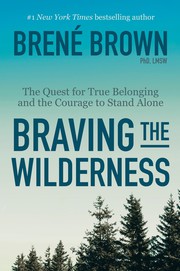
Braving the Wilderness: The quest for true belonging and the courage to stand alone
Belonging to yourself first lets you stand alone and still stay close to others.
2,004-word summary · 9 min read

The Untethered Soul
Singer names the noisy inner voice and shows how watching thoughts, loosening old hurt, and keeping the heart open through surrender can ease daily suffering…
2,752-word summary · 12 min read
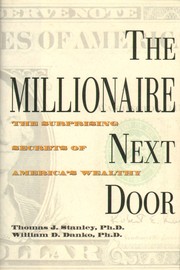
The Millionaire Next Door
Stanley and Danko survey wealthy Americans and find frugal savers living next door, not big spenders, in this 1996 money study.
2,466-word summary · 11 min read
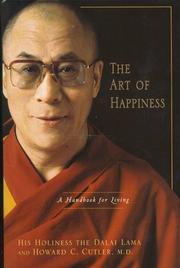
The Art of Happiness
The Dalai Lama and psychiatrist Howard Cutler link lasting happiness to training the mind, human warmth, compassion, and basic spiritual values for daily life.
3,394-word summary · 15 min read
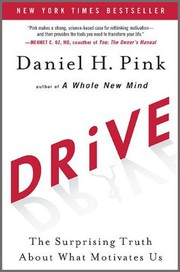
Drive: The Surprising Truth About What Motivates Us
Pink argues fair pay plus autonomy, mastery, and purpose at work beat carrots and sticks, using FedEx days, ROWE, flow, and clear Goldilocks tasks to explain…
2,339-word summary · 10 min read
SuperFreakonomics: Global Cooling, Patriotic Prostitutes And Why Suicide Bombers Should Buy Life Insurance
Levitt and Dubner apply incentives to prostitutes, suicide bombers, doctors, and climate fixes with cheeky data.
2,007-word summary · 9 min read
Predictably Irrational
Behavioral economist Dan Ariely shows why we overpay, procrastinate, and misjudge through simple experiments.
2,183-word summary · 10 min read
Grit
A psychologist argues sustained passion plus perseverance beats raw talent, and shows how grit can be grown.
2,432-word summary · 11 min read

Getting Things Done: The Art of Stress-Free Productivity
Capture all, clarify next moves, sort by context, review weekly, and engage calmly like water.
2,030-word summary · 9 min read
The Happiness Project
Gretchen Rubin spends a year testing monthly resolutions on energy, marriage, work, parenting, and play, tracking small habits to build a happier ordinary…
3,516-word summary · 16 min read