
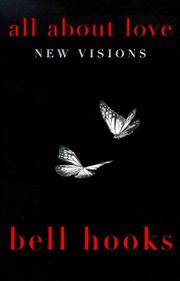
All About Love: New Visions
2,385-word summary 11 min read 239 pages in the book
- First published
- 2000
- Publisher
- William Morrow
- Pages
- 239
- ISBN
- 9780688168445
Reading options
What's inside (10 sections)
The line bell hooks keeps circling back to in this book is not hers. She borrows it from the psychiatrist M. Scott Peck, who defines love as the will to extend one's self for the purpose of nurturing one's own or another's spiritual growth. For hooks that definition is a crowbar. It pries love out of the soft place most of us store it, the place of feeling and accident and chemistry, and sets it down among decision, discipline, and work. If love is a verb, then it can be learned and practiced, and if it is a choice, then it can also be refused. Much of what follows is hooks working out the consequences of that reframing, and much of the book's staying power comes from how much it costs her to think it through.
All About Love: New Visions appeared in 2000, published by William Morrow, and runs 239 pages in that original edition, which carries ISBN 978-0-688-16844-5. It is not a work of scholarship in the way her earlier books on race and pedagogy were. It reads instead like thirteen connected essays, part memoir, part cultural criticism, part something like a sermon. hooks had spent two decades thinking about patriarchy, class, and the ways power shapes intimate life. Here she turns those same instruments on the subject she had avoided most of her life. The result sold steadily for years and then, long after her death, found a second audience among readers who quote it to each other the way people pass along a remedy.
Love as an Action
The first move hooks makes is about language. We say I love you when we mean I need you, or I am attached to you, or I would be lost without you, and the words hide more than they reveal. She spends the opening chapter trying to give love a meaning precise enough to be tested, which is why she reaches for Peck. Love, on that account, is not the feeling that arrives in the chest. It is the decision to help another person grow, and to grow oneself, and it is proven by what a person does rather than what a person announces.
From Erich Fromm she takes a set of components that give the definition some teeth. Love, Fromm argues in The Art of Loving, includes care, responsibility, respect, and knowledge. hooks uses these less as a checklist than as a way of catching counterfeits. Someone can say they care and still belittle you. Someone can claim responsibility and never ask what you actually need. Respect means seeing a person as they are, not as a project you are improving. Knowledge means paying close enough attention to understand someone over time. When those four things are missing, hooks says, what remains is not a lesser love. It is not love at all.
This is where the book's hardest sentence sits, and it repeats in different forms: love and abuse cannot coexist. hooks will not allow the two to be blended into something tolerable. A household ruled by fear, a partnership in which one person shrinks so the other can stay large, a parent who provides materially while inflicting cruelty, none of these qualify, no matter how often the word is used. Her phrase for the test is plain. Love is as love does.
She also sorts out a confusion that runs through the whole book. Psychoanalysis has a word, cathexis, for the emotional charge we attach to people, the investment that can feel enormous without being love. hooks admits she has felt cathexis for relatives she did not love and probably could not love. Attachment is not the same as care. Habit is not the same as commitment. Naming the difference lets her say something unfashionable: a great many relationships that everyone, including the people inside them, calls loving are held together by familiarity, obligation, or fear.
The First Lessons, Learned at Home
If love is a practice, then the place most of us first practice it is a family, and hooks is unsparing about how badly that tends to go. Children, she writes, learn what love means from what is done to them. In the second chapter she looks at households where children are hit, shamed, and told it is for their own good. She draws on her own upbringing in a large Black family in Kentucky, where the language of love coexisted with punishment, and where affection could be withheld as a weapon. She is careful not to turn her parents into villains, but she refuses to dress up what happened either.
The chapter argues that we are taught to confuse domination with love, especially toward the powerless. Obedience gets praised as proof of a good child. Fear gets mistaken for respect. hooks notices how often the same culture that sentimentalizes children also tolerates their pain. She wants a different lesson passed down, one in which adults tell children plainly that they are loved and then behave as though it were true. The wounded child, as she calls it, carries the first version of love into every later relationship, and keeps choosing partners who repeat the old arrangement.
Honesty and the False Self
The third chapter goes after lying, and hooks is at her best when she is blunt about why people do it. She describes how girls are socialized to please, to smooth things over, to say what a man wants to hear, and how boys are taught to build a false self that never admits fear or need. Both habits make love impossible, because love requires that two people actually be present to each other. A person hiding behind a performance cannot be known, and a person who cannot be known cannot really be loved.
Her image for this is the wounded child again, the boy silenced when he first told the truth, the girl taught that she had to become someone else to be wanted. hooks treats honesty as a discipline rather than a personality trait. Telling the truth to yourself is the first step, and it is harder than it sounds, because years of pretending erode the memory of what you actually feel. She wants readers to notice the small evasions, the polite agreements, the silences that keep the peace at the cost of connection. To love well, she argues, you have to be willing to hear another person's truth, which means you first have to survive hearing your own.
Commitment and the Love Ethic
A chapter on commitment takes on the assumption that love is something that happens to you. hooks insists it is something you choose, again and again, and that you can choose it even when you are single. Commitment here is not a vow to one person so much as a stance toward the world, a decision to live by what Fromm called a love ethic. That phrase does a lot of work in the book. It means taking love as the standard against which you measure your choices, in private and in public.
Once she raises the love ethic, hooks widens the frame. She argues that a culture obsessed with money and status cannot teach love, because it trains people to see each other as instruments. In the chapters on values and greed she describes a society that measures worth by possessions and treats the desire to accumulate as natural. She is not subtle about the damage. When people are taught that their value lies in what they own, they bring a transactional logic into their closest relationships, and they call the resulting arrangement love. She is also not naïve about how hard it is to refuse. hooks allows that this is a lonely position, especially for people who were told that safety meant having more.
Community, Mutuality, and the Trouble with Romance
The book refuses to let love stay inside the couple. hooks spends several chapters on the forms of love that a romance-obsessed culture overlooks, chiefly friendship and community. She writes about choosing to live in a working-class, racially mixed neighborhood instead of a quieter place, and about the ordinary texture of that choice, the neighbors who check on each other, the children who belong to everyone, the way care gets distributed when people live close enough to need one another. For hooks this is love doing its daily work, without candlelight and without a partner.
Mutuality is her term for the condition love requires: two people meeting as equals. She is honest about how often power gets in the way, and she names the usual suspects, gender, race, and class. A relationship can look like love on the surface while one person holds the upper hand, and the person holding it may not even see it. She is particularly sharp about the way women are trained to want a rescuer and men are trained to want someone to rescue, an arrangement that flatters both and leaves neither equal.
Then she turns to romance itself, and this is where some readers will feel a sting. hooks loves romance; she just refuses to let it stand in for love. Romance is excitement, novelty, the feeling of being chosen, and she is not against any of it. What worries her is the story that romance is the destination, that a single person arrives and that this arrival solves the underlying problem of being unloved. She writes about waiting for the ideal partner, about partners who satisfy the outward requirements while quietly failing the inner ones, and about the courage it takes to leave a relationship that looks right and feels wrong. Much of the chapter is about learning to distinguish sweet love, the shared pleasure of two people, from real love, the mutual work of two people growing.
Grief
Death gets a chapter, and it is one of the most affecting in the book. hooks writes about losing her brother and about a family that had no language for loss, a culture that treats grief as a problem to be managed and moves people along quickly toward normal. She argues that denying death deforms love, because a love that refuses to face loss is only in it for the good part. A willingness to grieve is part of the willingness to love.
She draws a connection many readers have quoted since: grief is not the opposite of love but one of its forms. To hold someone in memory, to let their absence ache, to keep telling the truth about who they were, these are acts of love that continue after the person is gone. hooks is not interested in closure. She is interested in a way of living that keeps the dead inside the world of the living, and in teaching children that death is part of life rather than a secret. Touch belongs here too, oddly as that seems. Earlier in the book she notices how physically starved many people are, how affection gets sexualized or rationed, and how much healing a hand on the shoulder can carry. Bodies need one another, and a culture that touches only in bed or in combat has cut off a channel through which love moves.
Healing and Redemption
The last stretch of the book is about repair. hooks does not pretend that childhood wounds disappear; she describes her own work, therapy included, and the slow process of learning to love herself. Self-love is not vanity here. It is the precondition for loving anyone else, because a person who cannot tolerate their own company will use others to hold the parts they cannot face. The book pushes against the idea that suffering is the price of depth. hooks insists that people can change, and that love is one of the forces that makes it possible.
Her word for this is redemption, a word she takes from the Black church she grew up in and then reclaims on her own terms. Redemption, in these pages, is not escape from the past. It is the possibility of a different future, a life in which the love you did not receive as a child can still be given and still be found. The closing chapters grow more spiritual, with talk of divine love and of love as a kind of destiny. She quotes Rilke on love as the most difficult of all our tasks, the work for which everything else is preparation, and she means it.
What Holds Up
Reading the book again, its faults are as visible as its strengths. hooks repeats. The same definitions return chapter after chapter, the same examples come back, and an editor willing to be tougher could have cut the book by a quarter. Some of her broad claims about our culture, or about patriarchy, are asked to do more work than they can bear, and readers who want evidence rather than assertion will sometimes be left holding a generalization. She moves between memoir, social theory, and self-help without much worry about the seams, and the spiritual language of the final chapters will not land for everyone.
There is also a fair complaint that the book, for all its warmth, can be abstract where it should be concrete. hooks tells us that love is an action but rarely walks us through a particular hard conversation in enough detail to show the action being performed. Readers who want a manual will not find one here. Readers who valued the rigorous theorist of her earlier work sometimes grumbled that she had wandered into the self-help aisle, though the book is plainly more than that.
And yet the unevenness is part of why it lasts. What hooks offers is not a system but a provocation, and the provocation has held up unusually well. She asks a question most of us avoid: whether the thing we call love in our own lives would survive the definition we claim to believe. It is not a comfortable question. The book is most useful to people willing to answer it slowly. Anyone looking for a tidy philosophy lesson should go elsewhere. Anyone who has ever confused being needed with being loved will find that hooks wrote this one for them.
FAQ
What definition of love does bell hooks use in All About Love?
She borrows M. Scott Peck's definition, love as the will to extend oneself for the purpose of nurturing one's own or another's spiritual growth, and treats love as a choice and an action rather than a feeling.
When was All About Love published and by whom?
It was first published in 2000 by William Morrow. The original edition runs 239 pages and carries ISBN 978-0-688-16844-5.
Is All About Love a self-help book?
It blends memoir, cultural criticism, and self-help. hooks moves between her own life and arguments about patriarchy and culture, so it reads more like connected essays than a step-by-step guide.
Similar books
Attached
A psychiatrist and a psychologist explain adult attachment styles and show how anxious, avoidant, and secure patterns shape dating, conflict, and the search…
2,157-word summary · 10 min read
Quiet
Cain traces the Extrovert Ideal from Harvard Business School to open offices and defends the power of quiet.
2,898-word summary · 13 min read
Nudge: Improving Decisions About Health, Wealth, and Happiness
Thaler and Sunstein show how defaults, framing, and social cues steer choices, and argue for choice architecture with an opt-out.
3,146-word summary · 14 min read
What Happened to You?
Oprah Winfrey and psychiatrist Bruce Perry explain how early experience shapes the brain, and why asking what happened to someone works better than asking what…
2,238-word summary · 10 min read

The Courage to Be Disliked: The Japanese Phenomenon That Shows You How to Change Your Life and Achieve Real Happiness
A philosopher and an angry young man argue over five nights about Adlerian psychology, trauma, approval, and the freedom to be disliked.
2,054-word summary · 9 min read

Moonwalking with Einstein: The Art and Science of Remembering Everything
A journalist spends a year training for the U.S. Memory Championship and discovers that extraordinary memory is mostly technique, attention, and a lot of…
2,027-word summary · 9 min read
The Total Money Makeover: A Proven Plan for Financial Fitness
Dave Ramsey lays out seven Baby Steps, from a $1,000 starter fund to a paid-off house, with the debt snowball at the center.
2,663-word summary · 12 min read
Don't Sweat the Small Stuff ... and It's All Small Stuff: Simple Ways to Keep the Little Things from Taking Over Your Life
Richard Carlson’s 1997 bestseller offers one hundred short chapters on lowering the volume on daily irritations, and it is more pragmatic than its title…
2,502-word summary · 11 min read
Made to Stick: Why Some Ideas Survive and Others Die
The Heath brothers break down why some ideas vanish on contact while others lodge in memory, tracing six traits that make a message stick.
2,527-word summary · 11 min read

Four Thousand Weeks: Time Management for Mortals
Oliver Burkeman turns the whole productivity project on its head, arguing that a human lifespan of roughly four thousand weeks is not a problem to optimize…
2,447-word summary · 11 min read

Dear Girls: Intimate Tales, Untold Secrets & Advice for Living Your Best Life
Ali Wong's debut collects fourteen letters to her daughters, covering sex, money, work, marriage, Vietnam, and being a working Asian American mother.
2,266-word summary · 10 min read

Why I'm No Longer Talking to White People About Race
Reni Eddo-Lodge traces black British history and shows how institutions, culture, and everyday assumptions keep producing racial inequality.
2,071-word summary · 9 min read
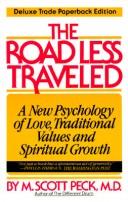
The Road Less Traveled: A New Psychology of Love, Traditional Values and Spiritual Growth
M. Scott Peck argues that maturity begins with accepting difficulty, then builds discipline, love, and spiritual growth through honest, often painful work.
2,200-word summary · 10 min read
How to Stop Worrying and Start Living
Carnegie offers day-tight routines for worry built from interviews and worker stories.
2,505-word summary · 11 min read
Dare to Lead
Research on courage shows how leaders build trust through vulnerability and clear values.
2,442-word summary · 11 min read
10% Happier
An ABC newsman panics on air, then finds meditation without losing his edge.
2,590-word summary · 12 min read
Essentialism
McKeown argues for less but better: discern the vital few, refuse the trivial many, and use buffers, small wins, and steady routines so key work gets done well…
2,421-word summary · 11 min read
Braving the Wilderness: The quest for true belonging and the courage to stand alone
Belonging to yourself first lets you stand alone and still stay close to others.
2,004-word summary · 9 min read
The Untethered Soul
Singer names the noisy inner voice and shows how watching thoughts, loosening old hurt, and keeping the heart open through surrender can ease daily suffering…
2,752-word summary · 12 min read
The Art of Happiness
The Dalai Lama and psychiatrist Howard Cutler link lasting happiness to training the mind, human warmth, compassion, and basic spiritual values for daily life.
3,394-word summary · 15 min read
Tiny Beautiful Things: Advice on Love and Life from Dear Sugar
Dear Sugar answers letters on love, grief, and work with tough empathy drawn from her own losses.
2,253-word summary · 10 min read
Grit
A psychologist argues sustained passion plus perseverance beats raw talent, and shows how grit can be grown.
2,432-word summary · 11 min read
Emotional Intelligence
Goleman argues self awareness and empathy shape success more than IQ alone.
2,026-word summary · 9 min read
Three Women
Three American women tell years of desire, grooming, marriage and arrangement.
1,983-word summary · 9 min read
Influence: The Psychology of Persuasion
Six levers plus unity explain why people say yes, learned undercover in salesrooms and labs.
2,030-word summary · 9 min read
The Happiness Project
Gretchen Rubin spends a year testing monthly resolutions on energy, marriage, work, parenting, and play, tracking small habits to build a happier ordinary…
3,516-word summary · 16 min read
The Gifts of Imperfection
Shame research turned into ten guideposts for dropping perfectionism and living with courage and connection.
2,799-word summary · 12 min read
Men Are from Mars, Women Are from Venus
Gray's Mars-and-Venus guide to why men withdraw and women talk, and how small daily acts of care keep a relationship working.
2,073-word summary · 9 min read
Factfulness
A doctor shows why we misread global trends and offers ten habits for seeing progress clearly.
2,247-word summary · 10 min read
A New Earth
Tolle maps ego pain and shows how presence can loosen roles, thoughts, and suffering.
1,909-word summary · 8 min read