
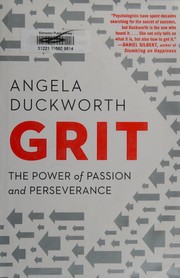
Grit
2,432-word summary 11 min read 352 pages in the book
- First published
- 2016
- Publisher
- Scribner
- Pages
- 352
- ISBN
- 9781501111105
Reading options
What's inside (8 sections)
I picked up Grit because of a story about the author that hooked me before I read a page. Angela Duckworth grew up hearing her father, a research scientist, say she had no genius. Then in 2013 she won a MacArthur fellowship, the so-called genius grant, for her research on why some people keep going and others quit. You could not invent a better setup for this book. Scribner published it in May 2016 as a 352 page hardcover, and it became one of those rare psychology books that escapes the lab and lands on nightstands, in locker rooms, and on teacher training syllabi. I read it in four sittings, argued with parts of it, and finished with one uncomfortable question aimed at myself, which is more than most self-improvement books manage.
The daughter her father called no genius
Duckworth does not open with theory. She opens with her own resume, which zigzags. She worked as a management consultant, left to teach math in public schools, and noticed something that bothered her. The kids with the highest IQs were not always the ones who learned the most. Some quick, brilliant students coasted and stalled. Some slower ones ground forward day after day and passed them by. Report cards rewarded talent. Reality seemed to reward something else.
That observation sent her back to school, a PhD in psychology at the University of Pennsylvania under Martin Seligman, the founder of positive psychology and the man behind the famous learned helplessness experiments with dogs. She wanted to study the opposite of giving up. What makes a person keep pushing toward a hard goal for years? She interviewed high achievers in many fields, built a short questionnaire she called the Grit Scale, and started testing it wherever striving gets measured in public. Military academies. Spelling bees. Rookie teachers. Sales floors.
The irony she returns to more than once is the family dinner table. Her father valued brilliance above all else and told her plainly she did not have it. Duckworth's whole career reads as a reply, not an angry one, more like a lab report filed across decades. Maybe brilliance was never the point. Maybe staying power was. I found this thread moving because it never turns bitter. She clearly loves her father. She just thinks he measured the wrong thing, and she spent her career building a better ruler.
One early admission matters for everything after. Duckworth is upfront that grit overlaps with older ideas, especially conscientiousness, the Big Five personality trait covering diligence and self-control. She does not pretend she discovered a new continent. Her claim is narrower and more practical. Of all the ways to describe stick-to-it-iveness, the combination of sustained passion and sustained perseverance predicts real outcomes, and both can be grown. That modesty made me trust her more than the average guru voice.
What grit actually is, and the two equations
So what is grit, exactly? Duckworth defines it as passion and perseverance for especially long-term goals. Two words in that sentence do heavy work. Passion here does not mean fireworks or falling in love with a subject in a week. It means a direction you keep, an interest that deepens over years. Perseverance does not mean one heroic all-nighter. It means showing up again after failure, boredom, and the plateau where progress goes flat for months.
The distinction she draws between intensity and stamina stuck with me. Plenty of people can sprint. New Year's resolutions, Monday diets, the first week of guitar. Grit is what remains in month nine when the novelty is gone and nobody claps. She tells the story of her own early running habit, or rather the lack of one, to make the point concrete. Enthusiasm is common. Follow-through is rare. The people who achieve hard things are usually the ones still in the room when it stops being fun.
Then come the two equations, the most quoted pages in the book. Talent times effort equals skill. Skill times effort equals achievement. Effort counts twice, once to build the skill and once to turn the skill into something real. Talent matters in her model. She never says it does not. A fast kid learns scales faster. But without effort the talent sits idle, and with effort the slower kid can close the gap and then some. I have seen teachers argue about these two lines for years, which tells you they hit a nerve. They flatter nobody and excuse nobody. If you are talented, the math still demands work. If you are not, the math still leaves the door open.
She also takes on our bias toward naturals. In experiments she describes, people rate effortless achievers as more gifted even when the striver achieves exactly as much, and they would rather hire or back the natural. This rang true for me. We love the story of the kid who never practices and aces the recital. Duckworth's dry reply is that the recital still had to be played. Somebody practiced, or somebody will lose to somebody who did.
West Point and the spelling bee
The research chapters are the strongest part of the book because they leave the office and go where quitting has consequences. The famous one is West Point. Every summer, new cadets endure Beast Barracks, six weeks of screaming, marching, sleep loss, and physical punishment designed to break the uncommitted. A chunk of each class leaves. Duckworth gave cadets her short grit questionnaire on arrival and found it predicted who survived Beast better than the academy's own admissions composite, the mix of test scores, class rank, and fitness that the Army spent decades refining. Scores and push-ups measured capacity. Her twelve questions measured staying.
I love this finding and I also want to squeeze it, because Duckworth herself adds the squeeze. Grit predicted retention, not who became a great officer. It measured one thing well rather than everything. That honesty runs through the chapter. She describes cadets who scored high and still struggled, and low scorers who found reasons to stay. Averages are not destinies. But for an admissions office choosing among thousands of qualified teenagers, one more signal that actually forecasts persistence is worth real money and real careers.
Then the spelling bee study, which is my favorite section in the whole book. She surveyed finalists at the National Spelling Bee and tracked how far they advanced. The winners were not the kids who loved word games or devoured novels, though many did both. The edge belonged to the kids who did the lonely work, long solo sessions memorizing roots and spelling lists, the least enjoyable part of preparation. Hours of solitary study forecasted survival round by round. Being read to as a small child did not. Quizzing with a parent, fun as it was, counted for less than the grind nobody watched.
There is a pattern across her field sites, and she states it plainly. Rookie teachers in demanding schools who scored higher on grit stayed longer and their students learned more. Salespeople with more grit kept their jobs and closed more. Nobody in these chapters succeeds by discovering a secret. They succeed by repeating unglamorous work past the point where most people stop. Reading three such studies in a row risks feeling repetitive, and I felt the drag slightly in the third. But the repetition is the argument. Grit shows up wherever effort compounds, across settings that share little else.
Interest, practice, purpose
The second half of the book asks the practical question. If grit matters, can you grow it? Duckworth's answer is yes, slowly, from the inside out, through four channels. Interest, practice, purpose, and hope. Three of them get full treatment here, and each chapter mixes lab findings with portraits of obsessives.
Interest comes first, and her advice surprised me. You do not find your passion by thinking harder. You trigger it by trying things, then develop it by going deeper. Beginners need exposure and encouragement before commitment. She describes her own daughters sampling activities, and warns parents against forcing early specialization or, just as bad, letting kids quit everything at the first boredom. Interest starts as play and grows through patient contact. It also needs what she calls a beginner's tolerance for clumsiness. Nobody loves something they are terrible at on day one unless someone makes day one fun.
Practice is the chapter that stung. Drawing on Anders Ericsson's research on expert performers, she lays out deliberate practice, and it sounds nothing like jamming with friends. You pick a stretch goal just beyond your reach. You focus completely. You get feedback fast. You repeat the weak spot until it stops being weak. Then you do it again tomorrow. Ericsson's musicians, athletes, and chess players improved through thousands of hours of exactly this, and Duckworth stresses the part everyone skips. Real practice is not enjoyable in the moment. Flow, that glowing state of total absorption, feels wonderful but mostly happens when using mastered skills, not when building new ones. If your practice always feels great, she suggests, you are probably rehearsing what you already know.
Purpose is the chapter that lifts the mood. Gritty people, she finds, usually connect their work to other people. A personal goal with a beyond-the-self reason survives bad weeks better than pure ambition. She describes hospital custodians studied by Amy Wrzesniewski, cleaners doing the same mopping and hauling, some of whom saw themselves as part of healing while others saw only a job. Same tasks, different story, different stamina. She also cites classroom experiments where students who wrote about how schoolwork could help others studied longer and scored higher. I am mildly skeptical of how large such effects are outside the lab, and Duckworth oversells this section a touch. But the core claim feels right from life. The runners I know who keep going all run for someone, a kid, a team, a cause, as much as for a time on a clock.
Hope, parenting, and the Hard Thing Rule
Hope is the fourth channel, and Duckworth means something specific by it, closer to Carol Dweck's growth mindset than to optimism as a mood. The belief that your abilities can change with effort. She traces the idea back to Seligman's old helplessness work, dogs and later people who learned that action changes outcomes, and to the students who treat failure as information instead of a verdict. A fixed mindset hears a bad grade as a label. A growth mindset hears it as a location on a map. One stops. The other reroutes.
This is where the book speaks most directly to parents and teachers, and where Duckworth gets personal about her own house. She reviews Diana Baumrind's parenting styles and lands where the data lands. The kids who thrive tend to have demanding and warm parents at once, high standards plus deep support. Strict without warmth breeds fear. Warmth without standards breeds drift. She calls the combination wise parenting, and she admits, with humor, how often she falls short of it before breakfast.
Out of this comes the book's most famous practical invention, the Hard Thing Rule that governs her family. Everyone, parents included, must do something hard, something requiring sustained practice. You can quit, but only at a natural stopping point, never mid-season, never on a bad day. And you choose the hard thing yourself. Three rules, plain language, and I watched half my parent friends adopt some version within a year of publication. The beauty is how it teaches all four grit channels at once. The kid picks an interest, practices deliberately, finds purpose on a team, and learns that plates pass. My reservation is one Duckworth partly shares. A household rule is easier to enforce in a comfortable home than in a family working three jobs. She knows grit language can sound tone-deaf about poverty, and she says so. Systems matter too.
Culture, teams, and honest doubts
The final stretch looks outward. Grit grows faster, she argues, inside a gritty culture than alone. Join the runners and you run. Join the complainers and you complain. Her showcase is the Seattle Seahawks under Pete Carroll, a program built on relentless competition and positive atmosphere at once. Carroll recruited players other teams overlooked and coached effort as a skill, practicing hard, talking openly about mindset, treating each roster spot as earned daily. Duckworth embedded with the team and came away convinced that culture did real work. Being surrounded by strivers made striving normal.
I bought the sports chapter halfway. Team cultures clearly shape behavior, and the Seahawks story is told with energy. But elite football selects for extreme competitors before coaching starts, so cause and effect blur. Duckworth would probably agree, and to her credit she frames culture as an amplifier rather than a magic spell. Put a willing kid on a serious team and both rise. Put a miserable kid there and you mostly get misery with better drills.
So where does the book land, and what should a skeptic keep? The fair doubts first. Critics, led by a widely cited meta-analysis from Credé and colleagues, found that grit, as measured, overlaps heavily with conscientiousness and adds only a little prediction beyond it. Duckworth accepts the overlap and argues the framework still helps people act, which is true but thinner than the marketing copy. Self-report scales can be gamed. Long-term passion is a strange thing to demand from a fourteen-year-old. And the darkest worry is moral, that grit talk lets schools and bosses blame strugglers for lacking character while ignoring empty fridges and broken systems. Duckworth answers this one head-on in the final pages. Build grit and fix conditions. Refuse the choice.
My own verdict sits between the fans and the debunkers. Grit is not a new law of nature, and the last third repeats itself. But the core message has changed how I spend my evenings. I stopped asking whether I was talented enough for a long project and started asking whether my practice had a stretch goal and fast feedback. I picked one hard thing and gave it a season instead of a week. Small shifts, real results. The father who worried about genius gets the last word in my memory of this book. Duckworth never proves him wrong on his terms. She proves the terms were wrong. Effort, aimed steadily for years, builds the thing talent only promises. That is worth 352 pages of anyone's time.
FAQ
When was Grit published?
Scribner published it on May 3, 2016. The first hardcover runs 352 pages with ISBN 9781501111105.
What is the main argument of Grit?
Sustained passion and perseverance predict achievement better than talent alone, and grit can be deliberately grown.
Does Duckworth claim grit beats talent or excuses inequality?
No. She says talent matters and insists grit work must pair with fixing broken systems, not blaming strugglers.
Similar books

Moonwalking with Einstein: The Art and Science of Remembering Everything
A journalist spends a year training for the U.S. Memory Championship and discovers that extraordinary memory is mostly technique, attention, and a lot of…
2,027-word summary · 9 min read
Think and Grow Rich
Hill teaches desire, faith and autosuggestion, distilling lessons from Carnegie interviews into thirteen principles for success.
2,458-word summary · 11 min read

What Happened to You?
Oprah Winfrey and psychiatrist Bruce Perry explain how early experience shapes the brain, and why asking what happened to someone works better than asking what…
2,238-word summary · 10 min read

The Courage to Be Disliked: The Japanese Phenomenon That Shows You How to Change Your Life and Achieve Real Happiness
A philosopher and an angry young man argue over five nights about Adlerian psychology, trauma, approval, and the freedom to be disliked.
2,054-word summary · 9 min read

The Total Money Makeover: A Proven Plan for Financial Fitness
Dave Ramsey lays out seven Baby Steps, from a $1,000 starter fund to a paid-off house, with the debt snowball at the center.
2,663-word summary · 12 min read
Don't Sweat the Small Stuff ... and It's All Small Stuff: Simple Ways to Keep the Little Things from Taking Over Your Life
Richard Carlson’s 1997 bestseller offers one hundred short chapters on lowering the volume on daily irritations, and it is more pragmatic than its title…
2,502-word summary · 11 min read

Made to Stick: Why Some Ideas Survive and Others Die
The Heath brothers break down why some ideas vanish on contact while others lodge in memory, tracing six traits that make a message stick.
2,527-word summary · 11 min read
Four Thousand Weeks: Time Management for Mortals
Oliver Burkeman turns the whole productivity project on its head, arguing that a human lifespan of roughly four thousand weeks is not a problem to optimize…
2,447-word summary · 11 min read
The Magic of Thinking Big
Schwartz's 1959 self-help classic argues that success follows from the size of your thinking, supported by sales anecdotes, vocabulary drills and goal setting.
2,579-word summary · 11 min read
The Road Less Traveled: A New Psychology of Love, Traditional Values and Spiritual Growth
M. Scott Peck argues that maturity begins with accepting difficulty, then builds discipline, love, and spiritual growth through honest, often painful work.
2,200-word summary · 10 min read

Attached
A psychiatrist and a psychologist explain adult attachment styles and show how anxious, avoidant, and secure patterns shape dating, conflict, and the search…
2,157-word summary · 10 min read
All About Love: New Visions
bell hooks borrows a definition of love as an action rather than a feeling, then spends thirteen chapters showing how hard it is to practice.
2,385-word summary · 11 min read
How to Stop Worrying and Start Living
Carnegie offers day-tight routines for worry built from interviews and worker stories.
2,505-word summary · 11 min read
Dare to Lead
Research on courage shows how leaders build trust through vulnerability and clear values.
2,442-word summary · 11 min read
10% Happier
An ABC newsman panics on air, then finds meditation without losing his edge.
2,590-word summary · 12 min read
Essentialism
McKeown argues for less but better: discern the vital few, refuse the trivial many, and use buffers, small wins, and steady routines so key work gets done well…
2,421-word summary · 11 min read
Braving the Wilderness: The quest for true belonging and the courage to stand alone
Belonging to yourself first lets you stand alone and still stay close to others.
2,004-word summary · 9 min read

The Untethered Soul
Singer names the noisy inner voice and shows how watching thoughts, loosening old hurt, and keeping the heart open through surrender can ease daily suffering…
2,752-word summary · 12 min read
The Art of Happiness
The Dalai Lama and psychiatrist Howard Cutler link lasting happiness to training the mind, human warmth, compassion, and basic spiritual values for daily life.
3,394-word summary · 15 min read
Emotional Intelligence
Goleman argues self awareness and empathy shape success more than IQ alone.
2,026-word summary · 9 min read
Influence: The Psychology of Persuasion
Six levers plus unity explain why people say yes, learned undercover in salesrooms and labs.
2,030-word summary · 9 min read
The Happiness Project
Gretchen Rubin spends a year testing monthly resolutions on energy, marriage, work, parenting, and play, tracking small habits to build a happier ordinary…
3,516-word summary · 16 min read
David and Goliath: Underdogs, Misfits, and the Art of Battling Giants
Gladwell argues disadvantages can become advantages, from biblical sling to dyslexia and class size.
3,197-word summary · 14 min read
The Gifts of Imperfection
Shame research turned into ten guideposts for dropping perfectionism and living with courage and connection.
2,799-word summary · 12 min read
A New Earth
Tolle maps ego pain and shows how presence can loosen roles, thoughts, and suffering.
1,909-word summary · 8 min read
12 Rules for Life
Twelve essays on responsibility from posture to truth to petting cats.
2,045-word summary · 9 min read
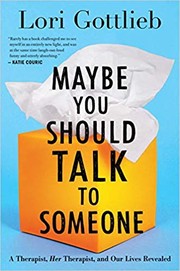
Maybe You Should Talk to Someone
Therapist Lori Gottlieb counsels John, Julie and Rita while seeing her own therapist Wendell after a breakup.
2,234-word summary · 10 min read
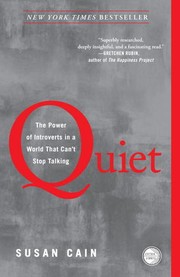
Quiet
Cain traces the Extrovert Ideal from Harvard Business School to open offices and defends the power of quiet.
2,898-word summary · 13 min read
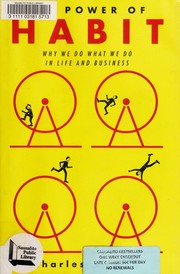
The Power of Habit
Why we do what we do: the cue routine reward loop, keystone habits, and how companies and movements use the same science, from toothpaste to the bus boycott.
2,207-word summary · 10 min read
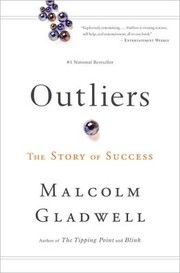
Outliers: The Story of Success
Success comes from practice, timing, and hidden chances more than talent alone.
1,934-word summary · 9 min read