
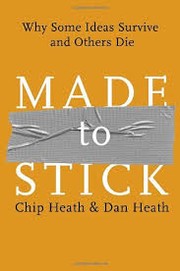
Made to Stick: Why Some Ideas Survive and Others Die
2,527-word summary 11 min read 336 pages in the book
- First published
- 2007
- Publisher
- Random House
- Pages
- 336
- ISBN
- 9781400064281
Reading options
What's inside (10 sections)
- Simple, and the trouble with what that word means
- Unexpected, and the open loop
- Concrete, and why the sense of a brick helps
- Credible, and the problem of self-proving ideas
- Emotional, and why we do not care about averages
- Story, and the narrative as a delivery system
- What the book gets right
- Where it falls short, and what I still use
- Key takeaways
- FAQ
I picked up Made to Stick the week I realized I had explained the same idea to three different people in three different ways, and none of them had remembered it. That is a strange thing for someone who writes for a living to admit, but there it was. The idea was not complicated. I simply could not get it to stick. So a book that promises to explain exactly why some ideas lodge in memory and others slide off felt less like marketing and more like a diagnosis I had asked for.
The book is built around a single observation that is easy to state and hard to sit with. Some ideas survive contact with the world. Urban legends do. Conspiracy theories do. Marketing slogans you have not thought about in twenty years do. Meanwhile, careful, true, important ideas, the kind that organizations spend years developing, vanish the moment a meeting ends. The Heaths want to know what the survivors have that the careful ideas lack. Their answer is that stickiness is not magic and not luck, and that it comes down to a small number of traits you can actually name and practice.
The acronym they build is SUCCESs, with the final s doubled on purpose. Simple, unexpected, concrete, credible, emotional, story. Six traits. What I liked immediately is that none of them are mystical. You cannot read the list and pretend the skill is reserved for naturally brilliant people. It is closer to carpentry than to inspiration. What I liked less, at first, is that the traits pull against each other. Concrete language is not the same as credible authority. Emotional weight is not the same as surprise. The book is really about holding several of them at once, which is harder than checking them off in sequence.
Simple, and the trouble with what that word means
The book opens on the idea of the core, and this is the part I have gone back to most. Simple does not mean simplified. The Heaths are careful about this distinction because the obvious reading of simple, which is to dumb something down until it is nearly contentless, is exactly the thing that makes ideas forgettable. Simple means finding the heart of the thing and then building everything else around it. A Southwest Airlines employee described their strategy as the low cost airline, and that single frame answered a thousand questions the company would otherwise have to negotiate. When a crew needs to decide whether to offer a beer service or keep the turnaround fast, the core makes the decision obvious. The idea is doing work before anyone even argues about it.
There is an echo here of Einstein, or at least of the quote attributed to him, about not explaining something to a six year old if you do not really understand it. The test of whether you have found the core is not whether you can summarize. Anyone can summarize. The test is whether the summary can generate new decisions in someone else's hands. That reframed the whole project for me. I had been treating a summary as a compressed version of a thing, when in fact a good core is a generator. It produces answers you have not thought of yet.
The flip side is that most organizations do not actually know their core. They have a list of seven priorities, which as the book notes is not a list of priorities at all. The useful discipline is subtraction, which is miserable work. You have to cut things you genuinely believe in, on the theory that holding everything at equal weight means holding nothing at weight.
Unexpected, and the open loop
The second trait turns on attention. You cannot get an idea to stick in a mind that has already decided to ignore you, so unexpectedness is about breaking the pattern first. The Heaths use a term I have quoted many times since, the open loop, borrowed from television writing. A good television scene leaves a question hanging that the viewer needs answered, and the need to close that loop is what keeps a person on the couch. Curiosity, in this framing, is not a gentle thing. It is an itch.
The example that stuck with me is the high school history teacher who handed out grades for the first day of class. Students received envelopes marked with their futures. Inside, most got a grade they were pleased with. A few got a grade suggesting they would drop out. The room erupted. The lesson that followed, about how schools sort and label people, landed with a force that no ordinary lecture would have managed, because the teacher had first violated the expectation of what the first day looks like.
There is a real insight buried in this about how much of teaching, and of communication generally, is spent fighting the audience's assumption that they already know what is coming. Once a person has categorized your message as one of the usual kinds, they have already begun to forget it. The unexpected is not decoration. It is the door you have to open before anything else can get in.
What the book does not dwell on, and I think it should have, is the cost of this. Suspense is exhausting. A message that is nothing but surprise, with no payoff, becomes the boy who cried wolf, and audiences learn to stop investing. The Heaths would probably agree, but the chapter moves on before reckoning with how easy it is to overuse the trick.
Concrete, and why the sense of a brick helps
Concrete language is the trait I found easiest to understand and hardest to practice, because abstraction is the natural habitat of anyone who writes or speaks for a living. We reach for words like synergy and engagement and value, not because we are lazy but because we are usually talking about things that genuinely do not have a shape. The argument against that habit is memory research, much of it tracing back to the old imagery work, showing that people remember things tied to senses and objects far better than they remember categories.
The vivid case the book returns to is the folk wisdom that you should not eat wax fruit, and the related observation about the difficulty of describing a bicycle to someone who has never seen one. Abstraction is not always a choice you are making. Sometimes the thing simply resists being made concrete, and you have to work at it. The military term for this is chest candy, and a general who can point to a row of medals has communicated rank and history in a single glance, where a paragraph would have failed.
Concrete also does something sneakier. It is a credibility engine. A story about a specific person, with a name and a town, tends to be believed in a way that a statistic about populations is not, even when the statistic is far more reliable. The Heaths are honest that this is a little troubling. It means that the vivid individual case can beat the true aggregate, which is one of the great failure modes of human reasoning. They do not pause there long, but the tension is present.
Credible, and the problem of self-proving ideas
Credibility gets a chapter that I think is the most quietly radical in the book, because it argues that external authority is a weak tool compared to something you can build into the idea itself. A statistic from a prestigious institution is borrowed credibility. It lasts exactly as long as the audience trusts the institution, which in the current climate is not long. The stronger move is to build something the audience can test with their own experience.
The authors' favorite example is a program that taught anti-smoking lessons by having students make their own tar models, or by running a cow lung through a machine and letting students compare healthy tissue to smoker's tissue. No statistic in the world competes with the moment a teenager holds that jar. The credibility is not asserted. It is demonstrated, and it survives because it is the student's own observation, not someone else's claim.
There is a famous experiment they cite about the cashew problem, which illustrates something adjacent. A caterer found that removing an item from a buffet increased complaints, because the remaining items no longer had anything to be contrasted against. Credibility in an idea works the same way. It does not float free. It is established in relation to what the audience already accepts, and if you do not know what they accept, you are guessing.
The other half of the chapter is the honest confession, which is a remarkably effective device. A company that admits its trucks get worse gas mileage than competitors, and explains why, tends to be believed about its safety record. The admission costs something, and that cost is exactly what makes it count. I have used this in my own writing more than once and it has never stopped feeling risky, which is probably why it works.
Emotional, and why we do not care about averages
The emotional chapter takes aim at a habit I did not know I had, which is the assumption that if the facts are strong enough, feeling will follow. It does not. The book makes the case with a study about a starving girl named Rokia, whose story moved people to give, while the same information presented as a statistic about millions of displaced people did not. Rokia is the identifiable individual, and the statistics are, cognitively speaking, a blur.
This is uncomfortable for anyone who cares about being accurate, because the implication is that the more precisely you describe a large problem, the less anyone will feel about it. Paul Slovic's work on psychic numbing runs underneath this chapter, and it is a grim foundation. The book's advice is not to lie, but to pair the one story with the aggregate so that the feeling and the scale arrive together. Whether that actually works, or whether the story simply wins and the statistic slides off, is a question the book leaves open.
The deeper argument is that most decisions are made emotionally and then justified rationally, which is the reverse of how we like to think about ourselves. If that is right, then an idea that skips the emotional register is not failing at persuasion. It is failing at reaching the part of the mind that decides.
Story, and the narrative as a delivery system
The final trait is story, and the Heaths are careful to distinguish story from narrative structure, which they treat as a different and slightly dangerous thing. A narrative structure is a framework you can pour facts into, and it tends to produce flat, manipulative content. A story, in their sense, is a real account with a person in it, facing something.
They introduce the idea of the story spine, a template for thinking about challenge, action, and result, which is useful because it is so close to how people already tell each other things over dinner. The argument for why stories work is essentially about mental simulation. When you hear a story, you do not merely listen. You run it, which means you have, in some modest way, already done the thing being described. That simulated experience is far stickier than a description of a conclusion.
The best example in the chapter, and one of the best in the book, is the Nike story about the jogger who was assaulted and whose father had the company make a batch of shoes with his daughter's name on them. It is a story that no corporate mission statement could have generated, and it communicates what the company values more convincingly than any amount of language about values.
What the book gets right
The achievement of Made to Stick is that it turns a vague envy, the envy you feel when someone else's throwaway line outperforms your careful presentation, into something you can work on. That is not a small thing. Most advice about communication is either so abstract it is unusable or so tactical it stops working the moment the context shifts. The SUCCESs framework sits in an unusual middle ground where you can actually hold it in your head while writing an email.
It also, quietly, makes an argument about respect. Every one of the six traits requires you to spend effort on the audience rather than on yourself. Find your core so they do not have to. Surprise them so they will look. Make it concrete so they can see it. Prove it so they can trust it. Make them feel so they will act. Tell it as a story so they can run it. Notice that the subject of every one of those sentences is the reader. A book about sticky ideas is, underneath, a book about paying attention to other people's minds.
The case-study structure is both the book's great strength and its main limitation. Strength, because the examples are vivid and the sheer volume of them makes the patterns hard to dismiss. Limitation, because the examples are selected for success and the failures are mostly implied. You come away with a strong sense of what works and a weaker sense of what to do when the framework does not apply, which is a real gap in the messy middle of actual work.
Where it falls short, and what I still use
If I have a complaint, it is that the book is more confident about the durability of its tricks than it should be. Suspense and surprise are powerful, and they are also exhaustible. An organization that uses open loops in every internal memo will find its people have learned to skim, and no amount of cleverness survives that. The book gestures at this problem without confronting it, and a chapter on restraint would have made the framework more durable than the ideas it describes.
The other gap is that the framework is silent on truth. Nothing in SUCCESs requires the idea to be true, and the authors know it. Conspiracy theories are sticky for exactly the reasons outlined here, and the book says so early, then moves on. That is an honest omission rather than a hidden one, but a reader looking for guidance on the ethics of persuasion will not find much.
For all that, I keep the list taped near my desk, which is the only real test a book like this can be given. When something I have written is not landing, I can usually find the reason in one of the six. Most often it is that I never found the core, or that I reached for an abstraction where a brick would have done the work. That diagnosis has saved me from a great deal of wasted writing, and it came from a book I finished in two sittings and have been borrowing from ever since.
FAQ
What does the SUCCESs framework in Made to Stick stand for?
It stands for Simple, Unexpected, Concrete, Credible, Emotional, and Story. Each letter is a quality that makes an idea more likely to be remembered and repeated.
Who is Made to Stick for?
It is written for anyone who needs a message to travel: marketers, teachers, managers, nonprofit storytellers, and public health communicators. No technical background is assumed.
Is Made to Stick based on real research or just anecdotes?
It leans heavily on case studies and urban legends rather than controlled studies, though it draws on memory and cognitive psychology. Readers who want heavy empirical backing may find it light on citations.
Similar books
The Total Money Makeover: A Proven Plan for Financial Fitness
Dave Ramsey lays out seven Baby Steps, from a $1,000 starter fund to a paid-off house, with the debt snowball at the center.
2,663-word summary · 12 min read
Dare to Lead
Research on courage shows how leaders build trust through vulnerability and clear values.
2,442-word summary · 11 min read
Essentialism
McKeown argues for less but better: discern the vital few, refuse the trivial many, and use buffers, small wins, and steady routines so key work gets done well…
2,421-word summary · 11 min read
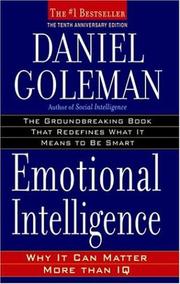
Emotional Intelligence
Goleman argues self awareness and empathy shape success more than IQ alone.
2,026-word summary · 9 min read
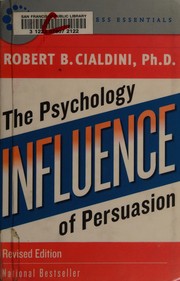
Influence: The Psychology of Persuasion
Six levers plus unity explain why people say yes, learned undercover in salesrooms and labs.
2,030-word summary · 9 min read
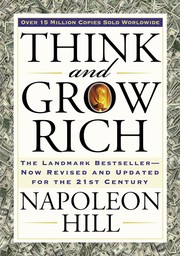
Think and Grow Rich
Hill teaches desire, faith and autosuggestion, distilling lessons from Carnegie interviews into thirteen principles for success.
2,458-word summary · 11 min read
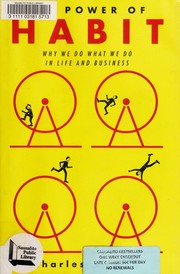
The Power of Habit
Why we do what we do: the cue routine reward loop, keystone habits, and how companies and movements use the same science, from toothpaste to the bus boycott.
2,207-word summary · 10 min read
The Tipping Point: How Little Things Can Make a Big Difference
How tiny shifts push ideas and products past a tipping point into epidemics.
2,014-word summary · 9 min read
Outliers: The Story of Success
Success comes from practice, timing, and hidden chances more than talent alone.
1,934-word summary · 9 min read
What Happened to You?
Oprah Winfrey and psychiatrist Bruce Perry explain how early experience shapes the brain, and why asking what happened to someone works better than asking what…
2,238-word summary · 10 min read
The Courage to Be Disliked: The Japanese Phenomenon That Shows You How to Change Your Life and Achieve Real Happiness
A philosopher and an angry young man argue over five nights about Adlerian psychology, trauma, approval, and the freedom to be disliked.
2,054-word summary · 9 min read
Moonwalking with Einstein: The Art and Science of Remembering Everything
A journalist spends a year training for the U.S. Memory Championship and discovers that extraordinary memory is mostly technique, attention, and a lot of…
2,027-word summary · 9 min read
Don't Sweat the Small Stuff ... and It's All Small Stuff: Simple Ways to Keep the Little Things from Taking Over Your Life
Richard Carlson’s 1997 bestseller offers one hundred short chapters on lowering the volume on daily irritations, and it is more pragmatic than its title…
2,502-word summary · 11 min read
Four Thousand Weeks: Time Management for Mortals
Oliver Burkeman turns the whole productivity project on its head, arguing that a human lifespan of roughly four thousand weeks is not a problem to optimize…
2,447-word summary · 11 min read
Cultish: The Language of Fanaticism
Amanda Montell argues that the real machinery of a cult is its vocabulary, and she traces how loaded language from 1960s communes to modern wellness brands and…
2,087-word summary · 9 min read
The Magic of Thinking Big
Schwartz's 1959 self-help classic argues that success follows from the size of your thinking, supported by sales anecdotes, vocabulary drills and goal setting.
2,579-word summary · 11 min read
The Road Less Traveled: A New Psychology of Love, Traditional Values and Spiritual Growth
M. Scott Peck argues that maturity begins with accepting difficulty, then builds discipline, love, and spiritual growth through honest, often painful work.
2,200-word summary · 10 min read

Attached
A psychiatrist and a psychologist explain adult attachment styles and show how anxious, avoidant, and secure patterns shape dating, conflict, and the search…
2,157-word summary · 10 min read
All About Love: New Visions
bell hooks borrows a definition of love as an action rather than a feeling, then spends thirteen chapters showing how hard it is to practice.
2,385-word summary · 11 min read
What the Dog Saw and Other Adventures
Nineteen New Yorker essays on pitchmen, ketchup, Enron, profiling, late bloomers and the limits of prediction, arranged in three parts.
2,049-word summary · 9 min read
How to Stop Worrying and Start Living
Carnegie offers day-tight routines for worry built from interviews and worker stories.
2,505-word summary · 11 min read
10% Happier
An ABC newsman panics on air, then finds meditation without losing his edge.
2,590-word summary · 12 min read
Think Again
Adam Grant argues for holding views loosely and testing them like a scientist, moving past preacher, prosecutor, and politician habits at work and in debate.
3,204-word summary · 14 min read
The Black Swan
Taleb argues rare shocks shape history more than models admit, and urges safer exposure over prediction.
2,588-word summary · 12 min read
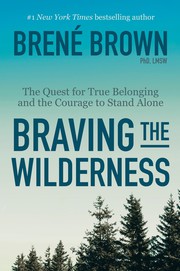
Braving the Wilderness: The quest for true belonging and the courage to stand alone
Belonging to yourself first lets you stand alone and still stay close to others.
2,004-word summary · 9 min read

The Untethered Soul
Singer names the noisy inner voice and shows how watching thoughts, loosening old hurt, and keeping the heart open through surrender can ease daily suffering…
2,752-word summary · 12 min read
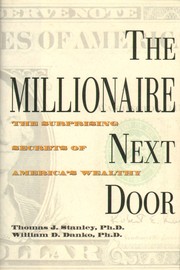
The Millionaire Next Door
Stanley and Danko survey wealthy Americans and find frugal savers living next door, not big spenders, in this 1996 money study.
2,466-word summary · 11 min read
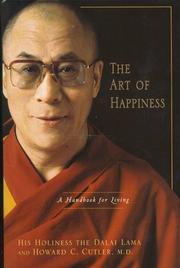
The Art of Happiness
The Dalai Lama and psychiatrist Howard Cutler link lasting happiness to training the mind, human warmth, compassion, and basic spiritual values for daily life.
3,394-word summary · 15 min read
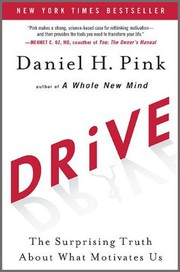
Drive: The Surprising Truth About What Motivates Us
Pink argues fair pay plus autonomy, mastery, and purpose at work beat carrots and sticks, using FedEx days, ROWE, flow, and clear Goldilocks tasks to explain…
2,339-word summary · 10 min read
SuperFreakonomics: Global Cooling, Patriotic Prostitutes And Why Suicide Bombers Should Buy Life Insurance
Levitt and Dubner apply incentives to prostitutes, suicide bombers, doctors, and climate fixes with cheeky data.
2,007-word summary · 9 min read