
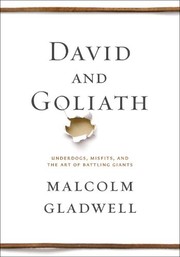
David and Goliath: Underdogs, Misfits, and the Art of Battling Giants
3,197-word summary 14 min read 320 pages in the book
- First published
- 2013
- Publisher
- Little, Brown and Company
- Pages
- 320
- ISBN
- 9780316204361
Reading options
What's inside (6 sections)
I picked this one up because I was tired of losing at pickup basketball to guys who looked like they should beat me. A friend said, you should read the Gladwell book about the Indian guy whose daughter's team pressed full court. That sounded random enough to try. David and Goliath: Underdogs, Misfits, and the Art of Battling Giants came out on October 1, 2013 from Little, Brown and Company, 320 pages, ISBN 9780316204361, and it grew out of a 2009 New Yorker article by Gladwell called How David Beats Goliath. I expected a business pep talk. What I got was stranger and more fun: girls basketball, French shepherds hiding refugees, cancer doctors trying wild chemo doses, and a long argument that being the small side sometimes lets you play a different game entirely.
Gladwell opens with the old story from the valley of Elah. Goliath is huge, armored, slow, expecting hand to hand combat with sword and shield. David is a shepherd boy who refuses the armor Saul offers because he cannot move in it. He takes a sling and stones from a stream. Everyone around assumes David is brave but doomed. Gladwell's point, borrowed from historians and doctors who study ancient warfare, is that this was a mismatch in David's favor once David refused to fight on Goliath's terms. A sling in skilled hands was not a toy. It could hurl a stone with stopping force at distance, while Goliath's size and heavy gear made him slow to react. Add the suggestion from the text that Goliath may have had poor vision, he needs a guide to lead him, he asks why David comes with sticks, and the fight reads less like a miracle and more like a fast kid with a ranged weapon facing a lumbering infantryman. Gladwell uses that as the frame for the whole book. Giants keep preparing for the last war. Underdogs win when they change the terms.
That idea splits into three parts. Part One is about the hidden strengths in apparent disadvantages. Part Two is about hard experiences that leave people stronger, up to a point. Part Three is about the limits of power, how strong parties fail when they push too hard or lose the sense that their actions are fair. Gladwell walks through each with long reported stories. Some land. Some feel stretched. I will go through them in the order he tells them, because the order is part of the pitch.
Where the basketball team that never stopped running came from
The first modern story is Vivek Ranadive. Ranadive is a software businessman who had never played basketball and ends up coaching his daughter Anjali's twelve year old girls team in Silicon Valley. The girls are short, new to the game, and cannot win playing straight up. So Ranadive teaches them a full court press for the entire game. Every inbound, two girls swarm the ball. They chase. They trap. They run like crazy while the other team tries to bring the ball up.
It works because most youth teams practice almost nothing against a press. They expect to walk the ball up and run a half court offense. Faced with constant pressure, they turn it over. Ranadive's team, which should lose on talent, reaches the national tournament conversation. Gladwell loves this because it is David refusing armor. The girls cannot win a slow, tall, skilled game, so they make the game fast, ugly, and tiring. They trade rest for turnovers.
I liked this chapter more than I expected, partly because I have seen rec league versions of it. A team that presses kids who never see pressure looks brilliant for three quarters and then gassed in the fourth. Gladwell admits the costs. The girls have to be in great shape. The parents hate it. Other coaches call it unsporting. Ranadive himself says the girls had fun, but you can feel the strain in the telling. Still, as an opening move for the book, it sets the rule: if you are weaker by normal measures, do not play normal.
From there Gladwell moves to classrooms and a researcher named Teresa DeBrito, connected to work on class size. The common belief among parents is simple. Fewer kids in a room must be better, so the smallest class wins. Gladwell says the data do not show that past a point. He points to examples where very small classes lose some of the buzz and variety that make discussion work, while overloaded classes clearly suffer. The sweet spot is in the middle. He tells DeBrito's story to show how a slightly larger, livelier group can beat a tiny sheltered one because students hear more views and teachers can run richer activities.
This is where my eyebrows went up. Class size research is messy, and Gladwell picks vivid cases over careful averages. He is honest that money matters and that poor schools with huge classes need help. His narrower claim is that shrinking from, say, twenty five to fifteen does not automatically buy what parents think it buys, and that a school chasing tiny classes might spend money better elsewhere. Fair enough as a question. Less convincing as a rule.
Next comes the big pond, small pond problem through a young woman named Caroline Sacks. She is bright, loves science, and gets into a highly selective university. There she finds herself surrounded by students who are even stronger in math and science, gets middling grades in tough courses, and drops the science major. Gladwell compares her path to what might have happened at a less famous school where she would have stayed near the top, kept her confidence, and stuck with science. He draws on economics work about relative rank, the idea that students judge themselves against classmates, not against the whole country. A good student at a great school can feel average and quit. The same student at a decent school feels strong and persists. He pairs this with art students and law students choosing schools where they can shine rather than drown.
This one stung a little because I knew people who lived it. The point is not that elite schools are bad. The point is that fit matters and that being a small fish in a huge pond carries costs people ignore when they chase names. Gladwell pushes it a bit far, as if everyone should avoid top schools for science, which is too broad. But the core about comparison is true to life. We do not rate ourselves in a vacuum. We rate ourselves against the five people at our table.
Then two stories about dyslexia and loss that carry the middle of Part One. David Boies is one of the most famous trial lawyers in America, and he is dyslexic. He did not read well as a child. He learned to listen with unusual focus, to remember what people said, to distill arguments by ear. In court that became a weapon. While other lawyers buried themselves in briefs, Boies mastered oral exchange. Gladwell interviews Boies about how he compensates, how he prepares witnesses, how he holds long threads of testimony in memory. The claim is that dyslexia, which hurt Boies in school, forced him to build listening and memory muscles that later set him apart.
Beside Boies, Gladwell places Emil Freireich, a cancer researcher who lost family members early and grew up with a sense of urgency and loss that made him willing to try aggressive treatments others called reckless. Freireich pushed high dose combination chemotherapy for childhood leukemia at a time when the field favored caution. Many children died. Then some lived who would not have otherwise, and protocols shifted. Gladwell does not pretend this was painless or clean. He presents Freireich as prickly, driven, shaped by early grief into someone who could tolerate risk and conflict. The argument is that certain kinds of suffering filter people toward hard jobs and bold moves. Most people touched by loss do not become Freireich. A few do, and medicine needed one.
These chapters are the strongest and also the most uncomfortable in the book. Strongest because Boies and Freireich are specific and vivid. Uncomfortable because it is easy to slide from some people turned hardship into skill to hardship is good for people. Gladwell tries to hold the line. He says disadvantages can help in particular ways, not that we should wish them on kids. Readers will decide if he holds it well enough.
The bombing that did not break London and the marches that did
Part Two turns to what Gladwell calls desirable difficulties. The phrase comes from learning research about obstacles that slow you down in a way that helps memory, but he stretches it to cover whole cities and movements.
He starts with the London Blitz in World War Two. German bombs pounded London. Many expected panic and collapse. Instead, morale in heavily hit-but-surviving areas often held or even rose. Gladwell leans on work distinguishing direct hits from near and distant misses. People killed or badly hurt cannot inspire anyone. People who survive a close miss can feel oddly relieved and bonded. People farther away hear the sirens, see that others endured, and feel part of something shared. The image he returns to is of Londoners sweeping glass, making tea, going to work. The bombing that was supposed to break the city gave many residents proof they could take it.
He is careful, up to a point, to say this has limits. Enough destruction breaks anything. Timing, leadership, and shared purpose matter. But the pattern he wants is clear. Remote pressure can create courage rather than fear. Distant trouble teaches that the giant cannot reach everywhere at once.
From London he jumps to Birmingham, Alabama and Wyatt Walker, the strategist alongside Martin Luther King Jr. who helped plan the 1963 campaign. Walker understood that Bull Connor, the city's commissioner, would react to peaceful young marchers with dogs and hoses, and that television would carry those images north. Gladwell walks through the hard choice to use children in marches, the training in nonviolence, the jails filling, the pressure on white business owners as downtown stalled. The argument is that Walker and King turned Connor's strength into a weakness. Connor had force. The movement had discipline and cameras. By refusing to meet force with force, they made force look cruel on the evening news and drew federal attention. It is David and Goliath again, this time with fire hoses.
This chapter reads well because Walker is a great character and the mechanics are concrete. Who marches where. Who gets arrested first. How bail money runs. How the national press decides what leads. Gladwell does not hide that this was risky and that parents and leaders argued about putting teenagers in the street. He presents it as a calculated use of disadvantage. People with no votes and no guns used order and suffering, borne openly, to shift power they could not move directly.
Then Northern Ireland, through Rosemary Lawlor and a contrast Gladwell sets up with New York policing. Lawlor grew up amid the Troubles. Her family and community faced aggressive house raids and harsh tactics from authorities. Instead of producing obedience, those tactics deepened resistance and pushed ordinary people toward the cause. Gladwell pairs this with a New York officer working in tough neighborhoods who learned that asking, explaining, and showing respect got more cooperation than kicking doors. The research term underneath is legitimacy. People obey rules they see as fairly applied by people who treat them as citizens. When power acts like an occupying force, even people who dislike violence stop helping.
I found this section persuasive in outline and shaky in detail. The outline, that heavy handed tactics can backfire, is well supported across conflicts. The detail, hopping from Belfast to Brooklyn, smooths over huge differences in history and law. Gladwell writes as if one lesson travels neatly. It travels, but with baggage. Still, he lands the bridge to Part Three. Power has limits, and one of them is inside people's heads. Push past what they see as fair and even your strength starts working against you.
When giants misread the fight
Part Three is the darkest and, to me, the most memorable. It asks what happens when powerful people or institutions try to solve problems by adding pressure without adding fairness.
Mike Reynolds and California's three strikes law carry the first story. Reynolds's daughter Kimber was murdered in 1992. Out of grief he campaigned for a law that would lock repeat offenders away for very long terms, including life on a third felony. Voters passed it. Gladwell traces what followed. The law caught some violent offenders, but it also swept in people whose third strike was minor theft, and it shifted discretion to prosecutors in ways that fell unevenly. Crime trends, which were already moving for many reasons, did not clearly reward the harshest version. Billions went to prisons. Families were split over long sentences that did not match the last crime. Gladwell's point is not that punishment never works. It is that a grieving father's understandable wish for safety turned into a blunt tool that punished without calibrating, and blunt tools waste force.
Beside Reynolds he places Wilma Derksen, a Canadian mother whose daughter Candace was murdered. Derksen moved the other way, toward a slow, painful openness to forgiveness and restorative approaches. Gladwell does not present her as soft. He shows the years of not knowing, the trial, the wish to remain tied to anger, and the deliberate choice to loosen that tie. Her stance did not change the past. It changed what the past did to her family and to the people around her. Set against Reynolds, the contrast is stark without Gladwell having to underline it much. One parent sought more law. One sought a different relation to the harm. Both acted from love. Only one scaled into state power, with all the distortions that follow.
The closing story is Le Chambon, the French Protestant village led in spirit by pastor Andre Trocme that sheltered Jewish refugees during the Nazi occupation and Vichy rule. Trocme preached nonviolence and quiet defiance. Villagers hid families in farms and schools, forged papers, moved children along mountain paths. Gladwell stresses why this tiny place could resist when larger towns complied. The villagers had a history as a religious minority, a memory of being persecuted themselves, and a leader who gave them language for refusal. Their very smallness and strangeness, hill farmers with strong faith, made them harder to sway with threats and propaganda aimed at ordinary French pride. The Nazis had force. Le Chambon had cohesion and cover stories.
I had known the outline of Le Chambon before, but Gladwell's telling reminded me how much depended on boring details. Extra food. Spare rooms. A school that could absorb new faces. A pastor willing to say no in plain words on Sunday. Giants plan for armies. They plan poorly for a village that simply hides one more child each week and lies politely to patrols.
Gladwell ties these threads into a theory of legitimacy and inverted curves. More punishment, more bombing, more pressure do not keep buying more order. Past some point they buy less. He likes U shaped drawings for this. A little of something helps, a lot hurts. Class size works like that in his telling. Courage under bombing works like that. Sentencing works like that. It is a neat shape, and he finds it everywhere, which is both the pleasure and the problem of the book.
What holds and what feels cherry picked
The honest criticism, which showed up fast in 2013, is that Gladwell picks stories that fit and skips the ones that do not. Reviewers in the New York Times and elsewhere called the book repetitive and loose with evidence. The pattern is familiar if you have read his earlier books. A counterintuitive claim, three vivid cases, a study cited quickly, a turn to the next claim. Specialists in each field pushed back. Education researchers said class size effects are more careful than he allows. Legal scholars said three strikes history is more tangled. Historians of the Blitz said morale was less sunny than the legend. None of that makes the stories false. It makes them partial.
Repetition is the other fair knock. At 320 pages the book circles the same move. Underdog refuses the usual contest. Underdog wins a point. Giant looks slow. Then another underdog. Ranadive's press, David's sling, Walker's marches, Le Chambon's hiding, Boies listening around reading, Freireich dosing around caution. After a while you can predict the beat. Readers who love Gladwell's voice will not mind. Readers who want a tighter argument will wish an editor had cut fifty pages and forced him to test the misses, the presses that failed, the small classes that thrived, the dyslexics who did not become star lawyers.
There is also a selection bias built into books like this. We meet the dyslexic lawyer who made it, not the many who struggled without support. We meet the village that hid Jews, not villages that tried and were caught. We meet the press that shocked a tournament, not the presses that got picked apart by the third game. Gladwell knows this and sometimes says so, but the glow of the winners carries the chapters anyway.
So who should read it? If you coach, teach, manage a small team against bigger rivals, or just like reported stories with a clear moral, there is a lot to enjoy. The Ranadive chapter alone is worth handing to a youth coach. The Sacks chapter is worth handing to a junior picking colleges. The Walker chapter is worth reading slowly for its mechanics. If you want careful social science, treat this as a set of hunches to check elsewhere, not as proof. The New Yorker piece from 2009 that started all this is tighter than the book, and the book is looser than the best histories of any single topic it touches.
I finished it on a bus, thinking about my basketball losses. The useful part was not go press full court. My knees would file a complaint. It was the smaller question Gladwell keeps asking in different clothes. What game am I actually able to win? David did not become a better swordsman than Goliath. He brought a sling. Ranadive did not teach twelve year olds to play like pros. He taught them to run and swarm. Walker did not outgun Connor. He outlasted him on camera. That question travels well even if you doubt half the studies. It also leaves a harder one Gladwell does not fully answer. When does refusing the usual game count as smart, and when is it just an excuse to avoid getting good at the basics? The book cheers the refusers. Life still needs people who can read the brief, teach the full class, and guard without fouling. Being small helps only if you also do the work the new game demands.
FAQ
When was David and Goliath published?
Little, Brown and Company published it on October 1, 2013 at 320 pages. It grew from his 2009 New Yorker article called How David Beats Goliath.
Is David and Goliath only about business?
No. It moves through girls basketball, classrooms, civil rights history, crime law, cancer research, and a French village during war. Business readers borrow the basketball and classroom parts most.
Do critics agree with Gladwell's argument?
Reviews were mixed and some New York Times critics called the examples selective. Read the stories as questions to test, not as settled proof.
Similar books
Outliers: The Story of Success
Success comes from practice, timing, and hidden chances more than talent alone.
1,934-word summary · 9 min read
The 48 Laws of Power
Robert Greene turns court history into 48 blunt power laws, each taught through stories like Fouquet and Louis XIV, plus reversals that show when each law…
2,846-word summary · 13 min read
Think and Grow Rich
Hill teaches desire, faith and autosuggestion, distilling lessons from Carnegie interviews into thirteen principles for success.
2,458-word summary · 11 min read
The Tipping Point: How Little Things Can Make a Big Difference
How tiny shifts push ideas and products past a tipping point into epidemics.
2,014-word summary · 9 min read
The Total Money Makeover: A Proven Plan for Financial Fitness
Dave Ramsey lays out seven Baby Steps, from a $1,000 starter fund to a paid-off house, with the debt snowball at the center.
2,663-word summary · 12 min read
Made to Stick: Why Some Ideas Survive and Others Die
The Heath brothers break down why some ideas vanish on contact while others lodge in memory, tracing six traits that make a message stick.
2,527-word summary · 11 min read
The Magic of Thinking Big
Schwartz's 1959 self-help classic argues that success follows from the size of your thinking, supported by sales anecdotes, vocabulary drills and goal setting.
2,579-word summary · 11 min read

The World Is Flat: A Brief History of the Twenty-first Century
Thomas L. Friedman's 2005 bestseller argues that technology, trade, and open borders leveled the global playing field, and it names the ten forces that did it.
2,369-word summary · 11 min read
Dare to Lead
Research on courage shows how leaders build trust through vulnerability and clear values.
2,442-word summary · 11 min read
Think Again
Adam Grant argues for holding views loosely and testing them like a scientist, moving past preacher, prosecutor, and politician habits at work and in debate.
3,204-word summary · 14 min read
The Black Swan
Taleb argues rare shocks shape history more than models admit, and urges safer exposure over prediction.
2,588-word summary · 12 min read
Essentialism
McKeown argues for less but better: discern the vital few, refuse the trivial many, and use buffers, small wins, and steady routines so key work gets done well…
2,421-word summary · 11 min read
Empire of Pain: The Secret History of the Sackler Dynasty
How the Sackler family sold OxyContin and shaped an overdose crisis while giving to museums.
2,048-word summary · 9 min read
Drive: The Surprising Truth About What Motivates Us
Pink argues fair pay plus autonomy, mastery, and purpose at work beat carrots and sticks, using FedEx days, ROWE, flow, and clear Goldilocks tasks to explain…
2,339-word summary · 10 min read
SuperFreakonomics: Global Cooling, Patriotic Prostitutes And Why Suicide Bombers Should Buy Life Insurance
Levitt and Dubner apply incentives to prostitutes, suicide bombers, doctors, and climate fixes with cheeky data.
2,007-word summary · 9 min read
Predictably Irrational
Behavioral economist Dan Ariely shows why we overpay, procrastinate, and misjudge through simple experiments.
2,183-word summary · 10 min read
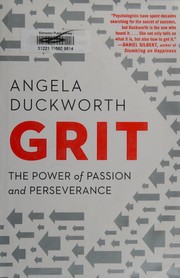
Grit
A psychologist argues sustained passion plus perseverance beats raw talent, and shows how grit can be grown.
2,432-word summary · 11 min read
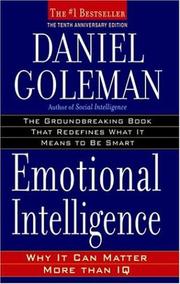
Emotional Intelligence
Goleman argues self awareness and empathy shape success more than IQ alone.
2,026-word summary · 9 min read
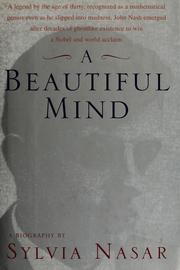
A Beautiful Mind
Mathematician John Nash's brilliant game theory rise, schizophrenia collapse, and Nobel return, with wife Alicia's care.
2,142-word summary · 10 min read
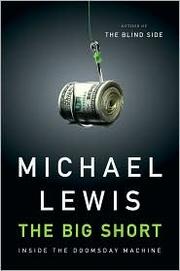
The Big Short: Inside the Doomsday Machine
Outsiders who read the bonds shorted subprime and watched the machine eat itself in 2008.
2,194-word summary · 10 min read
Influence: The Psychology of Persuasion
Six levers plus unity explain why people say yes, learned undercover in salesrooms and labs.
2,030-word summary · 9 min read
Never Split the Difference
Ex-FBI hostage negotiator Chris Voss shares tools for high stakes talks, from mirroring to calibrated questions. His 2016 book is direct, story driven, and…
2,965-word summary · 13 min read
Who Moved My Cheese?
A tiny parable about two mice and two little people hunting cheese in a maze, and why adapting to change beats waiting for old days to return.
2,533-word summary · 11 min read
The Power of Habit
Why we do what we do: the cue routine reward loop, keystone habits, and how companies and movements use the same science, from toothpaste to the bus boycott.
2,207-word summary · 10 min read
Deep Work: Rules for Focused Success in a Distracted World
Cal Newport's Deep Work in full: what focused work actually is, why shallow busyness wins by default, and the four philosophies he recommends for protecting…
2,138-word summary · 10 min read
What the Dog Saw and Other Adventures
Nineteen New Yorker essays on pitchmen, ketchup, Enron, profiling, late bloomers and the limits of prediction, arranged in three parts.
2,049-word summary · 9 min read
Talking to Strangers
Gladwell asks why we misread strangers, from spies and frauds to traffic stops, and why good intentions still fail.
2,836-word summary · 13 min read

Blink: The Power of Thinking Without Thinking
Fast judgments can beat analysis, and fail hard, in Gladwell's 2005 book on snap thinking.
2,008-word summary · 9 min read

The Zookeeper's Wife: A War Story
The directors of the Warsaw Zoo hid roughly three hundred Jews in empty cages and outbuildings after the German invasion, while Jan worked for the resistance.
2,065-word summary · 9 min read
The E-Myth Revisited
Gerber argues that most small businesses are run by technicians who own a job rather than a business, and that the fix is a system that runs without them.
2,169-word summary · 10 min read