
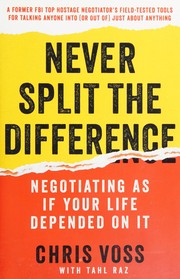
Never Split the Difference
2,965-word summary 13 min read 288 pages in the book
- First published
- 2016
- Publisher
- Harper Business
- Pages
- 288
- ISBN
- 9780062407801
Reading options
What's inside (8 sections)
I bought Never Split the Difference a week before a tricky salary talk. A friend who sells software told me it read fast and gave him lines he actually used. I was doubtful. Books by former FBI people often promise big and deliver stories you cannot copy. This one surprised me. I finished it in two evenings, tried two of the tools in a low stakes call about a contractor bill, and they worked well enough that I kept reading with a pen. The book is by Chris Voss, a former FBI hostage negotiator, written with Tahl Raz, and published by Harper Business in 2016. The hardcover runs 288 pages. It is direct, full of street stories, and built around practice rather than theory.
The core claim is simple. Negotiation is not a logic contest. It is an emotional exchange where people need to feel heard before they move. Voss calls his approach tactical empathy. You listen hard, name what the other person feels, and use that understanding to guide them toward a deal that works. He learned it talking to kidnappers and bank robbers when lives were on the line. He now teaches it for business, salary talks, purchases, and family arguments. The jump from hostage cases to office life sounds large. Voss bridges it with cases from both worlds, showing the same human habits at work.
Why a hostage negotiator writes about business
Voss opens with his background. He joined the FBI, worked crisis negotiation, and spent years on a team that handled kidnappings and standoffs in the United States and abroad. He describes training, failed talks, and talks that turned when someone changed tone. He also describes learning from psychologists and from other negotiators who favored calm questions over threats.
The turn toward business came after he left the Bureau. He started a consulting firm and began teaching executives, police departments, and students. He found that boardroom talks broke down for the same reasons hostage talks broke down. People felt unheard. They dug in. They heard demands as attacks. They hid what they really needed. The tools that calmed a bank robber holding people in a lobby also calmed a vendor angry about payment terms. Not because business is life or death, but because the brain under pressure acts in similar ways.
I liked this framing more than I expected. Many business books start with a model and then hunt for proof. Voss starts with scenes. A late night phone call with kidnappers abroad. A robbery where time drags and every word matters. A student trying to get a better phone bill. A job candidate trying to raise an offer without losing it. The scenes carry the ideas. You remember the sweat before you remember the label for the skill.
One idea to hold from the start is that Voss wants you to slow down. He mistrusts rushing to yes. He mistrusts splitting the middle. The title says it. Do not meet halfway for the sake of peace. Work for a result that both sides can live with and carry out. That stance shapes everything after.
Tactical empathy before tactics
The first real lesson is listening. Voss argues that most of us listen to reply, not to learn. In a hard talk we plan our next point while the other person speaks. Hostage negotiators cannot afford that. They have to make the other person feel understood, because a person who feels understood shares more and fights less.
Tactical empathy is his name for applied listening. It does not mean agreeing. It means showing you see the world as they see it. You slow your voice. You let pauses sit. You repeat key words. You show you are trying to grasp their fears and limits. Voss links this to work on the brain and fast emotional reactions, but he keeps the science light. The point is practical. Calm yourself, calm them, gather facts.
He is blunt about tone. A late night FM DJ voice, low and relaxed, works better than an eager or stern voice when tension is high. A smiling voice works for much of the rest. He warns against a flat or sharp tone that sounds like pressure. I tested this on a call I did not care much about, just to hear the difference. Slowing my speech by a third and lowering my volume changed how long the other person spoke. They filled the quiet with detail I could use. That small test sold me on reading the rest with care.
He also warns against the usual win talk. Do not go in to crush. Do not treat the other side as an enemy to beat. You are after information. What do they need, what scares them, what will they accept, what can they not say aloud. Empathy gets you there faster than argument. Argument makes people hide. Curiosity draws them out.
This section dragged a little for me in one spot. Voss repeats the listening point across several stories. I got it early and wanted the next tool. On a second pass I saw why he repeats. Listening is the base for mirroring and labeling and audits. Without it those moves sound like tricks. With it they sound like care. Still, a reader who wants steps may feel impatient for twenty pages. Stay with it. The payoff lands when he starts naming moves.
Mirroring, labeling, and the accusation audit
These three tools form the heart of the early chapters. They are simple to describe and take practice to do well.
Mirroring means repeating the last few key words the other person said, or the key three words, with an upward, curious tone. If a vendor says, we cannot ship before June, you say, cannot ship before June. Then you wait. The other person usually expands, corrects, or adds detail. You learn whether June is a hard limit or a wish. Voss traces this to natural human mimicry and to hostage work where getting someone to keep talking saved lives. He gives examples from kidnapping calls and from haggling where a mirror drew out the real deadline.
Labeling means naming the feeling you hear. It seems like you are worried about looking weak to your boss. Or, it sounds like this fee feels unfair after last quarter. You start with phrases like it seems like or it sounds like, then you pause. If you are right, they confirm and often add more. If you are wrong, they correct you and you still learn. The bar is low and the gain is real. Voss insists you do not need perfect insight. You need a calm guess that invites them to talk.
The accusation audit comes before a hard ask. You list the worst things they might think about you, in advance, and label them. You are probably going to think I am trying to squeeze you. You may feel I wasted your time last month. By saying the fear aloud, you drain it. Voss tells stories where he opened a call with a row of these labels and felt the other side soften. I tried a mild version before asking a client for a higher rate, naming that they might see me as chasing money after a slow month. The client laughed and said, well, a little, and then we talked openly about budget. It did not feel slick. It felt like clearing the air.
Voss fills these chapters with hostage and crime scenes. There is a bank robbery that stretched for hours, where careful talk kept people alive. There are kidnapping cases abroad where families and agents had to manage fear and ransom pressure. He also drops in business scenes, like students getting better deals on bills and rent by mirroring and labeling rather than demanding. The mix works because the pattern repeats. When people feel heard, they move from fixed lines to real talk.
If you take one habit from this stretch, take the pause. Mirror or label, then stop. Let silence do the work. Most of us rush to fill it and lose the detail that was coming.
No, yes, and calibrated questions
The middle of the book rethinks yes and no. Voss argues that yes is often fake. People say yes to end a call, to please you, to avoid conflict. That yes falls apart later. No, by contrast, often starts real talk. When someone can say no safely, they relax. They tell you what they cannot do, which shows you what they might do.
He suggests seeking no early with questions that invite refusal. Have you given up on this deal. Would it be a bad idea to try a different timeline. Is it unfair to ask for a lower fee given the delay. Each question lets the other side set a bound. You learn fast and you avoid pushing them into a false yes that dies in email the next day.
Then comes yes, but a specific kind. Voss wants commitment language rather than polite nods. That is right. I agree. Those phrases signal real consent. He warns against smiles and nods that mean nothing. You earn the true yes by stacking small understandings through mirrors and labels first.
Calibrated questions are the engine here. These are open questions that start with how or what and avoid why, which can sound like blame. How can I do that given my limits. What would it take to make this work on your side. How does this fit your goals for the quarter. The wording matters. How and what invite joint work. They put the other side in problem solving mode. Voss shows students using these lines to lower a bill, fix a travel mess, and reshape a job offer. He also shows agents using them with kidnappers to slow demands and create space.
Two rules stood out for me. Avoid why when tension is high, because it prompts defense. And avoid closed questions that invite a flat no when you need detail. Ask how this looks from their seat. Ask what a fair fix would include. Ask how you can help them sell the deal inside their firm. Each question hands them respect and pulls back facts.
I found this the most useful part for work life. A vendor once told me a delivery date was fixed. Instead of arguing, I asked, how am I supposed to meet my client if the parts land that late. He paused, then offered a partial shipment and a loan unit. No fight. The question made his constraint my shared problem. Voss would call that exactly the point.
Numbers, offers, and Black Swans
Later chapters turn to money and surprises. Voss knows readers want numbers, so he gives a clear method for offers and a warning about hidden facts.
The Ackerman model is his offer system. You set a target price, the number you really want. You make your first offer at a larger discount from that target, using precise odd numbers rather than round ones, because precise figures sound researched. You then plan two or three raises toward your target, with the jumps shrinking each time, and you use empathy and calibrated questions between offers. You close with a final small move and throw in a non cash item to signal you are at your edge. He walks through a salary talk and a purchase to show the rhythm. The steps feel mechanical on paper. In his stories they play as calm and steady, which helps the other side accept the end point.
He also covers anchoring, ranges, and the use of odd precise figures. If you say 98,500 rather than 100,000, people hear homework behind it. If you let the other side anchor high, you do not panic. You label, mirror, and ask calibrated questions to pull the range back to facts. I am no fan of haggling as sport, but I found this sane. It treats numbers as talk plus proof, not magic.
Black Swans are the unknowns that change everything. The term points to rare bits of information that flip a deal. A side motive no one named. A deadline tied to a bonus. A fear of looking bad in front of a boss. A family need behind a house sale. Voss tells stories where one quiet fact, once heard, unlocked a stuck talk. In a kidnapping case, a small detail about family politics shifted the demand. In a business case, learning that a counterpart needed praise inside his firm mattered more than a small price gap. The lesson is to stay curious to the end. Do not assume you know their world. Ask, mirror, label, and listen for the odd line that does not fit. That line is often the key.
He closes the method chapters with notes on lying, hard bargainers, and email versus voice. He prefers voice for hard parts because tone carries empathy and you can hear pause and strain. He gives tips for spotting false claims without calling people liars to their face. Label the doubt gently. Ask how a fact fits with another fact. Give them room to correct. For hard bargainers who push and threaten, he advises calm mirrors, audits, and questions rather than matching force. Force raises force. Curiosity lowers it.
Where the book strains and how I use it now
No fair summary can skip the weak spots. This book has a few, and they matter if you plan to use it at work.
First, the proof is mostly stories. Voss tells vivid cases from FBI work and from his classes, and they read well, but they are chosen by him and told by him. We do not see the talks that failed with these same tools. We do not get control groups or clear numbers across many deals. That does not make the tools false. Mirroring and labeling line up with known ideas about listening and feelings. It does mean you should treat the big claims with care. A tale about a kidnapping turning on one labeled feeling is gripping, not proof that labeling always turns talks.
Second, the frame can feel adversarial. For all the talk of empathy, the stance is still operator versus subject. You run an audit on them. You trigger a no. You bend their reality, to use his phrase for shaping perception. In a hostage case that frame fits. In a long business tie or a team talks, it can sour trust if people sense they are being handled. I now avoid his more combative lines at work. I keep the listening and the questions and drop anything that feels like a move on a person.
Third, the stretch from crime to commerce is real. A kidnapper with a gun and a manager with a budget face different risks. Time pressure differs. Options differ. What calms a gunman may only mildly help with procurement. Voss knows this and says to adapt, but the book sometimes writes as if a salary talk is a standoff. It is not. If you walk into a review talking like an agent, you will sound odd. The tools need softening for normal life.
Those limits noted, I still use the book weekly. My short list lives on a sticky note. Slow down and lower my voice. Mirror key words. Label the feeling. Open hard asks with an audit. Ask how and what, not why. Aim for true yes language. Plan offers with a target and small steps. Hunt for the hidden fact. Prefer voice for hard parts.
A quick example from last month shows the blend. A client wanted extra work inside the same fee, fast. Old me would have argued scope. Instead I opened with an audit. You probably feel I underdelivered last round and now I am nickel and diming you. He said, a bit, yes. I labeled the deadline fear. It sounds like your boss needs a win this week. He said yes and explained the board meeting. I mirrored his last line about the board and he added detail about what would count as a win. Then I asked, how can I cover the two items that matter for the board while we move the rest to next sprint. We settled on a smaller add with a clear fee for the rest. No split down the middle. No sour yes. It took ten minutes longer than a fight and saved weeks of drag.
Would I hand this book to anyone. Yes, with notes. If you negotiate for work, buy or sell, manage vendors, or handle tense calls, the early chapters alone repay the price. If you dislike war stories or want hard data, you may skim the crime scenes and keep the scripts. Pair it with a calmer book on joint problem solving to balance the operator tone. Practice on small stakes first, like bills and timelines, before you try a salary or a house. Record what worked in your own words. Voss gives lines, but your voice has to carry them.
What stays with me is not a trick but a habit. Assume there is more to learn. Ask one more open question. Name the feeling in the room. Let no feel safe. Plan your numbers and hold them with courtesy. Watch for the small fact that changes the shape of the deal. That habit fits a hostage call and a job talk and a kitchen table talk about money. The settings differ. The listening does not. For a 288 page book from 2016 that could have been pure memoir, that is a solid return. I still split too much when I am tired. Now I notice it, reset, and ask a better question.
FAQ
When was Never Split the Difference published?
Harper Business published it in 2016. The hardcover runs 288 pages with ISBN 9780062407801, co-written with Tahl Raz.
Who is Chris Voss and what does the book teach?
Voss was an FBI hostage negotiator. He teaches tactical empathy, mirroring, labeling, and calibrated questions for business and life.
What is the Ackerman model?
The Ackerman model is his system for making offers using calibrated raises toward a target price. The book explains it with a job and buying examples.
Similar books
The Total Money Makeover: A Proven Plan for Financial Fitness
Dave Ramsey lays out seven Baby Steps, from a $1,000 starter fund to a paid-off house, with the debt snowball at the center.
2,663-word summary · 12 min read
Made to Stick: Why Some Ideas Survive and Others Die
The Heath brothers break down why some ideas vanish on contact while others lodge in memory, tracing six traits that make a message stick.
2,527-word summary · 11 min read
Dare to Lead
Research on courage shows how leaders build trust through vulnerability and clear values.
2,442-word summary · 11 min read
Think Again
Adam Grant argues for holding views loosely and testing them like a scientist, moving past preacher, prosecutor, and politician habits at work and in debate.
3,204-word summary · 14 min read
The Black Swan
Taleb argues rare shocks shape history more than models admit, and urges safer exposure over prediction.
2,588-word summary · 12 min read
Essentialism
McKeown argues for less but better: discern the vital few, refuse the trivial many, and use buffers, small wins, and steady routines so key work gets done well…
2,421-word summary · 11 min read
Drive: The Surprising Truth About What Motivates Us
Pink argues fair pay plus autonomy, mastery, and purpose at work beat carrots and sticks, using FedEx days, ROWE, flow, and clear Goldilocks tasks to explain…
2,339-word summary · 10 min read
SuperFreakonomics: Global Cooling, Patriotic Prostitutes And Why Suicide Bombers Should Buy Life Insurance
Levitt and Dubner apply incentives to prostitutes, suicide bombers, doctors, and climate fixes with cheeky data.
2,007-word summary · 9 min read
Predictably Irrational
Behavioral economist Dan Ariely shows why we overpay, procrastinate, and misjudge through simple experiments.
2,183-word summary · 10 min read
Emotional Intelligence
Goleman argues self awareness and empathy shape success more than IQ alone.
2,026-word summary · 9 min read
Influence: The Psychology of Persuasion
Six levers plus unity explain why people say yes, learned undercover in salesrooms and labs.
2,030-word summary · 9 min read
The 48 Laws of Power
Robert Greene turns court history into 48 blunt power laws, each taught through stories like Fouquet and Louis XIV, plus reversals that show when each law…
2,846-word summary · 13 min read
David and Goliath: Underdogs, Misfits, and the Art of Battling Giants
Gladwell argues disadvantages can become advantages, from biblical sling to dyslexia and class size.
3,197-word summary · 14 min read
Think and Grow Rich
Hill teaches desire, faith and autosuggestion, distilling lessons from Carnegie interviews into thirteen principles for success.
2,458-word summary · 11 min read
Who Moved My Cheese?
A tiny parable about two mice and two little people hunting cheese in a maze, and why adapting to change beats waiting for old days to return.
2,533-word summary · 11 min read
The Power of Habit
Why we do what we do: the cue routine reward loop, keystone habits, and how companies and movements use the same science, from toothpaste to the bus boycott.
2,207-word summary · 10 min read
The Tipping Point: How Little Things Can Make a Big Difference
How tiny shifts push ideas and products past a tipping point into epidemics.
2,014-word summary · 9 min read
Outliers: The Story of Success
Success comes from practice, timing, and hidden chances more than talent alone.
1,934-word summary · 9 min read
Deep Work: Rules for Focused Success in a Distracted World
Cal Newport's Deep Work in full: what focused work actually is, why shallow busyness wins by default, and the four philosophies he recommends for protecting…
2,138-word summary · 10 min read
The E-Myth Revisited
Gerber argues that most small businesses are run by technicians who own a job rather than a business, and that the fix is a system that runs without them.
2,169-word summary · 10 min read

Sybil
A 1973 case study of a woman treated for multiple personalities, and the book that made dissociative identity disorder a household phrase.
2,054-word summary · 9 min read
Nudge: Improving Decisions About Health, Wealth, and Happiness
Thaler and Sunstein show how defaults, framing, and social cues steer choices, and argue for choice architecture with an opt-out.
3,146-word summary · 14 min read
What Happened to You?
Oprah Winfrey and psychiatrist Bruce Perry explain how early experience shapes the brain, and why asking what happened to someone works better than asking what…
2,238-word summary · 10 min read
The Courage to Be Disliked: The Japanese Phenomenon That Shows You How to Change Your Life and Achieve Real Happiness
A philosopher and an angry young man argue over five nights about Adlerian psychology, trauma, approval, and the freedom to be disliked.
2,054-word summary · 9 min read

Too Much and Never Enough: How My Family Created the World's Most Dangerous Man
Mary L. Trump's 2020 memoir traces how a cold, zero-sum Queens household shaped her uncle, and uses family tax documents to challenge his self-made story.
2,059-word summary · 9 min read
Moonwalking with Einstein: The Art and Science of Remembering Everything
A journalist spends a year training for the U.S. Memory Championship and discovers that extraordinary memory is mostly technique, attention, and a lot of…
2,027-word summary · 9 min read
Don't Sweat the Small Stuff ... and It's All Small Stuff: Simple Ways to Keep the Little Things from Taking Over Your Life
Richard Carlson’s 1997 bestseller offers one hundred short chapters on lowering the volume on daily irritations, and it is more pragmatic than its title…
2,502-word summary · 11 min read
Four Thousand Weeks: Time Management for Mortals
Oliver Burkeman turns the whole productivity project on its head, arguing that a human lifespan of roughly four thousand weeks is not a problem to optimize…
2,447-word summary · 11 min read
Cultish: The Language of Fanaticism
Amanda Montell argues that the real machinery of a cult is its vocabulary, and she traces how loaded language from 1960s communes to modern wellness brands and…
2,087-word summary · 9 min read

Beautiful Boy: A Father's Journey Through His Son's Addiction
David Sheff recounts watching his son Nic slide into meth addiction, and his own desperate, humbling search for how to help without destroying them both.
2,076-word summary · 9 min read