
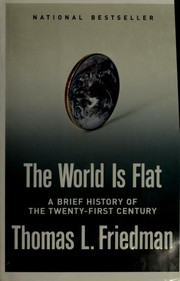
The World Is Flat: A Brief History of the Twenty-first Century
2,369-word summary 11 min read 488 pages in the book
- First published
- 2005
- Publisher
- Farrar, Straus and Giroux
- Pages
- 488
- ISBN
- 9780374292881
Reading options
What's inside (6 sections)
I came to this book late, years after "the world is flat" had stopped sounding like an insight and started sounding like a campaign slogan. I had seen it quoted, attacked, and parodied, and I wanted to know what the original actually argued. It turned out to be a reported travel book as much as an economics book. The 2005 first edition runs 488 pages, published by Farrar, Straus and Giroux with ISBN 9780374292881, and its famous opening scene sets the tone. Friedman is in Bangalore in February 2004, filming a documentary about outsourcing, walking through the campus of Infosys with its glass buildings and a conference room whose clocks are labeled for every market in its global supply chain. Nandan Nilekani, the company's chief executive, tells him that the playing field is being leveled. Friedman writes four words in his notebook: the world is flat. Then he calls his wife from his hotel and says he wants to write a book with that title.
The claim is not about geometry, and he says so. Columbus set out to prove the world was round. Friedman is describing a world that has been leveled, where individuals in Bangalore, Dalian, or Chicago can collaborate and compete with one another directly. He splits history into three eras to make the point. Globalization 1.0 ran from 1492 to roughly 1800 and was driven by countries and conquest. Globalization 2.0 ran from 1800 to 2000 and was driven by multinational companies. Globalization 3.0, the one he says began around 2000, is driven by individuals. Most of the book is spent explaining how that third era arrived so quickly.
The book hit at the right moment. It topped the New York Times, Wall Street Journal, and Book Sense bestseller lists, won the first Financial Times and Goldman Sachs Business Book of the Year award, and turned its title into the decade's shorthand for globalization. Friedman did not get to rest on it. Events outran the text, and a 2006 Release 2.0 and a 2007 Release 3.0 followed, each longer than the last, updating examples and answering critics. The version I am describing is the 2005 original, the one that did the arguing.
The ten flatteners
His list of causes is the part everyone remembers. The first is November 9, 1989, the fall of the Berlin Wall, which he pairs with the spread of Windows-powered personal computers. One gave the world a single market and the other put the means of production on ordinary desks. The second is August 9, 1995, the day Netscape went public. The browser made the internet something a five-year-old or a grandparent could use, and the IPO told investors there was money in it. Friedman likes to stack dates this way, as if the flattening were a countdown.
The third flattener is workflow software, a catch-all for the standards that let machines talk to each other without a human in the middle. Simple mail transfer protocol, HTML, later XML: boring acronyms that, in his telling, became the plumbing of collaboration. The fourth is uploading, which means communities publishing their own work: open-source projects like Apache and Linux, Wikipedia, blogs, podcasts. He calls this the most disruptive force of all, because the audience can become the author and the old gatekeepers lose control of the microphone.
The fifth is outsourcing, and here the reporting earns its keep. The Y2K panic sent companies hunting for programmers, and much of that work went to India. When the dot-com crash left oceans of unused fiber-optic cable, calls and data crossed the world almost for free, and Bangalore became the back office of the planet. Tax returns get prepared overnight while the client sleeps. Tech support answers from another hemisphere. Accent coaches train call-center staff to sound like they grew up in Ohio. His two best examples are small and human. JetBlue took reservations from workers sitting in their own homes in Salt Lake City. A McDonald's in Cape Girardeau, Missouri, wired its drive-through to a call center in Colorado Springs, more than 900 miles away, where an order taker would repeat the order back, snap a photo of the car, and fire both off to the kitchen. The old economics rule that services cannot be exported got quietly repealed.
The sixth is offshoring, which is outsourcing's heavier sibling: moving the factory itself. China's entry into the World Trade Organization in December 2001 opened the door, and suddenly Malaysia, Mexico, and Brazil were competing against a country with hundreds of millions of workers. The seventh is supply-chaining, and his hero is Wal-Mart, which wired its shelves to its suppliers so tightly that inventory became a stream of information rather than boxes in a warehouse. The eighth is insourcing, and his hero is UPS. Its people do more than drive brown trucks. They repair Toshiba laptops at a hub, and they run the entire supply chain for Papa John's, from the dough to the door. At this point the book stops being about technology and starts being about logistics, which is exactly the point.
The ninth is in-forming, which means search. Google, Yahoo, and MSN let anyone build a personal supply chain of knowledge, and Friedman is astounded by the volume of queries flowing through Google every day. The tenth is what he calls the steroids: digital, mobile, personal, virtual. Laptops, phones, wireless networks, voice over IP, file sharing. These do not flatten the world by themselves. They turbocharge the other nine, which is why the list is not ten separate causes so much as one system.
The triple convergence
The real argument of the book arrives after the list. None of the ten flatteners mattered much alone. Friedman says they converged around the year 2000, and that is the first part of what he calls the triple convergence. The second part is that new ways of working had to grow around them: horizontal collaboration, companies and people learning to share tasks across borders as if the borders were not there. The third part is that just as the technology was ready, three billion people from China, India, Russia, and the old Soviet bloc walked onto the field. That collision, not the internet by itself, is what he means when he says the world got flat.
What follows is his advice column, and it has aged the most. He describes a great sorting out in which some jobs disappear, others appear, and the developed world's middle class feels the pressure first. His suggestion for individuals is to become what he calls untouchables: workers who are special, specialized, or anchored. A top surgeon is anchored. A great barber is anchored. A specialist in some narrow, valuable thing is specialized. It is fine advice, though it is also the kind of advice that quietly assumes everyone can become exceptional.
His worry about the United States fills several chapters. The chapter called America and Free Trade takes on the fear that outsourcing would hollow out the country and ends up defending the old case for trade while admitting that the adjustment costs are real. The Untouchables turns that case into career advice, and the Quiet Crisis is the education chapter, the one that wears its worries on its sleeve: too few engineers, schools that are not keeping pace, a culture that celebrates celebrity over science. This Is Not a Test handles the security question after September 11. The shift in register is abrupt. One chapter he is a reporter with a notebook, the next he is an adviser with a list, and readers who came for the reporting may skim the advice. His remedies are sensible and unglamorous: make health insurance and retirement benefits portable so people can change jobs, invest in schools, keep learning for a lifetime. The 2006 Release 2.0 and 2007 Release 3.0 editions added chapters and updated examples, including material that tried to answer the growing pile of criticism. I read the original, which is the version that made the argument famous, and it is more cheerful than the updates ever became.
The Dell theory and the politics
The most quoted idea in the second half is the Dell theory of conflict prevention. No two countries that are both part of a major global supply chain, Friedman writes, will ever fight a war against each other as long as they are both part of the same chain. It is an upgrade of the Golden Arches theory from his earlier book, which held that no two countries with a McDonald's had gone to war since getting one. The Dell version is stronger because supply chains are deeper commitments than fast-food franchises. He points to the 2001-2002 standoff between India and Pakistan, when both sides had reasons to fight and both had investors and customers who would walk away. He points to China and Taiwan, joined at the wallet. He is careful to say it is not a guarantee, only a price tag that gets worse as the interdependence gets deeper.
The book's closing sections turn to geopolitics, and this is where Friedman the columnist takes over from Friedman the reporter. After September 11, he asks how terrorism fits his theory, and his answer is that closed societies and humiliation make recruits while open ones drain them. He uses small symbols to make big points, and one of the best is from a later trip: statuettes of the Virgin of Guadalupe, Mexico's patron saint, being imported from China. When a low-wage manufacturing country cannot even make its own religious souvenirs, he writes, the playing field has leveled for everyone, including the losers.
Where it holds up, and where it does not
The criticism is worth taking seriously, because it came from people who study this for a living. The economist Pankaj Ghemawat checked the data and found that roughly 90 percent of the world's phone calls, web traffic, and investment stays local. Whatever globalization is, it is not as deep as the metaphor suggests. Joseph Stiglitz, a Nobel winner, wrote that the world is not flat, and in many ways has been getting less flat. The geographer Richard Florida answered with an Atlantic essay called "The World Is Spiky," arguing that economic activity clusters in a handful of cities while the rest of the map stays uneven. John Gray, a political philosopher, wrote a review titled "The World Is Round" that granted the interconnection and denied the peace and the freedom. Geographers were especially unhappy, since a book that says place no longer matters ran straight into a field that exists to prove it still does. A fourth complaint is about omissions. The flat world is a game with winners and losers, and Friedman prefers the winners. Distribution inside countries, the fate of workers who cannot retrain, the people Paul Collier later grouped as the bottom billion, all get less room than the gleaming campuses and the improved call centers. The book warns about dislocation without ever living in it for long.
The method invites some of this. Friedman builds his case from interviews, airport conversations, factory tours, and anecdotes, and anecdotes are hard to argue with one at a time and easy to overgeneralize all at once. The metaphor itself is loose. He means leveled, but flat sounds like sameness, and sameness is exactly what the book does not describe. It is also long. The middle chapters repeat the thesis more often than they test it, and the enthusiasm can wear thin when a story has three examples where one would do. The list itself is lopsided in the same way. Y2K and fiber-optic cable are economic history; the Wal-Mart hymn is admiration dressed as analysis. Half the flatteners are infrastructure, half are narration, and the book never fully sorts out which are causes and which are symptoms. That looseness helps it read like the magazine series it effectively was. It makes the central claim harder to check.
Time has been unkind to the optimism. The 2008 financial crisis exposed how fragile the system was. Wages in the developed world did not rise the way the book's best case assumed. Inequality grew. China turned from partner to strategic rival, and the supply chains Friedman admired became bargaining chips in a trade war, then a vulnerability during the pandemic, when ports clogged and factories closed. Politicians who once praised offshoring now campaign against it. Populism on both sides of the Atlantic fed on exactly the anxieties the book treated as transition costs. None of that makes the descriptions false. It makes the mood feel like 2004, which it is.
What survives is the reporting and the vocabulary. Every time you call a support line, order something that ships from a warehouse two states away, or watch a company rewire itself around logistics, you are living in the world this book described. It won the first Financial Times and Goldman Sachs Business Book of the Year award in 2005, and its phrases went everywhere, from boardrooms to campaign speeches. Its first printing even has a collector's detail: the original jacket reproduced a 1976 painting by Ed Miracle called I Told You So, a ship sailing off the edge of the world, and a copyright dispute forced the publisher to change the art mid-run. The settlement came in 2006, so early copies look different from everything printed after. As a time capsule of how the early 2000s felt to a smart, connected optimist, it is hard to beat.
Read it as that and it earns its pages. I would not hand it to someone who wants current trade policy or hard numbers, and I would not read it alone; Ghemawat's essay makes a better companion than an enemy. But if you want to see the moment when a newspaper columnist looked at a call center in Bangalore and decided the whole world had changed shape, this is the original dispatch. The argument has holes. You can still see through them to the decade that made it.
FAQ
What are the ten flatteners in The World Is Flat?
Friedman lists the fall of the Berlin Wall, Netscape's IPO, workflow software, uploading, outsourcing, offshoring, supply-chaining, insourcing, in-forming (search), and the digital and mobile technologies he calls the steroids. Together, he argues, they leveled the global playing field around the year 2000.
Is The World Is Flat still accurate?
It is a useful map of early 2000s outsourcing and supply chains, but economists like Pankaj Ghemawat showed that most phone calls, web traffic, and investment remain local. Later events such as the 2008 crisis and the US-China trade war made the book's optimism look dated.
Why do some editions say Release 2.0 or 3.0?
Friedman published an updated and expanded edition in 2006 and a further updated version in 2007, adding new chapters and examples. This entry covers the original 2005 first edition, 488 pages, ISBN 9780374292881.
Similar books
Prisoners of Geography: Ten Maps That Tell You Everything You Need to Know About Global Politics
Tim Marshall explains how mountains, rivers, coasts, and resources shape the choices of nations, from Russia's flat borders to the chokepoints of the South…
2,328-word summary · 10 min read
Empire of Pain: The Secret History of the Sackler Dynasty
How the Sackler family sold OxyContin and shaped an overdose crisis while giving to museums.
2,048-word summary · 9 min read
The Big Short: Inside the Doomsday Machine
Outsiders who read the bonds shorted subprime and watched the machine eat itself in 2008.
2,194-word summary · 10 min read
Zero to One: Notes on Startups, or How to Build the Future
Thiel argues monopolies create value through vertical progress, not by copying competition.
2,582-word summary · 11 min read
Nudge: Improving Decisions About Health, Wealth, and Happiness
Thaler and Sunstein show how defaults, framing, and social cues steer choices, and argue for choice architecture with an opt-out.
3,146-word summary · 14 min read

Long Walk to Freedom
Mandela's account of a Thembu childhood, a law practice, a banned movement, twenty-seven years in prison, and the negotiation that ended apartheid.
2,454-word summary · 11 min read

Nothing to Envy
Barbara Demick follows six defectors from Chongjin through the North Korean famine, showing how ordinary people lived, believed, and finally left.
2,068-word summary · 9 min read
The Total Money Makeover: A Proven Plan for Financial Fitness
Dave Ramsey lays out seven Baby Steps, from a $1,000 starter fund to a paid-off house, with the debt snowball at the center.
2,663-word summary · 12 min read

Down and Out in Paris and London
Orwell's account of washing dishes in Paris hotels and tramping through London does not ask for pity, only for a clear look at how poverty actually works.
2,282-word summary · 10 min read
The Wright Brothers
David McCullough tells the story of two self-taught Ohio brothers, working largely alone and out of a bicycle shop, who solved the problem of flight before…
2,027-word summary · 9 min read
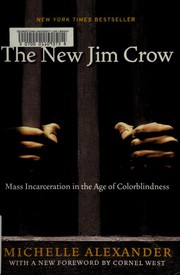
The New Jim Crow: Mass Incarceration in the Age of Colorblindness
How mass incarceration became a racial caste system after civil rights.
2,413-word summary · 11 min read
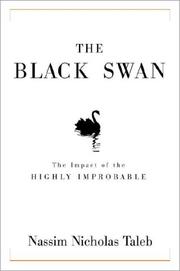
The Black Swan
Taleb argues rare shocks shape history more than models admit, and urges safer exposure over prediction.
2,588-word summary · 12 min read

How to Be an Antiracist
Kendi blends memoir and history to argue that fair policy, not self fixing, creates an equal society.
2,513-word summary · 11 min read
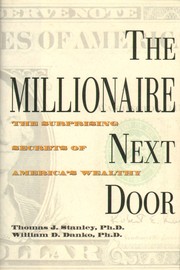
The Millionaire Next Door
Stanley and Danko survey wealthy Americans and find frugal savers living next door, not big spenders, in this 1996 money study.
2,466-word summary · 11 min read
Say Nothing
Patrick Radden Keefe traces Jean McConville's 1972 disappearance through the Price sisters, Brendan Hughes, and Gerry Adams, using Boston College tapes to…
2,846-word summary · 13 min read

Cleopatra: A Life
Pulitzer winner Schiff restores Cleopatra as a capable ruler, from Ptolemy debts and Caesar to Antony, Actium, and her death in 30 BC, built from coins and…
3,586-word summary · 16 min read
SuperFreakonomics: Global Cooling, Patriotic Prostitutes And Why Suicide Bombers Should Buy Life Insurance
Levitt and Dubner apply incentives to prostitutes, suicide bombers, doctors, and climate fixes with cheeky data.
2,007-word summary · 9 min read
Predictably Irrational
Behavioral economist Dan Ariely shows why we overpay, procrastinate, and misjudge through simple experiments.
2,183-word summary · 10 min read
Moneyball
Oakland buys walks and patience to win 103 games on a small payroll in Lewis's 2003 baseball story.
2,955-word summary · 13 min read
21 Lessons for the 21st Century
Twenty one essays on work, liberty, truth, and meaning when algorithms flood the world with noise.
2,101-word summary · 9 min read

The Communist Manifesto
Marx and Engels trace class struggle from bourgeoisie to proletarians, review rival socialisms, and close with a call to opposition parties. Notes on the 1848…
2,570-word summary · 11 min read
The 48 Laws of Power
Robert Greene turns court history into 48 blunt power laws, each taught through stories like Fouquet and Louis XIV, plus reversals that show when each law…
2,846-word summary · 13 min read
David and Goliath: Underdogs, Misfits, and the Art of Battling Giants
Gladwell argues disadvantages can become advantages, from biblical sling to dyslexia and class size.
3,197-word summary · 14 min read
A Promised Land
First-volume memoir from Iowa 2008 through the 2011 bin Laden raid, crisis management and doubt.
2,243-word summary · 10 min read
A People's History of the United States
A bottom-up history of the United States from Columbus to Clinton, told through workers, women, Native nations and Black voices against elite rule.
2,398-word summary · 11 min read
Homo Deus
After ruling the world, humans chase upgrades and delegate feeling to systems that know patterns.
2,013-word summary · 9 min read
Bad Blood
How Theranos sold finger prick miracles, faked tests, and silenced staff who knew patients were at risk.
2,021-word summary · 9 min read

The Prince
Machiavelli advises Lorenzo on rule through fear and love, fortune, cruelty and mercy.
2,204-word summary · 10 min read
The Lean Startup
Ries lays out Build-Measure-Learn, MVPs, pivots and validated learning for building companies under extreme uncertainty.
2,581-word summary · 11 min read
Between the World and Me
Coates writes to his son about the Black body in America, from Howard to the loss of Prince Jones.
2,234-word summary · 10 min read