
The Lean Startup
2,581-word summary 11 min read 336 pages in the book
- First published
- 2011
- Publisher
- Crown Business
- Pages
- 336
- ISBN
- 9780307887894
Reading options
What's inside (9 sections)
I came to The Lean Startup after hearing founders quote it for years. Someone would say MVP or pivot or validated learning, everyone would nod, and I realized I had never read the source. The book came out in 2011 from Crown Business and grew out of Eric Ries and his time building software startups in Silicon Valley, especially IMVU. I expected a book of slogans. What I found was more personal, a mix of failure stories, ideas borrowed from Toyota, and practical tools for testing ideas before spending years building them.
Ries defines a startup broadly. For him it is not just two people in a garage with venture funding. It is any human institution designed to create something new under conditions of extreme uncertainty. That lets him speak to founders, managers inside large firms, and teams at nonprofits. You cannot plan away uncertainty. You learn by building small things and watching what customers do.
Failure at IMVU and the lesson from There
The backbone of the book is Ries at IMVU, and before that at a company called There. There matters because it is the expensive failure that shaped everything after.
There was building a rich 3D virtual world, an avatar based space with its own currency and client software. The team worked for years, raised serious money, polished the technology, and launched with high hopes. Almost nobody came. The product was impressive and commercially empty. Ries describes talented people spending years on details customers never asked for.
IMVU started with some of the same people and a similar idea, avatars, chat, virtual goods, digital clothes. But the process was reversed. Instead of building in private for months, the team shipped as fast as possible and talked to customers almost daily. Ries tells stories about watching early users struggle to install the software, get confused by the interface, and use the product in ways the team never planned.
One early humiliation stuck with me. Customers did not want to download a big 3D client to chat with strangers. They wanted to bring friends from existing instant messenger networks. So IMVU integrated with those networks, even though it felt like a step back from the grand vision of a separate world.
Ries keeps returning to the same point. IMVU did not succeed because the founders were smarter the second time. It wasted less time. Build a little, measure, learn, change. That loop became the book. Shipping something rough and watching strangers ignore it is embarrassing. Ries argues that embarrassment is cheaper than three years building the wrong thing well.
Validated learning and Build-Measure-Learn
The central term is validated learning. Ries means learning backed by real customer behavior, not opinions in a meeting room.
Many companies claim they are learning. They run focus groups, collect praise for a demo, point to page views. Ries treats most of that as vanity. Someone saying your idea sounds cool is not validation. Even early sales can mislead if you do not know why people bought. Validated learning means you state a risky assumption, test it live, and get a signal you can act on.
The engine for that is Build-Measure-Learn. Build something small. Measure how customers respond. Learn whether your leap of faith assumptions were right. Then loop again. The goal is to circle that loop as fast as possible while spending as little as possible. Speed matters because every week spent on features nobody wants is waste. Keeping the loop small matters because big launches hide cause and effect. Change ten things at once and sales rise, and you still do not know which change worked.
Ries borrows from lean manufacturing, especially Toyota. In a car factory, lean means cutting inventory, fixing defects where they occur, and letting workers stop the line. Ries translates that to startups. Inventory is untested features sitting in code. Defects are false assumptions sitting in strategy docs. Stopping the line means talking to a customer now instead of after launch.
He also splits assumptions in two. Value hypotheses test whether a product delivers value once someone uses it. Growth hypotheses test how new customers will hear about it. Founders often test the first and assume the second will solve itself. Ries insists you test both.
I found this clarifying and strict. Clarifying because it gives you a question for any week: what did we prove with customer behavior. Strict because most daily work fails that test. Writing code, hiring, raising money, getting press, all of it can feel like progress while teaching nothing about whether the core idea works.
The minimum viable product
The most famous idea is the minimum viable product, the MVP. Ries means the smallest thing that lets you start learning.
This is widely misunderstood, and Ries tries hard to correct it. An MVP is not a cheap broken version or an excuse to ship junk. It is a deliberate experiment to test the riskiest assumption with the least effort.
He gives several types. One is the video MVP used by Dropbox. Before building full sync infrastructure, the founder posted a short video showing how the product would work. Signups jumped, which suggested real demand. The team learned without first solving the hardest technical problems.
Another is the concierge MVP, where you serve a few customers by hand instead of automating. Take orders by phone, match tutors by email, shop manually before building an app. It does not scale, and that is the point. You learn what people want before you automate the wrong workflow.
A third is the Wizard of Oz MVP, where customers think they use a finished product but humans do the work behind the screen. Fake the back end, see if anyone clicks the front end. If no one clicks, you saved months.
IMVU used rough versions of its own. Instead of a full 3D editor and store, the team stitched together simple chat, simple avatars, and a basic way to pay. Graphics were crude. What mattered was whether strangers would talk through avatars and whether anyone would pay for digital clothes.
Ries sets rules. Test one big assumption at a time. Aim at early adopters who want the product badly enough to forgive rough edges. Measure behavior that costs something, downloads, repeat use, payment, referrals, not compliments. The MVP is minimum for learning, not minimum for pride.
Innovation accounting: knowing if you are improving
Once you run experiments, you need a way to keep score. Normal accounting does not help an early startup. Revenue is zero or noisy. Hiring ten people or shipping version 2.0 can look like progress while the business stalls. Ries proposes innovation accounting, a three step discipline.
First, use an MVP to set a baseline. Where are you now in real behavior. How many sign up, stick around, pay. Write it down so you cannot argue later about whether things improved.
Second, tune the engine with small experiments. Ries favors cohort analysis here. Ignore total users, which rises if you keep marketing. Look at groups who joined in the same period. Does the January cohort activate faster or stay longer than the October cohort. If cohorts are flat, you are not improving, even if totals slope up.
Third, decide to pivot or persevere. If tuning moves numbers toward a working business, keep going. If repeated tests fail, face it and change strategy.
To make this real, Ries attacks vanity metrics. Total hits, total registered users, press mentions, all can rise while the business rots. He wants actionable metrics tied to a decision. Split tests are his main tool. Show half of new users one signup flow and half another, see which group activates more. Now you know the cause and can repeat it.
At IMVU the team thought more features would lift conversion. Tests showed the opposite. Simplifying onboarding, cutting steps, explaining value plainly, beat months of extra content. Without cohorts and split tests, they would have kept adding features and praising output.
This is one of the drier parts and one of the most useful. It is easy to chant Build-Measure-Learn. It is harder to pick one metric, run a clean test, and admit the result was flat.
Pivot or persevere
Pivot is the word that escaped the book. People now use it for any change. Ries means something narrower. A pivot is a change in strategy without a change in vision.
The vision is the big why. IMVU wanted to connect people through avatars and let creators sell virtual goods. That stayed steady. The strategy, who the first customers were, how they heard about it, what day one did, changed often.
Ries lists types. A zoom in pivot turns one feature into the whole product. A zoom out pivot does the reverse. A customer segment pivot aims the same product at different users. A customer need pivot solves a different problem for the same users. Others change pricing, growth method, sales channel, or technology while keeping the same customer problem.
That list can feel like jargon, and critics say so. In context Ries tries to show pivots are not panic moves. They are structured options. When tests fail, you do not just try harder. You change one element cleanly, then test again.
He tells of IMVU nearly abandoning avatars when metrics were weak. What stopped them was the small group who loved the product. Those users made clothes, hosted rooms, spent real money. The signal was weak in total but strong in a niche. So the team pivoted toward creators instead of away from avatars.
Ries wants a pivot meeting as a formal event. Bring the data, review what MVPs taught, decide together to stay or change. Without that ritual teams drift. They tweak headlines and buttons while the core belief quietly fails. Founders hate admitting a strategy is broken, so the meeting forces the choice.
Persevere gets less attention but matters as much. Not every flat test means pivot. Sometimes you ran too few tests, built too weak an MVP, or measured the wrong thing. The discipline is to make the call explicit and back it with evidence, not stubbornness or fear.
Small batches and engines of growth
Two later ideas close the method: work in small batches, and pick an engine of growth.
Small batches comes from manufacturing. Large batches feel efficient. Stamp a thousand parts, then move them. But large batches hide defects. Find the flaw after a thousand copies and you wasted them all. Small batches feel slower from switching tasks, but problems surface early and you learn faster.
Ries applies that to software. Big releases built over months hide bad assumptions. Teams spend weeks merging code and fixing integration bugs. By the time customers see anything, no one knows which choice caused which result. Small batches mean shipping constantly, sometimes several times a day.
IMVU moved to continuous deployment, pushing code live almost at once. Small changes are easier to test and easier to roll back than giant releases. Automated tests, monitoring, and feature flags that show a change to one percent of users make small batches safer. You need a culture where anyone can halt a release if metrics drop. He tells an outage story to prove speed needs discipline. Ship fast, watch within minutes, revert fast.
The engines of growth chapter tries to stop founders from listing viral growth as a plan. Ries names three.
Sticky growth comes from keeping customers. If churn is low and repeat use is high, you grow steadily without constant marketing. Compare retention against acquisition. Strong buzz with terrible retention is a leak.
Viral growth comes from customers bringing others as a side effect of use. Ries does not mean funny ads. He means products where sharing is built in, like a payment app where you must invite someone to pay them, or a social product better with friends. The key is how many new users each user brings. Below one, it fades. Above one, it compounds until the market fills.
Paid growth comes from buying customers, then earning more from them over time than you spent. Compare customer acquisition cost to lifetime value. If lifetime value is higher with margin to spare, you can scale spending. If not, paid growth buys losses faster.
Ries says focus on one engine at a time. Chasing all three spreads effort and muddies measurement. IMVU learned early paid ads did not pay back, while better retention and creator invites did.
What holds up, and what does not
The Lean Startup changed how many software teams work. Continuous deployment, split testing, cohorts, concierge tests, these are now normal. Even teams that never read Ries use his words. That influence is real.
There are fair criticisms around jargon and survivorship. The jargon complaint is easy to feel. Build-Measure-Learn, validated learning, innovation accounting, MVP, value hypothesis, growth hypothesis, engine of growth. Some name real practices. Some rename common sense. Talking to customers, shipping early, tracking retention, testing prices, all existed before 2011. Ries gives them a system and a story, which helps adoption, but readers tired of business terms will sigh. The pivot catalog reads especially like a glossary trying to cover every case.
The survivorship complaint cuts deeper. The book leans on wins like IMVU, Dropbox, Intuit, and Toyota, plus clean failures where the moral is neat. We hear less about teams that tested well, pivoted sensibly, and still failed because the market was small, timing was wrong, or luck ran out. Ries admits luck matters, but the shape of the book implies method can tame it. A skeptical reader will want more failed experiments and base rates, more admission that fast learning lifts odds without assuring anything.
Scope is another limit. Despite the broad definition of startup, examples cluster in software where shipping is cheap and clicks are easy to track. If you can deploy daily and log every action, small batches and split tests shine. If you build airplanes, medical devices, schools, or housing, rules, safety, and capital costs limit how lean you can be. Ries says the ideas still apply, talk to users early, test risky beliefs, keep batches as small as safety allows. That is true in spirit, but the book undersells how hard that gets outside web software.
There is also tension around vision. Ries says hold vision but pivot strategy, yet in practice the two blur. Founders can call stubbornness vision and flailing a pivot. The pivot meeting helps only if the team is blunt about sunk costs.
None of that made me dismiss the book. The core discipline holds: name your riskiest belief, test it with the smallest real product that creates behavior, track cohorts not totals, and choose openly to stay or change.
If you are starting something or leading a new team inside a larger firm, read the MVP, innovation accounting, and pivot chapters in order and take notes. If you build in a regulated or capital heavy field, read for mindset but expect to adapt tactics. If you hate startup slang, you will still gain, but you will need patience for terms.
I finished with a smaller view than the hype claims. The Lean Startup will not tell you what to build. It tells you how to waste less time learning whether what you built matters. That is a smaller promise than remaking management. For most teams, it is the promise they need.
FAQ
What is the Build-Measure-Learn loop in The Lean Startup?
Build a minimum viable product, measure how customers actually use it, and learn whether to pivot or persevere. Ries presents it as the core loop for managing startups under uncertainty.
Is The Lean Startup only for tech startups?
No. Ries argues the method applies to any group creating something new under uncertainty, including large companies and nonprofits. The examples skew toward software, which is part of the criticism.
Does the book ignore failure and luck?
Critics say it leans on survivorship stories and adds jargon to common sense. Ries admits many startups fail, but argues disciplined testing improves the odds versus grand planning.
Similar books
More like The Lean Startup →
Zero to One: Notes on Startups, or How to Build the Future
Thiel argues monopolies create value through vertical progress, not by copying competition.
2,582-word summary · 11 min read

Steve Jobs
Walter Isaacson's authorized Steve Jobs: forty interviews covering the garage, the 1985 ouster, Pixar, and the return that made the iPhone.
2,415-word summary · 11 min read
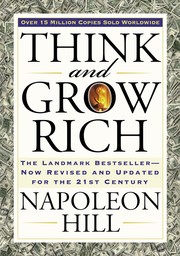
Think and Grow Rich
Hill teaches desire, faith and autosuggestion, distilling lessons from Carnegie interviews into thirteen principles for success.
2,458-word summary · 11 min read

Elon Musk: Tesla, SpaceX, and the Quest for a Fantastic Future
Ashlee Vance traces Elon Musk from a rough Pretoria childhood through PayPal, Tesla and SpaceX.
2,286-word summary · 10 min read

Who Moved My Cheese?
A tiny parable about two mice and two little people hunting cheese in a maze, and why adapting to change beats waiting for old days to return.
2,533-word summary · 11 min read
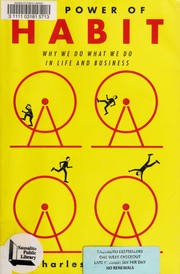
The Power of Habit
Why we do what we do: the cue routine reward loop, keystone habits, and how companies and movements use the same science, from toothpaste to the bus boycott.
2,207-word summary · 10 min read