
Reading options
What's inside (8 sections)
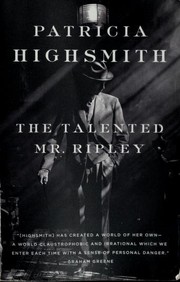
Like a lot of people, I met Tom Ripley through the movie. Matt Damon's performance is the version in my head whenever someone says the name, and that turned out to be a useful thing to have corrected by the book, because the novel is colder, stranger, and much lonelier than any of its adaptations. The film gives Tom a motive and an arc. The novel gives him a talent and a hunger, and it never once stops to punish him, which is the source of its nasty power. I finished it late at night and locked a door I do not normally lock.
Patricia Highsmith published it in 1955, when she was in her early thirties and had already written Strangers on a Train and, under a pseudonym, The Price of Salt. The Talented Mr. Ripley was the book that began the five-novel Ripley series and pushed her reputation upward, first in Europe, where France gave it the Grand Prix de Litterature Policiere in 1957, and eventually everywhere. The edition I read is the W. W. Norton paperback, about 288 pages, and the first thing to say about it is that it is not a mystery. You know who did it. The suspense is whether he will get away with it, and Highsmith builds that suspense with the patience of a watchmaker.
Tom, in New York, being nobody
The book opens in New York with Tom Ripley in his late twenties, running small cons with the precision of a person who has practiced, which he has. He impersonates an Internal Revenue agent in one early scene for no reason except that the suit fits and the performance is free. He is broke but presentable, orphaned young, raised by an aunt named Dottie whose cruelty left marks he does not inspect. The book never asks you to like him. It asks you to want his evening not to end, the way you want a good card trick to land.
One of those evenings ends in a bar with a stranger who mistakes him for a friend of a friend: Dickie Greenleaf, son of a wealthy shipbuilding family, currently living in Italy on his father's money and not coming home. The mistake does not get corrected. It turns into a job offer. Herbert Greenleaf, the father, hires Tom to sail to Italy at his expense and persuade Dickie to return, to grow up, to stop spending his inheritance on boats and beaches and a girlfriend who paints bad landscapes. Tom, who has never met the son he is going to retrieve, accepts. It is the last honest transaction in the book.
Tom's voyage across the Atlantic is one of my favorite stretches, because it shows the reader the actual instrument being tuned. He studies how to be the version of himself that will move through Dickie's world: the vocabulary, the manners, small deferrals, a wardrobe, a taste in music. He is a method actor before the phrase existed. And what he wants is not exactly money yet. What he wants is to stand inside a person's life and have it fit.
Mongibello, and the con that does not end
Dickie Greenleaf lives in Mongibello, a fictional coastal village in southern Italy that the novel draws the way it draws everything, with just enough sunlight that you feel the glare and just enough sand that you feel it in your shoes. He is charming, lazy, generous in the way of people who have never had to be anything else, and he is not hard to love. Marge Sherwood is there too, writing a book about the local town and being in love with Dickie in a way that is more patient than he deserves. She smells Tom immediately.
The first third of the book is a seduction scene with no physical seduction in it: Tom settles into Dickie's days, improves them, becomes useful. He takes Italian lessons from a local boy named Fausto. He learns the boat. He learns which silences to fill. Highsmith is exact about the mechanics of making yourself necessary, which is another word for making yourself wanted, and the book lingers there long enough to be honest about the fact that standing near someone with money is its own kind of pleasure, even before you steal anything.
Then Dickie gets bored. That is the whole hinge of the plot, and it arrives without a bang: Dickie is such a person that his attention is seasonal, and Tom can feel the season ending. There is a proposal to send him back to America. There is a moment where Dickie's affection cools in a way Tom reads exactly right. And Tom, who has been living in a borrowed life long enough to know the eviction notice when he sees it, decides he would rather keep the life than the friend.
The oar
The murder happens about a third of the way in, on a boat trip out of San Remo, and it is not written like a thriller set piece. It is written like a piece of violence done the way violence is actually done by amateurs: clumsily, with fear, with a great deal of cleanup afterwards. Tom hits Dickie with an oar, sinks the body weighted with an anchor, scuttles the boat, and nearly drowns himself swimming ashore. The murder is not the point. The point is that he does it and the story keeps going, fluid and calm, and Highsmith never inserts a narrator to tell you what to feel about it.
What follows is the impersonation, which is where the title's word, talented, earns itself. Tom becomes Dickie. He practices the signature until it is slavish. He writes to Marge as Dickie, inventing a painter named Di Massimo to explain his absence, in letters that are all plausible, none of them true. He starts from a position of hiding and escalates to living openly as Dickie in Rome for stretches: an apartment, a landlady, Dickie's clothes, the accounts, Dickie's money arranged wherever it can be arranged. He ships suitcases. He hangs the personality on its hook like a coat.
I had read that Highsmith does not punish Tom, but I had not understood that she does not even give him the dignity of being smooth. He is not a genius con man; he is a man doing a great deal of improvisation under terror, and the fear is one of the best things in the novel. Tom lies awake. Tom double-checks timelines. Tom, who fought to get inside this life, finds it is much smaller from the inside and makes him lonelier than being nobody ever did.
Freddie Miles and the ashtray
The second murder is more complicated, because the book knows it has to thread a needle. Freddie Miles, a friend of Dickie's from the old crowd, is loud, flashy, and the kind of personality who notices things in an instant. He turns up at the apartment in Rome where Tom is living and playing Dickie, and within minutes he senses that something is off. When he confronts Tom about it, the conversation goes badly in the specific way that makes violence inevitable in a novel like this: Freddie keeps pushing, because he is a person who has never been careful, and Tom, because he is a person who has been careful for months, discovers the terror of the explosion is worse than any lie. He strikes Freddie with a heavy ashtray, and then he has a body to move, and moves it, and stages a cover story meant to look like a robbery, and the next morning shaves his face with steady hands, because that is what the character does.
The murder is cleaner; the aftermath is messier. The police find the boat, which means the drowning theory becomes the murder theory, which means someone is now a suspect in the disappearance of Tom Ripley and the murder of Freddie Miles, and the someone has to be either Dickie or Tom, and Tom gets to choose which body the investigation goes hunting for. The middle sections of the novel play this out as a game of chess: Tom sails to Palermo as Dickie to establish an alibi, then resurfaces in Italy as Tom a few chapters later, and Highsmith keeps the two identities in play like a shy and a shell game. The first time I lost track of which one was supposed to be present was the moment I understood what everyone means by the book's genius: you lose track with Tom, because Tom is losing track with Tom.
The forged will, and the method that works forever
The endgame is a forgery, and this is the part where the novel stopped being a crime story for me and became something else. Tom types a document in Dickie's name, on Dickie's own typewriter, that leaves everything to Tom, and mails it to Herbert Greenleaf as if it came from his son. Then he reports to the police as Tom for a dutiful interview that closes himself out of the case. Marge visits him in Venice and finds Dickie's rings among Tom's things and arrives at the wrong conclusion: suicide. She delivers the theory to the family, the family takes the theory, the will follows the theory, and Tom Ripley, by being useful to everyone's desire not to know, walks out of the story with the life he wanted.
The last movement is Greece, and I give Highsmith enormous credit for not going where a lesser novel would go. There is no confrontation at Mongibello, no final slip, no hand on the shoulder. There is a letter from Herbert Greenleaf confirming the estate is settled in Tom's favor. And there is Tom, rich, free, taking a taxi to the finest hotel in the port, standing on a terrace with the whole future his to arrange, and the last pages crackle with the thing that makes the book modern: he is safe and he will never feel safe again. The fear does not end the con. It becomes the con's permanent condition.
Why the antihero starts here
Highsmith's contemporaries understood what she had done. Kirkus, in its 1955 review, praised the virtuosity of Tom's "nerveless, conscienceless progression" and said the book would pin a reader to the page. The Edgar Awards nominated it; France simply adopted it. Later canonization followed: the BBC's list of novels that shaped the world, Time's list of the best mystery and thriller books, and a hundred crime writers quietly citing Highsmith as the godmother of the amoral protagonist. Gore Vidal called her one of our greatest modernist writers, Graham Greene said she had created a world of her own, and both of them were talking about this book.
The criticism worth noting is the one the novel invites: Tom is not a real person and does not want to be one. There is no psychology to rationalize him, no abuse flashback that explains everything, only the moody material of his Aunt Dottie and a youth spent being no one in particular. Readers who need a thriller hero to be secretly good will find the book sour, and readers who want the violence to mean something will find it nearly amoral by design. There is also the homoerotic undertow, which every generation of critics reads differently: Tom's fixation on Dickie is written with a longing that the novel does not name, and Highsmith, who wrote the first lesbian novel with a happy ending in The Price of Salt, knew exactly what she was doing with a narrative that dresses the desire up as theft.
Three notable adaptations later, the book still feels dangerous in a way the films soften. The core reading, for me, is this: Tom Ripley is the first modern protagonist of getting away with it, the ancestor of the charming void at the center of so much crime fiction and so much television. Highsmith's secret is that she never explains him and never sentences him, because if a novel with a straight world in it always needs a justice machine, a novel with Tom Ripley at the center is mostly a mirror. Which is why the last line of the book feels less like an ending and more like a verdict on the reader: he got away, and part of us wants him to.
FAQ
Is The Talented Mr. Ripley the first book in a series?
Yes, it is the first of five novels about Tom Ripley, followed by Ripley Under Ground, Ripley's Game, The Boy Who Followed Ripley, and Ripley Under Water.
Does Tom Ripley get caught?
No. The Greenleaf family accepts that Dickie is dead, the forged will transfers the inheritance to Tom, and he ends the novel in Greece, wealthy and free but permanently worried about being caught.
Who does Tom Ripley kill?
Two people: Dickie Greenleaf, beaten with an oar during a boat trip out of San Remo, and Freddie Miles, killed with an ashtray in Rome after suspecting the impersonation.
Similar books
More from Ripley first, then related titles.

3rd Degree
The third Women's Murder Club novel follows a San Francisco terror cell and a three-day killing schedule, and it costs the club a member.
2,685-word summary · 12 min read
The Maltese Falcon
Sam Spade hunts a jeweled bird through lies after his partner is killed.
2,529-word summary · 11 min read

The Club
A luxury island resort for the rich turns deadly when secrets, staff and guests collide.
2,386-word summary · 11 min read
Hannibal
Lecter hides in Florence while Starling and Verger close in from both sides.
2,590-word summary · 12 min read

Eileen
A prison clerk in 1964 falls for a counselor before a violent break.
2,481-word summary · 11 min read
The Body in the Library
A strange girl found dead in a library pulls Miss Marple into lies about dance halls and film.
2,017-word summary · 9 min read

Jar of Hearts
At sixteen Geo helped bury her best friend. Fourteen years later the body is found, she goes to prison, and the killing starts again.
2,389-word summary · 11 min read
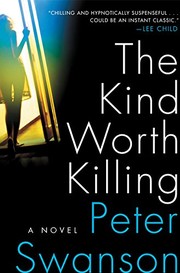
The Kind Worth Killing
A plane seat chat about murder becomes a pact, then a game where no one tells the full truth.
2,080-word summary · 9 min read
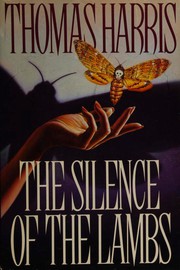
The Silence of the Lambs
Clarice Starling seeks Hannibal Lecter's help to catch Buffalo Bill before Catherine Martin runs out of time.
2,616-word summary · 12 min read
The Inmate
A nurse takes a prison job and faces the ex who she helped convict for murder years ago.
2,060-word summary · 9 min read
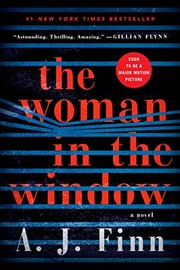
The Woman in the Window
Agoraphobic Anna Fox thinks she sees a murder across the street in Harlem.
2,026-word summary · 9 min read
None of This Is True
Podcaster Alix meets birthday-twin Josie, whose dark past becomes the series that consumes them both.
1,992-word summary · 9 min read
Dark Places
Libby Day, sole survivor of family murders, is paid to rethink her testimony.
1,910-word summary · 8 min read
And Then There Were None
And Then There Were None retold: ten to Soldier Island, rhyme deaths, no one left to tell.
2,137-word summary · 9 min read

What She Knew
Rachel lets her eight-year-old son run ahead in a Bristol park, and the nine-day search turns her into a suspect in the public eye.
2,952-word summary · 13 min read

The Crying of Lot 49
A California woman named executor of her ex-lover's estate follows a muted post horn into a possible centuries-old postal conspiracy, and Pynchon refuses to…
2,003-word summary · 9 min read

The Beach House
A young valet is beaten to death at a Hamptons party, and his law-student brother spends a year building a case against the family that covered it up.
2,049-word summary · 9 min read

Six Years
A professor who promised to forget the woman he loved sees her husband's obituary and discovers that the wedding, the marriage, and the woman herself may never…
2,076-word summary · 9 min read
The Trespasser
A Dublin Murder Squad detective investigates a staged dinner-party killing and finds a cover-up that reaches into her own department.
2,051-word summary · 9 min read

Rules of Prey
Minneapolis detective Lucas Davenport hunts a killer who leaves a new rule at every scene and treats murder as a game of wits.
1,914-word summary · 9 min read
The Late Show
Exiled to the LAPD night shift after accusing her supervisor, Renée Ballard keeps two cases that were meant to be handed off at dawn: a brutal assault and a…
2,563-word summary · 11 min read

The Black Dahlia
James Ellroy builds a fiction around the real Black Dahlia murder, following two Los Angeles cops whose partnership and obsessions destroy them.
2,533-word summary · 11 min read

Night Film
A disgraced journalist investigates the death of a reclusive horror director's daughter, following a red coat through hospitals, secret clubs, and a family…
2,690-word summary · 12 min read

4th of July
Lindsay Boxer shoots two armed teenagers in self-defense, faces a wrongful-death trial, and spends her leave chasing a string of throat-slashing murders in…
2,192-word summary · 10 min read
The Camel Club
Four Washington misfits witness a murder on Roosevelt Island and stumble into a conspiracy that reaches the Oval Office, with a hostage president and a nuclear…
2,354-word summary · 10 min read
Persuader
Reacher goes undercover in a Maine crime family to find a missing DEA agent and the man he once failed to kill, and Lee Child keeps the whole thing tight,…
2,278-word summary · 10 min read

61 Hours
A bus crash strands Jack Reacher in a snowbound South Dakota town where a drug gang, a corrupt police force, and a single witness are on a collision course.
2,227-word summary · 10 min read
The Last Mile
Melvin Mars is hours from execution for his parents' murder when another man confesses, and FBI cold case detective Amos Decker goes looking for the trap.
2,746-word summary · 12 min read

Still Missing
A realtor is abducted at a Vancouver Island open house and held for more than a year. Told through therapy sessions, the novel follows her escape and the hunt…
2,466-word summary · 11 min read

Bad Luck and Trouble
A deposit of $1,030 summons Jack Reacher back to his old army unit, which is being picked off one name at a time.
2,366-word summary · 11 min read