

Reading options
What's inside (8 sections)
I came to this one backwards. I read Little Secrets first, the 2020 Hillier novel about a missing boy and a husband having an affair, and liked how little patience it had with its own heroine. A friend told me the earlier book was meaner and sadder, and that I should read it with the lights on. She was right on both counts, though not in the way I expected.
Jar of Hearts was first published in 2018 by Minotaur Books. The hardcover runs 320 pages, ISBN 9781250154194, and it won the ITW Thriller Award for best hardcover novel. It follows three high school friends in the Seattle area across fourteen years: Angela Wong, who disappears at sixteen; Georgina "Geo" Shaw, who knows more than she admits; and Kaiser Brody, who grows up to carry a badge. Everything below spoils the book on purpose. These are full summaries, not teasers, so stop here if you want the twists cold.
What stayed with me is how physical Hillier makes guilt. For Geo it has an address: certain streets she avoids, years she counts, a gun under her pillow long before you understand why. What wore me down, and I mean this as fair warning rather than dismissal, is the middle stretch in prison, which keeps repeating its point after making it. More on that below.
The party and the woods
Geo is sixteen, bright, living with her dad Walter after her mom's death from cancer when Geo was five. She rarely stays out late because her dad cannot sleep until she is home. Her two best friends are Angela Wong, popular and pretty and good at everything, and Kaiser Brody, the boy who has loved Geo since forever without saying it right.
Then there is Calvin James. Early twenties, gorgeous, with his own apartment and a job and all the patience in the world for a sixteen-year-old girl who mistakes attention for love. Geo falls for him fast and hides the relationship from her friends, which is the first secret and not the worst one. He picks her clothes, picks her friends, sets the pace of everything physical. She tells herself this is what passion looks like. She is sixteen. She has no other model.
One Friday night seals everything. Geo and Angela drink at a party, then head to Calvin's place to keep drinking, with music and dancing that tips from fun into something reckless. Geo passes out. She wakes to find Calvin assaulting Angela. When Angela says she will go to the police, Calvin strangles her with his belt while Geo watches, frozen, drunk, useless. I believed this scene completely, which made it hard to read. Hillier does not write it to titillate. She writes it as fast, stupid, and final. One minute there are three drunk kids in an apartment. The next there is a body.
The cover-up is worse because Geo helps. Threatened and weeping, she helps Calvin carry Angela's body to the woods behind her childhood home and bury it. A much later flashback adds the detail that chills the whole book in retrospect: the dismembering was Geo's idea, carried out with a saw when Calvin went nauseous and froze. I go back and forth on whether that memory is accurate or Geo rewriting her own guilt to punish herself more. Either way the result is the same. The next day she lies to Angela's parents and to the police, says she last saw Angela at the party, and pretends to help search. She means to confess. Before she can, Calvin climbs through her window, assaults her once more, and vanishes from town.
She misses months of junior year without explanation. She is pregnant, and nobody knows except eventually the reader.
A good life built on a grave
Fourteen years pass. Geo is thirty now, an executive at a Seattle pharmaceutical company, engaged to its CEO Andrew, living the managed life of a woman who organized her guilt into calendar invites. As far as I could tell she has not seen Calvin since that night, has barely spoken to Kaiser in years, and has told no one the truth. Not her fiance. Not her dad. Nobody.
Then someone walking the woods finds Angela's remains behind Geo's childhood home. Kaiser, now a detective with Seattle PD, catches the case, and the forensics point at Calvin James, who by this point has been caught and exposed as the Sweetbay Strangler, a serial killer with at least three other women dead.
Geo is arrested. To avoid dying in prison she takes a deal: full testimony against Calvin, five years served. The trial chapters are some of the book's best. Calvin at thirty-five still looks like a movie star, still smiles at Geo like they share a joke. During a break he passes her a scrap of paper with two words and a small drawn heart, which she crumples into a bead and swallows. I mention this because it comes straight from the book and because it tells you everything about them: he still thinks they are a love story, and she would rather eat the evidence than be seen holding it.
On the stand Geo describes the control, the hitting, the assault, the night Angela died. It reads as honest, and mostly it is, except for the parts where it isn't, which the book doles out later. Calvin is convicted. Geo goes away for five years. Her fiance does not wait, her company does not keep her chair warm, and the Seattle press calls her every name available. Only her dad visits without flinching.
The five years inside
Hazelwood Correctional Institute is the kind of place where a new woman gets tested on day one, and Geo fails the test on night three in the worst way. I will not describe it beyond that. The book doesn't linger either, which I respected. What follows is Geo learning the prison economy fast because the alternative is not surviving it.
Her way in is Ella Frank, a lifer who runs the drug trade inside and needs someone with a head for money. Geo becomes that person, laundering cash through phone calls with an outside "financial planner," setting up college funds for Ella's kids, keeping books in her head. In return she gets protection and a job in the salon, where she befriends Cat Bonaducci, her first real female friend since Angela. Cat is seriously ill with cancer, and Geo's determination to get her care reads as penance for every person Geo failed to help before. There is also a corrections officer who trades small comforts for sex, which the book presents without glamour or preaching. It is transactional. Geo hates herself a little and does it anyway.
Two threads hum underneath the routine. Kaiser pays for reports on Geo's calls and letters, sure Calvin will reach out. Nothing comes except a run of letters signed with superhero names, which turn out to be from a foster kid doing a school project on prison life. I loved those letters. They are the only warm mail Geo gets, and she answers them, and for a few pages the book breathes. The other thread is the stack of letters Geo refuses to open. You will guess who they are from before she admits it. She stacks them unopened for years because opening them would mean feeling something she cannot afford inside.
Then the news breaks: Calvin has escaped. The book handles this mostly through Kaiser's dread rather than action scenes, which works. Every phone call Geo makes, every visitor log, gets re-read for signs. Nothing. That nothing is its own kind of fear.
Bodies in the same woods
Days before Geo's release, the woods behind her childhood home give up two more bodies. A young woman, dismembered like Angela. A two-year-old boy, strangled, with a heart and the words SEE ME drawn on his chest in lipstick. The woman is Claire Toliver, a law student. The boy is Henry Bowen, the child Claire gave up for adoption as a baby. And Henry's biological father is Calvin James, who dated Claire without telling her what he was.
I had to put the book down here. The pattern is plain and awful in a precise way. Someone is killing Calvin's secret children and their mothers and leaving them where Angela lay, with a message in makeup.
Geo gets out into this. She moves in with her dad Walter because no landlord will take her and no employer will hire her. Someone spray-paints hate on her garage and her car. Her parole officer is decent. Strangers are not. She starts spending time with Kaiser, who tells her about Claire and Henry and warns her Calvin may come for her. Kaiser has loved her since high school and never stopped, and Geo, who finally sees him clearly without Calvin in the way, sleeps with him. It is tender and a little desperate, two damaged people in their thirties checking whether comfort is still available. I found it moving, though one scene where they cook together felt staged to prove normalcy. People in this situation would order takeout. Small thing. It nagged me.
Then it happens again. Sasha Robinson and her four-year-old daughter Emily, same pattern: mother dismembered, child strangled with the heart and SEE ME. Sasha gave Emily up for adoption years earlier because of addiction. Her grandmother identifies Emily's father from old photos. Calvin again. That makes four new dead, two mothers and two children, all tied to one man. And Kaiser, going back over the months after Angela vanished, finally does the math he should have done at seventeen: Geo missed half of junior year because she was pregnant. With Calvin's child. Which means the person hunting Calvin's children might be hunting hers too.
Dominic
The unopened letters are from Geo's son. Given up at birth to Mark and Nori Kent, a couple Geo chose from profiles because they looked loving and steady, Dominic instead grew up neglected, then bounced through foster care. He is eighteen now. He writes like a boy doing homework on his own life, asking plain questions Geo cannot answer by mail. So she invites him to the house.
Hillier plays the visit the way she plays everything best: food and awkward politeness, with small talk that curdles. Dominic looks like Calvin, which Geo expects and still isn't ready for. He knows things about the new murders he should not know. He corrects himself once too often. Midway through the afternoon Geo understands, with her stomach dropping through the floor, that her son is the killer. Not Calvin. Dominic murdered Claire and Henry, Sasha and Emily, furious that Calvin's other children had mothers who kept them or placed them kindly while he got nothing and nobody. Whether that motive fully explains strangling toddlers is a question the book lets sit without answering, and I think that restraint is correct. Some motives don't survive being spelled out.
What follows is fast and brutal. Dominic attacks Geo, meaning to assault and kill her the way his father killed Angela. Calvin, who has been watching the house since his escape, steps in, saying the new killings drew him back, that he came to keep her safe. For one suspended moment Geo faces both monsters her life made: the boyfriend who ruined her at sixteen and the son she gave away. She keeps a gun under her pillow. She uses it. Both men die in her father's house, and she does not hesitate, and the book does not ask her to apologize.
A year later the epilogue finds Geo at Rose Hill Cemetery. She visits Angela, then her mother, then Dominic, whom she buries in the family plot despite everything, because he was her child and somebody has to love him now. She is with Kaiser. She is pregnant. For the first time since she was sixteen, she says, her happiness outweighs her grief. Endings like this can feel cheap. This one felt purchased.
What holds and what slips
Hillier's grip on guilt is the reason to read her. Geo is not a heroine who learns a lesson. She is a woman who did something unforgivable at sixteen, built a life on top of it, paid five years in a cage, lost the life anyway, and kept going. The book lets her be selfish, sexual, funny in dark places, bad at comfort, good at spreadsheets. Cat's illness brings out the only tenderness Geo trusts, and those salon scenes, with foils and bleach and gossip as cover for real talk, are my favorite pages. Kaiser works too, as the rare decent man in this genre who never becomes a speech. He waits, he investigates, he forgives slowly rather than all at once.
Against that, the middle third sags. Prison routine (another shakedown, another coded call, another favor for Ella) makes its point about survival economics and then keeps making it for fifty pages. Kaiser's investigation chapters sometimes restate what Geo's chapters already showed, so the reveals land twice, once vividly and once as paperwork. The unopened-letters device creaks under five years of never peeking; shame explains it, but the book needs it a little too badly, since the whole climax depends on Geo not knowing her son. And the final shootout, after hundreds of pages of dread, ends in minutes. I wanted one more breath in that room, one more choice visible. As is, it plays as reflex, which may be the point, but it left me blinking.
Content warnings matter here more than usual. Rape on the page, including a scene in prison. Strangulation described plainly. Murdered children, dismembered bodies. If any of that is a line for you, skip this one without guilt. If you like fast, guilt driven thrillers with rough edges, in the lane of Gillian Flynn at her sharpest or Shari Lapena with the gloves off, this belongs on your shelf. Just don't read the last hundred pages before bed. I did, and slept badly, and picked it back up at 2 a.m. to check one detail about the letters, which tells you the important thing: for all its sags, the book holds.
FAQ
Is Jar of Hearts part of a series?
No. It is a standalone thriller, though Hillier returned to similar Seattle crime territory in Little Secrets (2020).
Who commits the present day murders?
Dominic, the son Geo gave up for adoption, who kills Calvin's other children and their mothers out of rage over his own abandonment. Geo stops him at her father's house.
When was Jar of Hearts published?
Minotaur Books published it on June 12, 2018. The hardcover runs 320 pages with ISBN 9781250154194.
Similar books

3rd Degree
The third Women's Murder Club novel follows a San Francisco terror cell and a three-day killing schedule, and it costs the club a member.
2,685-word summary · 12 min read

The Club
A luxury island resort for the rich turns deadly when secrets, staff and guests collide.
2,386-word summary · 11 min read
The Kind Worth Killing
A plane seat chat about murder becomes a pact, then a game where no one tells the full truth.
2,080-word summary · 9 min read
Things We Do in the Dark
A comedian kills her husband, then a podcaster digs up her teen murder past.
2,427-word summary · 11 min read

What She Knew
Rachel lets her eight-year-old son run ahead in a Bristol park, and the nine-day search turns her into a suspect in the public eye.
2,952-word summary · 13 min read

The Beach House
A young valet is beaten to death at a Hamptons party, and his law-student brother spends a year building a case against the family that covered it up.
2,049-word summary · 9 min read

Six Years
A professor who promised to forget the woman he loved sees her husband's obituary and discovers that the wedding, the marriage, and the woman herself may never…
2,076-word summary · 9 min read

Rules of Prey
Minneapolis detective Lucas Davenport hunts a killer who leaves a new rule at every scene and treats murder as a game of wits.
1,914-word summary · 9 min read

4th of July
Lindsay Boxer shoots two armed teenagers in self-defense, faces a wrongful-death trial, and spends her leave chasing a string of throat-slashing murders in…
2,192-word summary · 10 min read

61 Hours
A bus crash strands Jack Reacher in a snowbound South Dakota town where a drug gang, a corrupt police force, and a single witness are on a collision course.
2,227-word summary · 10 min read

Still Missing
A realtor is abducted at a Vancouver Island open house and held for more than a year. Told through therapy sessions, the novel follows her escape and the hunt…
2,466-word summary · 11 min read

Bad Luck and Trouble
A deposit of $1,030 summons Jack Reacher back to his old army unit, which is being picked off one name at a time.
2,366-word summary · 11 min read

Worth Dying For
Reacher stops for one night in rural Nebraska and finds a family that runs the county, a missing girl and a shipment worth killing for.
2,021-word summary · 9 min read

Say You're Sorry
A widowed prosecutor defends the teenager accused of killing her babysitter, uncovering a small town's secrets and a killer hiding in plain sight.
2,116-word summary · 9 min read

Echo Burning
Reacher hitches a ride with a Texas woman who wants her abusive husband killed, then has to prove she did not murder him when he comes home.
2,209-word summary · 10 min read

Girl, Forgotten
A rookie US marshal guards a judge with a stalker and ends up reopening the 1982 prom-night murder of the judge's pregnant daughter.
2,111-word summary · 9 min read

The Woods
Twenty years after two teenagers were murdered and two vanished at summer camp, prosecutor Paul Copeland identifies a fresh corpse as one of the missing.
2,490-word summary · 11 min read

The Boy from the Woods
Wilde, found feral in a New Jersey forest in 1986, hunts for a missing teenager while a senator's secrets tear a wealthy town apart.
2,270-word summary · 10 min read
Without Fail
Reacher is asked to test vice presidential security by planning to kill.
2,084-word summary · 9 min read

The Widow
A widow of a suspected criminal faces reporters and police while hiding what her marriage really cost.
2,599-word summary · 12 min read
The Racketeer
A jailed lawyer trades a judge murder secret for freedom and revenge.
2,434-word summary · 11 min read
The Night Swim
A true crime podcaster covers a rape trial while probing an old drowning in a small town.
2,260-word summary · 10 min read
The Judge's List
Lacy Stoltz hunts a sitting judge who murders off his list.
2,513-word summary · 11 min read
The Innocent
A government hitman refuses one kill and must protect a teenage girl at the center of a cover-up.
2,403-word summary · 11 min read
The Girl Who Was Taken
A survivor returns alone while a reporter digs for her lost sister.
2,261-word summary · 10 min read
The Chalk Man
Childhood chalk codes lead to a murder that follows friends thirty years later.
2,350-word summary · 10 min read
The Silent Wife
A Chicago psychologist watches her twenty-year partnership collapse when Todd leaves for Natasha, then plans murder.
2,591-word summary · 12 min read
The Overnight Guest
A snowbound writer shelters a lost boy in Iowa while a twenty-year-old story of neglect closes in.
2,580-word summary · 11 min read
Running Blind
Jack Reacher must catch a killer who murders women with no forced entry and no trace.
2,008-word summary · 9 min read
Keep It in the Family
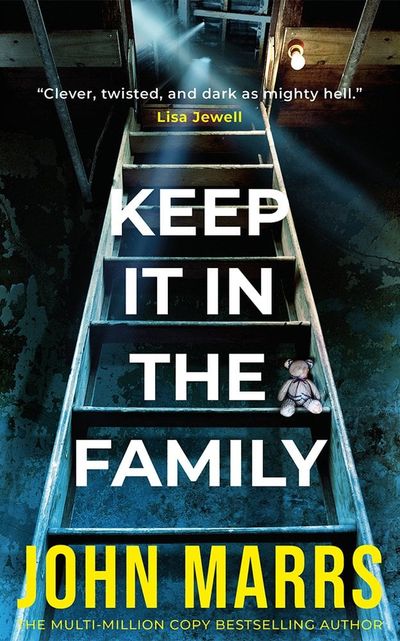
Mia and Finn renovate a long empty house and find seven children hidden in the attic.
2,270-word summary · 10 min read