
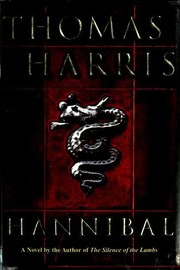
Hannibal
2,590-word summary 12 min read 484 pages in the book
- First published
- 1999
- Publisher
- Delacorte Press
- Pages
- 484
- ISBN
- 9780385299299
- Series
- Hannibal Lecter (#3)
Reading options
What's inside (7 sections)
I came to Hannibal with mixed feelings because The Silence of the Lambs is one of those books that did not need a sequel in my head. Clarice Starling earned her quiet win. Hannibal Lecter vanished into the crowd. Leaving them there felt right. Thomas Harris wrote the follow-up anyway, published in 1999 by Delacorte Press, a thick 484 page novel that picks up seven years later. It is the third book in the Hannibal Lecter series, after Red Dragon and The Silence of the Lambs, and it reads like Harris wanted to see what happens when both of his leads have been changed by time and no longer have the FBI holding them together.
The short version for anyone new. Lecter is free and living under a false name in Europe. Starling is still in the Bureau but her career is stalling. A rich and badly injured man from Lecter's past wants revenge and has the money to buy it. Those three lines pull toward each other until they meet in a way that divided readers when the book came out and still does.
This summary walks through the whole plot, so expect spoilers.
Seven years after the lambs
When we meet Clarice Starling again she is in her early thirties, still with the FBI, still capable, still carrying that West Virginia background that made her stand out at Quantico. The opening puts her in charge of a drug raid in Washington that goes wrong. The target is Evelda Drumgo, a woman with a baby in her arms and a gun nearby. What should have been an arrest turns into a shootout, covered live in messy fragments by TV crews. Starling shoots to protect her team. A baby survives. A woman dies. The press replays the tape until the facts blur.
Harris uses that raid to show how the Bureau has shifted around her. Her mentor Jack Crawford is old and ill. Her new antagonist is Paul Krendler, a Justice Department official who dislikes her and uses the Drumgo shooting to sideline her. He sends her to take mandatory firearms training, keeps her away from real cases, writes memos that sound neutral and cut deep. Her friend Ardelia Mapp, now working elsewhere in law enforcement, is one of the few people who tells her plainly what is happening. Starling is being shelved.
Around the same time Starling gets a letter. It smells of leather and shaving soap, written in that careful hand she knows. Lecter has been watching her from a distance. He writes with a mix of amusement and scolding, commenting on her troubles and on the men trying to push her out. He does not say where he is. He does not need to. The letter alone is enough to rattle the FBI, because it proves the most famous escapee in the system is still thinking about one particular agent.
I thought this opening was strong, maybe the best part of the book. Harris writes procedure well when he wants to. The raid feels confused in the right way, loud, fast, with bad sight lines and worse decisions. The aftermath feels true too. Investigations, second guessing, slow motion replays by people who were not there.
Florence and Dr. Fell
Lecter, meanwhile, has built a strange and pleasant life in Florence. He lives as Dr. Fell, working at the Palazzo Capponi as a curator and lecturer. He attends concerts. He shops for groceries with care. Harris clearly enjoyed researching this section. There are long passages about paintings and old punishments that slow the story but give Florence weight.
The trouble for Lecter is Inspector Rinaldo Pazzi, a Florentine detective from a family with a famous stain on its name. Centuries ago a Pazzi tried to murder the Medici and was hanged from a palace window. The modern Pazzi is competent but stuck, underpaid, married to a woman with expensive tastes, aware that his career will never match his ancestors in either direction. When he sees Dr. Fell on a security tape connected to an American inquiry, he starts to wonder. He checks fingerprints. He compares drawings. He contacts the FBI quietly, then breaks protocol when he learns there is a private reward.
That reward comes from Mason Verger. More on him in a minute. For now what matters is that Pazzi decides to catch Lecter alone and sell him rather than arrest him. He enlists a pickpocket to get a print. He confirms the match. He plans to trap Lecter with the help of a gang brought in from Sardinia.
Lecter figures it out before Pazzi can close the net. Harris keeps Lecter almost supernaturally alert in this book, which is one of my complaints, but the Florence cat and mouse still works because Pazzi is smart enough to be dangerous and greedy enough to be careless. He meets Lecter at night near the Palazzo Vecchio. Lecter kills him in a way that mirrors the fate of his ancestor. Pazzi is disemboweled and hanged from the window. It is grotesque and deliberate. I will not describe it further.
After that Lecter leaves Florence. He has to. The police will connect the death to Dr. Fell soon enough. He heads back toward the United States, toward Starling and toward the man who put a price on his head.
A quick note on Barney, the orderly from Baltimore who once guarded Lecter. He appears in these middle chapters, living a quiet life, working, trying to stay away from all of it. Mason's people lean on him for information. Lecter visits him, or sends word, in a scene that shows how Lecter keeps tabs through old channels. Barney is one of the few characters Lecter treats with something like respect, because Barney once treated him with professional courtesy. Those small loyalties matter to Lecter more than laws do.
Mason Verger and the pigs
Mason Verger is the engine of the second half. He is rich, from a meatpacking family, and he is the only victim of Lecter still alive in a physical sense. Years before this book, Lecter talked Mason into cutting off his own face with a piece of glass during a drug fueled encounter and then breaking his neck. Mason survived, paralyzed, on a respirator, his face gone, kept alive by machines and money and hate at his estate in Virginia called Muskrat Farm. His sister Margot is there too, a capable woman kept under his control through money and through secrets about her personal life. His assistant Cordell Doemling, a medical school dropout with strange tastes of his own, helps run the farm and the plan.
Mason wants Lecter eaten alive by specially raised wild pigs. He has bred them to be aggressive. He has tested them on others. He has built a pit and a schedule. He hires the Sardinians to kidnap Lecter in Florence and ship him to Virginia. When that fails because Lecter kills Pazzi and disappears, Mason shifts to using Starling as bait. He knows Lecter watches her. He uses Krendler inside Justice to keep Starling exposed and isolated, hoping Lecter will surface to contact or protect her.
Margot has her own angle. She wants Mason dead and wants his money and his sperm, for reasons tied to having a child with her partner and to years of abuse that the book sketches in blunt strokes. Cordell helps her in the end in a scene that is played as dark comedy and horror at once. I will leave the exact method alone except to say it involves the pigs and a change of plans Mason does not see coming.
The Verger chapters are the most uneven for me. On the one hand Mason is memorable. Harris writes his voice, wheezing through a speaking device, giving orders about pigs and bribes in the same tone, with a kind of flat good cheer that chills. On the other hand the farm starts to feel like a cartoon villain base after a while. Pigs trained to eat people on command, secret payoffs to officials, a private army of handlers. It pulls focus from the quieter tension between Starling and Lecter that made the earlier books sing. I kept wanting to get back to those two and kept getting another tour of the pig barn.
Still, the plan moves the plot. Lecter is eventually taken in the United States after a struggle that leaves several handlers dead. He is drugged, bound, and brought to the farm for the feeding. Starling, who has been tracking pieces of this on her own after the FBI pulls her off, arrives at the farm at night with little backup. What follows is messy, loud, and violent. Dogs, pigs, guns, a river nearby. Lecter gets free. Several bad men do not survive. Starling is hurt badly in the fight, shot and then wounded further when the pigs turn.
Lecter saves her. He carries her out. That choice, to risk himself for her when he could have walked away clean, is the turn the whole book pivots on.
Starling on her own
One thread I want to pull out separately is how alone Starling is for most of Hannibal. In The Silence of the Lambs she had Crawford behind her and a clear case. Here Crawford is fading. The Bureau is hostile. Krendler blocks her, leaks against her, and later faces his own exposure for taking gifts and favors. Mapp helps when she can but has her own post. Starling has to bend rules to follow the Verger money, to warn Lecter in Florence through back channels, to show up at Muskrat Farm without authorization.
Harris seems interested in what Starling does without institutional cover. She drinks too much cheap whiskey some nights. She runs to clear her head. She keeps her father's old watch or memories of him close, though the book does not lean on that as hard as Lambs did. She visits Crawford in the hospital. She refuses to play office games even when playing them might save her job. That stubbornness is admirable and also self destructive, and Harris lets both be true.
Her attempts to warn Lecter are interesting because they break the usual hunter logic. She is supposed to catch him. Instead she tries to tip him off about Pazzi and later about the farm, because she believes the bounty process around him is corrupt and because she owes him for saving her life years ago in Memphis. The FBI reads this as sympathy or worse. Readers may read it as integrity. Either way it costs her. By the time she reaches the farm she is effectively acting alone, with her badge more of a liability than a shield.
Krendler deserves a paragraph because he is hateable in a very specific bureaucratic way. He is not a killer. He does not order hits. He writes letters, withholds promotions, spreads rumors about Starling's stability and morals, and takes small perks from Mason while telling himself it is normal networking. Harris clearly despises that type. The book punishes Krendler in a scene so infamous that people who never read Hannibal have heard of it. I will get to it below. For now just note that every time Starling tries to do straight police work, Krendler is there with a form to slow her down.
The dinner and what comes after
After the farm, Lecter takes the wounded Starling to a rented house and treats her. He sets her shoulder, cleans her wounds, gives her drugs for pain, watches over her while she sleeps. When she wakes, she is a captive in a loose sense. She could not leave if she wanted to, and for a while she does not want to. Harris writes these chapters in a hazy, drugged rhythm. Long conversations. Memories surfacing. Lecter asking about her childhood, her father, the lambs. Starling answering more honestly than she ever has, partly because of morphine and partly because Lecter listens in a way no one else in her life does at that point.
Then Krendler is brought in, drugged and captured. What follows is the brain dinner. Lecter removes the top of Krendler's skull while he is alive and sedated, cooks slices of his brain with butter and herbs, and serves them to Starling and to Krendler himself. Starling at first refuses, then tastes under pressure and drugs. The scene is written with the care of a cooking show crossed with an operating theater. It is meant to disgust and to fascinate. It does both. It also marks the point where many readers either go with the book or put it down. I understood the idea Harris was reaching for, that Lecter feeds Starling the corrupt part of her world made literal, but the staging felt too neat and too cruel to take as anything but shock.
From there the book moves to its most argued choice. Starling does not arrest Lecter. She does not escape at the first chance. After a final confrontation where she has a chance to kill or hold him, she lets him go, and then she goes with him. Harris suggests, through therapy talk and long dialogues about trauma, that Lecter cures her of the lambs nightmare by giving her a different life, one outside the FBI, outside Krendler and rules and being used. The last pages find them living as a couple in hiding, somewhere warm, attending concerts, speaking other languages, lovers in a way the earlier books never prepared for.
I struggled with that ending on first read and still do. It asks a lot. Starling spent two books building an identity around doing the job right despite men who wanted to use her. To have her drop the badge for the man who once wore her down psychologically feels like a break rather than growth, even with the pages of explanation about her father and her grief. Friends who love this book argue it is freedom, that she chooses a person who sees her clearly over a system that never did. I see their point. The system failed her. Lecter never lied to her about what he was. Still, the power gap between them never closes in my mind. He drugs her, feeds her, dresses her wounds, picks her clothes, tells her who she is. That care looks a lot like control when you list it plainly.
Where does that leave Hannibal as a read. The Florence third is vivid and tense. The procedure around the Drumgo shooting rings true. Mason is grossly entertaining until he is not. The final third swings for something strange and misses for a lot of people, me included, though I respect Harris for not writing a safe chase and shootout close. At 484 pages it is longer than it needs to be. The art history tours, the pig farm logistics, the long psychiatric dialogues near the end could each lose twenty pages without harm.
If you liked Red Dragon for the hunt and Lambs for Starling, go in knowing this is a Lecter book first. He dominates. He cooks, quotes, plans, escapes handcuffs and pits with ease that strains belief. Starling shines in flashes, especially early, then fades into his project. That shift is the point for some readers and the problem for others. I finished it annoyed, thoughtful, and unable to stop talking about it, which is more than I say for tidy thrillers I forget by the next week.
FAQ
Where does Hannibal fit in the series?
It is the third Hannibal Lecter novel, after Red Dragon and The Silence of the Lambs, set seven years after Starling first met Lecter.
Who is Mason Verger?
He is a wealthy survivor of Lecter who lives on machines at Muskrat Farm and funds the hunt for revenge with pigs trained to kill.
Is the ending like the film?
No, the book ends with Starling leaving the FBI and living with Lecter, which differs sharply from the 2001 film version.
Similar books
More from Hannibal Lecter first, then related titles.
The Silence of the Lambs
Clarice Starling seeks Hannibal Lecter's help to catch Buffalo Bill before Catherine Martin runs out of time.
2,616-word summary · 12 min read
The Talented Mr. Ripley
A small-time con man is sent to bring a rich man's son home from Italy and decides to become him instead. Highsmith's amoral classic of the first antihero.
2,074-word summary · 9 min read
The Chalk Man
Childhood chalk codes lead to a murder that follows friends thirty years later.
2,350-word summary · 10 min read

If It Bleeds
Holly Gibney faces an outsider plus three more tales of dread.
2,219-word summary · 10 min read

Full Dark, No Stars
Four novellas about revenge where ordinary people do terrible things and live with it.
2,646-word summary · 12 min read

Eileen
A prison clerk in 1964 falls for a counselor before a violent break.
2,481-word summary · 11 min read
Later
Boy Jamie Conklin sees dead people who must answer truthfully, pulling him into NYPD cases and a drug crew's greed.
2,009-word summary · 9 min read

Darkly Dreaming Dexter
Miami blood spatter analyst Dexter kills killers by code until a killer without code finds him.
1,927-word summary · 9 min read
The Outsider
Coach Terry Maitland's DNA and witnesses point to an impossible murder, until Ralph Anderson and Holly Gibney trace it to El Cuco.
2,586-word summary · 11 min read
Kiss the Girls
Cross hunts Casanova kidnapping women including niece Naomi.
2,397-word summary · 11 min read
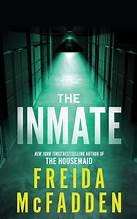
The Inmate
A nurse takes a prison job and faces the ex who she helped convict for murder years ago.
2,060-word summary · 9 min read
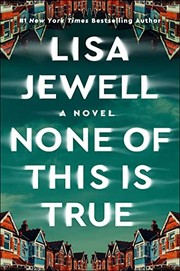
None of This Is True
Podcaster Alix meets birthday-twin Josie, whose dark past becomes the series that consumes them both.
1,992-word summary · 9 min read
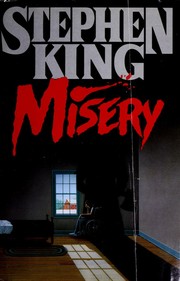
Misery
A novelist crashes in Colorado snow and wakes in the home of his self-declared number one fan, who will not let him leave.
2,744-word summary · 12 min read

What She Knew
Rachel lets her eight-year-old son run ahead in a Bristol park, and the nine-day search turns her into a suspect in the public eye.
2,952-word summary · 13 min read

The Beach House
A young valet is beaten to death at a Hamptons party, and his law-student brother spends a year building a case against the family that covered it up.
2,049-word summary · 9 min read

Six Years
A professor who promised to forget the woman he loved sees her husband's obituary and discovers that the wedding, the marriage, and the woman herself may never…
2,076-word summary · 9 min read

Lisey's Story
Two years after her novelist husband dies, Lisey Landon follows a trail of clues into his childhood and the other world that made him a writer.
1,998-word summary · 9 min read

The Trespasser
A Dublin Murder Squad detective investigates a staged dinner-party killing and finds a cover-up that reaches into her own department.
2,051-word summary · 9 min read

Rules of Prey
Minneapolis detective Lucas Davenport hunts a killer who leaves a new rule at every scene and treats murder as a game of wits.
1,914-word summary · 9 min read
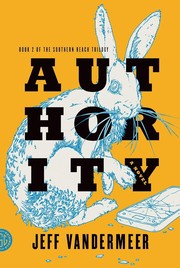
Authority
The new director of the Southern Reach takes over an agency that is hiding the truth about Area X, and the building starts to change around him.
2,029-word summary · 9 min read

The Late Show
Exiled to the LAPD night shift after accusing her supervisor, Renée Ballard keeps two cases that were meant to be handed off at dawn: a brutal assault and a…
2,563-word summary · 11 min read

Night Film
A disgraced journalist investigates the death of a reclusive horror director's daughter, following a red coat through hospitals, secret clubs, and a family…
2,690-word summary · 12 min read
A Head Full of Ghosts
A broke Massachusetts family lets a reality TV crew film their daughter's exorcism, and fifteen years later the only survivor tries to explain what really…
2,588-word summary · 12 min read

4th of July
Lindsay Boxer shoots two armed teenagers in self-defense, faces a wrongful-death trial, and spends her leave chasing a string of throat-slashing murders in…
2,192-word summary · 10 min read
The Camel Club
Four Washington misfits witness a murder on Roosevelt Island and stumble into a conspiracy that reaches the Oval Office, with a hostage president and a nuclear…
2,354-word summary · 10 min read
Persuader
Reacher goes undercover in a Maine crime family to find a missing DEA agent and the man he once failed to kill, and Lee Child keeps the whole thing tight,…
2,278-word summary · 10 min read

61 Hours
A bus crash strands Jack Reacher in a snowbound South Dakota town where a drug gang, a corrupt police force, and a single witness are on a collision course.
2,227-word summary · 10 min read
The Troop
A Boy Scout troop on a Canadian island takes in a stranger who cannot stop eating, and the worm inside him turns a camping trip into a war.
2,457-word summary · 11 min read
The Last Mile
Melvin Mars is hours from execution for his parents' murder when another man confesses, and FBI cold case detective Amos Decker goes looking for the trap.
2,746-word summary · 12 min read