

If It Bleeds
2,219-word summary 10 min read 448 pages in the book
- First published
- 2020
- Publisher
- Scribner
- Pages
- 448
- ISBN
- 9781982137977
Reading options
What's inside (7 sections)
I came to If It Bleeds in a strange mood. I wanted one long King novel and got four shorter ones instead. The 2020 collection from Scribner runs 448 pages in hardcover, ISBN 9781982137977, and holds Mr. Harrigan Phone, The Life of Chuck, If It Bleeds, and Rat. None of them feel like leftovers. Each one is built around a simple deal that goes wrong. A boy keeps a dead man phone. A man contains a whole town. A reporter feeds on sorrow. A writer trades love for a book.
I read them over four nights, which turned out to be the right pace. They are not linked by plot, except that Holly Gibney carries one of them, but they share a worry. What do we owe the dead, and what happens when we try to cheat that debt. Some passages scared me. More of them made me sad in a way I did not expect from King headlines about horror.
If you know King Maine towns, dead fathers, kind teachers, bullies, hospital corridors, you will feel at home. If you only know him from films, this is a fine place to start. Three of these have been filmed or optioned, and you can see why. Small casts, clear hooks. I kept thinking about how grief sounds different in each story, quiet in one, loud in another, but always close.
Mr. Harrigan Phone: A Favor From Beyond
Craig is nine when he starts working for Mr. Harrigan, a rich retired businessman in Harlow, Maine. The job is simple. Read to him, weed the garden, feed the dog. Harrigan pays well and talks little. He gives Craig lottery advice and a winning ticket that leaves the boy with real money for the first time in his life.
Craig uses some of it to buy Harrigan an iPhone, the first one, and teaches him to use it. Harrigan, who loves new tools, takes to it fast. He reads news on it, plays with voice mail, leaves blunt messages. When Harrigan dies, Craig puts the phone in his pocket in the coffin as a kind of gift.
Then the phone keeps working.
Grief makes Craig call the number and leave messages. He tells dead Harrigan about his life, about school, about a bully named Kenny Yanko who torments him every day. Soon after, Yanko dies in a freak accident. Craig tells himself it is chance. He switches to a new phone and tries to forget the old one in a drawer.
Years later, his favorite teacher, Ms. Hart, is killed by a drunk driver who gets a light sentence. Drunk, angry, Craig digs out the old phone and leaves a message wishing the driver dead. The driver is found dead by suicide. Craig throws the old phone in a lake.
What I liked is how ordinary the evil feels. No demons with names. Just a boy who misses being looked after and an old man who liked to fix things, even past death. Harrigan voice mails, short and dry, are creepy because they sound like him, not like a ghost. When Craig hears static and a few broken words, I felt cold.
The criticism I have is that King stacks the morals a little high. Phones rot our attention, money changes friendship, grief tempts us to ask for revenge. All true, but the story says it twice. Still, the last image of the phone at the bottom of the lake, possibly still on, stayed with me longer than any speech.
Readers who hate tech horror may still like this one. The phone is just a box. The bond is what matters. An old man with no family and a boy with a dead mother and a tired father find each other for a while. That part is sweet before it turns.
The Life of Chuck: Told Backwards
This is the odd one, and my favorite.
It comes in three acts, in reverse. Act Three first, Act One last. At first that feels like a trick. By the end it feels like the only way to tell it.
Act Three is called Thanks, Chuck. The world is ending in a slow, bureaucratic way. Internet fails. TV fails. Stars go out. Marty Anderson, a middle school teacher driving home in the Midwest, keeps seeing the same message on billboards and TV crawls. 39 Great Years. Thanks, Chuck. With a photo of an accountant named Charles Krantz. No one knows who Chuck is or why his retirement matters while California sinks and news anchors cry on air. Marty goes to stay with his ex wife Felicia as everything dims. In a hospital, Chuck dies with his family near. Outside his window, the sky empties.
Act Two is called Buskers. Months earlier, Chuck is in Boston on business. He hears a drummer playing on the street, a girl with buckets and skill. On impulse, this quiet man with a briefcase puts down his bag and dances. He is good. Light, joyful, trained without showing it. A young girl joins him. A crowd forms. Money falls. After, Chuck walks back to his hotel with a bad headache and a strange lift in his chest.
Act One is called I Contain Multitudes. Chuck is seven, orphaned after his parents die in a crash, raised by his grandparents in a big house with a locked cupola on top. His grandfather Albie tells him never to go in. His grandmother Sarah teaches him to dance in the kitchen. One day he picks the lock and goes up. Inside he sees himself, grown, dying in a hospital bed, with the same headache that will follow him. He understands, in a child way, that his time is short. He decides to live inside the time he has.
Put together, the meaning lands without a speech. Each person holds crowds inside. Parents, teachers, songs, streets. When Chuck dies of a brain tumor at 39, his inner world ends too. The billboards and blackouts are his mind shutting down, not the planet. Marty and Felicia are part of him.
I found this deeply moving, though I can see why some readers bounce off it. Almost no horror. No villain. Long passages about accounting conferences and middle school dances. The dancing scene risks sweetness and mostly earns it because King shows Chuck embarrassment as well as joy. He knows people stare. He dances anyway.
Bold note for sensitive readers: the hospital scenes are plain and sad, not graphic. The fear here is forgetting and being forgotten, which for me hit harder than any monster.
I finished it late and sat quiet for a while, thinking about who lives in my head.
If It Bleeds: Holly Sees the Reporter
The title story is the longest and the most direct sequel.
Holly Gibney of Finders Keepers sees TV coverage of a bomb at Albert Macready Middle School. Children dead. Grief everywhere. On screen is Chet Ondowsky, a local TV reporter, first on the scene, a little too close to tears in a way that feels performed. Holly, who fought an outsider in The Outsider, feels the old itch. Outsiders wear human faces, feed on pain, and show up where blood draws cameras.
She is not a confident hero at the start. She argues with herself, smokes too much, replays conversations. Pete, her older partner, thinks she chases shadows. Jerome and his sister Barbara help with legwork and tech. An old cop who tracked a similar creature years ago tells her how it works. The thing takes a human shape, eats sorrow, then moves on before people ask why it never ages.
Holly follows Ondowsky across states. She watches his broadcasts, checks property records, finds gaps. He appears at tragedies for decades, always nearby, always a little hungry after. When she gets close, he notices. The middle stretch is surveillance and dread, motel rooms, rental cars, phone calls where no one says what they mean.
The showdown is not a big gunfight. It is Holly, Barbara, and Jerome in a trap they set in an office building, trying to kill something faster and stronger than them with planning and nerve. Ondowsky changes when hurt, shows his other face. Holly freezes, pushes through, acts. Afterwards there is no parade. Just paperwork, lies to police, and the knowledge that grief will feed something else somewhere else.
I liked seeing Holly center stage after years as side help. She is on the spectrum, careful with words, brave in her own pattern. She counts breaths. She rehearses. She calls her mother in her head. King treats her habits with respect, not jokes. Her friendship with Jerome and Barbara gives the hunt warmth. They tease, they worry, they show up.
The fair knock is length. The case builds slowly, with a lot of TV news talk and database searches. Readers who want the outsider early may fidget for fifty pages. And the line between detective work and magic gets blurry. How Holly knows is sometimes feeling more than proof. I accepted it because her fear felt earned after The Outsider, but a newcomer might want more grounding. Read The Outsider first if you can, though King catches you up enough to follow.
Rat: A Deal in a Snowed In Cabin
The last story is quiet and mean in a classic King way.
Drew Larson is an English professor and short story writer who cannot finish a novel. Three tries, three stalls. His wife Lucy supports him. His kids love him. His friend Lyman has been sick. One fall, Drew gets an idea for a western thriller and knows he must write it now or lose it. He drives to the family cabin in Maine, far from town, to work straight through.
Then everything sours. A storm cuts the road. He gets sick with fever and sinus pain. Groceries run low. The cabin feels watched. A rat appears, oddly bold, almost conversational. In fever or not, Drew talks to it. The rat offers a bargain straight from old tales. It will cure his block and let him finish the book, but someone Drew loves will die in exchange. Drew, half joking, half desperate, says yes.
He recovers. The book pours out. He returns home thinner but happy. The novel sells, gets praise, pays bills. Lyman gets better from his illness, which feels like mercy. Then Lyman and his wife die in a car crash on a clear road. Drew understands the trade.
The final night, back at the cabin to close it up, the rat returns for a last talk. Drew begs, bargains, hates himself. The rat leaves, or dies, or was never there. Nothing is fixed.
This one divided my friends. Some found it slight after the Holly epic. I found it sharp. King knows this ground, a writer in a cold room wondering if success is worth the cost. The cabin details are strong. Wet wood, bad cell signal, soup cans, the ache behind the eyes. The rat is never cute. It is polite, tired, and pitiless.
My complaint is that the wife and kids blur. Lucy gets worry and love but little else. The kids are names more than people. That makes the bargain abstract when it should cut. Still, the last ten pages, where Drew tries to live normally with what he did, carry real guilt. No twist saves him.
What Holds Together, What Does Not
Four stories, four bargains. Craig trades grief for revenge. Chuck trades fear for dance. Holly trades safety for duty. Drew trades love for work. That pattern could feel neat, but King voice keeps it rough. He loves Maine diners, bad weather, decent teachers, tired cops. He lets people ramble. He repeats phrases until they itch.
Horror fans should know only two of these aim to frighten in the usual way. Mr. Harrigan Phone has chills. If It Bleeds has a monster. The Life of Chuck is tender science fiction about memory. Rat is moral dread. The tags fit. Horror, thriller, crime, short stories, supernatural. The crime thread runs through all four, not just Holly. Bullying, drunk driving, fraud, deals.
I had two gripes across the book. First, fathers and mentors die a lot to start plots. Harrigan, Chuck parents, Holly absent father talk. After a while I noticed the shape. Second, King explains his ideas once too often. A look, then a paragraph about the look. I wished an editor had cut ten pages from each story middle. The Harrigan lake scene, the Chuck dance, the Holly trap, the Rat farewell, all land. The walks to get there sometimes loop.
Even so, I closed the book glad I read it slowly. Chuck dance in the street. Holly counting breaths before a door. Craig reading to an old man in a sunny room. Drew watching snow cover his car. These images stayed past the scares.
For new King readers, start with Harrigan or Chuck, then try Holly. For long time readers, Holly rewards your memory of Bill Hodges, the Mercedes killer, and the Outsider case without requiring a reread. It is not his darkest book and not his lightest. It is a mid career collection that trusts small choices to carry weight, and most of the time they do.
FAQ
When was If It Bleeds published and how long is it?
Scribner published it in 2020. The hardcover runs 448 pages and the ISBN is 9781982137977.
Is If It Bleeds part of a series?
No. It stands alone as four novellas, though the title story continues Holly Gibney from Mr Mercedes, Finders Keepers and The Outsider.
Which stories are in If It Bleeds?
Mr Harrigan Phone, The Life of Chuck, If It Bleeds, and Rat, each about bargains with death, memory, and creative cost.
Similar books
Everything's Eventual: 14 Dark Tales
Fourteen Stephen King stories shuffled by the deal of a card deck, from the haunted room of 1408 to quiet tales of grief that sting as much as the monsters.
2,000-word summary · 9 min read
Full Dark, No Stars
Four novellas about revenge where ordinary people do terrible things and live with it.
2,646-word summary · 12 min read
Four Past Midnight
Four novellas about a plane lost in time, a writer haunted, and horrors small and large.
2,584-word summary · 11 min read
Later
Boy Jamie Conklin sees dead people who must answer truthfully, pulling him into NYPD cases and a drug crew's greed.
2,009-word summary · 9 min read
The Outsider
Coach Terry Maitland's DNA and witnesses point to an impossible murder, until Ralph Anderson and Holly Gibney trace it to El Cuco.
2,586-word summary · 11 min read
Skeleton Crew
King's 1985 collection pairs The Mist with The Jaunt, The Raft, and Survivor Type: 22 stories of Maine dread.
3,209-word summary · 14 min read
Revival
Jamie Morton shadows preacher Jacobs from boyhood healings to electric cures that open a door best left shut.
2,037-word summary · 9 min read
The Dark Half
A Maine novelist buries his violent pen name George Stark, then faces murders that carry his own fingerprints.
2,956-word summary · 13 min read
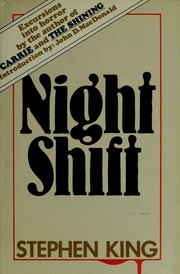
Night Shift
King's first story collection moves from haunted mills to killer cornfields, twenty early tales where ordinary places turn evil.
2,488-word summary · 11 min read
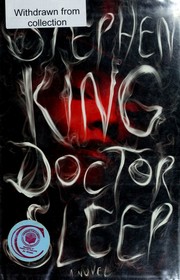
Doctor Sleep
Grown Dan Torrance gets sober in New Hampshire and helps gifted Abra Stone face the True Knot.
2,841-word summary · 13 min read
The Shining
The Shining retold: Jack winters at Overlook with Wendy and Danny, REDRUM, hedge maze chase.
2,011-word summary · 9 min read
Lullaby
A reporter discovers that a poem in a children's book kills anyone who hears it, and his attempt to destroy every copy turns into a road trip through grief,…
2,147-word summary · 10 min read
This Present Darkness
A pastor and reporter face demons over Ashton while angels answer prayer.
2,384-word summary · 11 min read
The Chalk Man
Childhood chalk codes lead to a murder that follows friends thirty years later.
2,350-word summary · 10 min read
Hannibal
Lecter hides in Florence while Starling and Verger close in from both sides.
2,590-word summary · 12 min read
The Call of Cthulhu and Other Weird Stories
Seventeen tales from Dagon to Innsmouth, led by Cthulhu, the Colour, and the Whisperer, in S. T. Joshi careful Penguin edition with notes and corrected texts.
2,593-word summary · 12 min read
The Call of Cthulhu
A professor's papers link a sculptor's dreams, a Louisiana cult raid, and a sailor's voyage to a sleeping god under the sea.
2,530-word summary · 11 min read
Horns
Accused of killing Merrin Williams, Ig Perrish wakes with horns that force strangers to confess their darkest sins.
2,264-word summary · 10 min read
NOS4A2
Vic McQueen's bike finds lost things through a bridge, pitting her against Manx's Rolls-Royce ride to Christmasland.
2,060-word summary · 9 min read
Rosemary's Baby
A young couple's dream apartment in the Bramford turns dark when helpful neighbors and a trusted doctor take over Rosemary's pregnancy.
2,665-word summary · 12 min read
The Whisper Man
Widower Tom Kennedy moves with his son Jake to Featherbank, where a child killer called the Whisper Man once hunted. When boys vanish again, Tom must face old…
2,492-word summary · 11 min read
Thinner
A Connecticut lawyer escapes punishment after a fatal crash, then an old Romani father lays a wasting curse on him and the pounds start falling off.
2,502-word summary · 11 min read
Death Note, Vol. 1: Boredom
Light Yagami finds a notebook that kills with a written name, and the hidden detective L sets a trap to expose him.
2,989-word summary · 13 min read
Hidden Pictures
Nanny Mallory sees Teddy drawings predict a murder in New Jersey.
2,332-word summary · 10 min read
The Silence of the Lambs
Clarice Starling seeks Hannibal Lecter's help to catch Buffalo Bill before Catherine Martin runs out of time.
2,616-word summary · 12 min read

Lisey's Story
Two years after her novelist husband dies, Lisey Landon follows a trail of clues into his childhood and the other world that made him a writer.
1,998-word summary · 9 min read
Hearts in Atlantis
Five linked stories follow Bobby Garfield, Carol Gerber, and their friends from a haunted childhood in 1960 to the long aftermath of Vietnam.
2,402-word summary · 11 min read
Rose Madder
After fourteen years of abuse, Rosie Daniels flees her cop husband and finds a painting that opens into a dangerous mythic world.
2,349-word summary · 10 min read
Holly
Grieving detective Holly Gibney takes a missing-girl case in 2021 and traces it to two polite retired professors with a basement secret.
2,607-word summary · 12 min read