
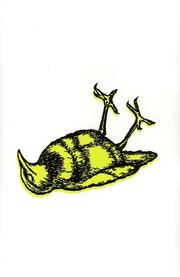
Lullaby
2,147-word summary 10 min read 260 pages in the book
- First published
- 2002
- Publisher
- Doubleday
- Pages
- 260
- ISBN
- 9780385504478
Reading options
What's inside (9 sections)
Most horror stories need a monster. Chuck Palahniuk found his inside a children's book. Lullaby, published in 2002, takes a premise that sounds like a campfire joke, a poem that kills anybody who hears it, and treats it with the deadpan seriousness of a newspaper reporter, which is exactly what its narrator is. The result is one of Palahniuk's funniest and bleakest novels, a road trip through grief, environmental radicalism and the American way of death, run at the speed of a man who has just realized his whole life was a murder.
The Story That Kills
The novel opens with Carl Streator, a middle-aged journalist in Portland, working on a series of articles about sudden infant death syndrome. It is the kind of assignment a newspaper hands to a competent reporter, and Carl does the job properly, visiting homes, interviewing parents, collecting the details that make crib death so unspeakable. Then he notices the pattern. Every house has the same book on the shelf or the nightstand: Poems and Rhymes Around the World, a thick anthology of nursery verse from everywhere on the planet. And every time, the book falls open to page 27.
The poem on that page is short, simple and anonymous. Carl reads it to himself, the way anyone would, and begins to understand what he has found. The rhyme is a culling song, an old African lullaby with a function that has nothing to do with comfort. It was used to kill unwanted children. In the twentieth century, printed in a harmless-looking anthology and read aloud by well-meaning parents, it has been killing babies in their cribs.
And then Carl remembers where he has seen the poem before. Years earlier, while his wife was pregnant, he bought the same anthology and read the same verse out loud in their apartment. His wife died. His daughter died. The doctors called it SIDS, and Carl spent years grieving a tragedy that he now understands was an act of murder, committed by himself, with a book, in his own living room.
The novel's premise does not stay a mystery for long. Carl tests the rhyme. The test works. What follows is the opening of a story that keeps widening: if a poem can kill, and the poem is printed in a book that exists in libraries and nurseries everywhere, then someone has to destroy every copy before the knowledge spreads. Carl, who has spent his life writing about other people's problems, suddenly has a mission.
Helen Hoover Boyle
Every Palahniuk novel has a woman who can see through the narrator, and in Lullaby she is Helen Hoover Boyle. Helen is a real estate agent who specializes in houses with histories, the kind of properties with rumors attached, and she has a professional relationship with the supernatural that Carl cannot match. She also knows about the culling song. Her husband and child are dead, she acquired the anthology from the estate of its publisher, and grief has left her with a worldview as sharp as broken glass. She has used the rhyme herself, deliberately, in revenge, and she feels about it roughly the way she feels about weather.
Carl and Helen join forces because they need each other. Helen has money, connections and an understanding of how the spooky side of the world operates. Carl has the obsession and the guilt. Their partnership starts as a business arrangement and slowly becomes something stranger, two middle-aged people hauling each other through a country they have both stopped believing in. Helen is the funniest character in the book, and Palahniuk gives her the best lines, but the voice underneath the comedy is a woman who has already been through the fire and refuses to pretend it did not happen.
Mona and Oyster
The road trip picks up passengers in Oakland. Mona Sabbat is Helen's assistant, a young woman raised inside a family of mystics and activists, and her boyfriend Oyster is an ecological radical with the charisma of a cult leader and the moral certainty of a teenager who has read too much and suffered too little. Mona and Oyster are chasing a grimoire, a book of shadows and spells that may contain the culling song and other magic. They want Helen and Carl to help them find it. The grimoire is said to contain spells for resurrection, and Mona has plans for those spells that are both sentimental and horrifying.
The novel's central argument lives in this four-way collision. Carl wants to destroy dangerous knowledge. Helen wants money and amusement and maybe a little redemption. Mona wants to raise the dead. Oyster wants to cull humanity itself, using the rhyme to murder the people he judges to be part of the problem, which by his calculations is most of them. Every position is a satire of something Palahniuk has watched American culture do with death: deny it, sell it, pretend to defeat it, or declare die-offs to be acceptable losses.
The four of them drive across the country, hunting down copies of Poems and Rhymes Around the World and destroying them. They visit libraries and warehouses and the homes of dead authors. They argue about the ethics of what they are doing while doing it. And Carl keeps using the culling song. The novel is honest about the slide. At first he kills by accident, then in panic, then in irritation, then on purpose. A driver who cuts him off. A stranger who scares him. The discovery that words are weapons turns out to sit very comfortably in a man who has spent years being quietly furious at the world, and the book lets the reader watch him become the thing he is trying to destroy.
The Falling Out
The middle of the novel is a sustained escalation, and the turn comes when Oyster attacks Helen to force her to reveal the rhyme. The group abandons him on a highway, which should be the end of him. It is not. Helen, it turns out, has learned a trick of her own: she can move her consciousness out of her body and into someone else. After Carl is arrested, she possesses a police officer and helps him escape, and from that point her relationship with the flesh becomes entirely strategic.
The grimoire turns out to have been in Helen's hands all along: the datebook she has carried on the trip is the spell book, written in invisible ink. Helen translates it herself. It contains the culling song and other spells, including a love spell, and Mona uses the possibility of that spell to poison Carl's mind about the relationship he has begun with Helen. Carl confronts Helen, then hunts down Nash, a paramedic who learned the rhyme and used it to kill women. After that confrontation Carl turns himself in to the police.
Palahniuk ties off the threads in a way that satisfies the book's own logic. Mona and Oyster steal the grimoire, though the culling song is no longer in it. Oyster uses the remaining spells to possess Helen and then kill himself. Helen, down to her last strength, jumps into the police sergeant and joins Carl for the final confrontation with Mona and Oyster. Her last move is the one genuinely unselfish act of the second half, and it changes what Carl is hunting: a page, a piece of paper, the idea of a song that can outlive everyone who knows its tune.
The Frame and the Ending
Lullaby is not told in real time. The narration is itself a document, delivered in short chapters with a rhythmic, almost hypnotic cadence that mimics the culling song, and the novel saves a piece of its structure for the last pages. The final chapter quietly changes what the reader has been reading, revealing the situation in which the story is being told. Palahniuk has always loved this kind of gear shift, and here it lands with genuine force, because it ties the act of storytelling to the novel's whole argument about stories that kill.
It also leaves the ending famously open. Carl and Helen are still together at the close, still mismatched, still searching. They hunt what they call phenomenons, the word they use for haunted places and cursed objects, and the book ends with the hunt continuing rather than resolving. The culling song may have lost its page, but the world it belongs to, the world where the dead are everywhere and the sale never stops, is exactly the same. If you are looking for a villain defeated and a wound healed, Lullaby is not that book. It is a comedy about two people who decide, for complicated private reasons, to keep going.
The Folklore Machine
It helps to know where Lullaby sits on Palahniuk's shelf. He arrived in the late 1990s as the author of Fight Club, a novel that became a film and a cultural shorthand, and he spent the following decade writing about people whose lives have been flattened by consumer culture and who reach for extreme solutions. Lullaby is his first full turn toward the supernatural, and he uses the turn the way an anthropologist uses a foreign country: to make ordinary American behavior look strange. The novel is full of rituals. Grieving parents accept casseroles and condolences. Estate sales turn dead people into inventory. News vans arrive at crime scenes like weather. The culling song is not more magical than any of this. It is simply faster.
That is the book's sharpest joke, and it is a serious one. In Palahniuk's telling, America already has songs that kill: the phrases deployed by politicians, the advertisements that teach people to want what will ruin them, the news stories beamed into living rooms. The culling song makes the process visible, and the characters' plans for it map onto real positions people take. Burn the books and hope the knowledge dies, which is Carl's plan. Seize the knowledge for a cause, and you become Oyster, deciding which lives are surplus. Hoard the magic and sell it, and you become half the people Helen does business with. Try to raise the dead, and you are Mona, refusing to accept the one thing the entire funeral industry exists to deny.
The prose is part of the argument. Lullaby runs on the short, chant-like chapters Palahniuk perfected, with phrases that recur like a chorus and details that read like catalog entries. The effect is hypnotic on purpose. By the end, the reader has been lulled by the same technique the novel is warning about, which is either a neat trick or a cheap one, depending on the reader. Even critics who find the shocks juvenile tend to concede that the book is tightly engineered. It is the rare horror novel that could be taught as a lesson about rhetoric.
The Verdict
Palahniuk wrote Lullaby after Fight Club and Choke made him a phenomenon in his own right, and it shows a writer at his most confident and his most unhinged. The prose is stripped and propulsive. The chapters are short enough to read while standing up. The satire lands on media culture, consumer culture, spiritual tourism, environmental zeal, real estate and the funeral industry, and it does not care whether the reader feels comfortable at any point. Some of the shock effects have aged into camp. The grief has not. Carl's original crime, a father reading a poem to his daughter, gives the whole comic nightmare a genuine bottom, and that is why the book endures when the gross-out material fades.
It is worth warning readers honestly. There are child deaths, mass killings, an attempted assault and a very dark view of human nature on display. If you can handle those, Lullaby is one of the sharpest horror-comedies of its era and one of the most honest books about how a person carries guilt it has no way to discharge. It is also, in its own black way, a love letter to reading. Words matter, the novel insists. Be careful which ones you say out loud, and be very careful which ones you love.
Lullaby has been optioned for film more than once and has never reached the screen, which may be for the best, since so much of its power lives in the narrator's flat, accumulating voice. The novels that followed it, including Diary, Haunted and Rant, pushed the same tools further into horror and folklore. Lullaby remains the most accessible of the group and the best entry point for readers who never got around to Palahniuk after Fight Club, or who bounced off his earlier, harsher books. It is a haunted house story where the house is a paperback, and the thing knocking on the walls is the sound of a mother's voice.
FAQ
What is the culling song in Lullaby?
It is a fictional African lullaby printed in the poetry anthology Poems and Rhymes Around the World. In the novel, reading the lyric aloud or to oneself kills the listener, and it is the engine of the plot.
Is Lullaby connected to Fight Club?
No. It is a standalone novel, though it shares Palahniuk's voice, his interest in outsiders and his taste for satire wrapped in horror.
Is Lullaby a horror novel?
It is a hybrid. The premise is supernatural horror, but the book plays it as a satirical road novel about guilt, media cycles and the ways people cope with death.
Similar books
Haunted
Writers lock in for three months and trade worse stories as food runs out.
2,576-word summary · 11 min read
Invisible Monsters Remix
A veiled model, a bold friend, and a scam-filled road trip remake Palahniuk's 1999 satire of beauty in shuffled Remix order.
2,665-word summary · 12 min read
Everything's Eventual: 14 Dark Tales
Fourteen Stephen King stories shuffled by the deal of a card deck, from the haunted room of 1408 to quiet tales of grief that sting as much as the monsters.
2,000-word summary · 9 min read
This Present Darkness
A pastor and reporter face demons over Ashton while angels answer prayer.
2,384-word summary · 11 min read

If It Bleeds
Holly Gibney faces an outsider plus three more tales of dread.
2,219-word summary · 10 min read
Four Past Midnight
Four novellas about a plane lost in time, a writer haunted, and horrors small and large.
2,584-word summary · 11 min read
Horns
Accused of killing Merrin Williams, Ig Perrish wakes with horns that force strangers to confess their darkest sins.
2,264-word summary · 10 min read
Revival
Jamie Morton shadows preacher Jacobs from boyhood healings to electric cures that open a door best left shut.
2,037-word summary · 9 min read
NOS4A2
Vic McQueen's bike finds lost things through a bridge, pitting her against Manx's Rolls-Royce ride to Christmasland.
2,060-word summary · 9 min read
Later
Boy Jamie Conklin sees dead people who must answer truthfully, pulling him into NYPD cases and a drug crew's greed.
2,009-word summary · 9 min read
The Dark Half
A Maine novelist buries his violent pen name George Stark, then faces murders that carry his own fingerprints.
2,956-word summary · 13 min read
Rosemary's Baby
A young couple's dream apartment in the Bramford turns dark when helpful neighbors and a trusted doctor take over Rosemary's pregnancy.
2,665-word summary · 12 min read
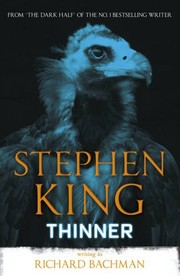
Thinner
A Connecticut lawyer escapes punishment after a fatal crash, then an old Romani father lays a wasting curse on him and the pounds start falling off.
2,502-word summary · 11 min read
Doctor Sleep
Grown Dan Torrance gets sober in New Hampshire and helps gifted Abra Stone face the True Knot.
2,841-word summary · 13 min read
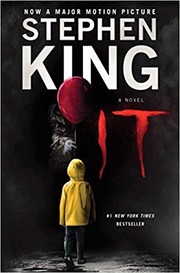
The Outsider
Coach Terry Maitland's DNA and witnesses point to an impossible murder, until Ralph Anderson and Holly Gibney trace it to El Cuco.
2,586-word summary · 11 min read
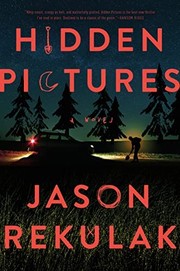
Hidden Pictures
Nanny Mallory sees Teddy drawings predict a murder in New Jersey.
2,332-word summary · 10 min read
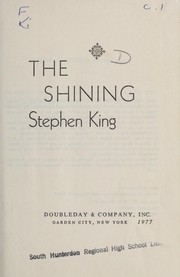
The Shining
The Shining retold: Jack winters at Overlook with Wendy and Danny, REDRUM, hedge maze chase.
2,011-word summary · 9 min read
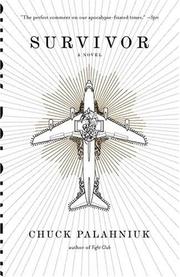
Survivor
Tender Branson, last Creedish survivor, confesses into a flight recorder as his plane dives, from servant to agent-made celebrity messiah in Palahniuk's 1999…
2,683-word summary · 12 min read
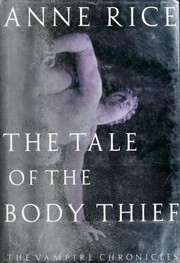
The Tale of the Body Thief
Lestat trades bodies with a psychic thief for one day of mortality and ends up trapped, sick, and hunting his own vampire body.
2,069-word summary · 9 min read
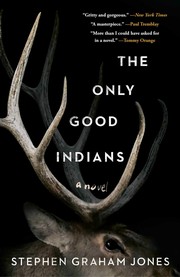
The Only Good Indians
Four Blackfeet men who killed a pregnant elk are hunted by her spirit a decade later, and the only person who can end the cycle is a teenage girl who was not…
2,010-word summary · 9 min read

Lisey's Story
Two years after her novelist husband dies, Lisey Landon follows a trail of clues into his childhood and the other world that made him a writer.
1,998-word summary · 9 min read
Night Film
A disgraced journalist investigates the death of a reclusive horror director's daughter, following a red coat through hospitals, secret clubs, and a family…
2,690-word summary · 12 min read
Infinite Jest
A film that kills its viewers, a tennis academy, a halfway house for addicts, and a future America where corporations name the years, all tangled together.
2,084-word summary · 9 min read
The Troop
A Boy Scout troop on a Canadian island takes in a stranger who cannot stop eating, and the worm inside him turns a camping trip into a war.
2,457-word summary · 11 min read
The Sisters Brothers
Two hired killers ride from Oregon to Gold Rush California to murder a prospector, and find their trade, their brotherhood, and the frontier myth coming apart.
2,095-word summary · 9 min read
Locke & Key, Vol. 1: Welcome to Lovecraft
After their father is murdered, the Locke children move into a haunted family estate where keys unlock doors to ghosts, other places, and dangerous secrets.
2,019-word summary · 9 min read
The Zombie Survival Guide: Complete Protection from the Living Dead
Max Brooks's deadpan survival manual explains the Solanum virus, the only ways to destroy the living dead, fortifying a home, and the outbreaks history quietly…
2,650-word summary · 12 min read
The Last House on Needless Street
A lonely man, a cat and a mysterious neighbor pull you into a house full of buried trauma.
2,627-word summary · 12 min read
The Chalk Man
Childhood chalk codes lead to a murder that follows friends thirty years later.
2,350-word summary · 10 min read
Relic
A museum beast kills during an exhibition while an agent investigates.
2,066-word summary · 9 min read